Phu Phrabat UNESCO World Heritage Site: Thailand’s Must-Visit Historical Park for Indian Travelers
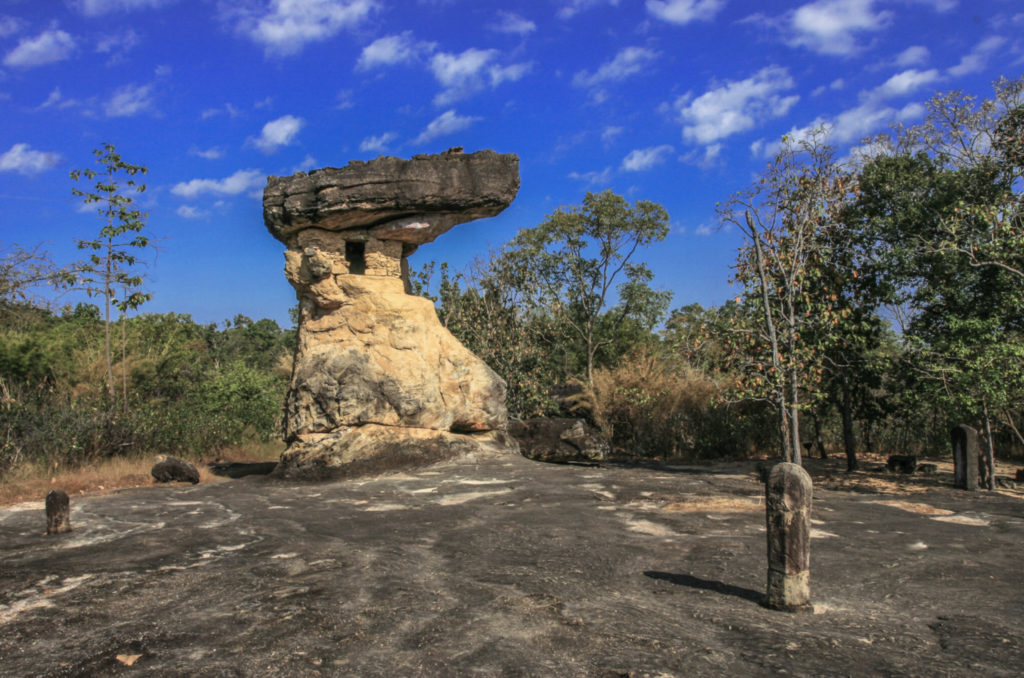
Phu Phrabat UNESCO World Heritage Site — inscribed on July 27, 2024, featuring ancient sima stones, prehistoric rock paintings and stunning natural rock formations in Udon Thani, Thailand.
Phu Phrabat UNESCO World Heritage Site is Thailand’s newest and most exciting cultural landmark — officially inscribed on the UNESCO World Heritage List on July 27, 2024. Located in Udon Thani Province in northeastern Thailand, this ancient historical park is now one of the most compelling reasons to plan a trip to Thailand beyond Bangkok and the beaches. Here is everything Indian travelers need to know about visiting the Phu Phrabat UNESCO World Heritage Site in 2025.
What Is Phu Phrabat UNESCO World Heritage Site?
The Phu Phrabat UNESCO World Heritage Site — officially known as Phu Phra Bat Historical Park — is a stunning sandstone mountain landscape filled with ancient rock shelters, prehistoric paintings, Buddhist temples, and thousands of sacred sima stones dating back to the 8th century Dvaravati period.
Located in the Phu Phan mountain range in Ban Phue District, western Udon Thani Province, the park sits within the Khuea Nam National Forest Reserve at an altitude of 320 to 350 metres above sea level.
What makes this site truly unique is that most of its ancient structures were formed naturally — shaped by glacial movements and differential erosion during the Mesozoic-Cretaceous period over 15 million years ago — and later adapted by humans for religious and cultural purposes across multiple civilisations.
Why Was Phu Phrabat Inscribed as a UNESCO World Heritage Site?
The Phu Phrabat UNESCO World Heritage Site was recognised for its Outstanding Universal Value — specifically for preserving the largest collection of sima stones in the world.
Sima stones are boundary markers used in Buddhist traditions to consecrate sacred spaces. The sima stone tradition at Phu Phrabat dates back to the Dvaravati period (7th–10th century) and represents a unique cultural practice found nowhere else on earth at this scale.
Thailand’s Prime Minister Sritha Thavisin personally delivered the keynote address at the 46th Session of the World Heritage Committee held at the Bharat Mandapam International Exhibition and Convention Centre in New Delhi, India — where the inscription was officially announced.
With this inscription, Thailand now has:
- 5 Cultural World Heritage Sites
- 3 Natural World Heritage Sites
And Udon Thani has become the only province in Thailand with two UNESCO World Heritage Sites.
Phu Phrabat UNESCO World Heritage Site: Key Highlights
Here is what makes the Phu Phrabat UNESCO World Heritage Site so special for visitors:
🪨 Extraordinary Rock Formations
The park is filled with dramatic natural rock formations — towering pinnacles, giant balanced boulders, and mushroom-shaped rocks formed by millions of years of erosion. These are not man-made — they are entirely natural masterpieces of geology.
🎨 6,000-Year-Old Prehistoric Rock Paintings
Ancient rock paintings are preserved inside natural shelters throughout the park. The most notable are:
- Tham Wua — depicting oxen
- Tham Khon — depicting human figures
These paintings are believed to be approximately 6,000 years old, making them among the oldest artistic records in Southeast Asia.
🛕 Ancient Buddhist and Hindu Temples
Rock formations throughout the park have been converted into temples across multiple historical periods — from the Dvaravati period (7th–10th century) through later eras — showing a remarkable blend of Hindu and Buddhist religious influence.
👸 The Legend of Ho Nang Usa
The park’s most famous structure is Ho Nang Usa — a rock formation associated with a captivating local legend about a king who imprisoned his daughter to protect her from suitors. Despite her isolation, she secretly communicated with her lover, and they eventually married against her father’s wishes. The story adds a magical, romantic dimension to the already stunning landscape.
🪨 The World’s Largest Collection of Sima Stones
The Phu Phrabat UNESCO World Heritage Site contains the largest and best-preserved collection of sima stones globally — boundary markers that defined sacred Buddhist spaces during the Dvaravati period. This is the primary reason UNESCO granted it World Heritage status.
How to Get to Phu Phrabat UNESCO World Heritage Site from India
For Indian travelers, reaching the Phu Phrabat UNESCO World Heritage Site involves:
| Step | Details |
|---|---|
| Flight | Fly from Delhi, Mumbai, or Chennai to Bangkok (BKK or DMK) |
| Connecting flight | Bangkok → Udon Thani Airport (UTH) — approx. 1 hour |
| Road transfer | Udon Thani city → Ban Phue District → park entrance — approx. 1.5 hours by car or taxi |
| Total travel time | Approx. 6–8 hours from India including connections |
Pro Tip: Combine your visit to Phu Phrabat with Ban Chiang World Heritage Site — also in Udon Thani — to make the most of your trip to Thailand’s northeast.
Best Time to Visit Phu Phrabat UNESCO World Heritage Site
| Season | Months | Conditions |
|---|---|---|
| Best time | November — February | Cool, dry, ideal for trekking |
| Good time | March — May | Warm, manageable for morning visits |
| Avoid | June — October | Rainy season, trails may be slippery |
The park is best explored in the early morning when light filters through the rock formations beautifully — perfect for photography.
Why Indian Travelers Should Visit Phu Phrabat in 2025
- Indian connection — the UNESCO inscription was announced in New Delhi, India at Bharat Mandapam
- Visa-free entry — Indians can visit Thailand visa-free for up to 60 days in 2025
- Unique heritage — unlike Angkor Wat or Bagan, this UNESCO site remains largely off the tourist radar
- Instagram-worthy — dramatic rock formations and ancient temples make it a photographer’s dream
- Budget-friendly — northeastern Thailand is far more affordable than Bangkok or Phuket
FAQs — Phu Phrabat UNESCO World Heritage Site
Q: When was Phu Phrabat inscribed as a UNESCO World Heritage Site? Phu Phrabat was officially inscribed on the UNESCO World Heritage List on July 27, 2024, during the 46th Session of the World Heritage Committee held in New Delhi, India. It is Thailand’s most recently added UNESCO World Heritage Site.
Q: How many UNESCO World Heritage Sites does Thailand have after Phu Phrabat? Thailand now has a total of 8 UNESCO World Heritage Sites — 5 cultural and 3 natural — following the inscription of the Phu Phrabat UNESCO World Heritage Site in 2024.
Q: Is Phu Phrabat Historical Park worth visiting for Indian tourists? Absolutely. The Phu Phrabat UNESCO World Heritage Site offers a completely different experience from Thailand’s typical beach and city tourism. With 6,000-year-old rock paintings, ancient Buddhist temples, and the world’s largest collection of sima stones, it is one of the most unique and underrated heritage destinations in all of Asia.
Final Word
The Phu Phrabat UNESCO World Heritage Site is Thailand’s newest cultural treasure — and one of its most underexplored. For Indian travelers who want to experience the real depth of Thai history and culture beyond the crowds of Bangkok and Phuket, Phu Phrabat offers a once-in-a-lifetime experience that connects ancient civilisations, stunning landscapes, and living Buddhist traditions.
Plan your visit in 2025 — before the crowds discover it.
🔗 Official Source: UNESCO World Heritage Centre — Phu Phrabat

Aaseem Bhardwaj is a journalist, seasoned traveler and IT professional based in India. With firsthand travel experience across Southeast Asia, East Asia, Middle East and Europe, Aaseem founded Travel Man Today to provide reliable visa updates and travel news for Indian passport holders. He has personally traveled to Thailand, Vietnam, Malaysia, Japan, Singapore, Hong Kong, South Korea, UAE and Europe. Follow his travel vlogs on YouTube at @travelmantoday





Templates for Indians