EASA Gulf Airspace Warning Extended to August 31 — UAE, Bahrain, Qatar, Kuwait and Jordan
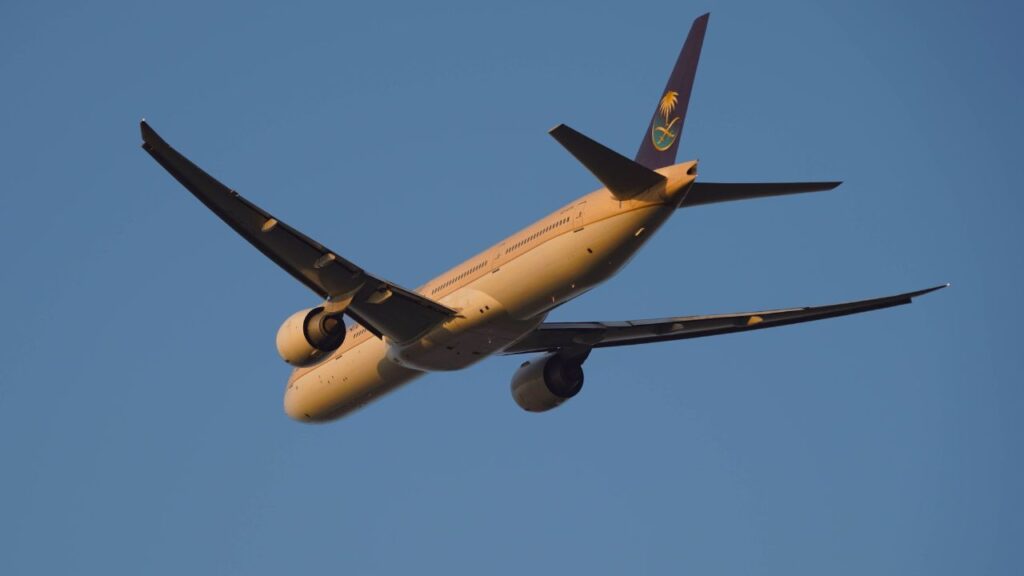
EASA Gulf airspace warning revised July 22, 2026 — extended until August 31 with no content changes, covering UAE, Bahrain, Qatar, Kuwait and Gulf of Oman, plus a new Jordan bulletin.
EASA Gulf airspace warning has been extended until August 31, 2026 — the European Union Aviation Safety Agency revised its Conflict Zone Information Bulletin (CZIB) on July 22, maintaining all existing recommendations for airlines to avoid operating over the UAE, Bahrain, Qatar, Kuwait, and parts of the Gulf of Oman west of longitude 58°E.
A separate EASA Gulf airspace warning has also been issued for Jordan on the same day — a new addition to the warning framework covering countries whose airspace EASA considers elevated-risk for civil aviation operations.
The extension comes as the US completed a 13th consecutive night of airstrikes on Iranian military targets, Iran rejected a temporary US ceasefire proposal, and Brent crude oil prices briefly surpassed $100 per barrel.
What the EASA Gulf Airspace Warning Covers
The advisory covers airspace at all altitudes and flight levels over the United Arab Emirates, Bahrain, Kuwait, Qatar, and parts of the Gulf of Oman west of longitude 58°E.
The bulletin applies to European airlines and all third-country carriers authorised by EASA operating flights to, from, and within the European Union. This means every airline with EASA operating authorisation — including Indian carriers connecting through European hubs — is subject to the advisory.
EASA recommends that operators do not operate within the affected airspace and instead closely monitor developments and follow official aeronautical guidance.
Critically, the revision carries “no changes to the content or recommendations” from the previous version — meaning EASA has assessed the situation, decided the risk level has not reduced, and extended the existing high-risk classification for a further month without modification.
| EASA Gulf Airspace Warning — Coverage July 24 | Status |
|---|---|
| United Arab Emirates | High-risk — avoid until August 31 |
| Bahrain | High-risk — avoid until August 31 |
| Qatar | High-risk — avoid until August 31 |
| Kuwait | High-risk — avoid until August 31 |
| Gulf of Oman (west of 58°E) | High-risk — avoid until August 31 |
| Jordan | New warning — avoid until August 31 |
| Validity | Extended from July 22 — no content changes |
| Applies to | EASA-authorised carriers globally |
Why EASA Extended the Warning
According to EASA, the security situation in the Gulf remains volatile despite a memorandum of understanding signed by the United States and Iran to extend a temporary ceasefire. The agency said implementation of the agreement has been marked by “recurrent and significant violations,” creating “a high level of risk across the Gulf region.”
EASA identified five specific threat categories that civil aviation faces in the affected airspace.
Missile and drone attacks. The conflict has generated a sustained pattern of missile and drone activity across the Gulf region — including attacks on Bahrain, Kuwait, Qatar, and Jordan by Iranian forces — creating a live threat environment that cannot be discounted for commercial aviation routing.
Air-defence interception activity. When air defence systems are actively engaged, there is lateral and vertical debris from intercepted munitions. Aircraft flying through or near active interception corridors face physical risk from falling debris even when not directly targeted.
Falling debris. Intercepted missiles and drones generate falling debris across wide geographic areas. The trajectory of debris is unpredictable and can affect airspace at multiple flight levels.
Combat aircraft operations. US, coalition, and Iranian military aircraft are actively operating across Gulf airspace. The presence of combat aircraft at varying altitudes creates collision risk and identification challenges.
Misidentification risk. EASA warned that the heightened readiness of national and US air-defence systems increases the possibility of “misidentification, unintended engagement and collateral effects affecting civil aircraft.”
This last point is the most alarming for aviation professionals — and it is why ALPA India cited the same historical cases in its DGCA letter. When air defence systems are operating at high readiness, the risk of a civilian aircraft being misidentified as a threat and engaged is not theoretical. It happened with Iran Air Flight 655, Ukraine International Airlines Flight 752, and others. EASA is explicitly acknowledging this risk in its advisory language.
EASA also warned that military operations could occur with little or no warning, leaving airlines with very limited time to reroute aircraft safely.
The New Jordan Warning: What It Means
The separate EASA Gulf airspace warning bulletin issued for Jordan on July 22 is significant because it extends the high-risk classification to the Levant corridor — a key transit route for flights connecting Europe with the Gulf, South Asia, and Southeast Asia.
EASA said the security situation has deteriorated rapidly since mid-July, with increased missile and drone activity affecting Jordanian airspace. It noted that, despite the heightened military activity, Jordanian authorities have not introduced conflict-related airspace restrictions or route closures, leaving airlines with limited publicly available mitigation measures.
The absence of official Jordanian airspace restrictions means airlines must make their own operational risk assessments about whether to fly through Jordanian airspace — without the formal guidance that official restrictions would provide. This is a more complex situation than when airspace is formally closed, because airlines cannot defer to regulatory prohibition. They must make independent safety judgements based on EASA’s advisory.
The UK’s FCDO had already issued a specific new advisory for Aqaba airport and seaport — reflecting the same deteriorating security picture in Jordan’s southern region that EASA is now formalising in its conflict zone bulletin.
What the EASA Warning Means in Practice
The EASA Gulf airspace warning is important to understand correctly — it is not an airspace closure. It is a recommendation that carries serious regulatory and commercial consequences for airlines that choose to operate in the designated areas.
For passengers, the advisory does not mean commercial flights have stopped operating. Rather, it is guidance issued to airlines to help them assess operational risks and determine whether flights should be rerouted or adjusted based on the evolving security situation.
UAE carriers — Emirates, flydubai, Air Arabia, and Etihad — are UAE-registered and UAE-regulated, not subject to EASA authority in the same way as EU carriers. They continue to operate. Dubai International Airport remains functional. The EASA Gulf airspace warning is primarily the regulatory mechanism that explains why European carriers like British Airways, Lufthansa, KLM, Air France, Singapore Airlines, and others have suspended or rerouted their Gulf services.
Airlines that operate despite the EASA advisory face the following practical consequences. Insurance war-risk premiums increase significantly when a regulator has formally flagged airspace as high-risk — making flights economically unviable for some carriers even if they technically choose to continue. Crew duty-of-care obligations mean airlines must assess whether crewing flights through EASA-warned airspace is defensible from a safety management perspective. And any incident involving a civilian aircraft in EASA-warned airspace would expose the operating airline to severe regulatory and legal consequences.
What Indian Travelers Must Know
The EASA Gulf airspace warning directly affects Indian travelers in two ways.
If you are flying an Indian carrier through Gulf airspace: Air India, IndiGo, Air Arabia, and other carriers continue to operate Gulf routes. However, ALPA India has formally requested DGCA suspension of Indian carrier Gulf flights — and while no suspension has been issued, the EASA advisory is the international regulatory foundation underlying that request. Monitor dgca.gov.in and your airline’s app for any changes before departure.
If you are flying a European or international carrier that has suspended Gulf routes: The EASA Gulf airspace warning extended to August 31 means European carriers will not resume Dubai routes before that date at the earliest — and given how consistently airlines have extended beyond initial EASA timelines, plan for October or later as the realistic resumption window.
Complete Air Suvidha 2.0 before any return flight to India from the Gulf — mandatory at airsuvidha.civilaviation.gov.in within 24 hours of India arrival. Remember UPI does not work in the UAE — carry UAE Dirhams or use a zero-forex international card. For travel insurance covering conflict-related disruptions, SafetyWing Nomad Insurance provides comprehensive coverage at affordable daily rates for Indian travelers.
FAQs — EASA Gulf Airspace Warning July 2026
Q: What is the EASA Gulf airspace warning and which countries does it cover?
The European Union Aviation Safety Agency extended its Conflict Zone Information Bulletin covering airspace over the UAE, Bahrain, Kuwait, Qatar, and parts of the Gulf of Oman west of longitude 58°E until August 31, 2026. A separate bulletin also covers Jordan until August 31. The advisory was revised on July 22 with “no changes to the content or recommendations” — meaning EASA assessed the risk level as unchanged and extended the existing high-risk classification. The warning applies to European airlines and all third-country carriers authorised by EASA.
Q: Why are European airlines not flying to Dubai if UAE airports are open?
The EASA Gulf airspace warning is the regulatory framework behind European carrier suspensions. Airlines face significantly increased war-risk insurance premiums when EASA formally designates airspace as high-risk, making flights economically unviable even if technically permitted.
Airlines also have crew duty-of-care obligations that make operating in EASA-warned airspace legally and operationally complex. The combination of regulatory advisory, insurance cost, and safety management responsibility is why British Airways, Lufthansa, KLM, Singapore Airlines, and others are suspending routes despite UAE airports continuing to operate normally.
Q: When is the EASA Gulf airspace warning expected to end?
The current EASA Gulf airspace warning extension runs until August 31, 2026. EASA will reassess the security situation before that date and either lift, maintain, or further extend the advisory depending on how the US-Iran conflict evolves.
Given that EASA cited “recurrent and significant violations” of the ceasefire memorandum as the reason for the extension, a further extension beyond August 31 is possible if the security situation does not materially improve. Airlines that have suspended routes until October and beyond are anticipating exactly this scenario.
Final Word
The EASA Gulf airspace warning extension to August 31 — with no content changes and a new Jordan bulletin added simultaneously — confirms what the trajectory of this conflict has been signalling for two weeks: the risk level in Gulf airspace has not reduced, and the regulatory framework that governs European airline operations will not loosen before September at the earliest.
For Indian travelers, the practical consequence is that European carriers remain absent from Gulf routes, UAE carriers are absorbing the gap, and any journey planning involving Gulf transit or Gulf destinations should be built around UAE-carrier options — Emirates, flydubai, Air Arabia, and Etihad — until the EASA advisory is formally lifted.
Also Read:
- Middle East Flight Suspensions — Full Airline List July 2026
- Middle East Travel Advisory 2026 — US, UK, Canada Gulf Warnings
- UAE Travel Advisory July 2026 — Full Airline Status
Official Sources:
- Gulf News — EASA Extends Gulf Airspace Warning to August 31
- EASA — Conflict Zone Information Bulletins
 Thailand Airport Baggage Rule 2026: Checked Bags Can Now Be Opened Without You

Japan Travel Rules 2026: Tax-Free Changes and Kyoto Luggage Ban Explained

Thailand DTV Visa India Self-Application: Travel Agent Gets Approved in 26 Days Without an Agent

US Ebola Entry Ban 2026: 3 African Countries Restricted Until November

Thailand Airport Baggage Rule 2026: Checked Bags Can Now Be Opened Without You
Japan Travel Rules 2026: Tax-Free Changes and Kyoto Luggage Ban Explained
Thailand DTV Visa India Self-Application: Travel Agent Gets Approved in 26 Days Without an Agent
US Ebola Entry Ban 2026: 3 African Countries Restricted Until November

Aaseem Bhardwaj is a journalist, seasoned traveler and IT professional based in India. With firsthand travel experience across Southeast Asia, East Asia, Middle East and Europe, Aaseem founded Travel Man Today to provide reliable visa updates and travel news for Indian passport holders. He has personally traveled to Thailand, Vietnam, Malaysia, Japan, Singapore, Hong Kong, South Korea, UAE and Europe. Follow his travel vlogs on YouTube at @travelmantoday






Templates for Indians



4 thoughts on “EASA Gulf Airspace Warning Extended to August 31 — UAE, Bahrain, Qatar, Kuwait and Jordan”