Japan Train Ticket QR Code: Edmondson Magnetic Ticket Dies Spring 2027
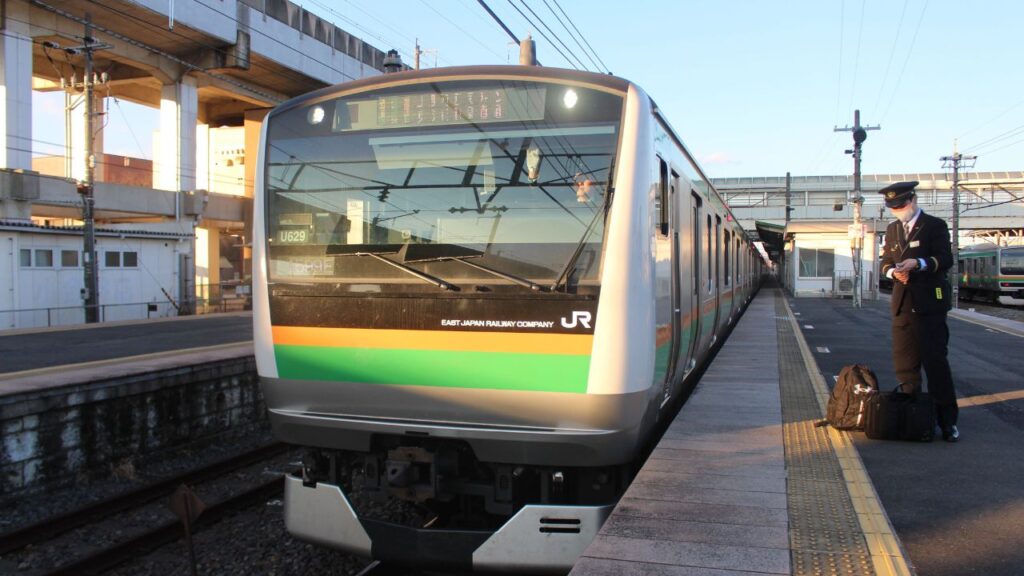
Japan train ticket QR code spring 2027 — JR East replaces the 155-year-old Edmondson magnetic ticket with a larger 57.5mm × 85mm QR code ticket after testing found the Edmondson size caused scanning errors when passengers' fingers covered the code.
Japan train ticket QR code system will replace one of the most enduring symbols of the country’s railway culture — East Japan Railway Co. (JR East) has announced it will retire the Edmondson magnetic paper ticket for short-distance rides in spring 2027, replacing it with a larger QR code ticket that can be scanned without entering a magnetic slot.
The Japan train ticket QR code announcement has triggered a wave of nostalgia across Japanese social media, with rail enthusiasts calling the decision the “biggest transformation” in the history of Japan’s railroads and scrambling to collect the traditional tickets before they disappear forever. For Indian travelers visiting Japan in 2027 and beyond, the change means a fundamentally different short-distance ticketing experience at Tokyo’s major train stations.
What Is the Edmondson Ticket and Why Does It Matter
The Edmondson ticket being retired is not merely a transit token — it is a piece of industrial heritage with a direct lineage to the 1830s.
Thomas Edmondson, a stationmaster in northern England, devised an innovative framework in the 1830s. Departure and destination stations, fares, and other information were printed on uniform, relatively thick cards measuring 30 millimetres by 57.5 mm, so the issued tickets could be managed through serial numbers.
Japan adopted the British railway mechanism directly when the track line between Shinbashi and Yokohama stations started operations in 1872 — making the Edmondson ticket a continuous feature of Japanese rail travel for 155 years. Even when the physical material changed from rigid paper to a thinner, softer one with a magnetic coating for use in automated ticket gates, the Edmondson size was preserved exactly. The ticket’s dimensions have never changed since Japan’s first railway went into service.
The “Ed ticket” — as it is affectionately nicknamed among rail connoisseurs — survived through the steam era, electrification, the Shinkansen, and the IC card revolution. What magnetic swipe technology could not eliminate, QR codes finally will.
JR East President Yoichi Kise expressed his mixed feelings about the shift. “I used to collect hard paper tickets myself so I feel sorrow at seeing the current Edmondson ticket disappear forever,” he said. “Nevertheless, this reform will bring benefits to not only our customers but also the environment, so I sincerely ask for our passengers’ understanding.”
Why JR East Is Making the Change
The Japan train ticket QR code transition is driven by two clear operational rationales — cost and environment.
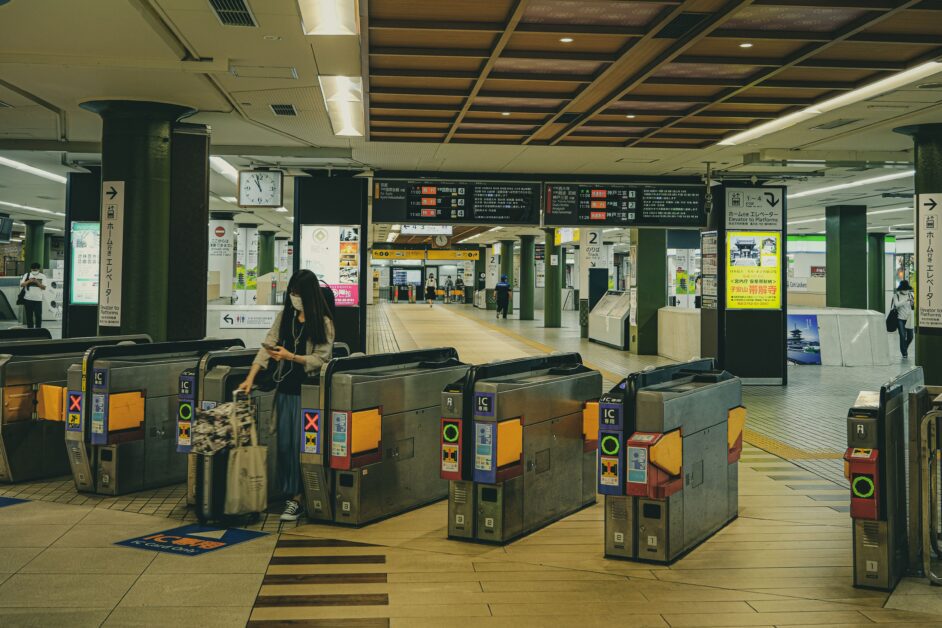
Maintenance cost reduction. Magnetic ticket gates require constant maintenance — the slot mechanism that reads, validates, retains, and ejects magnetic tickets is mechanically complex and expensive to service. QR-code tickets only need to be held up to a dedicated scanner, eliminating the possibility of becoming jammed in the ticket gates. The jam rate from magnetic tickets is a significant source of maintenance calls and passenger delay at Tokyo’s high-volume stations.
Environmental benefit. JR East currently recycles 160 tons of used tickets each year. The recycling process for magnetic tickets is arduous — the magnetic layer must be removed from each ticket before the paper substrate can be reused. With QR code tickets, the magnetic layer removal step is eliminated entirely, simplifying and reducing the environmental footprint of the recycling process.
The new Japan train ticket QR code is expected to measure 57.5 mm by 85 mm — three times the surface area of the old-school Edmondson pass at 30 mm by 57.5 mm. The larger size is a practical necessity: JR East’s testing found that an Edmondson-size ticket with a QR code resulted in frequent scanning errors because the code was often accidentally covered by the passenger’s fingers when held over the scanner.
“Our repeated rounds of verification testing have revealed that an Edmondson-size ticket with a QR code can readily result in scanning errors, as the code is often accidentally covered by the passenger’s fingers when it is held over the scanner,” explained a JR East representative.
JR East had originally planned to maintain the Edmondson ticket size when it first announced the QR system in 2024. The company changed course after testing revealed the scanning error problem — making the larger 57.5 mm by 85 mm format a technical necessity rather than a design preference.
| Japan Train Ticket QR Code — Old vs New Comparison | Edmondson (Old) | QR Code (New) |
|---|---|---|
| Dimensions | 30mm × 57.5mm | 57.5mm × 85mm |
| Technology | Magnetic stripe | QR code |
| Gate mechanism | Inserted into slot | Held up to scanner |
| Recycling process | Magnetic layer removal required | Simple — no layer removal |
| JR East annual recycling | 160 tons of tickets | Significantly reduced effort |
| System launch | 1872 (Japan’s first railway) | Spring 2027 |
| Historical origin | Thomas Edmondson, UK, 1830s | JR East, 2024 announcement |
| Jamming risk | Yes — slot can jam | No — contactless scan |
| Size vs predecessor | Unchanged 155 years | 3× larger surface area |
The 95% IC Card Reality: Who Still Uses Paper Tickets
The Japan train ticket QR code transition affects a relatively small proportion of total JR East passengers — but understanding who uses paper tickets is important context for Indian travelers specifically.
Users of IC transit cards, such as the famed JR East Suica, currently account for 95 percent of passengers. Customers utilising Edmondson tickets total just roughly half of the remaining paper ticket users.
This means approximately 2.5% of JR East passengers are currently using Edmondson magnetic tickets for their primary transit method — a small share of the total passenger base, but at JR East’s scale of handling tens of millions of daily passengers, still representing significant absolute volume.
For Indian tourists visiting Japan, the IC card ecosystem is almost always the recommended approach. The Suica card — JR East’s reloadable IC transit card — works on virtually every train, bus, and transit system in Greater Tokyo, and can be loaded with yen at any JR ticket machine using international Visa and Mastercard credit cards. In-app digital Suica is available through Apple Wallet and Google Pay for iPhone and Android users.
When do Indian tourists currently use Edmondson tickets rather than Suica? Primarily for day trips to specific destinations where a single-purchase ticket is more economical, or when visiting Japan for very short periods and not wanting to invest in a reloadable IC card.
Seven Private Rail Companies Following JR East
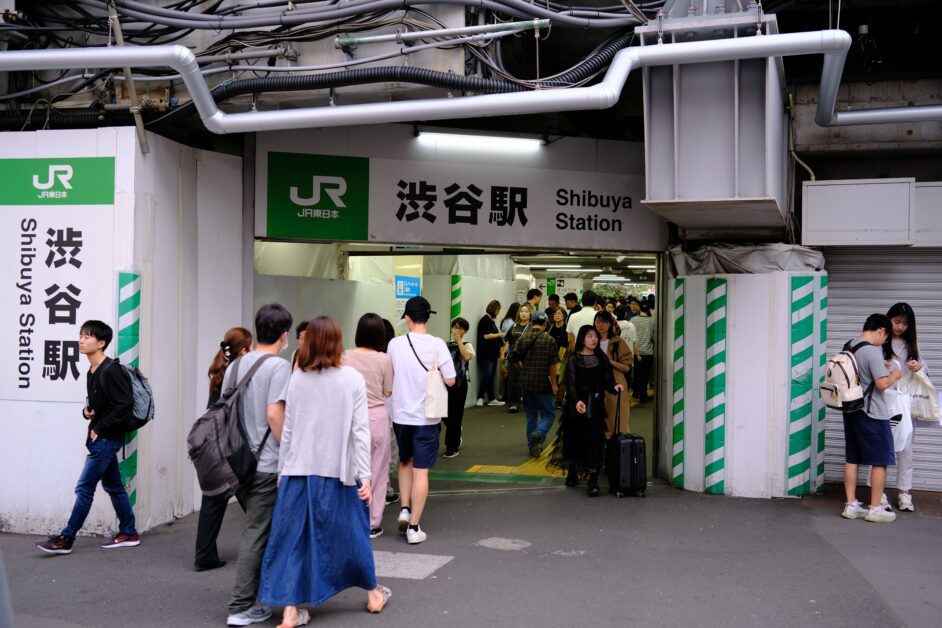
The Japan train ticket QR code transition is not limited to JR East alone — seven private rail companies in the Kanto region around Tokyo are similarly looking to adopt QR codes for their train tickets.
The seven private operators — including Tobu Railway and Keikyu Corp. — have observed that they have “yet to determine the size” of their QR code tickets. Given JR East’s testing experience showing Edmondson-size QR codes produce scanning errors, these private operators are likely to follow the larger 57.5 mm × 85 mm format once they complete their own testing.
Tobu Railway serves destinations including Nikko — one of Japan’s most important UNESCO World Heritage Sites and a common day trip from Tokyo for Indian tourists. Keikyu Corp. serves Yokohama, Kamakura, and Narita Airport. Both operators are among the most Indian-relevant private railways in the Kanto network.
The combination of JR East and seven private operators transitioning to QR codes means that the Edmondson ticket will likely vanish from major railroads around Tokyo’s capital in the near future — possibly by 2028 at the outside.
What This Means for Indian Travelers to Japan
The Japan train ticket QR code change from spring 2027 is largely transparent for the majority of Indian travelers to Japan — because most already use IC cards rather than paper tickets for day-to-day transit.
If you already use Suica or other IC cards: No change. IC cards continue working at all gates unaffected by the QR code transition.
For short-distance ticket purchases: From spring 2027, the physical ticket will be larger and scanned rather than inserted. The purchase process at ticket vending machines will be largely similar — buy your ticket, receive it from the machine, hold it to the scanner rather than inserting it.
For train ticket collectors: Indian rail enthusiasts visiting Japan before spring 2027 can collect authentic Edmondson magnetic tickets as souvenirs from JR East ticket machines. With the Edmondson ticket’s 155-year continuous history ending in spring 2027, these physical tickets will become genuine historical artefacts of the world’s most celebrated railway culture.
Practical recommendation: Get a Suica card loaded with ¥2,000–3,000 at Narita or Haneda Airport immediately on arrival. It covers all Tokyo subway, JR, bus, and even convenience store purchases — the most versatile transit tool in Japan. UPI does not work in Japan — carry Japanese yen for cash purchases. For travel insurance covering Japan trips, SafetyWing Nomad Insurance provides comprehensive coverage at affordable daily rates for Indian travelers.
FAQs — Japan Train Ticket QR Code 2027
Q: When will JR East replace magnetic train tickets with QR codes?
JR East will replace traditional magnetic Edmondson tickets for short-distance rides with larger QR code tickets in spring 2027. The new Japan train ticket QR code will measure 57.5 mm by 85 mm — three times the size of the current Edmondson ticket — after testing revealed that an Edmondson-size QR code produced frequent scanning errors because passengers’ fingers accidentally covered the code when holding it to the scanner. Seven private rail companies in the Kanto region are also planning the same transition.
Q: Why is JR East abandoning the Edmondson ticket after 155 years?
JR East is transitioning to the Japan train ticket QR code system for two primary reasons. First, to lower maintenance costs for ticket gates — the magnetic slot mechanism is mechanically complex, expensive to maintain, and prone to jamming. QR codes eliminate the physical insertion process and the jamming risk. Second, for environmental benefit — JR East currently recycles 160 tons of used tickets annually, with each magnetic ticket requiring the arduous removal of the magnetic layer before recycling. QR code tickets eliminate this step entirely.
Q: Will the JR East Suica IC card continue working after the QR code transition?
Yes — Suica and all other IC transit cards continue working after the spring 2027 Japan train ticket QR code transition. The QR code change only affects passengers purchasing individual paper tickets for short-distance rides. Users of IC transit cards — currently 95% of JR East passengers — will notice no change at ticket gates. Indian tourists are recommended to use Suica for all Tokyo transit regardless of the QR code transition.
Final Word
The Japan train ticket QR code transition from spring 2027 ends a 155-year railway heritage that connects Japan’s modern Shinkansen era directly to Thomas Edmondson’s 1830s Lancashire stationmaster innovation. JR East President Yoichi Kise’s public expression of personal sorrow at the Edmondson ticket’s end — from a man who collected them himself
— captures exactly why this operational change is also a cultural moment for Japan. For Indian travelers, the practical advice remains simple: get a Suica card at the airport, use it for everything, and if you have any love for railway history, buy an Edmondson magnetic ticket from a JR East vending machine before spring 2027. You will be holding a piece of global transport heritage that has outlasted empires.
Also Read:
- Japan Haneda Airport Rules — 30-Min Bag Deadline September 1
- ANA Japan Flights India 2026 — Hello Blue Sale Delhi from ₹40K
- Japan Visa Cover Letter Indians — Complete Guide 2026
Official Sources:
 Thai Airways Flood Waiver 2026: Free Date Change Sept 26–Oct 11, Same Route and Class

AirAsia Thailand 2026: Analysts Warn AAV Faces Risk From Malaysian Parent’s Fuel Crisis

Suvarnabhumi Baggage Delay 2026: Thai Airways Backlog Sept 26–27, Contact Numbers
Bangkok Flooding 2026: All 50 Districts Disaster Zones, Airports Still Operating

Thai Airways Flood Waiver 2026: Free Date Change Sept 26–Oct 11, Same Route and Class
AirAsia Thailand 2026: Analysts Warn AAV Faces Risk From Malaysian Parent’s Fuel Crisis
Suvarnabhumi Baggage Delay 2026: Thai Airways Backlog Sept 26–27, Contact Numbers
Bangkok Flooding 2026: All 50 Districts Disaster Zones, Airports Still Operating

Aaseem Bhardwaj is a journalist, seasoned traveler and IT professional based in India. With firsthand travel experience across Southeast Asia, East Asia, Middle East and Europe, Aaseem founded Travel Man Today to provide reliable visa updates and travel news for Indian passport holders. He has personally traveled to Thailand, Vietnam, Malaysia, Japan, Singapore, Hong Kong, South Korea, UAE and Europe. Follow his travel vlogs on YouTube at @travelmantoday




Templates for Indians