Thailand Visa Agency Fraud 2026: Bangkok Raid Exposes Fake Bank Statements for European Visas
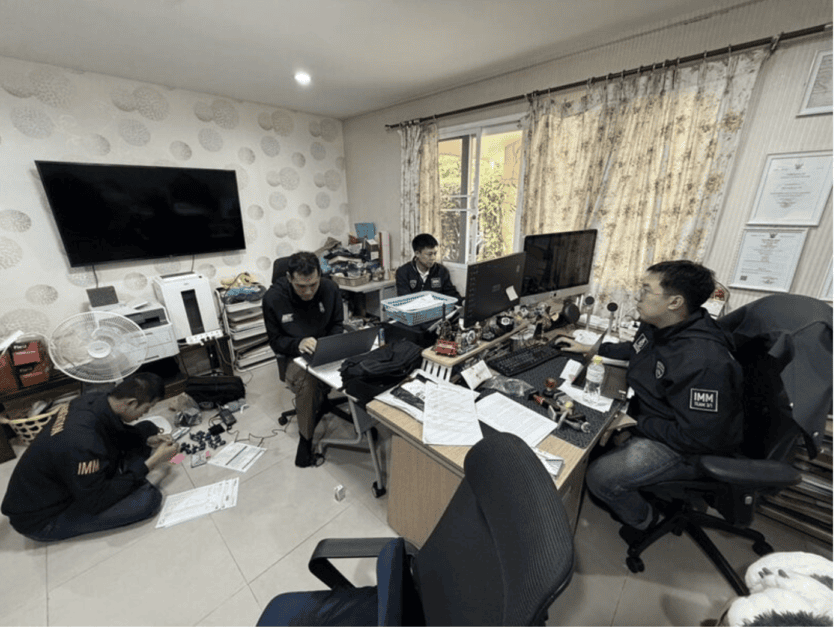
Thailand visa agency fraud 2026 — Thai Immigration Division 3 officers raid a Sai Mai district visa consultancy on August 17 after a European embassy flagged fake bank statements, seizing forged documents, fake bank stamps, and four computers from a business that charged THB 40,000 per customer.
Quick answer: Thai immigration police raided a Bangkok visa agency on August 17 after a European embassy flagged fake bank statements in Schengen visa applications. Over 400 customers may be affected. Each paid THB 40,000 (~₹96,000) for the service. Charges include document forgery under Thai criminal law.
Thailand visa agency fraud 2026 has been exposed in a major Bangkok police operation — immigration police raided a visa consultancy office in Sai Mai district after a European embassy alerted Thai authorities that several Thai applicants had submitted suspicious documents, particularly bank statements that appeared to have been falsified.
The Thailand visa agency fraud 2026 raid on August 17 is a direct warning for Indian travelers who plan to apply for Schengen or other European visas through third-party visa agents in Bangkok or elsewhere in Thailand — and a reminder that fake bank statements are the single most common document fraud detected by European embassies, including those processing applications from Indian nationals.
For Indian travelers planning European trips from Thailand or India, our Schengen visa cover letter guide covers how to prepare legitimate documentation that passes embassy scrutiny.
What the Raid Found: Fake Stamps, Altered Transactions, 400+ Customers
Immigration Bureau deputy chief Pol. Maj. Gen. Phanthana Nuchanart ordered officers from Immigration Division 3 to execute a search warrant issued by the Min Buri Criminal Court at the Sai Mai visa consultancy.
Officers seized fake bank stamps and stamps belonging to various agencies, more than 20 suspected fake financial documents, four desktop computers and dozens of other forged documents, including salary certificates and bank statements. All items were seized for forensic examination and further investigation into other people involved.
The forgery operation was sophisticated in its execution but had a specific technical failure that triggered the European embassy’s alert. Officers compared the seized documents with records from the banks concerned and found similar irregularities in five cases. The names of the applicants did not match the actual bank account holders, while transaction records had been altered and did not correspond with information confirmed by the banks.
Investigators also found that the five applicants’ travel expenses were paid using the same foreign bank credit card number — a single point of financial traceability that connected multiple applications and helped identify the pattern.
Immigration Division 3 chief Pol. Maj. Gen. Songprod Sirisukha said preliminary inquiries indicated that more than 400 customers may have been affected. The company reportedly charged each customer THB 40,000 (~₹96,000), putting the total value of the suspected transactions at more than THB 16 million (~₹38 million).
The Charges: Criminal Code Sections 264, 265, 268, 251, 252
The Thailand visa agency fraud 2026 suspects face serious criminal charges under Thai law — not minor regulatory violations.
The suspects could face charges including jointly forging and using forged documents under Sections 264, 265 and 268 of the Thai Criminal Code, as well as forging official seals under Sections 251 and 252. Authorities said the exact charges will be determined after forensic examination of the seized evidence and further investigation.
Thai Criminal Code Sections 264–268 cover document forgery with penalties of up to three years imprisonment and/or fines. Section 265 specifically covers forgery of documents likely to cause damage to a third party — which is exactly what falsified bank statements submitted to a European embassy represent. Forging official seals under Sections 251 and 252 carries additional penalties for the stamp forgery component of the operation.
The criminal exposure is not limited to the visa agency operators. Applicants who knowingly submitted forged documents — even if they did not produce the forgeries themselves — face legal liability for using forged documents under Thai law and potential visa bans from the targeted European countries.
| Thailand Visa Agency Fraud 2026 — Raid Summary | Details |
|---|---|
| Date | August 17, 2026 |
| Location | Visa consultancy office, Sai Mai district, Bangkok |
| Authorising officer | Pol. Maj. Gen. Phanthana Nuchanart, Immigration Bureau |
| Court warrant | Min Buri Criminal Court |
| Items seized | Fake bank stamps, 20+ fake financial documents, 4 computers, forged salary certificates |
| Trigger | European embassy alerted Thai police to suspicious applications |
| Forgery detected | Names ≠ account holders; altered transaction records; single credit card for 5 applicants |
| Customers affected | 400+ |
| Fee charged per customer | THB 40,000 (~₹96,000) |
| Total value | THB 16 million (~₹38 million) |
| Charges | Criminal Code Sections 264, 265, 268 (forgery) and 251, 252 (official seal forgery) |
Why European Embassies Catch Fake Bank Statements
The Thailand visa agency fraud 2026 case illustrates exactly how European embassies detect forged financial documents — and why the detection rate is high enough to trigger a law enforcement referral.
Schengen embassies — and other European visa-issuing missions including UK, Switzerland, and Norway — routinely verify bank statements by cross-referencing the document format, typography, and account details against known bank templates. Modern bank verification tools allow embassy staff to identify:
Account holder name mismatches. As in this case, the names on the forged statements did not match actual account holders. Embassies in high-volume markets have direct verification arrangements with local banks for suspicious applications.
Transaction pattern irregularities. Bank transactions in forged statements often follow unrealistic patterns — large round deposits appearing immediately before the statement period, unusually consistent monthly amounts, or transaction descriptions inconsistent with the account type. In this case, altered transaction records did not correspond with information confirmed by the banks.
Typography and formatting. Each Thai bank has specific statement formats, fonts, and layouts that are well-known to embassy processing staff in Bangkok who review hundreds of Thai bank statements weekly. Incorrect fonts, misaligned text, or incorrect header formats are immediately visible.
Digital metadata. Forged documents submitted digitally often carry metadata revealing the editing software, creation date, and modification history — a PDF bank statement edited in Adobe Illustrator two days before submission is identifiable.
The shared foreign credit card number that connected five applications in this case is a different category of detection — it suggests the visa agency was using a single operational credit card to book the “travel expenses” that applicants were required to demonstrate for European visa purposes.
What This Means for Indian Travelers in Thailand Applying for European Visas
The Thailand visa agency fraud 2026 arrest is directly relevant for Indian travelers for two reasons.
Many Indian travelers apply for Schengen visas from Bangkok. Indian nationals living in Thailand on work permits, digital nomad visas, or long-stay arrangements often apply for European Schengen visas from Bangkok rather than from India — because they are legally resident in Thailand and the Bangkok Schengen processing queues can be faster than VFS centres in some Indian cities. The visa agencies implicated in this raid are the same agencies many Indian applicants use.
Fake bank statements are the most common India-origin Schengen rejection reason. European embassies processing Indian applicants consistently cite bank statement irregularities as the leading cause of Schengen visa rejection. The detection methods that identified the Thailand visa agency fraud 2026 operation are the same methods applied to Indian-origin applications — an insufficient or inconsistent bank balance is better documented with a legitimate six-month statement than covered with a forged one.
What to do instead: Apply for Schengen visas through VFS Global in India or Thailand using genuine documentation. If your bank balance is genuinely insufficient for a Schengen application, build it legitimately over 2–3 months before applying rather than using a visa agent who offers “financial document assistance.” Genuine bank statements, legitimate ITR, and a well-written cover letter are the correct approach.
For confirmed flight reservations needed for your Schengen visa application, a legitimate booking is available at flyinghelpline.com/flight-reservation/ for just ₹999. For a complete Schengen visa cover letter format, visit travelmantoday.com/visa-templates/ for ready-to-use legitimate templates.
The Consequences of Using Forged Documents
For the 400+ customers who paid THB 40,000 each for the visa consultancy service, the Thailand visa agency fraud 2026 exposure creates a serious multi-layered legal and travel risk.
European visa bans. Applicants identified as having submitted forged documents face multi-year Schengen visa bans — typically 5 years for a first offence, potentially permanent for repeat offenders. The ban applies across all 27 Schengen Area countries simultaneously. A Schengen ban also affects UK, Australia, USA, and Canada visa applications, as all of these countries ask applicants to declare previous visa refusals.
Thai criminal liability. Using forged documents — even if the applicant did not produce them — is an offence under Section 268 of the Thai Criminal Code. Applicants who knowingly used the service face potential prosecution in Thailand alongside the visa agency operators.
Passport flagging. Thai immigration maintains records of individuals associated with forged document cases. Passport holders connected to this investigation may face enhanced scrutiny at Thai border crossings and airports.
For Indian nationals in Thailand who used this visa agency and are uncertain about the status of their applications, the safest course is to consult a legitimate immigration lawyer — not another visa agency — before taking any further action.
FAQs — Thailand Visa Agency Fraud 2026
Q: What happened in the Bangkok visa agency raid on August 17?
Thai immigration police raided a visa consultancy office in Sai Mai district, Bangkok on August 17 after a European embassy alerted Thai police that several Thai applicants had submitted suspicious documents, particularly bank statements that appeared to have been falsified. Officers seized fake bank stamps, more than 20 suspected fake financial documents, and four desktop computers. Preliminary inquiries indicated that more than 400 customers may have been affected. The company charged each customer THB 40,000 (~₹96,000), with total transactions exceeding THB 16 million.
Q: How did the European embassy detect the fake bank statements?
Officers compared the seized documents with bank records and found that names on applications did not match actual account holders, while transaction records had been altered and did not correspond with bank-confirmed information. Investigators also found that five applicants’ travel expenses were paid using the same foreign bank credit card number — a single traceability point connecting multiple fraudulent applications. European embassies process hundreds of Thai and Indian bank statements weekly and have well-established verification protocols for detecting forgeries.
Q: What should Indian travelers do if they need a Schengen visa and their bank balance is low?
Apply through VFS Global in India or Thailand using genuine documentation. If your bank balance is insufficient for a Schengen application, build it legitimately over 2–3 months before applying — Schengen embassies look for consistent balance history, not a single high number. A well-written Schengen visa cover letter explaining your financial situation professionally, paired with genuine bank statements and ITR, is a significantly better strategy than falsified documents that carry criminal liability, visa bans, and the risk of permanent ineligibility for European and other major country visas.
Final Word
The Thailand visa agency fraud 2026 raid on August 17 is a clear enforcement signal — European embassies are active in flagging suspicious applications to Thai police, and the Thai immigration system responds with court warrants and criminal charges. For Indian travelers in Bangkok or India planning European visa applications, the message is unambiguous:
fake bank statements are detected, they carry criminal consequences in Thailand, and they produce multi-year Schengen bans that affect every subsequent international travel plan. Use legitimate documents, use VFS Global, and get the application right rather than paying THB 40,000 to get it rejected and banned.
Also Read:
- Schengen Visa Cover Letter Indians — Complete Guide
- Thailand Deportation Rules 2026 — Six Offence Categories
- How to Book a Dummy Ticket Online Free — Step by Step
Official Sources:
 Singapore Cruise Centre 2026: New HarbourFront Terminal Open, 720,000 Passengers in 10 Weeks
Bangkok Flood October 2026: Receding Across Capital, Suvarnabhumi 18% Backlog Cleared
China Accommodation Registration 2026: Indians Can Now Register Online, No Police Visit Needed

Thailand Baggage Screening 2026: Checked Bags Can Be Opened Without You From October 16

Singapore Cruise Centre 2026: New HarbourFront Terminal Open, 720,000 Passengers in 10 Weeks
Bangkok Flood October 2026: Receding Across Capital, Suvarnabhumi 18% Backlog Cleared
China Accommodation Registration 2026: Indians Can Now Register Online, No Police Visit Needed
Thailand Baggage Screening 2026: Checked Bags Can Be Opened Without You From October 16

Aaseem Bhardwaj is a journalist, seasoned traveler and IT professional based in India. With firsthand travel experience across Southeast Asia, East Asia, Middle East and Europe, Aaseem founded Travel Man Today to provide reliable visa updates and travel news for Indian passport holders. He has personally traveled to Thailand, Vietnam, Malaysia, Japan, Singapore, Hong Kong, South Korea, UAE and Europe. Follow his travel vlogs on YouTube at @travelmantoday





Templates for Indians