Dubai Al Maktoum Airport 2026: L&T and Mitsubishi Win 50km People Mover Contract
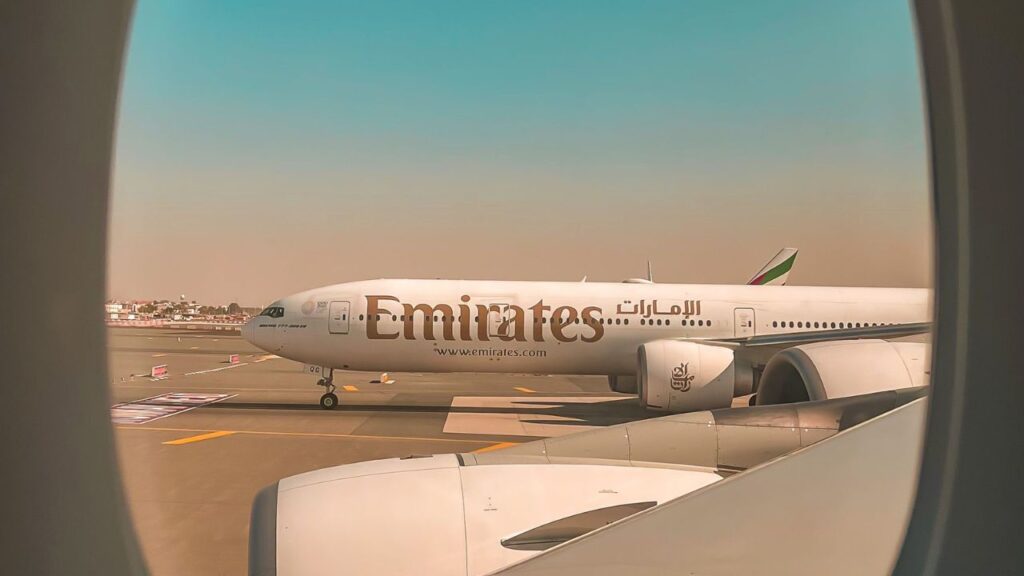
Dubai Al Maktoum airport 2026 APM contract — Dubai Aviation City Corporation awards the 50km underground automated people mover system to an MHI-L&T consortium, making it the world's largest airport people mover system at more than six times the length of Dallas Fort Worth's Skylink.
Quick answer: Dubai has awarded the Al Maktoum International Airport automated people mover (APM) contract to an Indian-Japanese consortium — India’s Larsen & Toubro and Japan’s Mitsubishi. The 50km underground system will be the world’s largest airport APM, over six times the length of Dallas Fort Worth’s current record holder. Phase 1 operational target: 2032.
Dubai Al Maktoum airport 2026 construction has reached a major milestone — Dubai Aviation City Corporation has awarded the contract for a 50km driverless people mover at Al Maktoum International Airport, to be delivered by a three-company consortium involving Mitsubishi Heavy Industries, MHI Mobility Engineering Services, and Indian engineering and construction group Larsen & Toubro.
The Dubai Al Maktoum airport 2026 APM contract is one of the largest single infrastructure contracts awarded in UAE aviation history — part of a $35 billion first-phase expansion of Al Maktoum International Airport that will eventually make it the largest airport in the world by passenger capacity, handling 260 million passengers annually against Dubai International’s current 95.2 million.
For Indian travelers — and the 3.5 million Indian nationals living in the UAE — the dual significance is clear: Larsen & Toubro, one of India’s most celebrated engineering conglomerates, has won a defining contract in the world’s most ambitious airport project. And when Al Maktoum opens Phase 1 in 2032, the airport that serves Indian travelers flying to and through Dubai will be a fundamentally different experience from today’s Dubai International.
For the current UAE airport context, see our UAE airports passengers 2026 guide.
The APM System: 50km, 14 Stations, Underground
The approximately 50km network will be more than six times the length of the current longest airport APM system, the approximately 8km Skylink at Dallas Fort Worth International Airport.
The scale of the Al Maktoum APM is genuinely extraordinary. To contextualise: the Skylink at Dallas Fort Worth — currently the world’s longest airport people mover — is 8 kilometres of elevated automated railway connecting DFW’s five terminals. Al Maktoum’s system will be 50 kilometres — six times longer, entirely underground.
The system will run under the apron of the entire airfield and the airport’s terminals. It will consist of several tracks, taking passengers from the terminals to the concourses.
The underground configuration is driven by the airport’s scale — 70 square kilometres of airport footprint, five parallel runways, five terminal buildings, and more than 400 aircraft contact stands. Surface-level people movers or buses at this scale would create unacceptable transit times. The underground APM allows passengers to move between terminals and concourses efficiently regardless of surface operations.
When completed, the APM system will consist of two sets of counter-rotating loops. The first will have a four-track loop set connecting the terminals with the concourses, while the second will be a twin two-track loop set connecting the two sets of concourses.
The 14-station total system — with 4 stations in Phase 1 — will cover all terminals and concourses across the three-phase expansion. Phase 1 alone includes the West Terminal (800,000 sq metres, 45 million passenger capacity) and Concourse 1 (100 contact gates).
The L&T Contract: India Builds the World’s Largest Airport APM
L&T will handle the design, procurement, testing and on-site construction of other subsystems. Its scope will also include onboard communication systems for vehicles, platform screen doors and depot equipment.
The Larsen & Toubro scope in the MHI-L&T consortium is the physical construction and integration layer — guideways, DC traction substations, power distribution, signalling, telecommunications, onboard communication systems, platform screen doors, and depot equipment. MHI and MHI-MESC handle the vehicle design, procurement, testing, and overall system integration.
The contract structure is a Design-and-Build arrangement — the consortium is responsible for the complete APM system from design through commissioning and operational readiness. This is not a supply-only contract but a full turnkey delivery.
For L&T, this is its largest single UAE infrastructure contract and one of the most high-profile international aviation projects any Indian company has ever won. L&T has built metro rail systems across India — the Hyderabad Metro, the Ahmedabad Metro, and systems in Chennai and Bangalore — and has been expanding its international infrastructure portfolio in the Gulf. The Al Maktoum APM is the flagship international project in that expansion.
The appointment follows the submission of bids in July 2025 and is the latest in a series of major contract awards issued by DAEP as work accelerates on Dubai’s largest aviation infrastructure project. To date, DAEP has awarded contracts worth around AED 13 billion, with construction progressing across several key packages, including enabling works, the second runway, and the initial structural foundations for passenger terminals and aircraft gates.
The AED 13 billion in contracts awarded to date — and the AED 55 billion ($15 billion) in additional contracts planned before end of 2026 — confirm that Al Maktoum’s construction is now past the planning phase and into accelerating physical delivery. The second runway is under construction. Terminal foundations are being laid. The APM contract is the passenger transit infrastructure that connects it all.
The Al Maktoum Vision: World’s Largest Airport by 2032
The Dubai Al Maktoum airport 2026 APM contract sits within a development plan that, when complete, will make Al Maktoum International the largest airport in the world by every significant metric.
Scale: 70 square kilometres of footprint — five times the size of current Dubai International Airport at Garhoud. For reference, Dubai International covers approximately 14 square kilometres.
Capacity: 260 million passengers per year at full build-out. Dubai International handled 95.2 million in 2025 — a record for any airport in the world. Al Maktoum at full capacity would nearly triple that figure.
Runways: Five parallel runways with quadruple independent operation — capable of handling departure and arrival operations simultaneously without runway conflicts.
Gates: 400+ aircraft contact stands — more than any airport currently operating.
Phase 1 timeline: 2032. The West Terminal, Concourse 1, two runways, and the 4-station APM Phase 1 are targeted for operational readiness in 2032. All Dubai International operations are planned to transfer to Al Maktoum within 10 years of Phase 1 opening.
Transfer from DXB: When Al Maktoum Phase 1 opens, Emirates will begin the largest airline hub migration in aviation history — moving its entire operation from Garhoud (DXB) to Dubai South (Al Maktoum). This migration has been planned across a 10-year transition window to avoid operational disruption.
| Dubai Al Maktoum Airport 2026 — Key Facts | Details |
|---|---|
| Airport name | Al Maktoum International (DWC/AMI) |
| Location | Dubai South, 50km south of Dubai city centre |
| Total footprint | 70 square kilometres |
| vs Dubai International | 5x larger |
| Capacity at completion | 260 million passengers per year |
| Runways | 5 parallel runways |
| Aircraft contact gates | 400+ |
| APM system length | 50km — world’s longest |
| APM stations | 14 total (4 in Phase 1) |
| APM contractor | MHI + MHI-MESC + Larsen & Toubro |
| APM system configuration | Underground, counter-rotating loops |
| Contracts awarded to date | AED 13 billion |
| Further contracts planned | AED 55 billion by end of 2026 |
| Phase 1 opening target | 2032 |
| DXB transfer to AMI | Within 10 years of Phase 1 opening |
What This Means for Indian Travelers Flying Dubai
The Dubai Al Maktoum airport 2026 development has long-term planning implications for every Indian traveler who uses Dubai as a destination or transit hub.
The 2032 timeline. When Al Maktoum Phase 1 opens in 2032, Indian travelers booking Dubai flights will begin routing through a new airport 50km south of the current Dubai International. The Dubai Metro Blue Line extension to Al Maktoum will provide the land connection — allowing travelers from Dubai city to reach the new airport by metro. The journey from central Dubai to Al Maktoum will be longer than the current DXB trip but fully metro-connected.
The Emirates hub. Emirates will operate from Al Maktoum as the Phase 1 airline anchor — meaning Indian travelers on Emirates flights to/through Dubai will be the earliest users of the new airport’s facilities. If you fly Emirates Delhi–Dubai–London or Mumbai–Dubai–New York today, by 2032–2033 that connection will operate through Al Maktoum.
The transit experience. The 50km underground APM, the automated check-in and immigration processes (Al Maktoum is designed with no counters — fully automated passenger processing), and the 400+ gate scale will produce a transit experience significantly different from today’s DXB. Better in theory — more automated, more capacity, more efficient connections. Different in practice — 50km of airport to navigate, terminal-to-terminal distances measured in kilometres rather than metres.
L&T’s win as India-UAE relationship signal. The selection of India’s Larsen & Toubro as the construction partner for the world’s largest airport APM is a commercial statement about India-UAE bilateral infrastructure confidence. For Indian travelers, it is also a reminder that the airport they will use in Dubai from 2032 was partly built by Indian hands.
Before any UAE trip, remember UPI does not work in the UAE — carry UAE Dirhams or a zero-forex international card. For travel insurance covering UAE flights and Dubai trips, SafetyWing Nomad Insurance provides comprehensive coverage at affordable daily rates for Indian travelers.
FAQs — Dubai Al Maktoum Airport 2026
Q: What APM contract has been awarded for Dubai’s Al Maktoum Airport?
Dubai Aviation City Corporation has awarded the contract for a 50km driverless people mover at Al Maktoum International Airport to a three-company consortium involving Mitsubishi Heavy Industries, MHI Mobility Engineering Services, and Indian engineering and construction group Larsen & Toubro. The approximately 50km network will be more than six times the length of the current longest airport APM system, the approximately 8km Skylink at Dallas Fort Worth International Airport.
Q: What is Larsen & Toubro’s role in the Al Maktoum Airport APM?
L&T will handle the design, procurement, testing and on-site construction of subsystems including guideways, DC traction substations, power distribution, signalling and telecommunications, onboard communication systems for vehicles, platform screen doors and depot equipment. MHI and MHI-MESC lead the APM vehicle design, procurement, testing, and overall system integration. The contract is a Design-and-Build arrangement with the consortium responsible for complete turnkey delivery from design through commissioning and operational readiness.
Q: When will Al Maktoum International Airport open and how big will it be?
Phase 1 of Al Maktoum International Airport is targeted for operational readiness in 2032. At full build-out, Al Maktoum will cover 70 square kilometres — five times the size of current Dubai International Airport — with five parallel runways, 400+ aircraft contact gates, and a capacity of 260 million passengers per year. The 50km, 14-station underground APM system will be the world’s largest. All Dubai International operations are planned to transfer to Al Maktoum within 10 years of Phase 1 opening.
Final Word
The Dubai Al Maktoum airport 2026 APM contract — 50km underground people mover, MHI-L&T consortium, world’s largest airport transit system — is the defining infrastructure contract of Dubai’s aviation generation.
When Phase 1 opens in 2032, Indian travelers flying Emirates from Delhi or Mumbai will be among the first to experience a terminal that represents the furthest reach of aviation infrastructure ambition in 2026.
The current UAE airports handled 1.13 billion passengers in the decade through 2025. Al Maktoum at full capacity will handle 260 million per year — building enough capacity to accommodate a decade’s worth of UAE passenger growth in a single airport. For Indian travelers, the most relevant near-term fact is that L&T is building it — and the longer-range fact is that from 2032 onwards, flying Emirates means flying through one of the most technologically advanced airports ever constructed.
Also Read:
- UAE Airports Passengers 2026 — 1.13 Billion in Ten Years
- Dubai Family Visit Visa Indians — Sponsor Parents, Earn Dh3,000
- Abu Dhabi Free Visa Indians — DCT Offer Until October 31
Official Sources:
- Gulf News — Dubai’s New Passenger Terminal at Al Maktoum Airport to Get 50km People Mover System
- Dubai Aviation Engineering Projects — DAEP Official
 Thailand Itinerary Indians 5 Days: Bangkok, Ayutthaya, Chiang Mai — ₹31,250 Cost Breakdown

Trusted Thailand 2026: What the Safety Certification Means for Indian Travelers

UAE Flights Disruption 2026: SpiceJet India Routes Delayed, Air Canada Suspends to March 2027
EU Hand Luggage Rules 2026: What Actually Changed — and What Hasn’t Yet
Thailand Itinerary Indians 5 Days: Bangkok, Ayutthaya, Chiang Mai — ₹31,250 Cost Breakdown
Trusted Thailand 2026: What the Safety Certification Means for Indian Travelers
UAE Flights Disruption 2026: SpiceJet India Routes Delayed, Air Canada Suspends to March 2027
EU Hand Luggage Rules 2026: What Actually Changed — and What Hasn’t Yet

Aaseem Bhardwaj is a journalist, seasoned traveler and IT professional based in India. With firsthand travel experience across Southeast Asia, East Asia, Middle East and Europe, Aaseem founded Travel Man Today to provide reliable visa updates and travel news for Indian passport holders. He has personally traveled to Thailand, Vietnam, Malaysia, Japan, Singapore, Hong Kong, South Korea, UAE and Europe. Follow his travel vlogs on YouTube at @travelmantoday






Templates for Indians