Seoul Incheon Airport 2026: World’s No. 2, Terminal 1 Renovation Starts 2028
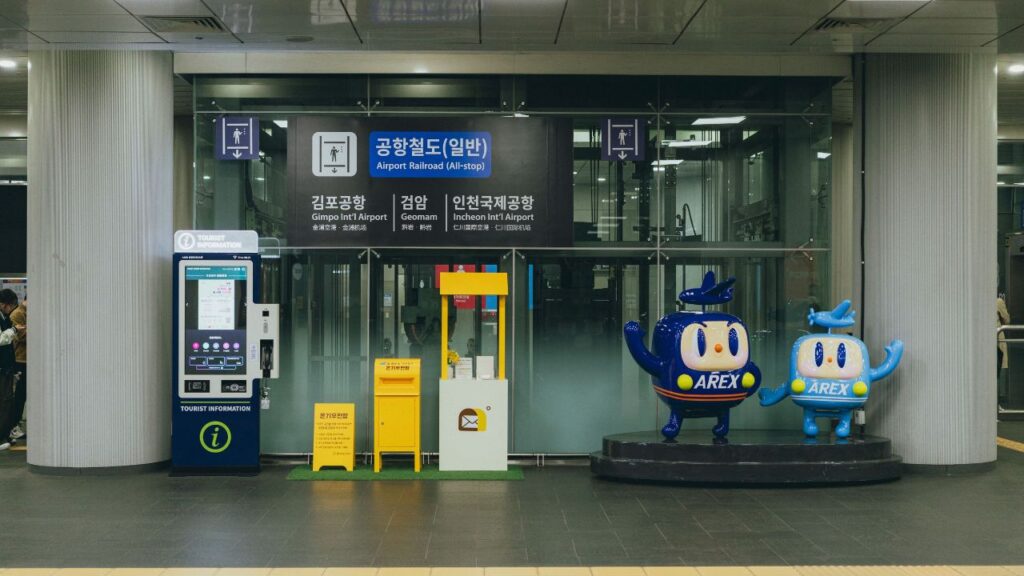
Seoul Incheon airport 2026 — ranked the world's second-best airport in the 2026 Skytrax World Airport Awards behind Singapore Changi, Incheon International Airport handled 38.39 million international passengers in H1 2026 as the Middle East conflict diverted passengers from Dubai through Seoul, while IIAC announced a 1.77 trillion won Terminal 1 renovation beginning in 2028 that will raise capacity from 54 million to 64 million passengers annually.
Quick answer: Incheon International Airport was ranked the world’s second-best airport in the 2026 Skytrax World Airport Awards, behind Singapore Changi. It handled 38.39 million international passengers in H1 2026, up 6.3% year-on-year — boosted by Middle East conflict diverting passengers from Dubai through Seoul. Incheon Airport Corporation plans to invest 1.77 trillion won (approximately ₹11,500 crore) to renovate Terminal 1, with design complete by September 2027 and construction beginning in 2028. Terminal 1 capacity will rise from 54 million to 64 million passengers annually.
Seoul Incheon airport 2026 has earned its world’s second-best ranking — the Incheon International Airport Corporation announced a comprehensive Terminal 1 renovation programme on September 1, confirming the airport’s investment commitment to maintaining its position as Northeast Asia’s premier hub even as passenger volumes surge to record levels from the Middle East conflict’s routing diversion effect.
The Seoul Incheon airport 2026 renovation announcement was made at Amsterdam’s Schiphol Airport on September 1 — a deliberate choice of venue, signalling that IIAC is studying Schiphol’s comprehensive redesign as the model for Incheon’s own Terminal 1 transformation. The airport operator plans to invest more than 1.77 trillion won in the project — approximately USD 1.29 billion or ₹11,500 crore at current exchange rates.
For Indian travelers who use Incheon as a transit hub between India and destinations in the Americas, Europe, or Oceania — or who visit Seoul directly for K-culture, medical tourism, and the wellness experiences we covered in our South Korea wellness tourism article — the Seoul Incheon airport 2026 renovation timeline has specific practical implications. See our South Korea wellness tourism 2026 guide for the India–Korea travel demand context.
The Skytrax Ranking: World’s Second-Best Airport
Seoul Incheon airport 2026 ranking — second globally in the Skytrax World Airport Awards, behind Singapore Changi — is the commercial context that makes the Terminal 1 renovation investment both rational and urgent.
Incheon’s second-place ranking reflects what frequent international travelers consistently report: the airport’s immigration efficiency, duty-free shopping quality, transit transit hotel and transit tour programme, cultural exhibition spaces, and general operational reliability place it in a different category from most Asian hubs. The Skytrax ranking is based on passenger surveys covering terminal comfort, cleanliness, facilities, wayfinding, and staff — all areas where Incheon consistently scores near the top globally.
The world’s second-best airport is also, in practical terms, one of the world’s most valuable transit hubs. Korean Air and Asiana Airlines — now consolidated under the Korean Air group following Asiana’s relocation to Terminal 2 in January 2026 — operate Incheon as their primary hub with onward connections to North America, Europe, and Oceania. Singapore Airlines, Japan Airlines, Vietnam Airlines, Vietjet Air, Jeju Air, and Emirates all operate from Terminal 1, providing Indian travelers with connection options across a wide range of carriers and destinations.
The Surge: 38.39 Million in H1, Middle East Conflict Effect
The Seoul Incheon airport 2026 passenger surge is the commercial pressure that is simultaneously vindicating the Terminal 1 renovation investment and accelerating its urgency.
The airport handled 38.39 million international passengers in the first half of 2026, up 6.3% year-on-year. The airport has seen a surge in popularity partly due to the US-Iran conflict, which has prompted airlines to divert passengers from Middle Eastern hubs such as Dubai to alternative routes through Asia. Seoul’s Incheon is one of the primary beneficiaries of this diversion, alongside Singapore Changi and Tokyo Narita.
The Middle East diversion effect on Incheon is commercially significant — passengers who previously flew Delhi–Dubai–London or Mumbai–Dubai–Toronto now fly Delhi–Seoul–London or Mumbai–Seoul–Toronto on Korean Air or code-share partner routes. Each diverted passenger represents a transit passenger using Incheon’s terminal facilities rather than Dubai International’s.
For Indian travelers, the Incheon surge has a practical implication: transit times at Incheon that were comfortable in 2024 may be tighter in 2026 as the airport runs at higher volumes. The Terminal 1 renovation — which separates the six departure and arrival halls into a unified system and upgrades the baggage handling to 100% screening — will improve throughput once complete. Until 2028 when construction begins, Indian transit passengers should allow 2.5–3 hours minimum for Incheon connections rather than the 1.5–2 hours that were comfortable in lower-volume years.
The Renovation Plan: What Changes in Terminal 1
The Seoul Incheon airport 2026 Terminal 1 renovation is the most significant airport infrastructure investment in Northeast Asia announced in 2026. The programme covers five specific upgrade areas.
Mechanical, electrical, telecommunications, and firefighting systems. Terminal 1’s core infrastructure is 25 years old — installed when the terminal opened in 2001. The renovation will replace these ageing systems to bring them in line with current safety regulations. Upgrading a 25-year-old terminal’s mechanical and electrical systems while keeping it operational is a complex engineering challenge — it is why the renovation is divided into at least three sequential zones rather than a single shutdown.
Baggage handling: selective to 100% screening. The current selective screening system — where luggage is inspected on a risk-based sample — will be replaced with 100% baggage screening. This is a global aviation security trend driven by international standards. The 100% screening requirement necessitates a complete redesign of the baggage handling infrastructure, which is the most operationally disruptive element of the renovation.
Unified departure and arrival halls. Terminal 1 currently has six separate departure and arrival halls — a configuration that creates wayfinding complexity and passenger flow inefficiency. The renovation will combine these into a unified system, improving passenger flow and reducing the walking distances that the current fragmented layout requires.
Duty-free and commercial area rearrangement. The renovation will rearrange duty-free and commercial areas to improve passenger flows. The current layout, designed for 2001-era passenger volumes and retail expectations, does not optimise the commercial revenue per square metre that the 64-million-capacity post-renovation terminal will require to justify its investment.
Capacity increase: 54 million to 64 million annually. Once the project is completed, Terminal 1’s annual passenger capacity is expected to rise from 54 million to 64 million. Combined with Terminal 2’s capacity, Incheon will have total annual capacity exceeding 100 million passengers — placing it in the same tier as Dubai International and Beijing Capital.
| Seoul Incheon Airport 2026 — Key Facts | Detail |
|---|---|
| Skytrax 2026 ranking | World’s 2nd best (behind Singapore Changi) |
| H1 2026 international passengers | 38.39 million (+6.3% YoY) |
| Growth driver | Middle East conflict diverting passengers from Dubai |
| Terminal 1 renovation investment | 1.77 trillion won (~USD 1.29B / ₹11,500 crore) |
| Design completion | September 2027 |
| Construction start | 2028 |
| Construction completion | By 2035 |
| Renovation model | Amsterdam Schiphol Airport redesign |
| Terminal 1 current capacity | 54 million passengers/year |
| Terminal 1 post-renovation capacity | 64 million passengers/year |
| Terminal 1 airlines served | Vietnam Airlines, Vietjet, Jeju Air, JAL, SIA, Emirates, others |
| Terminal 2 airlines | Korean Air, Asiana (moved Jan 2026), Jin Air, Air Busan, Air Seoul |
Which Terminal Do Indian Travelers Use at Incheon?
The Seoul Incheon airport 2026 terminal assignment for Indian travelers depends on which airline they are flying.
Terminal 1 — the terminal being renovated serves most airlines including Singapore Airlines, Japan Airlines, Vietnam Airlines, Vietjet Air, Jeju Air, and Emirates. Indian travelers connecting through Incheon on Singapore Airlines (from Singapore or Changi connections), Japan Airlines (for Tokyo connections), or Emirates (for Gulf-rerouted itineraries) will use Terminal 1.
Terminal 2 serves Korean Air and its subsidiaries and affiliates, including Asiana Airlines, which relocated there in January 2026, as well as Jin Air, Air Busan, and Air Seoul. Indian travelers flying Korean Air directly — Delhi–Incheon on KE on a Korea visit — will use Terminal 2. Indian travelers connecting onto Korean Air’s North America or European services from Incheon will also use Terminal 2.
The inter-terminal transfer at Incheon is via the underground automated people mover — approximately 8 minutes travel time between terminals. For Indian transit passengers with connections between Terminal 1 and Terminal 2 airlines, allow minimum 90 minutes beyond the people mover travel time for immigration processing (if required) and security re-clearing.
What Indian Travelers Should Know About Visiting Seoul
Seoul Incheon airport 2026 is not just a transit hub — for Indian travelers, South Korea is a genuine destination worth the direct visit.
Korean Air operates Delhi–Incheon direct flights. Asiana Airlines and Air India operate on the India–Korea corridor with varying routings. The Delhi–Seoul flight time is approximately 7 hours. Seoul’s K-culture tourism infrastructure — BTS landmarks, K-drama filming locations, K-beauty shopping at Myeongdong and Olive Young — is directly targeted at the Indian Hallyu fandom that has driven Korea’s emergence as India’s next major outbound destination.
The pharmacy tourism we covered in our South Korea wellness tourism article — foreign pharmacy spending up 206% in May 2026, dermatology clinics in Gangnam at Indian-attractive prices — is accessible directly from Incheon to Seoul via the AREX (Airport Railroad Express) in 43 minutes from Incheon Airport to Seoul Station, or 51 minutes to Hongdae.
Korean Won is required — UPI does not work in South Korea. Carry a Visa or Mastercard, or withdraw Korean Won at Incheon Airport on arrival. For travel insurance covering South Korea trips and Incheon transit connections, SafetyWing Nomad Insurance provides comprehensive coverage at affordable daily rates for Indian travelers.
FAQs — Seoul Incheon Airport 2026
Q: Why is Incheon Airport seeing a surge in passengers in 2026?
Incheon International Airport handled 38.39 million international passengers in the first half of 2026, up 6.3% year-on-year. The airport has seen a surge in popularity partly due to the US-Iran conflict, which has prompted airlines to divert passengers from Middle Eastern hubs such as Dubai to alternative routes through Asia. This diversion effect benefits Incheon, Singapore Changi, and Tokyo Narita as the primary alternative Northeast and Southeast Asian transit hubs for long-haul itineraries that previously routed through Dubai or Abu Dhabi.
Q: What is the Incheon Terminal 1 renovation plan and when will it happen?
The renovation, led by Incheon International Airport Corporation with an investment of more than 1.77 trillion won (approximately USD 1.29 billion), will replace mechanical, electrical, telecommunication, and firefighting systems installed 25 years ago. The terminal’s baggage handling system will also be upgraded from selective to 100% screening. Six separate departure and arrival halls will be combined into a unified system. The corporation plans to complete the design by September 2027 and break ground in 2028, with the renovation divided into at least three sequential zones to keep Terminal 1 operational throughout. Terminal 1’s annual passenger capacity will rise from 54 million to 64 million when complete by 2035.
Q: Which airlines operate from Terminal 1 versus Terminal 2 at Incheon?
Terminal 1 serves most airlines including Vietnam Airlines, Vietjet Air, Jeju Air, Japan Airlines, Singapore Airlines, and Emirates. Terminal 2 serves Korean Air and its subsidiaries and affiliates, including Asiana Airlines, which relocated there in January 2026, as well as Jin Air, Air Busan, and Air Seoul. The inter-terminal transfer via underground automated people mover takes approximately 8 minutes. Indian transit passengers with connections between terminals should allow a minimum of 90 minutes beyond the transit time for security and any immigration processing.
Final Word
Seoul Incheon airport 2026 — world’s second-best by Skytrax, 38.39 million passengers in H1, 6.3% growth driven by Middle East conflict diversion, 1.77 trillion won Terminal 1 renovation starting 2028, capacity rising from 54 to 64 million — is executing the infrastructure investment that its passenger volume surge and competitive positioning both demand.
The renovation model taken from Schiphol confirms IIAC’s ambition: not just maintenance but a comprehensive transformation that keeps Incheon competitive with Changi, Haneda, and Narita through 2035 and beyond.
For Indian travelers, the practical message is straightforward — Incheon is a world-class transit hub with direct Seoul access by AREX, the pharmacy and wellness tourism infrastructure we covered is 43 minutes from the terminal, and the Terminal 1 renovation from 2028 is a multi-year project that keeps the terminal operational throughout via sequential zone construction.
Also Read:
- South Korea Wellness Tourism 2026 — Pharmacies Beat Duty-Free
- South Korea Tourist Taxi 2026 — KTO 50% Off Until November
- AirAsia MOVE South Korea — KTO Promotes Busan, Gyeongju, Jeju
Official Sources:
- VnExpress — World’s 2nd Best Airport to Fully Renovate Terminal 1 by 2035
- Incheon International Airport Corporation
 Japan Travel Rules 2026: Tax-Free Changes and Kyoto Luggage Ban Explained
Thailand DTV Visa India Self-Application: Travel Agent Gets Approved in 26 Days Without an Agent
US Ebola Entry Ban 2026: 3 African Countries Restricted Until November
OCI Cardholders India Travel 2026: Can You Travel With Passport Update Pending?
Japan Travel Rules 2026: Tax-Free Changes and Kyoto Luggage Ban Explained
Thailand DTV Visa India Self-Application: Travel Agent Gets Approved in 26 Days Without an Agent
US Ebola Entry Ban 2026: 3 African Countries Restricted Until November
OCI Cardholders India Travel 2026: Can You Travel With Passport Update Pending?

Aaseem Bhardwaj is a journalist, seasoned traveler and IT professional based in India. With firsthand travel experience across Southeast Asia, East Asia, Middle East and Europe, Aaseem founded Travel Man Today to provide reliable visa updates and travel news for Indian passport holders. He has personally traveled to Thailand, Vietnam, Malaysia, Japan, Singapore, Hong Kong, South Korea, UAE and Europe. Follow his travel vlogs on YouTube at @travelmantoday


Templates for Indians

2 thoughts on “Seoul Incheon Airport 2026: World’s No. 2, Terminal 1 Renovation Starts 2028”