Thailand Baggage Screening 2026: Checked Bags Can Be Opened Without You From October 16
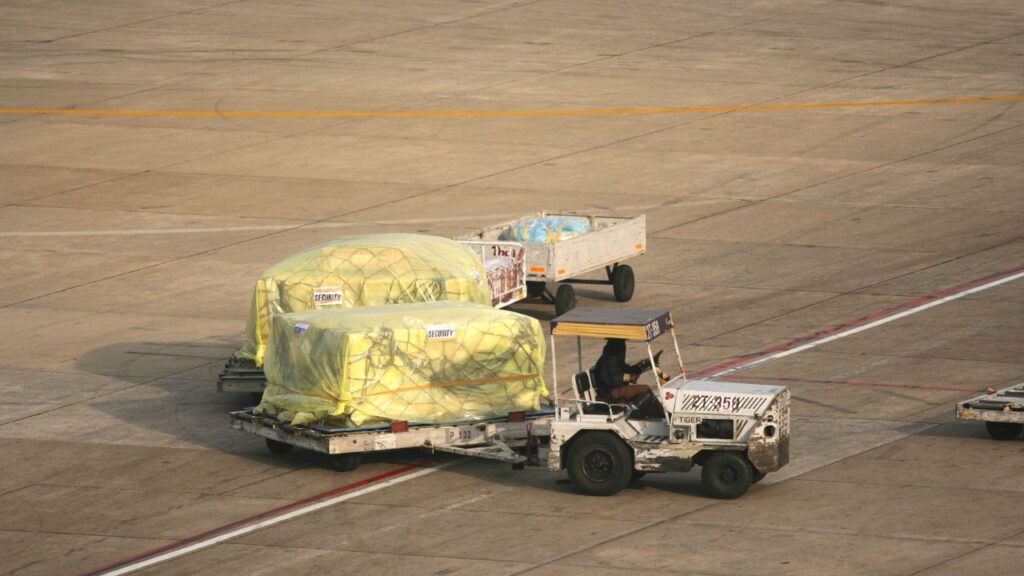
Thailand baggage screening 2026 — checked bags at Suvarnabhumi Airport pass through X-ray screening as the Civil Aviation Authority of Thailand's new regulation takes effect October 16, 2026, allowing security officers to open checked luggage without the passenger being present when screening detects suspicious or prohibited items, with CAAT recommending TSA-approved locks and advising passengers not to place valuables, power banks, or essential medications in checked baggage.
Quick answer: From October 16, 2026, airport security at all Thai airports can open your checked baggage without you being present if screening identifies a suspicious item. This is not routine — bags are only opened when X-ray or scanning detects explosives, prohibited items, dangerous goods, or other aviation security threats. The inspection is recorded, and a notification is placed inside your bag. Prohibited items found may be confiscated without return. Action required: use TSA-approved locks, do not pack valuables in checked bags, remove all prohibited items before check-in. The regulation applies to all departures from Thai airports.
Thailand baggage screening 2026 is changing on October 16 — the Civil Aviation Authority of Thailand’s (CAAT) Notification on the Screening of Checked Baggage to Be Transported by Aircraft B.E. 2569 takes effect, allowing airport security officers to open and manually inspect checked luggage without the bag’s owner being present when screening identifies a potential security concern. The regulation was published in February 2026 and has been in a preparation period since — airports, airlines, and ground handlers have had eight months to train staff, update procedures, and communicate the change to passengers.
The Thailand baggage screening 2026 change does not mean every checked bag will be opened. CAAT has specifically and repeatedly clarified that the new procedure applies only when security screening — X-ray scanning, automated detection systems, or security officer assessment — identifies an item considered suspicious, prohibited, or potentially harmful to aviation safety.
Routine baggage will pass through unchanged. The change eliminates the current requirement to locate the passenger before opening a flagged bag, which has historically delayed security processing and in some cases given time for items to be concealed or moved.
For Indian travelers departing Thailand — whether from Suvarnabhumi, Don Mueang, Phuket International, Chiang Mai, or any other Thai airport — this change affects every checked bag you send into the hold from October 16 onward. The practical actions required are specific and straightforward. See our Thailand THIM app 2026 guide for the broader Thailand aviation security context.
What the New Rule Actually Says
The Thailand baggage screening 2026 regulation is precise on when and how inspections occur.
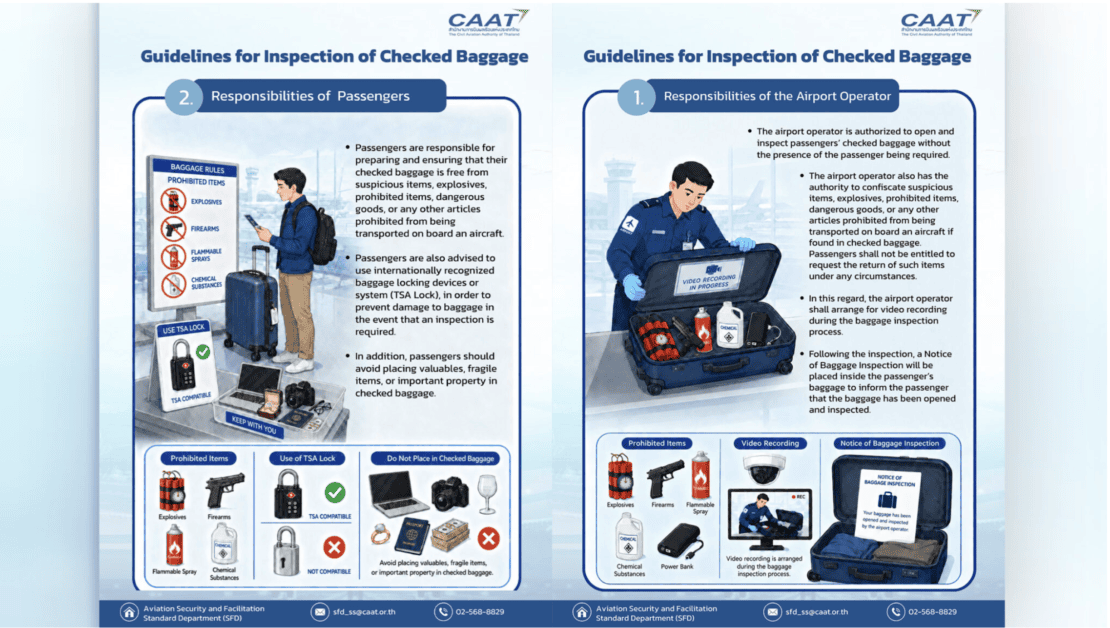
Trigger: Inspections are authorised only when security officers have reasonable grounds to suspect that a checked bag contains explosives, prohibited items, dangerous goods, or other items not allowed on aircraft. The trigger is reasonable suspicion from screening — not random selection, not profiling, not routine procedure.
Process: When a flagged bag is opened, the inspection takes place within designated secure areas in the baggage handling zone. The process is recorded — either through documentation or video — to maintain transparency and accountability.
Notification: After the inspection, a notification is placed inside the bag for the owner. Indian travelers who collect their bag at the destination and find a CAAT inspection notice inside have had their bag opened under this procedure.
Confiscation: If prohibited items are found during the inspection, officers may confiscate them without returning them and take further action in accordance with relevant laws, regulations, or procedures. There is no guarantee of return or compensation for confiscated items — which is why the pre-departure check is the most important action any traveler can take.
Who is responsible: Public airport operators are responsible for conducting the inspections under the regulation — meaning the inspection takes place in the airport’s secure baggage area, conducted by trained security personnel, not airline staff.
Why Thailand Is Doing This: The Drug Smuggling Context
The Thailand baggage screening 2026 change was accelerated in part by a specific and high-profile aviation security failure — a drug smuggling case involving a Thai Airways cabin crew member that demonstrated Thailand’s existing checked baggage procedures were inadequate.
LoyaltyLobby noted that the regulation was introduced partly in response to this case, which revealed that the requirement to locate passengers before opening flagged bags could create delays that compromise security effectiveness. The current system — requiring security to find the bag’s owner before opening it — is operationally inefficient and can give suspects time to be alerted.
More broadly, Thailand’s change aligns its baggage screening procedures with the standard already operating in Singapore, Japan, the United States, and other key aviation markets. In Singapore, Changi Airport has had passenger-absent checked baggage inspection authority for years as part of its world-class security framework. The US TSA has operated similar authority domestically since post-9/11 security reforms. Thailand is catching up with the international standard, and the CAAT has framed the change explicitly as bringing Thailand’s aviation security in line with international requirements.
What Indian Travelers Must Do Before October 16
The Thailand baggage screening 2026 changes require three specific preparation steps from Indian travelers departing any Thai airport from October 16 onward.
Action 1 — Switch to TSA-approved locks.
The most important practical change for Indian travelers who currently use combination locks or keyed locks on their checked baggage is to switch to TSA-approved locks before their next Thailand departure. TSA-approved locks — widely available on Amazon India and at luggage stores — have a secondary keyway that allows security officers to open the lock using a universal master key without cutting or breaking it. When security opens a TSA-locked bag, the lock is relocked afterward, and your bag remains secured. Without a TSA lock, security may cut your lock or force the bag open to access the interior — the bag may then travel the remainder of its journey unlocked. CAAT specifically recommends TSA-approved locks in its passenger guidance.
Action 2 — Remove all prohibited items from checked bags before check-in.
The practical consequence of passenger-absent inspections is that there is no opportunity to explain or justify a borderline item once the bag is flagged. Items that might be waved through with a passenger explanation at a manual check — high-capacity power banks, certain liquids, items that look like electronics components — will be assessed by the security officer alone, without your input. The safest approach is to ensure your checked bag contains zero prohibited items before check-in.
Review the CAAT prohibited items list for your specific airline and route — rules differ for domestic and international Thailand departures and for onward international connections.
Action 3 — Remove all valuables and essential medications from checked baggage.
The new inspection procedure does not create liability for damage or loss beyond the existing airline checked baggage liability framework. If valuables — jewellery, electronics, cash, medication — are in your checked bag and the bag is inspected, you have limited recourse if items are missing after the inspection. CAAT explicitly advises against placing valuables in checked bags. For Indian travelers carrying gold jewellery from Thailand purchases, electronics, or prescription medications, these items must travel in hand luggage only.
Items Most Likely to Trigger Inspection
The Thailand baggage screening 2026 procedure is triggered by specific categories of items detected during X-ray screening. Indian travelers should be particularly careful to avoid these categories in checked baggage.
Power banks and lithium batteries: High-capacity power banks and loose lithium batteries are aviation safety risks and must travel in hand luggage, not checked bags. X-ray scanners flag lithium battery shapes automatically. A power bank in your checked bag virtually guarantees a flag.
Aerosols and liquids above permitted limits: Large aerosol cans, certain cosmetic products in large quantities, and liquids above airline-permitted volumes are common flagging triggers at Thai airports.
Certain foods: Some Thai food products — dried shrimp paste, certain preserved items — have dense X-ray signatures that resemble explosive or prohibited materials. If you are packing Thai food in your checked bag, ensure packaging is intact and clearly labelled.
Tools and sharp implements: Multi-tools, cutting implements, and certain sporting equipment items may trigger additional screening. Check your airline’s specific permitted items list.
Counterfeit goods: Thai customs and airport security coordinate on counterfeit goods detection — fake luxury items found during security screening may be confiscated separately.
For travel insurance covering Thailand trips including coverage for checked baggage inspections, confiscated items, and baggage handling issues, SafetyWing Nomad Insurance provides comprehensive coverage at affordable daily rates for Indian travelers.
The Complaint Process
The Thailand baggage screening 2026 process includes a formal complaint mechanism for cases where the inspection results in problems or damage.
If your bag is opened and inspected and you believe the inspection caused damage, resulted in missing items, or was conducted improperly, you have two channels for complaint. The first is your airline — the airline is the contractual carrier responsible for your checked baggage and the first point of contact for any baggage handling issue. The second is CAAT’s formal complaint system, accessible through the CAAT website at caat.or.th.
Document any issues immediately on collection at the destination — photograph the bag and its contents before touching anything if damage or missing items are suspected. File the complaint at the airport baggage claim desk before leaving the airport.
| Thailand Baggage Screening 2026 — Key Facts for Indian Travelers | Detail |
|---|---|
| Effective date | October 16, 2026 |
| Regulatory authority | Civil Aviation Authority of Thailand (CAAT) |
| Regulation name | CAAT Notification on Checked Baggage Inspection B.E. 2569 (2026) |
| What changes | Bags may be opened without passenger present when flagged |
| When bags are opened | Only when screening detects suspicious/prohibited/dangerous items |
| Is it routine? | No — only triggered by screening flags |
| Inspection location | Designated secure areas in baggage handling zone |
| Documentation | Inspection recorded; notification placed in bag |
| Confiscation | Prohibited items may be confiscated without return |
| Recommended lock type | TSA-approved locks (openable with master key) |
| Do NOT pack in checked bag | Valuables, power banks, lithium batteries, essential medicines |
| Complaint channels | Airline first; CAAT complaint system (caat.or.th) |
| Applies to | All departures from Thai airports |
FAQs — Thailand Baggage Screening 2026
Q: Will my checked bag be routinely opened at Thai airports from October 16?
No. CAAT has specifically clarified that checked baggage will not be routinely opened under the new procedure. The rule takes effect October 16, 2026, and applies only when security screening — including X-ray checks, automated detection systems, or security assessment — identifies an item considered suspicious, prohibited, or potentially harmful to aviation safety.
Bags that pass standard screening without triggering a flag will not be opened. The change removes the previous requirement to locate the passenger before opening a flagged bag, which had caused operational delays in security processing.
Q: What should Indian travelers do to prepare for the new Thailand baggage screening rule?
Three actions are required before your next departure from a Thai airport from October 16 onward. First, switch to TSA-approved locks on your checked baggage — these allow security to open the lock with a master key without cutting it, and the bag is relocked afterward. Second, ensure your checked bag contains zero prohibited items before check-in
— review CAAT and airline prohibited items lists. Third, move all valuables (jewellery, electronics, cash), power banks, lithium batteries, and essential medications to your hand luggage. Do not pack anything in your checked bag that you cannot afford to lose or have confiscated.
Q: What happens if something is missing from my checked bag after a Thailand security inspection?
If your bag is opened under the new procedure and you find items missing or damage on collection, document the issue by photographing the bag and contents before leaving the baggage area. Report the issue at the airport baggage claim desk before departing the terminal. File a complaint with your airline — the carrier is the primary contractual party responsible for your checked baggage. You may also file a formal complaint with CAAT through its complaint system at caat.or.th if you believe the inspection was conducted improperly.
Final Word
Thailand baggage screening 2026 — effective October 16, CAAT Notification on Checked Baggage Inspection B.E. 2569, checked bags opened without passenger when screening flags suspicious items, inspection recorded, notification placed inside, prohibited items confiscated without return, TSA-approved locks recommended, no valuables or power banks in checked bags, applies to all departures from all Thai airports, complaint via airline or CAAT — requires three specific actions from every Indian traveler departing Thailand from October 16:
buy TSA-approved locks before travel, clear all prohibited items from checked bags, and move valuables and power banks to hand luggage. The rule does not affect how you arrive in Thailand — only how your bags are processed when you depart. Take the 15 minutes before check-in to review what is in your checked bag. It is substantially easier than filing a complaint after your bag has been opened and an item confiscated in a secure baggage area you cannot access.
Also Read:
- Thailand THIM App 2026 — TDAC, Visa Extension, 90-Day Report
- Bangkok Airport Taxi Indians 2026 — 2,000 Baht Scam Warning
- Thailand Visa Free 30 Days 2026 — September 15 India Confirmed
Official Sources:
- TAT News — Thailand Introduces Enhanced Baggage Screening Procedures
- Civil Aviation Authority of Thailand — caat.or.th
 Thailand Baggage Screening 2026: Checked Bags Can Be Opened Without You From October 16
Thailand THIM App 2026: One Platform for TDAC, Visa Extension, 90-Day Report and Discounts

US Visa Wait Times Indians 2026: B1/B2 Up to 12 Months — All 5 Consulates Compared
Austria Working Holiday Visa Indians: 18-30, 12 Months, No Job Offer, €195 — Complete Guide

Thailand Baggage Screening 2026: Checked Bags Can Be Opened Without You From October 16
Thailand THIM App 2026: One Platform for TDAC, Visa Extension, 90-Day Report and Discounts
US Visa Wait Times Indians 2026: B1/B2 Up to 12 Months — All 5 Consulates Compared
Austria Working Holiday Visa Indians: 18-30, 12 Months, No Job Offer, €195 — Complete Guide

Aaseem Bhardwaj is a journalist, seasoned traveler and IT professional based in India. With firsthand travel experience across Southeast Asia, East Asia, Middle East and Europe, Aaseem founded Travel Man Today to provide reliable visa updates and travel news for Indian passport holders. He has personally traveled to Thailand, Vietnam, Malaysia, Japan, Singapore, Hong Kong, South Korea, UAE and Europe. Follow his travel vlogs on YouTube at @travelmantoday






Templates for Indians