Singapore Tourism Receipts 2026: S$7.21 Billion Drop — What It Means for Indians
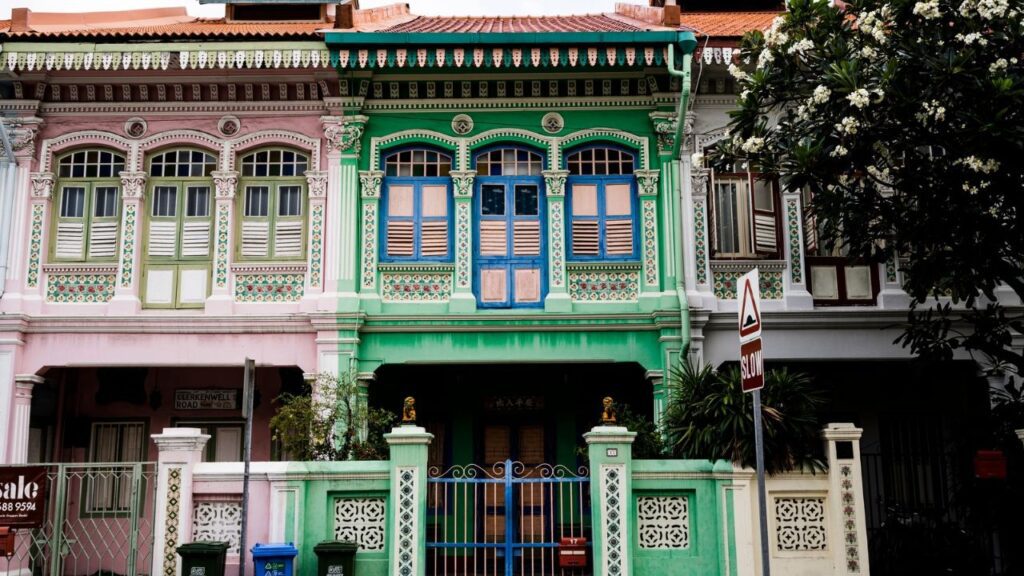
Singapore’s tourism receipts fell 6.2% to S$7.21 billion in Q2 2026, according to the Singapore Tourism Board — but India held its #3 position with 357,152 visitors and S$471.6 million in spending.
Singapore’s tourism receipts fell 6.2% to S$7.21 billion (~₹45,400 crore) in Q2 2026, with visitor arrivals down 6.6% to 3.76 million. India remained the third-largest source of visitors — and here’s why the slowdown could actually benefit Indian travellers planning a Singapore trip.
Singapore Tourism Receipts 2026: The Official Numbers
Singapore’s tourism receipts for Q2 2026 (April–June) came in at S$7.21 billion, marking a 6.2% decline year on year, according to Singapore Tourism Board (STB) figures released on October 15, 2026.
Visitor arrivals in the same period fell 6.6% to 3.76 million. On a quarter-on-quarter basis, the drop was even sharper — spending fell 15.4% from S$8.51 billion in Q1 2026, reflecting a difficult mid-year period for global tourism.
Despite the Q2 weakness, Singapore’s first-half 2026 performance remained largely stable. Total tourism receipts for January–June 2026 reached S$15.71 billion (~₹9.9 lakh crore), down just 0.3% from the same period last year. Arrivals for the half-year stood at 8.19 million, down 1.7%.
Why Singapore Tourism Slowed in Q2 2026
The STB was direct about the causes behind the Singapore tourism receipts 2026 decline.
“The performance comes amid a challenging global environment,” said STB, citing the “escalation of the Middle East conflict in Q1 contributing to higher fuel costs, reduced air capacity and economic uncertainties that have affected international travel, particularly from European source markets.”
It added: “Despite these headwinds, tourism spending remained relatively resilient.”
Two additional factors dragged Q2 numbers lower. First, the FIFA World Cup held in June and July reportedly redirected wagering budgets away from Singapore’s casinos and towards sports betting — contributing to the sharp 15.4% fall in sightseeing, entertainment, and gaming receipts. Second, reduced air capacity on some routes — driven by higher jet fuel costs — meant fewer seats into Changi Airport.
Spending Category Breakdown: What Fell and What Held Up
The Singapore tourism receipts 2026 data shows a clear split between Q2 weakness and H1 resilience across spending categories.
| Spending Category | Q2 2026 Change (YoY) | H1 2026 Change (YoY) |
|---|---|---|
| Sightseeing, Entertainment & Gaming | Down 15.4% | Up 2.3% |
| Food and Beverage | Down 9.8% | Down 6.2% |
| Accommodation | Down 8.4% | Down 5.3% |
| Shopping | Down 1.5% | Up 2.9% |
Shopping was the most resilient category — both in Q2 (down only 1.5%) and the strongest performer across H1 (up 2.9%). STB credited new luxury retail openings and stronger in-store experiences for supporting shopping spend. This is particularly relevant for Indian tourists, for whom shopping at Orchard Road, ION, Mustafa Centre, and Bugis Street is a core part of any Singapore trip.
India’s Position in Singapore Tourism 2026
India remained a critical source market for Singapore despite the overall dip. Read our full breakdown of India’s #3 ranking in Singapore tourism for the complete numbers.
| Metric | India (Q2 2026) | India’s Rank |
|---|---|---|
| Visitor arrivals | 357,152 | 3rd (after China, Indonesia) |
| Tourism receipts | S$471.6 million (~₹29,700 crore) | 4th |
| YoY change in receipts | Down 5.6% | Moderate decline |
China led all source markets with S$965.5 million in receipts (down 1.9%), followed by Indonesia at S$589.7 million (down 15.2%). India’s 5.6% dip is well within the range of normal market fluctuation and does not suggest any structural shift in Indian travel to Singapore.
What the Singapore Tourism 2026 Slowdown Means for Indian Travellers
A dip in overall tourist volumes and spending is not bad news for Indian travellers — it often creates better conditions on the ground. Here is the practical read for Indians considering Singapore in late 2026.
1 — Hotel rates are more competitive
Lower overall demand in Q2 typically flows into more competitive hotel pricing by Q3–Q4. Check rate comparisons on Agoda or Booking.com for October–December 2026 — Singapore mid-range hotels that were running at SGD 250–300 per night may now offer SGD 180–220.
2 — Casino crowds are thinner
The gaming sector saw a 15.4% receipt drop partly because FIFA World Cup shifted wagering elsewhere. Resorts World Sentosa and Marina Bay Sands saw fewer high-volume gamblers in Q2 — a quieter casino floor benefits casual visitors.
3 — Shopping is still strong — and getting better
Shopping receipts rose 2.9% in H1 2026, supported by new luxury retail openings. Indian tourists who budget for shopping will find a strong retail environment — and less of the overcrowding that marked peak 2023–2024 Singapore tourism.
4 — Flights from India remain well-connected
Air India, IndiGo, Singapore Airlines, and Scoot all operate direct flights from Delhi, Mumbai, Chennai, Bangalore, and Hyderabad to Singapore’s Changi Airport. Fares from India have eased slightly due to lower global demand — a good window for locking in tickets.
5 — UPI now accepted at select Singapore merchants
Unlike most countries, Singapore has enabled UPI payments at a growing number of hawker centres, shops, and restaurants. Look for the UPI QR code — but carry Singapore Dollars (SGD) as backup.
FAQs — Singapore Tourism Receipts 2026
Q1: Why did Singapore’s tourism receipts fall in Q2 2026?
The Singapore Tourism Board cited three main factors: the escalation of the Middle East conflict in Q1 2026 (which raised fuel costs and reduced air capacity), global economic uncertainty affecting European source markets, and the FIFA World Cup redirecting gaming budgets away from Singapore’s casinos to sports betting. The 15.4% fall in sightseeing, entertainment, and gaming was the largest single drag on Q2 receipts.
Q2: Is Singapore still worth visiting in 2026 despite the tourism slowdown?
Absolutely. The drop in arrivals and receipts reflects global headwinds, not a decline in Singapore’s quality as a destination. For Indian tourists, a slightly softer demand environment in late 2026 means better hotel pricing, thinner crowds at popular attractions, and more competitive flight fares. Shopping — one of the top activities for Indians in Singapore — actually grew in H1 2026.
Q3: How does Singapore’s tourism performance compare to other Southeast Asian countries in 2026?
UN Tourism data cited alongside the STB figures shows global international arrivals rose just 0.4% in H1 2026 — making Singapore’s 1.7% decline slightly worse than the global average but not dramatically so. Thailand, Malaysia, and Indonesia all faced similar headwinds from higher aviation costs and the ripple effects of Middle East instability on long-haul travel sentiment.
Also Read
???? Singapore Tourism 2026: India Ranks 3rd — Key Numbers for Indian Travellers
???? Japan Raises Saudi Arabia Travel Alert 2026: Warning for Indians
???? Thailand Flood Warning October 2026: Essential Alert for Indian Tourists
Official Sources
???? Singapore Tourism Board — Q2 2026 Tourism Statistics
???? Straits Times — Singapore Q2 Tourism Receipts Report (October 15, 2026)
Final Word
Singapore’s tourism receipts 2026 dip is a story of global headwinds, not destination fatigue. The Middle East conflict, higher fuel costs, and the FIFA World Cup’s pull on gaming revenues created a difficult Q2 — but the first half as a whole stayed nearly flat. For Indian travellers, who make up the third-largest visitor group, the picture is stable. And with hotel rates easing and shopping still strong, late 2026 is a smart time to book that Singapore trip.
 Singapore Tourism Receipts 2026: S$7.21 Billion Drop — What It Means for Indians
Bangkok Flooding October 2026: Roads Submerged — What Indians Must Know
Laem Son National Park 2026: Thailand’s Hidden Beach Gem Opens for Tourism Season
Japan Saudi Arabia Travel Alert 2026: Essential Warning for Indians Visiting the Kingdom

Singapore Tourism Receipts 2026: S$7.21 Billion Drop — What It Means for Indians
Bangkok Flooding October 2026: Roads Submerged — What Indians Must Know
Laem Son National Park 2026: Thailand’s Hidden Beach Gem Opens for Tourism Season
Japan Saudi Arabia Travel Alert 2026: Essential Warning for Indians Visiting the Kingdom

Aaseem Bhardwaj is a journalist, seasoned traveler and IT professional based in India. With firsthand travel experience across Southeast Asia, East Asia, Middle East and Europe, Aaseem founded Travel Man Today to provide reliable visa updates and travel news for Indian passport holders. He has personally traveled to Thailand, Vietnam, Malaysia, Japan, Singapore, Hong Kong, South Korea, UAE and Europe. Follow his travel vlogs on YouTube at @travelmantoday





Templates for Indians