ALPA India West Asia Flights: Pilots Urge DGCA to Suspend Gulf Routes
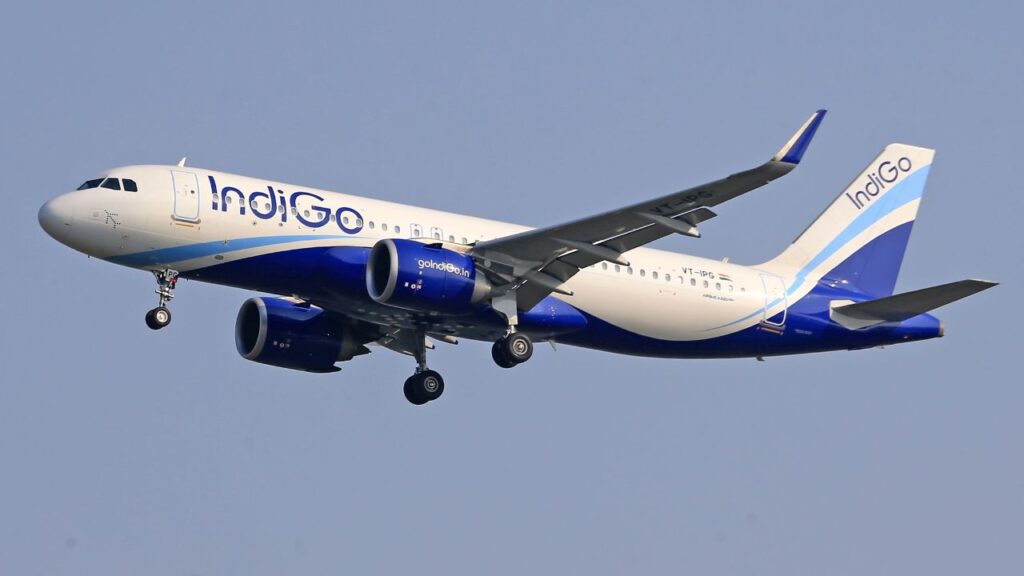
ALPA India West Asia flights suspension letter filed July 20, 2026 — president Captain Sam Thomas cites GPS spoofing, missile misidentification risk and war-zone insurance gaps.
ALPA India West Asia flights suspension request was formally filed with the Ministry of Civil Aviation and the Directorate General of Civil Aviation (DGCA) on July 20, 2026 — with the Airline Pilots’ Association of India urging regulators to immediately ground all commercial Indian carrier operations into the UAE and other high-risk Gulf destinations.
The ALPA India West Asia flights letter, written by association president Captain Sam Thomas, states that the security situation across the Persian Gulf has reached a critical juncture and that operating civilian airliners into active conflict zones exposes passengers and crew to complex and unpredictable hazards that cannot be managed through standard airline safety protocols.
What ALPA India Is Asking the DGCA to Do
The ALPA India West Asia flights request covers four specific regulatory actions. Each is presented as urgent and non-negotiable from a pilot safety perspective.
First — immediately suspend Indian carrier flights into identified high-risk conflict zones in West Asia until a centralised and authoritative risk assessment is conducted by the government. This applies specifically to routes to the UAE, Saudi Arabia, Bahrain, Kuwait, and other Gulf destinations currently experiencing or at risk of active military engagement.
Second — issue binding regulatory directives from the DGCA specifically governing commercial aviation operations in conflict zones. ALPA argues that current guidelines are insufficient for the threat environment that exists today.
Third — mandate disclosure and verification of valid war-risk insurance for all crew members on flights operating near conflict zones. The association argues that airlines may be operating without confirming that their crews are covered by adequate war-risk insurance — a serious regulatory gap during a period of active hostilities.
Fourth — initiate an inquiry into Air India’s decision-making on West Asia operations. ALPA has singled out Air India specifically, calling for the DGCA to examine the airline’s internal risk assessment process for continuing Gulf route operations.
| ALPA India West Asia Flights — Four Demands | Target Body |
|---|---|
| Suspend Indian carrier flights to high-risk Gulf zones | DGCA / Ministry of Civil Aviation |
| Issue binding directives for conflict zone operations | DGCA |
| Mandate disclosure of valid war-risk insurance for crew | DGCA |
| Initiate inquiry into Air India’s West Asia decision-making | DGCA |
The Safety Risks ALPA Has Identified
Captain Sam Thomas’s letter lays out a specific list of technical and operational hazards that make Gulf route flying dangerous in the current conflict environment. These are not general concerns — they reflect well-documented challenges that arise when civilian aviation operates near active military zones.
GPS spoofing and jamming. The conflict has generated widespread GPS disruption across the Persian Gulf region — a problem that directly affects the precision navigation systems that modern commercial airliners depend on for approach, departure, and en-route navigation. Multiple aviation authorities have issued NOTAMs about GPS unreliability across the region.
Risk of missile engagement or misidentification. ALPA explicitly cited three historical cases where civilian airliners were shot down during active conflicts: Iran Air Flight 655, shot down by the United States; Libyan Arab Airlines Flight 114, shot down by Israel; and Ukraine International Airlines Flight 752, shot down by Iran. Captain Thomas wrote that the consequences of a misjudgement in such an environment are potentially catastrophic.
Dynamic airspace restrictions. Conflict-related airspace closures and restrictions can change rapidly and without advance notice — leaving commercial jets in transitional airspace without clear routing guidance and forcing flight crews to make navigation decisions without adequate tactical intelligence.
Limited real-time situational awareness. Commercial flight crews do not have access to military-grade real-time threat intelligence. They cannot know, in real time, whether a missile has been launched near their route, whether a military engagement is occurring in their flight path, or whether their aircraft could be misidentified as a threat.
ALPA’s position is direct: operating in this environment amounts to wilful endangerment of human life if the risks are not formally assessed and managed by the government rather than left to individual airline decisions.
The Broader Context: What Has Already Happened
The ALPA India West Asia flights demand did not emerge from a vacuum. The current situation in July 2026 follows months of escalating disruption to Indian airline Gulf operations.
When the conflict first escalated in late February 2026, both Air India and IndiGo suspended all West Asia flights. Air India extended its suspension to include the UAE, Saudi Arabia, Israel, and Qatar in early March. The airline later suspended its Delhi–Tel Aviv route entirely through May 31. As conditions partially stabilised, Indian carriers resumed Gulf routes — but the July 12–20 escalation cycle has renewed concerns dramatically.
The Houthi attack on Abha airport, the UAE missile threat on July 12, the Bahrain airport disruption on July 16, and the Kuwait flight cancellations on July 20 have all occurred within a ten-day window. ALPA’s timing of the July 20 letter is directly tied to this fresh escalation cycle.
More than 50 international airlines — including British Airways, Singapore Airlines, KLM, Lufthansa, and Air France — have already suspended or significantly reduced Gulf routes. ALPA India’s core argument is that if sophisticated international carriers backed by major governments have pulled back, Indian carriers should not be continuing without a government-mandated safety review.
DGCA and Ministry Response
The DGCA and Ministry of Civil Aviation have not publicly responded to the ALPA India West Asia flights request as of the time of writing. Air India and IndiGo have both continued Gulf operations following their earlier temporary suspensions, though they have applied careful route monitoring and have adjusted specific services in response to individual airspace events.
The DGCA has broad regulatory authority over Indian carrier operations and can issue binding directives if it determines the safety threshold warrants intervention. Whether the July 20 ALPA letter triggers such a response depends on the government’s independent assessment of the threat environment.
What Indian Travelers Must Know Right Now
For Indian passengers with upcoming flights to the UAE, Saudi Arabia, Bahrain, Kuwait, or other Gulf destinations on Air India, IndiGo, or Air India Express, the ALPA India West Asia flights demand does not automatically mean your flight will be cancelled. As of July 20, 2026, no suspension order has been issued by the DGCA.
However, the situation is evolving rapidly. Travelers should take specific precautions.
Check your flight status before heading to any airport — through your airline’s app or official website. Monitor the DGCA’s official website at dgca.gov.in for any regulatory announcements. Follow NCEMA UAE at @NCEMAUAE and the Indian Embassy in the UAE at indembassyuae.gov.in for real-time safety updates.
If your flight is cancelled as a result of any regulatory suspension, you are entitled to a full refund or free rebooking under India’s Civil Aviation Requirements as restated in the Ministry’s July 19, 2026 passenger advisory.
Travel insurance covering conflict-related flight cancellations and regional disruptions is strongly recommended for any Gulf travel in the current environment. SafetyWing Nomad Insurance provides comprehensive coverage at affordable daily rates for Indian travelers. Remember UPI does not work in the UAE or Gulf — carry UAE Dirhams or use a zero-forex international card.
FAQs — ALPA India West Asia Flights July 2026
Q: What has ALPA India asked the DGCA to do about West Asia flights?
ALPA India, the Airline Pilots’ Association of India, wrote to the Ministry of Civil Aviation and DGCA on July 20, 2026 urging an immediate suspension of Indian carrier flights to the UAE and other high-risk Gulf destinations.
The association cited GPS spoofing and jamming, risk of missile engagement or misidentification, dynamic airspace restrictions, and limited real-time tactical intelligence as specific hazards. ALPA also demanded binding DGCA directives for conflict zone operations, mandatory war-risk insurance disclosure for crew, and an inquiry into Air India’s Gulf route decision-making.
Q: Has the DGCA suspended Indian airline flights to the Gulf in response to ALPA’s request?
No — as of July 20, 2026, the DGCA has not issued any suspension order in response to ALPA India’s West Asia flights request. Air India, IndiGo, and Air India Express are continuing Gulf route operations. The DGCA and Ministry of Civil Aviation have not publicly responded to the ALPA letter at the time of writing. Travelers should monitor dgca.gov.in and their airline’s official channels for any regulatory changes.
Q: What historical incidents does ALPA cite to support the suspension demand?
ALPA India cited three cases where civilian airliners were shot down during active conflicts: Iran Air Flight 655, shot down by the United States during a previous conflict; Libyan Arab Airlines Flight 114, shot down by Israel; and Ukraine International Airlines Flight 752, shot down by Iran in January 2020. ALPA president Captain Sam Thomas used these cases to argue that the current belligerents — the US, Israel, and Iran — have a documented history of targeting civilian aviation during conflict periods, making continued operations an unacceptable safety risk.
Final Word
The ALPA India West Asia flights suspension request filed on July 20, 2026 is one of the most serious safety challenges raised by an Indian aviation body in recent memory — and it arrives at a moment when the Gulf’s aviation environment is genuinely more dangerous than at any point since the conflict began.
Whether the DGCA acts on the request or maintains the current approach of carrier-level monitoring and route adjustment depends on an official government risk assessment that has not yet been made public. For Indian travelers, the message is clear: stay informed, check your flight status before every departure, carry travel insurance, and be prepared for rapid schedule changes if the regulatory environment shifts.
Also Read:
- India Flight Cancellation Rights — Ministry Advisory July 2026
- UAE Travel Advisory July 2026 — Full Airline Status
- SafetyWing Nomad Insurance — Full Review for Indians
Official Sources:
 Thailand Airport Baggage Rule 2026: Checked Bags Can Now Be Opened Without You

Japan Travel Rules 2026: Tax-Free Changes and Kyoto Luggage Ban Explained

Thailand DTV Visa India Self-Application: Travel Agent Gets Approved in 26 Days Without an Agent

US Ebola Entry Ban 2026: 3 African Countries Restricted Until November

Thailand Airport Baggage Rule 2026: Checked Bags Can Now Be Opened Without You
Japan Travel Rules 2026: Tax-Free Changes and Kyoto Luggage Ban Explained
Thailand DTV Visa India Self-Application: Travel Agent Gets Approved in 26 Days Without an Agent
US Ebola Entry Ban 2026: 3 African Countries Restricted Until November

Aaseem Bhardwaj is a journalist, seasoned traveler and IT professional based in India. With firsthand travel experience across Southeast Asia, East Asia, Middle East and Europe, Aaseem founded Travel Man Today to provide reliable visa updates and travel news for Indian passport holders. He has personally traveled to Thailand, Vietnam, Malaysia, Japan, Singapore, Hong Kong, South Korea, UAE and Europe. Follow his travel vlogs on YouTube at @travelmantoday





Templates for Indians



1 thought on “ALPA India West Asia Flights: Pilots Urge DGCA to Suspend Gulf Routes”