Dubai Airport Near Full Capacity Despite Middle East Conflict — CEO Confirms
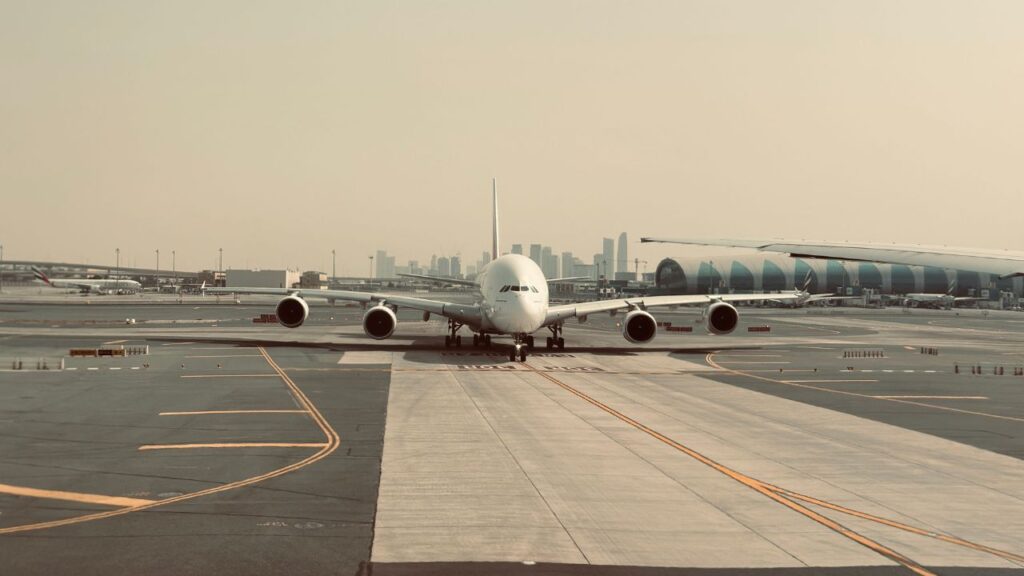
Dubai Airport near full capacity confirmed by Dubai Airports CEO Paul Griffiths on July 20, 2026 — Emirates operating 80–90% of schedule, 6M passengers handled since conflict began.
Dubai Airport near full capacity operations are continuing normally despite the worst regional aviation disruption in years — and Dubai Airports CEO Paul Griffiths has confirmed it publicly. Speaking to Bloomberg on the sidelines of the Farnborough International Airshow on July 20, 2026, Griffiths said he reviewed DXB’s operations that same morning and found services running as usual, with Emirates operating between 80 and 90 percent of its regular schedule and passenger traffic remaining busy as usual.
The statement is one of the most significant pieces of reassurance issued by a senior aviation executive during the current Middle East conflict cycle — and it matters directly for the millions of Indian nationals who use DXB as a transit hub or departure airport every month.
What Paul Griffiths Said — The Full Picture
Dubai Airport near full capacity status was confirmed by Griffiths across several key metrics. Here is exactly what the CEO said.
Emirates is operating 80 to 90 percent of its regular flight schedule — a remarkably high retention rate given that approximately 50 international airlines are currently operating at DXB, roughly half the normal complement. The gap left by suspended European and international carriers has been largely offset by Emirates’ expanded capacity.
Restrictions affecting some northern air corridors — including Iranian and Iraqi airspace — have not significantly disrupted Dubai’s operations. Airlines have been rerouting through Saudi Arabian airspace and southern corridors while maintaining safety and operational efficiency. These alternative routes will continue to be used until Iranian and Iraqi airspace fully reopen.
Demand for travel through Dubai has remained strong throughout the conflict period. Griffiths expressed confidence that DXB would return to full operational capacity once regional conditions stabilise.
The delayed return of major European carriers including British Airways and Air France is linked to government guidance and insurance requirements for flights to the region — not to operational issues at Dubai Airport itself. This distinction is important: the problem is not DXB’s capability to operate, but the policy and insurance environment that some foreign carriers face when operating to the Gulf.
The Numbers: 6 Million Passengers, 32,000 Movements, 213,000 Tonnes of Cargo
Since the regional conflict began, Dubai International Airport and Al Maktoum International Airport together have delivered operational numbers that underline the resilience of Dubai’s aviation infrastructure.
More than six million passengers have been handled across both airports. More than 32,000 aircraft movements have been completed. Over 213,000 tonnes of cargo have been processed.
These figures — covering the period since the conflict escalated — confirm that Dubai’s airports have not been passive during the disruption. They have actively absorbed traffic rerouted away from other Gulf hubs, stepped up capacity for carriers that have maintained operations, and processed cargo flows that would previously have moved through other regional airports now facing operational restrictions.
| Dubai Airport Near Full Capacity — Key Operational Data | Figures |
|---|---|
| Passengers handled (since conflict began) | 6 million+ |
| Aircraft movements | 32,000+ |
| Cargo processed | 213,000+ tonnes |
| Emirates schedule operating | 80–90% of normal |
| International airlines currently at DXB | ~50 (vs ~100 normally) |
| Alternative routing used | Saudi Arabian airspace and southern corridors |
| When full capacity expected | Once Iranian and Iraqi airspace reopen |
Why Dubai Airport Has Remained Operational
The Dubai Airport near full capacity performance during the conflict reflects three structural advantages that DXB holds over most other regional airports.
Emirates as a backbone carrier. With Emirates operating 80 to 90 percent of its schedule and actively offsetting the shortfall from suspended European carriers, DXB has a single-carrier anchor that no other major hub has at the same scale. Emirates serves 137 destinations across 72 countries and has been expanding its summer schedule even as international carriers pull back.
Southern corridor rerouting. When northern airspace through Iran and Iraq became operationally uncertain, airlines with DXB connections pivoted to Saudi Arabian airspace and southern corridor routing. This adds flight time and fuel cost, but it maintains the fundamental connectivity that keeps DXB functional as a hub. Crucially, Saudi Arabian authorities have kept their airspace open for civilian commercial operations — a key enabler of Dubai’s continued operability.
Physical and logistical infrastructure. Dubai International Airport is built to handle 90 million passengers annually — one of the largest airport capacities in the world. The sheer scale of DXB’s runways, terminals, ground handling, air traffic control capacity, and cargo infrastructure means it can absorb significant disruption without hitting operational limits. Even at half its normal international airline complement, DXB continues operating near full capacity because its own infrastructure ceiling is so high.
Why This Matters for Indian Travelers
For Indian nationals — whether Indian expats in the UAE, Indian tourists transiting through Dubai, or Indian passport holders flying via Dubai to Europe, Australia, or North America — the Dubai Airport near full capacity confirmation is directly relevant and reassuring.
DXB is the single most important aviation hub for Indian international travel. Millions of Indians transit through Dubai annually on Emirates, flydubai, Air Arabia, IndiGo, Air India, and dozens of other carriers. If DXB had been forced to reduce operations significantly, the knock-on impact on Indian aviation would have been severe — affecting seat availability, fares, transit connections, and cargo flows simultaneously.
Instead, with DXB operating near full capacity and Emirates absorbing much of the international carrier shortfall, the India-Dubai corridor remains functional. Air India and IndiGo have both been operating normally from Indian cities to Dubai throughout the conflict period. Air India Express added a new Navi Mumbai–Abu Dhabi service on July 15 — a sign that Indian carriers are expanding rather than contracting their Gulf presence.
The practical advice for Indian travelers using DXB remains unchanged: check your specific flight status before leaving home, arrive four hours early as advised for the current summer peak period, ensure your travel insurance is active and covers regional disruptions, and use official sources — NCEMA, your airline app, and dubaiairports.ae — for any real-time updates.
Remember UPI does not work in the UAE. Carry UAE Dirhams or use a zero-forex international card for all airport expenses in Dubai. For comprehensive travel insurance covering your UAE transit or Dubai trip, SafetyWing Nomad Insurance provides reliable coverage at affordable daily rates for Indian travelers.
What Needs to Happen for Full Capacity to Return
The path to full capacity at DXB is clear, according to Griffiths. Iranian and Iraqi airspace must fully reopen for commercial aviation before normal northern corridor routing resumes. Once that happens, the European and international carriers that have suspended Dubai routes — British Airways, Singapore Airlines, KLM, Lufthansa, Air France, Cathay Pacific, and others — will begin reassessing their reactivation timelines.
The government guidance and insurance requirements that Griffiths cited as the primary reason for European carrier delays are not DXB-specific issues. They are policy-level responses by European governments and aviation insurers to the broader regional security environment.
Once EASA and national aviation authorities update their conflict zone assessments following any de-escalation, the insurance-linked barriers that are keeping some carriers away will ease.
Until then, DXB continues operating near full capacity — a statement of operational resilience that few airports anywhere in the world could make in comparable circumstances.
FAQs — Dubai Airport Near Full Capacity July 2026
Q: Is Dubai Airport operating normally during the Middle East conflict?
Yes — Dubai Airports CEO Paul Griffiths confirmed on July 20, 2026 that Dubai International Airport is operating near its full operational capacity. Emirates is flying 80 to 90 percent of its regular schedule.
Passenger traffic has remained busy as usual. Since the conflict began, DXB and Al Maktoum International Airport together have handled more than six million passengers, 32,000 aircraft movements, and 213,000 tonnes of cargo. Alternative routing through Saudi Arabian airspace has allowed normal flight operations to continue despite northern corridor restrictions.
Q: Why are some European airlines still not flying to Dubai if DXB is operating normally?
Griffiths explained that the delayed return of carriers like British Airways and Air France is linked to government guidance and insurance requirements for flights to the region — not to operational issues at Dubai Airport itself. European aviation authorities and insurers have applied precautionary policies to Gulf-region flights during the conflict period. Once these policies are updated in response to any regional de-escalation, European carrier resumptions are expected to follow.
Q: How are airlines getting around the northern airspace restrictions?
Airlines operating to and from Dubai have been rerouting through Saudi Arabian airspace and southern corridors to avoid the Iranian and Iraqi airspace restrictions that have been in effect during the conflict. Griffiths confirmed these alternative routes maintain full safety and operational efficiency. The southern routing adds some flight time and fuel cost compared to northern corridor routes, but it has been sufficient to maintain Dubai Airport near full capacity throughout the disruption period.
Final Word
Dubai Airport near full capacity operations during the most significant Middle East conflict in recent aviation history is a statement of structural resilience that deserves recognition. Six million passengers, 32,000 aircraft movements, and 213,000 tonnes of cargo processed since the conflict began — all while operating with half the normal international airline complement.
For Indian travelers who depend on DXB as their gateway to the world, the message from Paul Griffiths is clear and direct: the airport is open, Emirates is flying, and Dubai is absorbing the disruption better than almost any other hub in the region. Check your specific flight, arrive early, carry travel insurance, and use Dubai’s aviation resilience to your advantage.
Also Read:
- UAE Travel Advisory July 2026 — Full Airline Status
- UAE Kuwait Flights Cancelled — Emirates Etihad Air Arabia July 20
- Dubai Customs Summer 2026 — 3 Million Passengers, 7-Second Screening
Official Sources:
 Thailand Airport Baggage Rule 2026: Checked Bags Can Now Be Opened Without You

Japan Travel Rules 2026: Tax-Free Changes and Kyoto Luggage Ban Explained

Thailand DTV Visa India Self-Application: Travel Agent Gets Approved in 26 Days Without an Agent

US Ebola Entry Ban 2026: 3 African Countries Restricted Until November

Thailand Airport Baggage Rule 2026: Checked Bags Can Now Be Opened Without You
Japan Travel Rules 2026: Tax-Free Changes and Kyoto Luggage Ban Explained
Thailand DTV Visa India Self-Application: Travel Agent Gets Approved in 26 Days Without an Agent
US Ebola Entry Ban 2026: 3 African Countries Restricted Until November

Aaseem Bhardwaj is a journalist, seasoned traveler and IT professional based in India. With firsthand travel experience across Southeast Asia, East Asia, Middle East and Europe, Aaseem founded Travel Man Today to provide reliable visa updates and travel news for Indian passport holders. He has personally traveled to Thailand, Vietnam, Malaysia, Japan, Singapore, Hong Kong, South Korea, UAE and Europe. Follow his travel vlogs on YouTube at @travelmantoday






Templates for Indians