Thailand E-Visa Indians 2026: Complete Guide to Fees, Types and Application
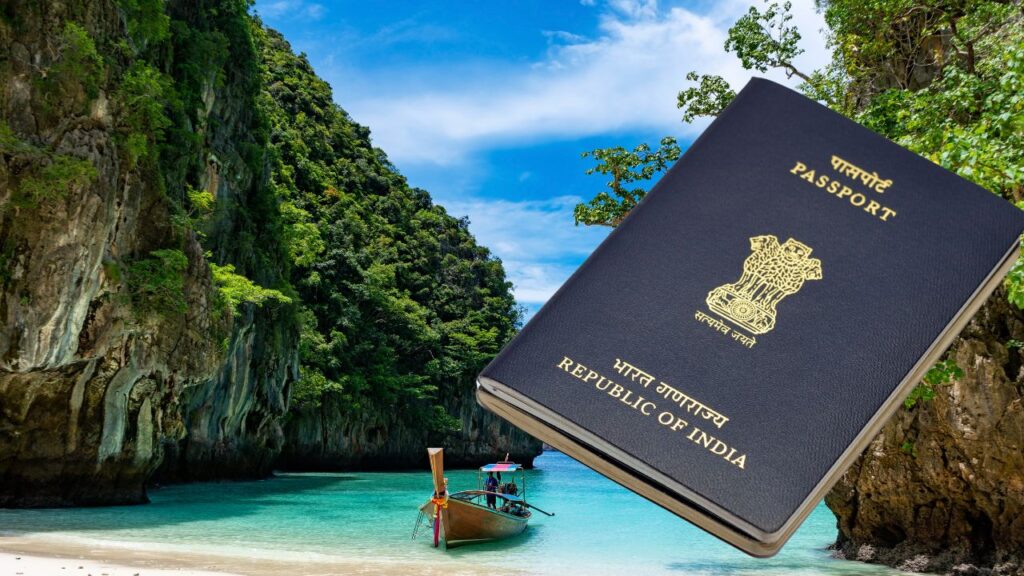
Thailand e-visa Indians 2026 — the thaievisa.go.th portal handles all visa types from a single account, replacing physical sticker visas and in-person embassy appointments across all 94 Thai missions worldwide.
Thailand E-Visa Indians 2026 runs through a single unified portal — thaievisa.go.th — which replaced the old system of physical visa stickers and in-person embassy appointments across all 94 Royal Thai embassies and consulates since January 2025. Every visa type from a two-week tourist trip to a five-year Destination Thailand Visa now goes through the same portal, the same account, and the same document upload system.
The Thailand e-visa Indians use is one of the most significant modernisation steps Thailand has made in its immigration infrastructure — and understanding how it works, what each visa type costs, and why applications get rejected saves time, money, and the frustration of a refusal when your travel dates are already booked.
How the Thailand E-Visa Portal Works: Six Steps
The Thailand e-visa Indians apply for through thaievisa.go.th follows a six-stage process — each stage must be completed correctly before the next becomes available.
Step 1 — Create an account. Register at thaievisa.go.th with a valid email address and a password meeting the portal’s character requirements. The activation link sent to your email expires in 30 minutes — use it immediately.
Step 2 — Select your embassy. The portal asks for the country that issued your passport, where you are currently located, and which Thai embassy should handle the file. For Indian passport holders, the relevant embassies are the Royal Thai Embassy in New Delhi, the Royal Thai Consulate-General in Mumbai, the Royal Thai Consulate-General in Chennai, or the Royal Thai Consulate-General in Kolkata — depending on where you reside.
Step 3 — Enter personal details. Your details are pulled from an OCR scan of your passport’s biodata page. Everything must appear in English with no hyphens, slashes, or symbols. If your passport has no surname — which applies to many South Indian passport holders — leave the family name field blank and enter your full name under the first name field. Always verify the OCR output before proceeding, as the system occasionally misreads zeros as the letter O or eights as the letter B.
Step 4 — Upload documents. Travel evidence, financial proof, accommodation confirmation, and your photograph are all uploaded here. File size and format requirements are strict — see the document specification section below.
Step 5 — Sign the declaration and pay. Review your application, sign the digital declaration, and pay the visa fee by international credit or debit card. Indian Visa and Mastercard cards work on the portal.
Step 6 — Download the approval. Once approved, your E-Visa Confirmation Document arrives as a PDF. Print it before you travel — you need it at check-in and at Thai immigration on arrival. Save a digital copy as backup.
One critical rule: you must be physically outside Thailand when you file the application. Filing from inside Thailand results in outright refusal.
Which Visa Type Do Indian Travelers Actually Need
The Thailand e-visa Indians need depends entirely on why they are going and how long they plan to stay. There are three main categories.
Tourist Visa (TR) — For Holiday and Tourism
The Tourist Visa comes in single and multiple entry. Single entry allows up to 60 days’ stay on a three-month visa. Multiple entry gives six months’ validity with unlimited entries, each capped at 60 days. Both require proof of at least 20,000 baht (~₹48,000) in accessible funds.
For Indian passport holders currently, visa-exempt entry is the first question to answer before applying for a Tourist Visa. India was upgraded to 30-day visa-free entry by Thailand’s Cabinet on July 14, 2026 — awaiting Royal Gazette publication. Until the Gazette publishes, the existing 60-day visa-free rules remain in force. Once published, Indian travelers who want stays longer than 30 days will need to apply for a Tourist Visa through thaievisa.go.th to get the 60-day per-entry allowance.
Non-Immigrant B Visa — For Work and Teaching
The Non-Immigrant B covers paid employment and teaching. Employment applications require a Ministry of Labour pre-approval letter (WP32), corporate registration documents for the employer, and a formal offer letter. Teaching applications need an approval letter from the relevant education authority, an institutional contract, and a criminal background check.
Both allow a 90-day stay on a three-month visa and require a minimum of 30,000 baht (~₹72,000) in available funds. Indian IT professionals, teachers, and other workers coming to Thailand on contracts must apply for this visa before their employment begins.
Destination Thailand Visa (DTV) — For Remote Workers, Freelancers and Long Stays
The DTV is Thailand’s most ambitious visa innovation — valid for five years, allowing 180 days per entry with one extension of a further 180 days at a cost of THB 1,900 (~₹4,400). It splits into three tracks.
The Workcation track is for remote workers and freelancers with income from outside Thailand. The Soft Power track is for those enrolled in certified Thai cultural programmes — cooking schools, Muay Thai academies, traditional medicine, music. The Dependent track covers the primary applicant’s legal spouse and unmarried children under 20.
Every DTV applicant must show 500,000 baht (~₹1.2 million) in savings held continuously for at least three months. The DTV does not permit working for Thai companies, providing services to Thai clients, or holding a Thai work permit.
| Thailand E-Visa Indians — Visa Type Comparison | Validity | Max Stay | Minimum Funds |
|---|---|---|---|
| Tourist (single entry) | 3 months | 60 days | 20,000 baht (~₹48,000) |
| Tourist (multiple entry) | 6 months | 60 days per visit | 20,000 baht (~₹48,000) |
| Non-Immigrant B (employment) | 3 months | 90 days | 30,000 baht (~₹72,000) |
| Non-Immigrant B (teaching) | 3 months | 90 days | 30,000 baht (~₹72,000) |
| DTV (Workcation) | 5 years | 180 days + 180-day extension | 500,000 baht (~₹1.2M) |
| DTV (Soft Power) | 5 years | 180 days + 180-day extension | 500,000 baht (~₹1.2M) |
| DTV (Dependent) | 5 years | 180 days + 180-day extension | Primary holder’s coverage |
Document Specifications: What Gets Flagged and Why
The Thailand e-visa Indians submit documents for has strict format requirements — and most rejections happen because documents fail technical specifications rather than because the applicant is ineligible.
Photographs: JPG format only, maximum 200 KB. White background, taken within the last six months, full face visible, neutral expression, no tinted glasses, no headwear unless for religious purposes. Scanned physical prints are rejected. Images that have been edited or retouched are caught automatically.
Passport scan: JPG, JPEG, or PDF, maximum 3 MB. Must show all four corners of the biodata page and the two-line machine-readable strip at the bottom. Cropped, blurry, or partial scans are rejected immediately.
Bank statements: PDF or JPG, maximum 3 MB. Must show your full name, the bank’s official stamp, and cover 3 to 6 months depending on the visa type. For Indian applicants, statements from nationalized banks (SBI, PNB, BOB) and private banks (HDFC, ICICI, Axis, Kotak) are all accepted — ensure the statement header clearly shows the bank’s name and logo.
Proof of current location: Utility bill, driving licence, residence permit, or a valid entry stamp showing where you currently reside. For Indian applicants applying from India, your Aadhaar card showing your current address, a utility bill, or your Indian driving licence are the most commonly accepted documents.
Signed declaration: JPG, JPEG, or PDF, maximum 3 MB. Must be signed clearly, high resolution.
Why Applications Get Rejected: The Most Common Mistakes
The Thailand e-visa Indians submit gets rejected for a consistent set of reasons — understanding these before you apply avoids the cost and delay of resubmission.
Unseasoned funds. For the DTV specifically, a large deposit made shortly before the application reads as borrowed money. The 500,000 baht must have been in your account for at least 90 days before you apply. Cryptocurrency, stock portfolios, and property valuations are not accepted as proof of funds regardless of value.
Thin Workcation evidence. A LinkedIn profile without supporting contracts, invoices, or an HR letter from a foreign employer is not sufficient for the Workcation DTV. Indian freelancers must provide active client contracts or bank statements showing regular freelance income — not just a professional profile.
Unaccredited Soft Power providers. Soft Power applications fail when the Thai cultural programme is not on the Department of Fine Arts or relevant authority’s accredited list. Confirm accreditation before enrolling and before applying.
Tax residency risk. Spending 180 days or more in Thailand in a calendar year makes you a Thai tax resident — meaning foreign income remitted into Thailand becomes taxable. DTV holders who plan to stay long periods should consult a tax professional before committing to a multi-180-day itinerary.
Fees: Why the Same Visa Costs Different Amounts
The Thailand e-visa Indians apply for carries base fees set in Thai Baht — but each embassy converts those fees independently, which is why the same DTV may cost USD 300 in one country and a much higher equivalent elsewhere.
The DTV base fee is THB 10,000 (~₹24,000). For Indian passport holders applying through Thai embassies and consulates in India, the fee is generally in the USD 300–350 range payable by international card. This is significantly less than some overseas posts — the Wellington consulate has been noted to charge considerably more in NZD equivalent.
Proof-of-funds requirements also vary by post. US consulates require USD 16,000 equivalent, Eurozone missions set the bar at €15,000, and London requires £11,000. These are not baht-to-currency conversions — they are independently set local benchmarks. Indian applicants applying from abroad must also provide proof of legal residence in their current country.
After Approval: TDAC Is Mandatory for Every Visit
Once your Thailand e-visa Indians receive is approved and the PDF is downloaded, one more step remains before every Thailand trip — the Thailand Digital Arrival Card (TDAC).
The paper TM6 landing card is gone. Every non-Thai national must complete the TDAC online before arrival — free at tdac.immigration.go.th. Complete it within 72 hours before your departure. The TDAC collects your flight details, advance passenger information, and your Thailand address, pre-loading your data into the immigration system and speeding up counter processing on arrival.
Save the TDAC QR code both on your phone and in printed form. At immigration at Suvarnabhumi, Don Mueang, or Phuket, having the QR code ready reduces counter processing time significantly.
Remember UPI does not work in Thailand — carry Thai Baht or use a zero-forex international card. For travel insurance covering your Thailand trip, SafetyWing Nomad Insurance provides comprehensive coverage at affordable daily rates for Indian travelers. For confirmed flight reservations needed for your Thailand visa application, a legitimate booking is available at flyinghelpline.com/flight-reservation/ for just ₹999.
FAQs — Thailand E-Visa Indians 2026
Q: Do Indian nationals need a Thailand e-visa in 2026?
Indian passport holders are currently eligible for 30-day visa-free entry to Thailand — approved by Cabinet on July 14, 2026 and awaiting Royal Gazette publication. Until the Gazette publishes, the existing 60-day visa-free rules remain at all Thai borders. The Thailand e-visa Indians need to apply for through thaievisa.go.th is required for stays longer than the visa-free allowance, for Non-Immigrant B employment or teaching purposes, and for the five-year Destination Thailand Visa (DTV). Confirm current entry requirements at thaievisa.go.th before every trip.
Q: How much does the Thailand Destination Thailand Visa cost for Indians?
The DTV base fee is THB 10,000 (~₹24,000) payable through the thaievisa.go.th portal. For Indian applicants applying through Thai embassies and consulates in India, the equivalent fee in USD is typically in the USD 300–350 range. Proof of funds required is 500,000 baht (~₹1.2 million) held for at least 90 days before application. The DTV is valid for five years with stays of up to 180 days per entry — extendable once per entry for another 180 days at THB 1,900.
Q: What documents do Indian passport holders need for a Thailand Tourist Visa?
For the single-entry Tourist Visa, Indian applicants need a passport scan showing all four corners and the MRZ strip, a JPG photograph on a white background taken within six months, a confirmed return flight booking, hotel accommodation confirmation or invitation letter, and bank statements covering at least three months showing a minimum balance of 20,000 baht (~₹48,000). For the multiple-entry Tourist Visa, bank statements covering three to six months and a full travel itinerary are typically required. Apply from your place of residence outside Thailand through the relevant Thai embassy or consulate in India.
Final Word
The Thailand e-visa Indians apply for in 2026 is a well-designed system that has genuinely simplified the visa process — one portal, all visa types, no embassy queues for most applications. The Tourist Visa gives 60 days per entry for Indian travelers who need longer than the visa-free allowance.
The Non-Immigrant B covers work and teaching. The DTV gives five years of 180-day stays for remote workers and freelancers who meet the 500,000 baht funds threshold. Start your application at least three months before you travel — get the funds sitting in your account, translate and notarise any non-English documents, and check document specifications exactly before uploading. The system rewards preparation and penalises shortcuts.
Also Read:
- India Thailand Visa Waiver — 30 Days Free, Arrivals to Surge
- Thailand Travel Advisory Indians July 2026 — Full Guide
- SafetyWing Nomad Insurance — Full Review for Indians
Official Sources:

Aaseem Bhardwaj is a journalist, seasoned traveler and IT professional based in India. With firsthand travel experience across Southeast Asia, East Asia, Middle East and Europe, Aaseem founded Travel Man Today to provide reliable visa updates and travel news for Indian passport holders. He has personally traveled to Thailand, Vietnam, Malaysia, Japan, Singapore, Hong Kong, South Korea, UAE and Europe. Follow his travel vlogs on YouTube at @travelmantoday



Templates for Indians