Lumpini Park Bangkok 2026: Smart Parking Trial Launches September 15
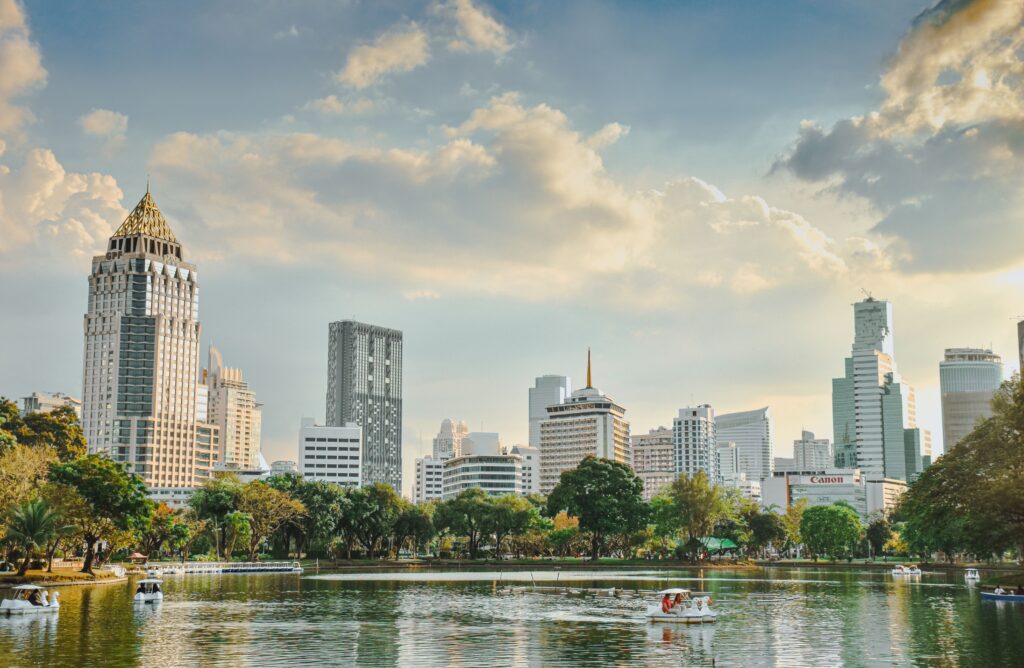
Lumpini Park Bangkok 2026 smart parking system trial from September 15 — automated licence plate recognition and digital cashless payment will free 377 car spaces and 191 motorcycle spots from all-day commuter use.
Lumpini Park Bangkok 2026 is getting a significant infrastructure upgrade — the Bangkok Metropolitan Administration will begin testing a new smart parking management system from September 15 to 30, with a full commercial launch planned for October 1, replacing a broken manual system that has allowed all-day commuters to monopolise 568 parking spaces at one of Bangkok’s most visited green spaces.
The Bangkok Metropolitan Administration will begin testing a new smart parking management system at Lumpini Park in September as part of efforts to ease chronic parking congestion and improve convenience and safety for park visitors.
The Lumpini Park Bangkok 2026 smart parking project targets a problem that park visitors and joggers have complained about for years — office workers and commuters from surrounding Silom, Sathon, and Ploenchit businesses parking at Lumpini for the entire working day, leaving genuine park users with no spaces during the morning 5am–9am and evening 5pm–8pm exercise peaks.
What the Smart Parking System Does
The upgraded system is designed to address the long-standing problem of motorists leaving their vehicles in the park’s car park for extended periods while travelling elsewhere, reducing the number of spaces available for visitors, particularly during the busy morning and evening exercise periods.
The Lumpini Park Bangkok 2026 smart parking upgrade has three core technology components.
Automated licence plate recognition (LPR). Cameras at entry and exit points automatically read and log every vehicle’s licence plate as it enters and leaves the car park. This creates a real-time, tamper-proof record of each vehicle’s dwell time — eliminating the manual ticketing process that allowed vehicles to stay indefinitely without consequence.
Time limits and escalating fees. A maximum parking duration will be enforced for the first time at Lumpini. The city will test an automated licence plate recognition system from September 15 to 30 before full launch on October 1. Overstaying beyond the maximum limit will trigger automatic additional charges calculated from the LPR entry timestamp.
Cashless digital payment. The new system accepts digital payment — eliminating the cash-handling queues at exit booths that add to congestion during peak periods.
The Scale of the Problem Being Fixed
The project targets all-day commuters to free up 377 car spaces and 191 motorcycle spots for actual park visitors.
The numbers tell the story clearly. Lumpini Park has approximately 568 combined car and motorcycle parking spaces. When all-day commuters fill those spaces by 8am, park visitors arriving for morning exercise, lunch breaks, or afternoon visits from 9am onward find no available parking. The problem is concentrated on working days when the surrounding Silom-Sathon business district generates the highest commuter parking demand.
The BMA said the Lumpini Park Bangkok 2026 smart parking upgrade is designed to ensure parking spaces at one of Bangkok’s most popular parks are used more efficiently for their intended purpose — park visitors, joggers, cyclists, and families using the green space rather than office workers commuting to nearby buildings.
The issue mirrors problems that Bangkok’s BMA has encountered at other public facilities — where proximity to commercial districts creates parking arbitrage that erodes public facility access. Lumpini’s location between the Silom business district and the Ploenchit-Rama IV corridor makes it uniquely susceptible to commuter parking overflow.
| Lumpini Park Bangkok 2026 Smart Parking — Key Details | Information |
|---|---|
| Trial period | September 15–30, 2026 |
| Full commercial launch | October 1, 2026 |
| Car spaces | 377 |
| Motorcycle spaces | 191 |
| Total spaces | 568 |
| Technology | Automated licence plate recognition |
| Payment | Digital/cashless |
| Problem targeted | All-day commuter parking by non-park visitors |
| Peak exercise periods | Morning: 5am–9am |
| Operator | Bangkok Metropolitan Administration (BMA) |
Lumpini Park 2026: A Green Space in Active Transformation
The Lumpini Park Bangkok 2026 smart parking upgrade is happening alongside the most significant transformation the park has undergone in decades.
The Lumpini Park Hawker Centre — modelled after Singapore’s hawker centres — opened on April 10, 2026 on Ratchadamri Road adjacent to the park. Operated by the BMA, it runs in two shifts: 5am to 4pm and 4pm to midnight, with 88 street food vendors per shift. The hawker centre gives park visitors a high-quality, affordable food destination immediately adjacent to the green space — matching the Singapore model of combining park access with quality street food infrastructure.
The Lumpini Dog Park opened on February 7, 2026 — a dedicated space inside Lumpini designed for pet owners and their dogs, combining Japanese-style garden calm with Thai garden aesthetics. The project was developed in partnership with the Japanese Chamber of Commerce Bangkok to mark their 70th anniversary.
Together — the smart parking system, the hawker centre, and the dog park — the Lumpini Park Bangkok 2026 improvements represent a coordinated BMA effort to upgrade one of Bangkok’s most central and most visited public spaces into a world-class urban park.
The BMA’s Wider Smart City Direction
The Lumpini Park Bangkok 2026 smart parking project is explicitly framed as part of the city’s wider push to modernise public facilities through technology. Bangkok Governor Chadchart Sittipunt has made technology-driven public space improvement one of the defining themes of his administration — from smart waste collection to digital queue management at public hospitals to the hawker centre’s structured food vendor licensing.
The smart parking system at Lumpini is a direct expression of this direction. By applying licence plate recognition, digital payment, and time enforcement to a public car park, the BMA is treating parking management as a data and technology problem rather than simply a capacity problem. The 568 existing spaces are sufficient for genuine park visitor demand — the problem is distribution and control, not total capacity.
This framing — using technology to maximise the utility of existing public infrastructure rather than building more — is increasingly the model for Bangkok’s urban management under Chadchart’s administration.
What This Means for Indian Travelers Visiting Lumpini Park
Lumpini Park is one of Bangkok’s most essential visitor experiences — 57 hectares of green space in the heart of Silom, free entry, open from 5am to 9pm daily, with swan pedal boats, monitor lizards, morning tai chi groups, jogging tracks, and the new hawker centre.
For Indian travelers staying in the Silom-Sathon hotel corridor or visiting the area for business, Lumpini Park is a 10-minute walk from BTS Sala Daeng or a 2-minute walk from MRT Lumpini Station — which makes the parking issue largely irrelevant for most visitors. MRT is the simplest way to reach Lumpini from anywhere in central Bangkok.
For Indian families arriving by taxi or Grab with children or elderly members, the October smart parking launch means from October 1, parking at Lumpini will be more reliably available during morning and evening peak periods than it currently is. The LPR system removes the manual barrier — you drive in, camera reads your plate, you pay digitally on exit. No ticket, no cash, no queue at the booth.
The Lumpini Park Hawker Centre opened in April 2026 — 88 vendors per shift serving Thai street food, seafood, grilled meats, noodles, and fresh fruit. It is the best-value food option adjacent to the park and a genuine addition to the Lumpini visit experience. Remember UPI does not work in Thailand — carry Thai Baht or use a zero-forex international card for the hawker centre, parking fees, and boat hire. For travel insurance covering your Bangkok trip, SafetyWing Nomad Insurance provides comprehensive coverage at affordable daily rates for Indian travelers.
FAQs — Lumpini Park Bangkok 2026 Smart Parking
Q: When does Lumpini Park’s smart parking system launch?
The city will test an automated licence plate recognition system from September 15 to 30 before full launch on October 1. The trial period runs for two weeks before the commercial system goes live. The smart parking upgrade will cover all 568 spaces — 377 car spaces and 191 motorcycle spots — across Lumpini Park’s car park. The BMA said the system is designed to free up spaces for genuine park visitors by preventing all-day commuter parking by office workers from surrounding Silom and Sathon buildings.
Q: How does the Lumpini Park smart parking system work?
The Lumpini Park Bangkok 2026 smart parking system uses automated licence plate recognition cameras at entry and exit points to log every vehicle’s arrival and departure time. Time limits will be enforced for the first time, with escalating fees for overstaying beyond the maximum permitted duration. Payment is digital and cashless at exit. The system eliminates the manual ticketing process that previously allowed all-day commuters to park indefinitely at no additional cost and take spaces intended for park visitors during morning and evening exercise peaks.
Q: What else is new at Lumpini Park Bangkok in 2026?
The Lumpini Park Hawker Centre — modelled after Singapore’s hawker centres — opened on April 10, 2026 adjacent to the park on Ratchadamri Road. It operates in two shifts with 88 street food vendors per shift from 5am to midnight. The Lumpini Dog Park opened on February 7, 2026 — a dedicated pet space inside the park combining Japanese garden aesthetics with Thai garden design. Together with the September smart parking upgrade, these three additions make 2026 one of the most significant years of Lumpini Park development in the park’s history.
Final Word
The Lumpini Park Bangkok 2026 smart parking trial from September 15 is a practical and overdue fix for one of central Bangkok’s most persistent public space management problems — all-day commuter parking that locks out genuine park visitors during the exercise peaks that define why Lumpini matters to Bangkok residents. Licence plate recognition, digital payment, and time limits are the right tools for the job.
Combined with the hawker centre, the dog park, and the MRT station at the park’s southwest gate, Lumpini in late 2026 is more accessible, better served, and more functional than at any point in recent memory. For Indian travelers visiting Bangkok, add Lumpini to the itinerary — and arrive by MRT Lumpini Station rather than by car.
Also Read:
- Bangkok Expo October 2026 — World Travel Culture Expo IMPACT
- Thailand Travel Advisory Indians July 2026 — Full Guide
- Thailand Tourist Arrivals 2026 — 17.36 Million by July 18
Official Sources:
 Thailand Tourist Fee 2027: 450 Baht (~₹1,125) From Q1 2027, Air First
Thailand Visa Land Border 2026: Two Entries Per Calendar Year — September 15 Does NOT Reset Your Count
Belarus e-Visa Indians 2026: India Added to Eligible List, Fee and Validity Not Yet Published
South Korea Tourist Complaints 2026: Record 1,753 in 7 Months — Taxis, Hotels, Overcharging
Thailand Tourist Fee 2027: 450 Baht (~₹1,125) From Q1 2027, Air First
Thailand Visa Land Border 2026: Two Entries Per Calendar Year — September 15 Does NOT Reset Your Count
Belarus e-Visa Indians 2026: India Added to Eligible List, Fee and Validity Not Yet Published
South Korea Tourist Complaints 2026: Record 1,753 in 7 Months — Taxis, Hotels, Overcharging

Aaseem Bhardwaj is a journalist, seasoned traveler and IT professional based in India. With firsthand travel experience across Southeast Asia, East Asia, Middle East and Europe, Aaseem founded Travel Man Today to provide reliable visa updates and travel news for Indian passport holders. He has personally traveled to Thailand, Vietnam, Malaysia, Japan, Singapore, Hong Kong, South Korea, UAE and Europe. Follow his travel vlogs on YouTube at @travelmantoday




Templates for Indians