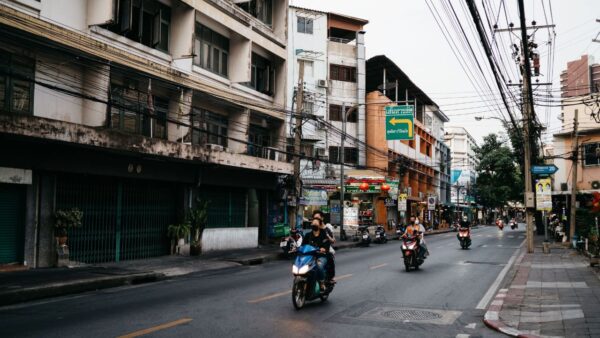
Thailand Super El Nino 2027: October Onset, Drought Risk and Crop Damage Forecast

Thailand Super El Nino 2027 — TMD warns of October onset and strongest El Niño since 1950, with temperatures rising 1.5–2.5°C by April 2027, Bangkok heat index potentially reaching 50–54°C and THB 62 billion in agricultural damage.
Thailand Super El Nino 2027 warning has been issued by the Thai Meteorological Department — Thailand is unlikely to escape the impact of a Super El Niño expected to hit the country in October and last through the early part of the 2027 rainy season, affecting crops, rice plantations and water consumption.
Surangpong Paraphan, director of the Weather Forecast Division at the Thai Meteorological Department, said the US National Oceanic and Atmospheric Administration (NOAA) has forecast a very strong El Niño developing between October and December this year — potentially the strongest since 1950. The Thailand Super El Nino 2027 event is expected to weaken by early 2027 before easing into a mild El Niño, with weather conditions then forecast to shift to La Niña by the end of 2027.
What a Super El Niño Is and Why Thailand Is Vulnerable
A Super El Niño is an unusually strong warm phase of the El Niño-Southern Oscillation during which sea surface temperatures in the central and eastern tropical Pacific rise significantly above normal. When those temperatures rise far enough and persist long enough, the event earns the “Super” designation — meaning it is expected to produce more severe drought, heat, and weather disruption than a standard El Niño episode.
Thailand may experience hotter temperatures and below-normal rainfall, with the greatest risk from late 2026 through early 2027.
Thailand’s vulnerability is structural. The country’s agricultural economy — rice, sugarcane, cassava, rubber, and fruit — depends heavily on predictable monsoon rainfall. The Chao Phraya basin and the northeastern plateau, which together account for the majority of Thailand’s agricultural production, are the areas most sensitive to reduced rainfall during an El Niño cycle.
Thailand faces a 96–98% probability of entering an El Niño phase between June and July, with conditions potentially persisting into early 2027, according to Environment Minister Suchart Chomklin, citing NOAA, the International Research Institute for Climate and Society, and the European Centre for Medium-Range Weather Forecasts. Chiang Rai Times
The Thailand Super El Nino 2027 threat has been confirmed across multiple international climate modelling agencies simultaneously — making this one of the highest-confidence El Niño forecasts Thailand has received.
What the Thai Meteorological Department Is Warning
The Thai Meteorological Department has warned that rainfall could fall by at least as much as expected during a standard El Niño event — but the Super El Niño escalation means the department is now preparing for more extreme scenarios.
Temperatures in Thailand could rise by 1.5 to 2.5 degrees Celsius by April next year, increasing the risk of drought in some areas and flooding in others. Intense heatwaves are also possible between March and April. In Bangkok, average temperatures could reach 39–41°C, while the heat index may climb to 50–54°C, raising the risk of heatstroke and other heat-related illnesses. ou
Associate Professor Seree Supratid, director of the Climate Change and Disaster Centre at Rangsit University, added that the extreme heat conditions could strain electricity supplies as demand for air conditioning rises — increasing the risk of localised power outages during the hottest months.
The national rainfall picture going into the Super El Niño period is already concerning. Thailand’s Office of the National Water Resources has issued a warning that an impending El Niño phenomenon could prove more severe than the country’s 2015 drought crisis, with prolonged dry spells potentially stretching well into 2027. National cumulative rainfall is currently running 10% below average.
The Economic Impact: THB 62 Billion Agricultural Risk
The Thailand Super El Nino 2027 carries a quantified economic risk for the agricultural sector.
Krungthai COMPASS estimates that agricultural damage could exceed THB 62 billion, equal to about 0.31% of GDP, between late 2026 and mid-2027. The estimate includes possible damage to rice, sugarcane, and cassava if heat, drought, and uneven rainfall reduce yields. Thaiger
Rice is the most exposed crop. Thailand is one of the world’s largest rice exporters, and the Chao Phraya basin’s rice-growing cycle depends on predictable rainy season onset and adequate reservoir storage through the dry season. A Super El Niño that reduces rainfall by more than 20–30% from average during the rainy season translates directly into lower reservoir levels, reduced irrigation availability, and lower rice yields.
Sugar and cassava — major export crops in the northeastern and eastern regions — face similar exposure. These are water-intensive crops planted on rainfed rather than irrigated land, making them highly sensitive to below-normal rainfall months.
The government’s response has been decisive. The Office of the National Water Resources of Thailand has ordered authorities to accelerate preparations to respond to a potential Super El Niño, raising the risk of drought and putting pressure on water resources nationwide. Thailand will step up the rehabilitation of surface water sources and groundwater wells to expand water storage capacity, particularly for daily life.
| Thailand Super El Nino 2027 — Key Forecasts | Details |
|---|---|
| Onset timing | October 2026 |
| Peak period | October–December 2026 (potentially strongest since 1950) |
| Duration | Through early 2027 rainy season |
| Transition | Weakens to mild El Niño by early 2027 |
| Shift to La Niña | Forecast by end of 2027 |
| Temperature rise | 1.5–2.5°C by April 2027 |
| Bangkok heat index risk | 50–54°C (heatstroke risk) |
| Rainfall impact | Below normal — 10% below average already |
| Agricultural damage estimate | THB 62 billion (0.31% of GDP) |
| Benchmark comparison | Potentially worse than 2015 drought crisis |
What the Government Is Doing to Prepare
The Thailand Super El Nino 2027 preparation effort is already underway at multiple government levels.
ONWR gave in-principle approval to the Khlong Wang Tonot reservoir project in Chanthaburi province, scheduled for implementation during 2027–2032. Designed to store approximately 99.5 million cubic metres of water, the reservoir is expected to enhance water security for the province and the Eastern Economic Corridor.
The ONWR meeting also reviewed sustainable water management plans for Hat Yai district in Songkhla province, three southern border provinces, and Nan province — all areas identified as vulnerable to combined flood and drought risk. The Thai government has also acknowledged 858 groundwater development projects aimed at strengthening community-level water security at the mid-fiscal year 2026 budget stage.
The Department of Climate Change and Environment will accelerate the development of high-resolution climate databases to improve planning for droughts, floods and other extreme weather events, while also expanding public awareness and adaptation programmes.
ONWR instructed state agencies to immediately clear obstructions along waterways — a practical short-term measure to ensure that rainfall that does arrive in the 2026 remaining rainy season reaches reservoirs rather than being lost to blocked drainage.
Farmers are being advised by agricultural extension officers to adjust planting dates, select crop varieties suited to shorter growing periods and heat stress, and add mulch and crop residue to improve soil moisture retention ahead of the drier 2027 season.
What This Means for Indian Travelers Planning Thailand in 2027
The Thailand Super El Nino 2027 forecast has practical implications for Indian travelers planning Thailand trips in the first half of 2027.
Higher temperatures. The forecast of 1.5–2.5°C above normal temperatures by April 2027 means Bangkok, Chiang Mai, and northern Thailand could be significantly hotter than usual during the traditional cool season of November through February. Indian travelers visiting in early 2027 should plan for more intense heat than historical averages suggest.
Bangkok heat index of 50–54°C. The heat index — which combines temperature and humidity into a felt-temperature measure — is a more practically relevant number than the air temperature alone. A heat index of 50–54°C in Bangkok during March and April 2027 creates serious heatstroke risk for outdoor sightseeing, temple visits, and market exploration. Plan outdoor activities for early morning before 9am and late afternoon after 4pm during these periods.
Water supply and agriculture. Reduced reservoir levels from the Super El Niño may create water supply pressures in some provinces. Tourist areas including Phuket, Samui, Chiang Mai, and Bangkok have generally resilient water supply infrastructure, but travelers visiting northern or northeastern provinces should be aware of potential water restrictions.
Positive offsetting factor. A Super El Niño typically means a drier rainy season — which for Indian tourists visiting Thailand in the July–October 2027 window could mean less disruption from the heavy rains that affect Andaman Coast beach destinations in July and August. The tradeoff is higher temperatures and the agricultural consequences, but from a pure tourist-experience perspective, a drier rainy season can create more beach days than a typical year.
Before any Thailand trip, confirm current entry requirements at thaievisa.go.th. India now has 30-day visa-free entry approved by Cabinet on July 14 — awaiting Royal Gazette publication. Complete the mandatory TDAC digital arrival card within 72 hours before departure. Remember UPI does not work in Thailand — carry Thai Baht or a zero-forex international card. For travel insurance covering Thailand trips including heat-related medical emergencies, SafetyWing Nomad Insurance provides comprehensive coverage at affordable daily rates for Indian travelers.
FAQs — Thailand Super El Nino 2027
Q: When will the Super El Niño hit Thailand and how long will it last?
Thailand is unlikely to escape the impact of a Super El Niño expected to hit the country in October and last through the early part of the 2027 rainy season, affecting crops, rice plantations and water consumption. The US NOAA has forecast a very strong El Niño developing between October and December 2026 — potentially the strongest since 1950. The Super El Niño is set to weaken by early 2027, transitioning to a mild El Niño before weather conditions shift to La Niña by the end of 2027.
Q: How severe could the Thailand Super El Niño 2027 drought be?
Thailand’s Office of the National Water Resources has warned that an impending El Niño phenomenon could prove more severe than the country’s 2015 drought crisis, with prolonged dry spells potentially stretching well into 2027. National cumulative rainfall is already 10% below average. Krungthai COMPASS estimates that agricultural damage could exceed THB 62 billion, equal to about 0.31% of GDP, between late 2026 and mid-2027, covering potential damage to rice, sugarcane, and cassava.
Q: What are the expected temperature impacts of the Thailand Super El Niño?
Temperatures in Thailand could rise by 1.5 to 2.5 degrees Celsius by April next year, increasing the risk of drought in some areas and flooding in others. In Bangkok, average temperatures could reach 39–41°C, while the heat index may climb to 50–54°C, raising the risk of heatstroke and other heat-related illnesses. Intense heatwaves are also possible between March and April 2027. The extreme heat conditions could also strain electricity supplies as demand for air conditioning rises. ou
Final Word
The Thailand Super El Nino 2027 forecast is the most consequential climate warning Thailand has received since the 2015 drought — and it is backed by a rare convergence of global climate modelling agencies pointing in the same direction. An October 2026 onset, a peak through December, temperatures rising 1.5–2.5°C above normal, a Bangkok heat index potentially reaching 50–54°C in March and April, THB 62 billion in agricultural damage, and a drought that could exceed 2015’s crisis in severity are the headline projections.
The government is acting — reservoir projects, groundwater development, early warning systems, and water source rehabilitation are all underway. For Indian travelers with Thailand plans in early 2027, plan for heat, plan outdoor activities around the coolest parts of the day, and carry adequate hydration and heat protection. The country is not unvisitable — but it will be hot.
Also Read:
- Thailand Travel Advisory Indians July 2026 — Full Guide
- Thailand Tourist Arrivals 2026 — 17.36 Million by July 18
- India Thailand Visa Waiver — 30 Days Free, Arrivals to Surge
Official Sources:
 Thailand Tourist Fee 2027: 450 Baht (~₹1,125) From Q1 2027, Air First

Thailand Visa Land Border 2026: Two Entries Per Calendar Year — September 15 Does NOT Reset Your Count
Belarus e-Visa Indians 2026: India Added to Eligible List, Fee and Validity Not Yet Published

South Korea Tourist Complaints 2026: Record 1,753 in 7 Months — Taxis, Hotels, Overcharging

Thailand Tourist Fee 2027: 450 Baht (~₹1,125) From Q1 2027, Air First
Thailand Visa Land Border 2026: Two Entries Per Calendar Year — September 15 Does NOT Reset Your Count
Belarus e-Visa Indians 2026: India Added to Eligible List, Fee and Validity Not Yet Published
South Korea Tourist Complaints 2026: Record 1,753 in 7 Months — Taxis, Hotels, Overcharging

Aaseem Bhardwaj is a journalist, seasoned traveler and IT professional based in India. With firsthand travel experience across Southeast Asia, East Asia, Middle East and Europe, Aaseem founded Travel Man Today to provide reliable visa updates and travel news for Indian passport holders. He has personally traveled to Thailand, Vietnam, Malaysia, Japan, Singapore, Hong Kong, South Korea, UAE and Europe. Follow his travel vlogs on YouTube at @travelmantoday






Templates for Indians