ANA Haneda Near Miss 2026: TCAS Alert Saves Flight NH968 From Mid-Air Collision
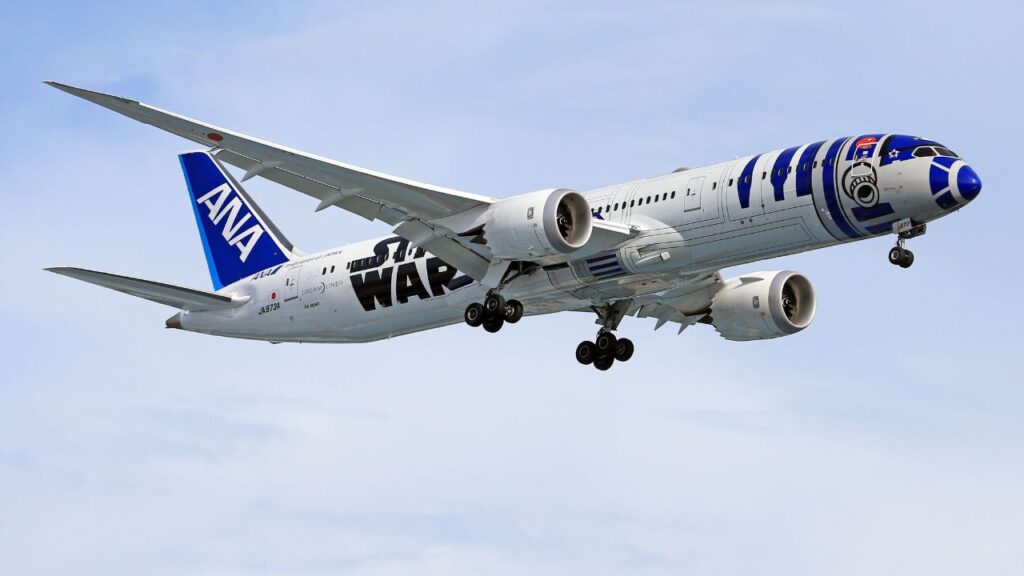
ANA Haneda near miss 2026 — flight NH968 executes a TCAS-commanded go-around on August 4, climbing away steeply from Runway C approach after coming within 70 feet of a Japan Civil Aviation Bureau CJ4 inspection aircraft that had departed Runway D.
ANA Haneda near miss 2026 unfolded at approximately 6:00am on August 4 when All Nippon Airways flight NH968, arriving from Shanghai Pudong, received a TCAS Resolution Advisory on final approach to Runway C — prompting the crew to immediately execute a go-around and emergency climb that separated the Boeing 767 from a Japan Civil Aviation Bureau flight inspection aircraft by as little as 70 feet.
ANA flight NH968’s collision avoidance system was activated as the plane with 197 people on board neared the airport in Tokyo. The pilot followed the system’s instruction and climbed to avoid another aircraft at around 6am local time.
The Ministry of Land, Infrastructure, Transport and Tourism said its inspection aircraft, which had taken off from Runway D, was flying nearby about to check radio, light and other facilities of the airport. The details were being investigated.
None of the 197 passengers and crew were injured and no problems were found with the aircraft, according to ANA.
What Happened: The Full Sequence at Haneda
The ANA Haneda near miss 2026 developed from a proximity conflict between two aircraft operating on different runways simultaneously — a situation that standard separation procedures exist precisely to prevent.
Flight‑tracking data cited by Flightradar24 indicated the incident involved ANA flight NH968 on approach to Runway C and a separate aircraft operated by Japan’s Civil Aviation Bureau, which had departed from Runway D shortly beforehand. The Civil Aviation Bureau’s flight inspection aircraft lifted off from Runway D just as NH968, arriving from Shanghai Pudong, was lining up to land on Runway C, bringing the two aircraft into unusually close proximity.
The JCAB aircraft is a Citation CJ4 — a small business jet used by Japan’s civil aviation authority to conduct flight inspections of airport radio navigation systems, instrument landing systems, and approach lighting facilities. Routine inspection flights are a normal part of airport operations worldwide — but their timing must be coordinated precisely with the arrival flow to ensure separation with landing commercial aircraft.
The FlightRadar24 data shows that the ANA 767 immediately pulled up into a steep climb, eventually banking right and away from the airport before returning to land some 15 minutes later.
The JCAB CJ4 flight inspection aircraft briefly halted its climb and descended to 900 feet, passing below the ANA 767, before proceeding with its mission across Tokyo Bay.
An audio recording reported to capture the exchange between Haneda’s area control centre and the control tower circulated online — in which a controller is heard angrily questioning how the situation arose. The investigation will examine controller instructions, crew readbacks, aircraft positioning data, and surveillance records to determine why established separation standards were not maintained.
How Close Was the ANA Haneda Near Miss 2026
The ANA 767 and Japan Aviation Bureau CJ4 came within 70 feet of each other — and that TCAS command may be all that ultimately saved the two aircraft from a catastrophic mid-air collision.
70 feet is approximately 21 metres. At the speeds at which both aircraft were moving — the 767 on final approach at approximately 250 km/h and the CJ4 climbing from the runway — a separation of 70 feet represents an extraordinarily narrow margin.
TCAS Resolution Advisories — the specific alert type that activated on NH968 — are the final automated layer of protection against mid-air collision in commercial aviation. A Resolution Advisory issues specific vertical instructions to the crew: climb, descend, or maintain vertical speed. The crew is trained and required to follow a TCAS RA immediately, without waiting for air traffic control confirmation. The system works bilaterally — when two aircraft are fitted with TCAS, both receive complementary advisories that move them away from each other.
Such alerts are very rare during normal airport operations, and represent the final airborne layer of protection against a midair collision.
The Haneda Context: Japan’s Airport Safety Scrutiny
The ANA Haneda near miss 2026 arrives less than three years after the January 2, 2024 Haneda runway collision — when Japan Airlines Flight 516 landed on a runway occupied by a Japan Coast Guard Dash 8 aircraft, destroying both planes and killing five Coast Guard crew members. That collision was one of the most serious aviation accidents in Japan’s post-war history.
The fact that TCAS was activated and instructed the pilots to take immediate evasive action will certainly trigger an investigation. As investigators review the aircraft positioning, controller instructions, crew readbacks, and surveillance data, they will be looking to see why established separation standards were not maintained.
At the back of their minds will be the similarities with the American Airlines Flight 5342 tragedy from January last year, where an aircraft with 60 passengers and four crew on board collided with a military helicopter while on final approach to Ronald Reagan Washington National Airport, crashing into the Potomac River.
Haneda is operating under heightened scrutiny from Japan’s Ministry of Land, Infrastructure, Transport and Tourism and the Japan Transport Safety Board following the 2024 collision. The August 4 incident — while it ended without collision — will intensify examination of Haneda’s runway management and separation procedures.
The specific concern is the coordination between arriving commercial traffic and the JCAB flight inspection aircraft schedule. Flight inspections are planned activities that happen on a regular basis — the question is how an inspection departure from Runway D was permitted to conflict with a final approach on Runway C at a margin that required TCAS activation to prevent collision.
What This Means for Travelers Flying to Tokyo Haneda
The ANA Haneda near miss 2026 is being handled as a serious safety incident and will trigger a formal investigation. NH968 landed safely 15 minutes after executing the go-around. All 197 passengers and crew members on board were uninjured. No aircraft damage was found.
For Indian travelers flying to Tokyo Haneda — which handles direct services from Delhi (Air India), Mumbai (Air India), and connections through Dubai, Singapore, and other hubs on multiple carriers — the incident is relevant as context rather than as a reason to change travel plans.
Haneda is one of the world’s busiest and best-operated airports. TCAS worked exactly as designed — the automated system identified the proximity conflict and issued the correct instruction, which the ANA crew followed immediately. The outcome of this incident — a go-around, a safe landing 15 minutes later, and no injuries — is precisely the outcome that aviation safety systems are designed to produce.
Japan requires Indian passport holders to obtain a visa before arrival. Apply through the Embassy of Japan in New Delhi or Consulates in Mumbai, Chennai, Kolkata, Bengaluru, or Osaka before travel. For travel insurance covering flights to Tokyo Haneda and Japan trips, SafetyWing Nomad Insurance provides comprehensive coverage at affordable daily rates for Indian travelers. For confirmed flight reservations needed for your Japan visa application, a legitimate booking is available at flyinghelpline.com/flight-reservation/ for just ₹999.
FAQs — ANA Haneda Near Miss 2026
Q: What happened at Haneda Airport with the ANA flight on August 4?
An All Nippon Airways flight from Shanghai made an evasive manoeuvre while approaching Haneda airport around 6am on August 4. ANA flight NH968’s collision avoidance system was activated as the plane neared the airport in Tokyo. The pilot followed the system’s instruction and climbed to avoid another aircraft.
The other aircraft was a Japan Civil Aviation Bureau flight inspection CJ4 that had departed from Runway D. The two aircraft came within 70 feet of each other before the ANA Boeing 767 executed a go-around and returned to land safely 15 minutes later. None of the 197 passengers and crew were injured.
Q: What is TCAS and why did it activate at Haneda?
TCAS — Traffic Collision Avoidance System — is an onboard automated system that monitors the airspace around an aircraft using transponder signals from other aircraft. When another aircraft comes within a predicted conflict distance, TCAS issues a Traffic Advisory followed, if necessary, by a Resolution Advisory — a specific vertical manoeuvre instruction.
A Resolution Advisory, which activated on NH968, is the final layer of automated collision protection. Crews are trained and required to follow TCAS RA instructions immediately. Such alerts are very rare during normal airport operations. The system worked correctly on August 4 — separating the ANA 767 from the JCAB CJ4.
Q: Is Haneda Airport safe to fly into after the August 4 incident?
Yes — Haneda Airport is one of the world’s busiest and most professionally operated airports. The August 4 incident is serious and will be fully investigated, but it ended without collision, injury, or aircraft damage because the safety systems — specifically TCAS — functioned exactly as designed. An investigation is underway to determine how the separation failure occurred between the ANA arrival on Runway C and the JCAB departure from Runway D. Haneda continues normal operations. All 197 passengers on NH968 disembarked safely.
Final Word
The ANA Haneda near miss 2026 on August 4 is the most significant aviation safety event at Tokyo’s busiest airport since the January 2024 runway collision — and its context is impossible to separate from that tragedy. TCAS saved 197 passengers and crew from an outcome that could have been catastrophic. The 70-foot separation, the steep climb away from the airport, the 15-minute delay before landing safely — these are the data points of a system that worked.
The investigation that follows will determine how the separation standards that should have prevented the TCAS activation from being needed in the first place were not maintained. For Indian travelers flying to Tokyo, Haneda remains one of the world’s most capable airports — and the fact that TCAS activated and was followed correctly on August 4 is evidence of the safety culture that surrounds it.
Also Read:
- Air India Phuket Delhi Turbulence — AI2379 Drops 12 Injured August 4
- India Flight Cancellation Rights — Ministry Advisory July 2026
- SafetyWing Nomad Insurance — Full Review for Indians
Official Sources:
- Bangkok Post — ANA Flight Makes Evasive Manoeuvre at Haneda
- Simple Flying — ANA 767 and JCAB CJ4 Come Within 70 Feet
 Bangkok Airport Taxi Indians 2026: 2,000 Baht Scam Warning and How to Pay the Right Price
Air Astana Dubai 2026: Almaty and Astana Flights Resume October 1–2, 22 Weekly by Month-End
Singapore Changi Airport Ranking 2026: World’s Best for 14th Time, Suvarnabhumi 36th
Thailand Tourist Fee 2027: 450 Baht (~₹1,125) From Q1 2027, Air First

Bangkok Airport Taxi Indians 2026: 2,000 Baht Scam Warning and How to Pay the Right Price
Air Astana Dubai 2026: Almaty and Astana Flights Resume October 1–2, 22 Weekly by Month-End
Singapore Changi Airport Ranking 2026: World’s Best for 14th Time, Suvarnabhumi 36th
Thailand Tourist Fee 2027: 450 Baht (~₹1,125) From Q1 2027, Air First

Aaseem Bhardwaj is a journalist, seasoned traveler and IT professional based in India. With firsthand travel experience across Southeast Asia, East Asia, Middle East and Europe, Aaseem founded Travel Man Today to provide reliable visa updates and travel news for Indian passport holders. He has personally traveled to Thailand, Vietnam, Malaysia, Japan, Singapore, Hong Kong, South Korea, UAE and Europe. Follow his travel vlogs on YouTube at @travelmantoday






Templates for Indians

3 thoughts on “ANA Haneda Near Miss 2026: TCAS Alert Saves Flight NH968 From Mid-Air Collision”