Air India Phuket Delhi Turbulence: Flight AI2379 Drops 300 Feet, 12 Injured
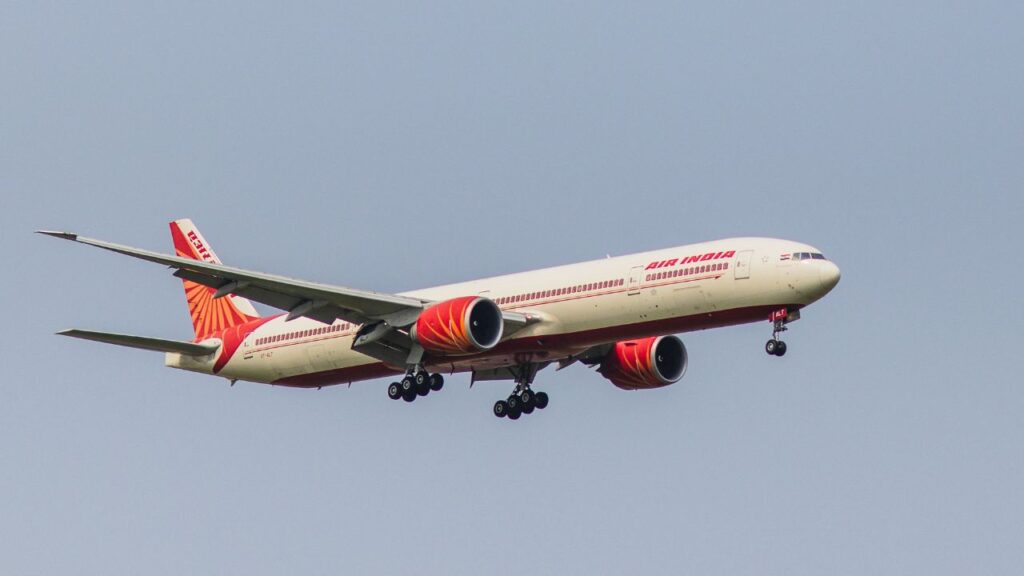
Air India Phuket Delhi turbulence on August 4, 2026 — flight AI2379 carrying 134 passengers drops approximately 300 feet during cruise turbulence, injuring 12 people including two crew members before landing safely at Delhi IGI Airport.
Air India Phuket Delhi turbulence incident on August 4, 2026 has injured at least 12 people on board flight AI2379 — including 10 passengers and two crew members — after the Airbus A320 experienced a brief in-flight turbulence-related event during cruise that caused a momentary and severe change in altitude estimated at approximately 300 feet (91 metres).
Air India confirms that flight AI2379, operating from Phuket to Delhi on 4 August, experienced a brief in-flight turbulence-related event during cruise, resulting in a momentary change in altitude. The aircraft landed safely in New Delhi, and all passengers and crew have safely disembarked.
The Air India Phuket Delhi turbulence event is the most significant in-flight safety incident on a Thailand-India route in 2026 — and with investigations underway, it is already drawing attention to clear air turbulence risks on Southeast Asia to South Asia corridors.
What Happened: The Full Sequence
Flight AI2379 departed Phuket International Airport on the morning of August 4, heading to Indira Gandhi International Airport in Delhi. The flight was operated by an Airbus A320 and carried 134 passengers.
Air India said flight AI2379 experienced a brief turbulence-related event during cruise, causing a momentary change in altitude. The aircraft landed safely in Delhi, where all 134 passengers and crew disembarked without further incident.
The altitude drop was sudden and severe. Initial reports indicate that the plane dropped approximately 300 feet (91 meters) in altitude due to turbulence.
One passenger described the moment to ANI news agency: “There was a sudden drop in the plane’s altitude. I hit my head on the roof and then fell down.” Another passenger said the incident lasted several minutes: “It had been an hour and a half since the flight. It was early morning. We were sleeping on the flight. The flight suddenly stopped while moving and turned around — it kept moving like this for 2-3 minutes. 15-20 passengers got injured. There were more than 100 people in the flight.”
A small number of passengers and crew members with minor injuries requiring medical assessment have been taken to a medical facility at the airport for precautionary examination and care by Air India’s airport team and medical personnel.
Visuals shared on social media showed injured passengers being taken to ambulances in wheelchairs outside Indira Gandhi International Airport. In addition, there was some damage to the aircraft, according to local media reports. An investigation into the incident is ongoing.
The Injury Breakdown
The Air India Phuket Delhi turbulence event injured 12 people confirmed by official airline statement — though some passenger accounts suggest the number affected could be higher.
The 12 people included 10 passengers and two members of the crew. WION reported the number as 14, with 10 passengers and four crew members, citing later updates as medical assessments were completed at Delhi airport.
Air India was explicit in its initial statement that no serious injuries had been reported. There have been no serious injuries as of now. The airline categorised all injuries as minor — requiring precautionary medical assessment rather than hospitalisation.
The aircraft damage cited in local media reports has not been specified by Air India — the airline’s statement focused on passenger safety rather than the extent of the structural or interior damage.
| Air India Phuket Delhi Turbulence — AI2379 August 4, 2026 | Details |
|---|---|
| Flight number | AI2379 |
| Route | Phuket (HKT) → Delhi IGI (DEL) |
| Date | August 4, 2026 |
| Aircraft | Airbus A320 |
| Passengers on board | 134 |
| Confirmed injuries | 12 (10 passengers, 2 crew) — other reports up to 14 |
| Injury severity | Minor — precautionary medical assessment |
| Altitude drop reported | Approximately 300 feet (91 metres) |
| Aircraft landing | Safe — Delhi IGI |
| Aircraft condition | Some damage reported — under investigation |
| Investigation | Ongoing |
Clear Air Turbulence: Why Phuket-Delhi Is a Risk Corridor
The Air India Phuket Delhi turbulence event on August 4 joins a growing global pattern of severe turbulence incidents on Asian routes — and the Phuket-Delhi corridor carries specific risk factors.
Clear air turbulence (CAT) is invisible to aircraft radar and strikes without visible warning. It occurs typically at cruise altitude near jet streams — fast-moving bands of air at 9,000 to 12,000 metres where the boundary between fast and slow-moving air masses creates violent instability. The Indochina-Bay of Bengal-Indian subcontinent corridor that Phuket-Delhi flights traverse passes through one of Asia’s most climatically active zones during the monsoon season.
August is the peak of the South Asian monsoon. The Bay of Bengal is generating active convective weather. Jet stream positioning during the monsoon period creates turbulence-prone corridors at cruise altitudes, and the monsoon trough across the Indian subcontinent generates additional instability that can affect descending aircraft during the final two hours of flight.
Clear air turbulence is among the most common causes of in-flight injuries globally — accounting for the majority of serious non-fatal turbulence injuries each year according to aviation safety databases. It cannot currently be predicted with reliable precision, though turbulence forecasting tools are improving.
The most important passenger safety measure in turbulence remains the one passengers most often ignore: keep the seatbelt fastened whenever seated, even when the seatbelt sign is off.
What Air India Is Doing
Air India said its airport team and medical personnel were standing by at Delhi to assist injured passengers immediately upon landing.
The airline has confirmed an investigation is underway into the Air India Phuket Delhi turbulence cause and sequence. The DGCA — India’s civil aviation regulator — will receive the full incident report and may conduct its own investigation review. Under DGCA regulations, airlines must file an Accident/Incident Data Reporting (AIDR) report within 72 hours of any turbulence event causing injuries.
Air India’s statement was measured and professional — the Tata Group-owned carrier has been through significant safety scrutiny since the AI171 Ahmedabad crash of June 2025, and the communications team responded quickly with confirmed facts rather than allowing passenger social media accounts to define the narrative.
Safety Advice for Indian Travelers on Southeast Asia to India Flights
The Air India Phuket Delhi turbulence incident on August 4 is a timely reminder of the specific safety practices every passenger should follow on long-haul flights, particularly during the Indian monsoon season.
Always fasten your seatbelt when seated. The most consistent finding across all turbulence injury investigations is that injured passengers were not wearing seatbelts when the turbulence struck. When turbulence creates a 300-foot altitude drop in seconds, an unseatbelted passenger becomes a projectile. Fasten your seatbelt every time you are in your seat — not just when the sign is illuminated.
Stow cabin baggage securely. Overhead lockers must be firmly latched and bags must not be overloaded. In severe turbulence, unsecured items in overhead bins can fall and cause serious injuries. Store heavy items like laptops under the seat in front rather than in the overhead locker.
Heed crew instructions immediately. When cabin crew instruct passengers to return to seats during cruise, they are responding to turbulence weather information before the event is felt by passengers. React immediately — do not wait for the aircraft to start moving.
Consider travel insurance. The Air India Phuket Delhi turbulence event is exactly the scenario that travel insurance medical and personal accident coverage is designed for. For travel insurance covering India-Thailand flights and South Asia routes, SafetyWing Nomad Insurance provides comprehensive coverage at affordable daily rates for Indian travelers.
FAQs — Air India Phuket Delhi Turbulence August 2026
Q: What happened on Air India flight AI2379 from Phuket to Delhi on August 4?
Air India confirms that flight AI2379, operating from Phuket to Delhi on 4 August, experienced a brief in-flight turbulence-related event during cruise, resulting in a momentary change in altitude. Initial reports indicate that the plane dropped approximately 300 feet (91 meters) in altitude. The 12 people injured included 10 passengers and two members of the crew. The aircraft landed safely in Delhi and all 134 passengers disembarked. An investigation is ongoing.
Q: Were the injuries from the Air India Phuket Delhi turbulence serious?
There have been no serious injuries as of now. A small number of passengers and crew members with minor injuries requiring medical assessment have been taken to a medical facility at the airport for precautionary examination and care by Air India’s airport team and medical personnel. No hospitalisations were reported. Passengers described hitting their heads on the cabin ceiling and falling — consistent with an unseated passenger in a rapid altitude drop.
Q: What is Air India doing after the turbulence incident?
Air India deployed airport and medical teams at Delhi to assist injured passengers on arrival. The airline confirmed an investigation is underway into the turbulence-related event. Under DGCA regulations, Air India must submit an AIDR incident report within 72 hours. DGCA may conduct its own review investigation. Air India has confirmed all passengers disembarked safely and that there were no serious injuries.
Final Word
The Air India Phuket Delhi turbulence incident on August 4, 2026 is a serious event that resulted in real injuries to 12 people — but it is also one that ended the best possible way: the aircraft landed safely, all passengers disembarked, and the injuries were minor rather than life-threatening.
The 300-foot altitude drop is consistent with severe clear air turbulence events that have become more frequent globally as climate change alters jet stream behaviour.
The lesson is unchanged from every previous turbulence incident: fasten your seatbelt, stow your baggage, and listen to crew instructions. Those three actions have prevented countless serious injuries on flights where turbulence struck without warning.
Also Read:
- India Flight Cancellation Rights — Ministry Advisory July 2026
- Thailand Travel Advisory Indians July 2026 — Full Guide
- SafetyWing Nomad Insurance — Full Review for Indians
Official Sources:
- NDTV — Air India Phuket-Delhi Flight Hit by Turbulence, 12 Injured
- Business Standard — Air India Phuket-Delhi Turbulence Incident
 Thailand Tourist Fee 2027: 450 Baht (~₹1,125) From Q1 2027, Air First

Thailand Visa Land Border 2026: Two Entries Per Calendar Year — September 15 Does NOT Reset Your Count

Belarus e-Visa Indians 2026: India Added to Eligible List, Fee and Validity Not Yet Published

South Korea Tourist Complaints 2026: Record 1,753 in 7 Months — Taxis, Hotels, Overcharging

Thailand Tourist Fee 2027: 450 Baht (~₹1,125) From Q1 2027, Air First
Thailand Visa Land Border 2026: Two Entries Per Calendar Year — September 15 Does NOT Reset Your Count
Belarus e-Visa Indians 2026: India Added to Eligible List, Fee and Validity Not Yet Published
South Korea Tourist Complaints 2026: Record 1,753 in 7 Months — Taxis, Hotels, Overcharging

Aaseem Bhardwaj is a journalist, seasoned traveler and IT professional based in India. With firsthand travel experience across Southeast Asia, East Asia, Middle East and Europe, Aaseem founded Travel Man Today to provide reliable visa updates and travel news for Indian passport holders. He has personally traveled to Thailand, Vietnam, Malaysia, Japan, Singapore, Hong Kong, South Korea, UAE and Europe. Follow his travel vlogs on YouTube at @travelmantoday






Templates for Indians



3 thoughts on “Air India Phuket Delhi Turbulence: Flight AI2379 Drops 300 Feet, 12 Injured”