Thai Airways Q2 2026: Net Profit Plunges 87% as Fuel Costs Double Year-on-Year
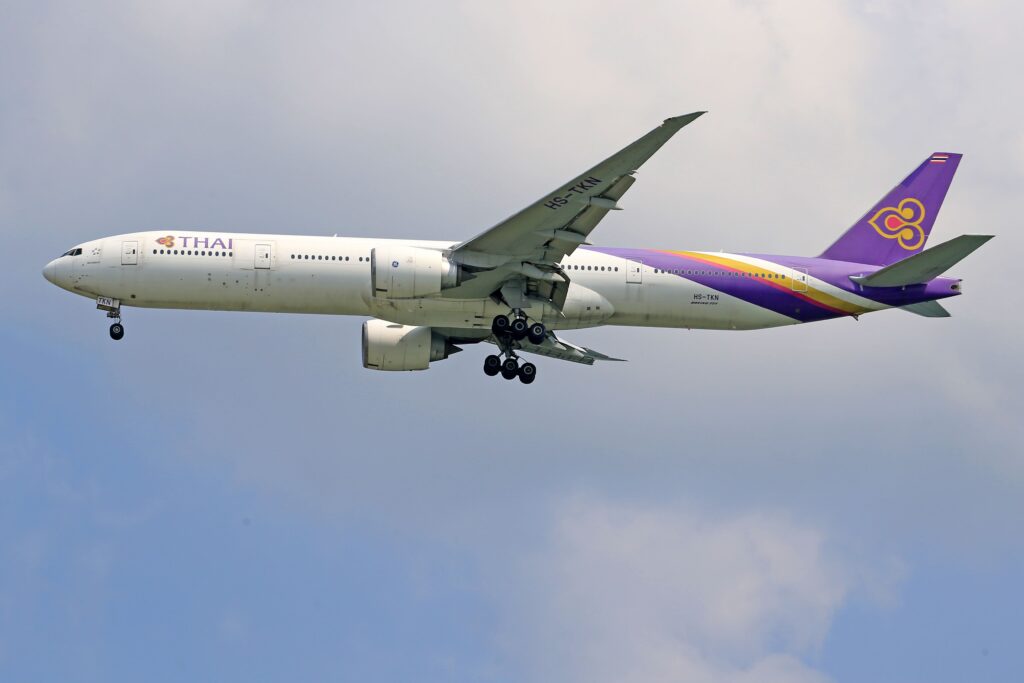
Thai Airways Q2 2026 — net profit collapses 87% from THB 12.13 billion to THB 1.54 billion as average jet fuel prices surge 104.6% year-on-year due to the Middle East conflict, while the airline's THB 123.76 billion cash position provides a substantial financial buffer.
Thai Airways Q2 2026 results show a net profit of 1.54 billion baht — compared with a net profit of 12.13 billion baht in the same period of last year — as average fuel prices increased by 104.6% year-on-year due to the Middle East conflict that began on February 28. X
The Thai Airways Q2 2026 collapse in profitability is one of the most dramatic single-quarter earnings reversals in THAI’s post-rehabilitation history. From THB 12.13 billion to THB 1.54 billion is an 87% decline in net profit — and the cause is not operational mismanagement but a geopolitical event entirely outside the airline’s control: jet fuel price increases generated by the US-Iran conflict that severed Gulf airspace connectivity and drove oil price volatility through the second quarter.
The Q2 Numbers: Revenue Up, But Fuel Doubled
THAI recorded total expenses (excluding one-time items) of 44.93 billion baht, an increase of 29.7% from the same period the prior year, mainly due to higher jet fuel prices arising from unrest in the Middle East. Average fuel prices increased by 104.6% year-on-year. THAI recorded operating profit before finance costs (excluding one-time items) of 3.69 billion baht, with an EBIT margin of 17.5%. Finance costs of 3.16 billion baht were also recorded. X
The 104.6% year-on-year fuel price increase is the central fact of the Thai Airways Q2 2026 result. When your primary input cost — jet fuel — more than doubles in a single year, every other operational efficiency becomes irrelevant. THAI’s cost management, its network rationalisation, and its post-rehabilitation financial discipline were all overwhelmed by a 104.6% fuel cost increase that no airline’s pricing model can fully absorb through fare increases alone.
Despite reducing operations during the April-June quarter, Thai’s passenger revenues were up year on year — a confirmation that the demand side of THAI’s business remained healthy even as the cost side was devastated by fuel.
THAI carried a total of 3.66 million passengers. Available Seat Kilometers (ASK) amounted to 16,778 million, decreasing 4.4% from the same period of last year due to flight reductions resulting from unrest in the Middle East, which affected passenger travel demand. Revenue Passenger Kilometers (RPK) totalled 11,993 million, a decrease of 11.3%. The average Cabin Factor stood at 71.5%, compared with 77.0% in the same period of last year. X
The cabin factor decline from 77% to 71.5% is operationally significant. A 5.5 percentage point load factor drop means THAI’s seats are filling less efficiently — a direct consequence of reduced demand from travelers avoiding Middle East routing connections and the suppression of European long-haul bookings that had previously fed THAI’s Bangkok hub.
| Thai Airways Q2 2026 — Key Financial Metrics | Q2 2026 | Q2 2025 | Change |
|---|---|---|---|
| Net profit | THB 1.54 billion | THB 12.13 billion | -87% |
| Total expenses (excl. one-time) | THB 44.93 billion | — | +29.7% |
| Average fuel price increase | — | — | +104.6% YoY |
| Operating profit (EBIT, excl. one-time) | THB 3.69 billion | — | — |
| EBIT margin | 17.5% | — | — |
| Finance costs | THB 3.16 billion | — | — |
| EBITDA | THB 8.18 billion | — | — |
| Total passengers carried | 3.66 million | — | — |
| ASK | 16,778 million | — | -4.4% |
| RPK | 11,993 million | — | -11.3% |
| Cabin factor | 71.5% | 77.0% | -5.5pp |
| Total assets (June 30, 2026) | THB 322.08 billion | — | +5.9% |
| Cash and current financial assets | THB 123.76 billion | — | — |
The H1 2026 Picture: Q1 Strong, Q2 Devastated
To understand Thai Airways Q2 2026 in context, the Q1 2026 data is essential. Thai Airways recorded a net profit of THB 10.107 billion in Q1 2026 — up 2.7% from Q1 2025 — demonstrating that the airline’s post-rehabilitation operating model was genuinely performing before the Middle East conflict altered the fuel cost environment.
The contrast between Q1 2026 (THB 10.1 billion profit) and Q2 2026 (THB 1.54 billion profit) maps almost exactly onto the February 28 conflict start date. Q1 included January and February — the pre-conflict months where fuel prices reflected the pre-escalation oil environment. Q2 covered April, May, and June — entirely within the post-conflict period when fuel prices surged and Gulf airspace restrictions began suppressing demand.
Thai airlines will remain under pressure in the second and third quarters from the oil price spike as the uptick in airfares and fuel surcharges are insufficient to cover the surge in costs. The pace of flight cancellations resulting from fuel shortages has persisted, with no sign of deceleration in the near term. business-standard
The Q3 2026 outlook is similarly concerning. AoT predicts a slight contraction in flight traffic for Q3, aligning with flight slot bookings for the summer schedule that declined by 6% year-on-year. If fuel prices remain elevated through September — and the EASA Gulf warning extended to August 31 suggests no imminent normalisation — Q3 2026 will present a similar cost environment to Q2.
The Fuel Cost Context: 104.6% Increase in Historical Perspective
Thai Airways Q2 2026’s 104.6% year-on-year fuel price increase deserves a moment of contextualisation — because it is an almost unprecedented single-year fuel cost spike for any airline.
In the 2008 oil price shock, jet fuel roughly doubled between early 2007 and the July 2008 peak — producing the largest single-year airline fuel cost shock in aviation history up to that point. Several carriers went bankrupt in 2008 specifically because of that cost spike.
THAI’s 104.6% year-on-year Q2 fuel price increase is comparable in scale to the 2008 shock — concentrated in a single quarter rather than spread across 18 months. The reason THAI survived this one without a crisis comparable to 2008 is that its post-rehabilitation balance sheet — THB 123.76 billion in cash and current financial assets as of June 30 — provides a much stronger buffer than the debt-loaded balance sheet that almost killed THAI in 2020.
Thai Airways International saw quarterly profits plunge on the back of higher fuel costs, as the national carrier warned that continued uncertainty in the Middle East remains a primary risk. gulfnews
Middle East Conflict: The Primary Risk Going Forward
The Thai Airways Q2 2026 results identify the Middle East conflict and its fuel price impact as the primary risk for the remainder of 2026. This is not a THAI-specific problem — Singapore Airlines, Cathay Pacific, and virtually every Asian carrier that released Q2 results have cited fuel cost pressure as the dominant factor.
The difference between carriers is their financial buffer and hedging position. THAI’s THB 123.76 billion cash position is substantial for a company of its size — it provides 12+ months of operational runway even in an adverse fuel cost environment. The rehabilitation-era debt restructuring that cleaned THAI’s balance sheet is the reason the airline can absorb a 104.6% fuel cost increase without an immediate liquidity crisis.
The fleet dimension adds another layer. As of June 30, 2026, THAI operated a fleet of 84 aircraft, with an average aircraft utilisation of 12.9 hours per aircraft per day. At 12.9 hours per aircraft per day, THAI is operating its fleet intensively — maximising utilisation to spread fixed costs across more flying hours. This is the correct operational response to a high fuel price environment: fly the aircraft as much as possible to dilute fixed costs, while managing yield carefully to ensure each passenger contributes to fuel cost recovery. X
What This Means for Indian Travelers Flying Thai Airways
The Thai Airways Q2 2026 results have direct practical implications for Indian travelers who use THAI as their carrier of choice for Bangkok connections and Southeast Asia routing.
Fuel surcharges are rising. The uptick in airfares and fuel surcharges are insufficient to cover the surge in costs. Even though THAI has raised surcharges, the 104.6% fuel cost increase cannot be fully recovered through fare increases without destroying demand. Indian travelers booking THAI in Q3 and Q4 2026 should expect elevated base fares and fuel surcharges compared to 2025 levels — but not a doubling of ticket prices, because THAI is absorbing a significant portion of the cost increase. business-standard
Fleet and schedule reliability. THAI’s 84-aircraft fleet at 12.9 hours daily utilisation and THB 123.76 billion in cash means the airline is not in financial distress and is not at immediate risk of disruption to its schedule. Indian travelers can book THAI with confidence in the airline’s operational stability.
India routes. Thai Airways serves Delhi and Mumbai from Bangkok Suvarnabhumi with the Airbus A321neo (on shorter sectors) and widebody aircraft on the India-Bangkok trunk routes. These routes are among THAI’s most commercially important Indian sub-continent connections and have not been affected by the Middle East routing disruptions.
Before any Bangkok trip, confirm current India-specific entry requirements at thaievisa.go.th. India’s 30-day visa-free entry is approved but awaiting Royal Gazette publication. Complete the mandatory TDAC digital arrival card within 72 hours before departure. Remember UPI does not work in Thailand — carry Thai Baht or a zero-forex international card. For travel insurance covering Thai Airways flights and Bangkok trips, SafetyWing Nomad Insurance provides comprehensive coverage at affordable daily rates for Indian travelers.
FAQs — Thai Airways Q2 2026
Q: How much did Thai Airways profit fall in Q2 2026?
For the second quarter of 2026, THAI reported a net profit of 1.54 billion baht, compared with a net profit of 12.13 billion baht in the same period of last year. This represents an 87% decline in net profit year-on-year. The primary cause was a 104.6% year-on-year increase in average jet fuel prices arising from unrest in the Middle East. Total expenses (excluding one-time items) increased 29.7% from the same period the prior year to THB 44.93 billion. X
Q: What caused Thai Airways’ massive Q2 2026 profit decline?
THAI recorded total expenses of 44.93 billion baht, an increase of 29.7% from the same period the prior year, mainly due to higher jet fuel prices arising from unrest in the Middle East. Average fuel prices increased by 104.6% year-on-year. The Middle East conflict that began on February 28, 2026 drove oil price volatility and jet fuel cost increases that affected all Asian carriers. THAI also experienced a 4.4% decline in Available Seat Kilometers and an 11.3% decline in Revenue Passenger Kilometers as demand was affected by the geopolitical situation. X
Q: Is Thai Airways financially stable despite the Q2 2026 profit collapse?
Yes. As of June 30, 2026, cash and cash equivalents at THAI, together with other current financial assets, totalled 123.76 billion baht. THAI had total assets of 322.08 billion baht. THAI’s post-rehabilitation balance sheet — with THB 123.76 billion in liquid assets — provides substantial financial buffer against the fuel cost shock. The airline remained profitable in Q2 2026 despite the 87% profit decline. Q1 2026 delivered THB 10.1 billion in net profit before the conflict’s full fuel cost impact was felt. X
Final Word
The Thai Airways Q2 2026 net profit of THB 1.54 billion — an 87% collapse from THB 12.13 billion in Q2 2025 — is not a THAI management failure. It is a balance sheet impact statement for a 104.6% year-on-year jet fuel price increase driven by a geopolitical conflict that THAI cannot control.
The post-rehabilitation THAI had the financial cushion — THB 123.76 billion in cash — to absorb the shock without a crisis. The Q3 2026 outlook remains challenging if Middle East tensions persist through September. But the airline is stable, its India routes are operating, and Indian travelers booking THAI for Bangkok connections in late 2026 are not booking an airline in distress — they are booking an airline absorbing an unprecedented fuel cost event with a strong balance sheet underneath it.
Also Read:
- Thailand Tourist Arrivals 2026 — 18.51 Million by August 1
- Thailand Travel Update Indians — Visa-Free, Baggage, Hotel Tax
- Middle East Flight Suspensions — Full Airline List July 2026
Official Sources:
 Thai Airways Flood Waiver 2026: Free Date Change Sept 26–Oct 11, Same Route and Class
AirAsia Thailand 2026: Analysts Warn AAV Faces Risk From Malaysian Parent’s Fuel Crisis
Suvarnabhumi Baggage Delay 2026: Thai Airways Backlog Sept 26–27, Contact Numbers
Bangkok Flooding 2026: All 50 Districts Disaster Zones, Airports Still Operating

Thai Airways Flood Waiver 2026: Free Date Change Sept 26–Oct 11, Same Route and Class
AirAsia Thailand 2026: Analysts Warn AAV Faces Risk From Malaysian Parent’s Fuel Crisis
Suvarnabhumi Baggage Delay 2026: Thai Airways Backlog Sept 26–27, Contact Numbers
Bangkok Flooding 2026: All 50 Districts Disaster Zones, Airports Still Operating

Aaseem Bhardwaj is a journalist, seasoned traveler and IT professional based in India. With firsthand travel experience across Southeast Asia, East Asia, Middle East and Europe, Aaseem founded Travel Man Today to provide reliable visa updates and travel news for Indian passport holders. He has personally traveled to Thailand, Vietnam, Malaysia, Japan, Singapore, Hong Kong, South Korea, UAE and Europe. Follow his travel vlogs on YouTube at @travelmantoday






Templates for Indians
2 thoughts on “Thai Airways Q2 2026: Net Profit Plunges 87% as Fuel Costs Double Year-on-Year”