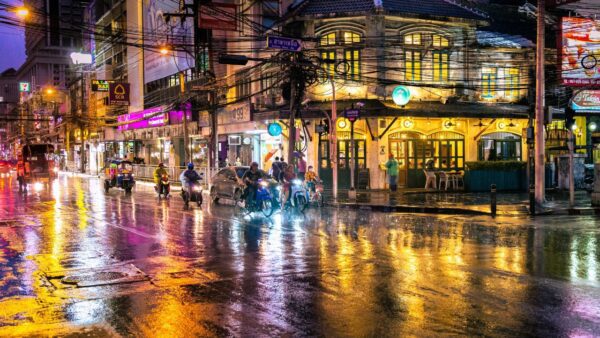
Thailand Secondary Airports 2026: CAAT Cuts Fees 50% to Unlock New Routes
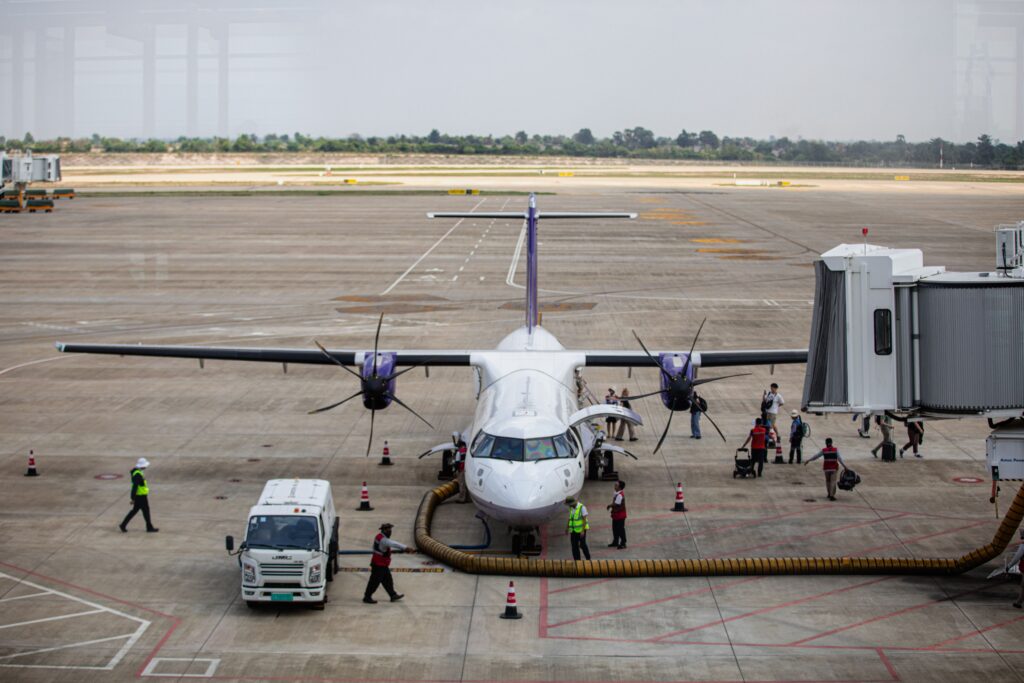
Thailand secondary airports 2026 — CAAT Director-General ACM Manat Chavanaprayoon announces the "Small Airports, High Standards" strategy targeting six high-potential regional airports with 50% airport service fee cuts to incentivise airlines to open new routes, as Thailand records 85.16 million passengers in January-July 2026.
Quick answer: CAAT has launched a “Small Airports, High Standards” campaign targeting six high-potential secondary airports — Surat Thani, Ubon Ratchathani, Khon Kaen, Nakhon Si Thammarat, Phitsanulok, and Udon Thani. Airlines opening new routes to these airports get a 50% airport service fee cut. Thailand recorded 85.16 million air passengers January–July 2026, up 1.48% year-on-year.
Thailand secondary airports 2026 are moving to centre stage — the Civil Aviation Authority of Thailand has unveiled a comprehensive drive to upgrade provincial airport infrastructure and airspace management, aiming to turn regional hubs into growth engines for trade, tourism, and investment. Bangkok Post
The Thailand secondary airports 2026 strategy is the aviation infrastructure component of Thailand’s broader push beyond Bangkok and Phuket — recognising that India’s 1.45 million arrivals through August 15 are overwhelmingly concentrated at Suvarnabhumi and that significant demand remains untapped for secondary cities with strong tourism assets.
For Indian travelers who have done Bangkok and Phuket multiple times and are ready to explore Chiang Mai, the Northeast, or the Gulf’s lesser-known coastline, the CAAT fee cut strategy is the commercial trigger that will bring new route options to market.
For the full Suvarnabhumi capacity context, see our Suvarnabhumi Airport Congestion 2026 guide.
The “Small Airports, High Standards” Strategy
Under its new banner, “Small Airports, High Standards,” CAAT is targeting proportionate, high-level safety and operational standards across all secondary infrastructure rather than enforcing a one-size-fits-all model.
The naming is deliberate — “Small Airports, High Standards” is CAAT’s signal to airlines that operating into Thailand’s secondary airports does not mean accepting lower safety infrastructure or operational reliability than at Suvarnabhumi or Don Mueang. The proportionate standards model — calibrated to the airport’s scale rather than applied uniformly — is designed to make secondary airport operations commercially viable without imposing the infrastructure costs of a major international gateway.
CAAT Director-General ACM Manat Chavanaprayoon said: “Growth in air travel is no longer concentrated at major gateway airports. Demand is spreading to secondary cities, and we are building the regulatory and operational framework to match that shift.” Bangkok Post
The six airports identified as highest priority under the Thailand secondary airports 2026 programme are: Surat Thani, Ubon Ratchathani, Khon Kaen, Nakhon Si Thammarat, Phitsanulok, and Udon Thani.
These six — not randomly selected — represent the regional coverage map of Thailand’s next tourism and economic development layer. Surat Thani is the mainland gateway to Koh Samui, Koh Phangan, and Koh Tao. Ubon Ratchathani anchors the eastern Mekong corridor. Khon Kaen is the Northeast’s commercial and academic hub. Nakhon Si Thammarat is the deep south’s most historically significant city. Phitsanulok links the lower North — Sukhothai’s UNESCO-listed ruins are 60km away. Udon Thani serves the upper Northeast including the extraordinary Ban Chiang UNESCO heritage site.
The 50% Fee Cut: How It Works
The commercial mechanism driving the Thailand secondary airports 2026 expansion is a 50% reduction in airport service fees for airlines opening new routes to the targeted secondary airports.
CAAT has confirmed measures to reduce airport service fees by 50% to incentivise airlines to open new routes to secondary cities.
For airlines, the 50% fee reduction addresses the primary economics of new route launches. A new route to Ubon Ratchathani or Khon Kaen carries demand uncertainty risk — the first year or two of any new route involves building passenger awareness and establishing booking patterns. If the airport fee component of operating costs is halved during the route establishment period, the breakeven load factor drops, making it financially viable to launch routes that would otherwise not meet the airline’s hurdle rate.
Deputy Transport Minister Phattrapong said the initiative aims to modernise aviation infrastructure and improve airport services through the adoption of advanced technology. He said the plan would help turn secondary provinces into stronger tourism destinations while boosting local economies. He described Phitsanulok as a strategic gateway to the lower North, linking Sukhothai, Phetchabun, Uttaradit and Tak, provinces with strong tourism potential.
The eight airports being upgraded to hub status alongside the six primary targets include Krabi, Surat Thani, Ubon Ratchathani, Khon Kaen, Nakhon Si Thammarat, Trang, Phitsanulok, and Udon Thani — with biometric systems and advance passenger screening being introduced as part of the upgrade programme.
The Passenger Numbers: 85.16 Million in Seven Months
Despite ongoing geopolitical volatility, Thailand recorded 85.16 million air passengers between January and July 2026, up 1.48% year-on-year. Domestic traffic reached 39.26 million passengers (up 1.64%), while international journeys rose to 45.91 million (up 1.34%).
The 85.16 million figure — and its split between 39.26 million domestic and 45.91 million international — tells the story that the secondary airport strategy is addressing. Domestic travel at 39.26 million is growing faster proportionally than international at 45.91 million — and domestic travel is the market that secondary airports primarily serve.
Data from the Department of Airports in 2025 found that airports under its responsibility handled a combined total of 14.23 million passengers, identifying six high-potential airports that present the strongest case for expanded routes and investment.
The 14.23 million passengers at Department of Airports-managed secondary airports — against 85.16 million total — confirms that secondary airports handle only 17% of Thailand’s total air traffic. The CAAT strategy is designed to grow that share by making secondary airports operationally competitive, commercially attractive to airlines, and better connected to the international routes that bring high-spending visitors.
What This Means for Indian Travelers
The Thailand secondary airports 2026 development has two direct implications for Indian travelers planning multi-destination Thailand itineraries.
More direct route options to secondary Thai cities. When the 50% fee incentive produces new domestic and international route launches — expected within 12–18 months of the programme’s activation — Indian travelers will gain direct or one-stop access to Khon Kaen, Ubon Ratchathani, and Nakhon Si Thammarat that currently requires routing through Suvarnabhumi or Don Mueang with tight connections. The Northeast Thailand cultural circuit — the Grand Canyon of Mekong, Phu Phan Mountains, Ubon Ratchathani’s temples — becomes meaningfully more accessible from India.
Reduced Suvarnabhumi congestion as domestic traffic disperses. Every domestic passenger who uses a secondary airport rather than transiting through Suvarnabhumi is one fewer person in the 5,000–6,000 passengers per hour peak queue that Indian international arrivals face. The secondary airport strategy is the long-term complement to the short-term congestion fixes — diverting domestic traffic away from Bangkok airports by making regional airports genuinely competitive.
Before any Thailand trip, confirm current entry requirements at thaievisa.go.th. India’s 30-day visa-free entry awaits Royal Gazette publication. Complete TDAC free at tdac.immigration.go.th within 72 hours before departure. UPI does not work in Thailand — carry Thai Baht. For travel insurance covering Thailand domestic flights and multi-city itineraries, SafetyWing Nomad Insurance provides comprehensive coverage at affordable daily rates for Indian travelers.
FAQs — Thailand Secondary Airports 2026
Q: Which secondary airports is Thailand prioritising for development in 2026?
The Civil Aviation Authority of Thailand has unveiled a comprehensive drive to upgrade provincial airport infrastructure and airspace management, aiming to turn regional hubs into growth engines for trade, tourism, and investment.
The six airports identified as highest priority are Surat Thani, Ubon Ratchathani, Khon Kaen, Nakhon Si Thammarat, Phitsanulok, and Udon Thani. Eight airports are being upgraded to hub status including Krabi, Trang and these six, with biometric systems and advance passenger screening being introduced as part of the upgrade programme. Bangkok Post
Q: What is the 50% airport fee cut and who benefits from it?
CAAT has confirmed measures to reduce airport service fees by 50% to incentivise airlines to open new routes to secondary cities. The fee reduction applies to airlines opening new domestic or international routes to targeted secondary airports. By halving the airport fee component of route operating costs, CAAT lowers the breakeven load factor for new routes — making it financially viable for airlines including Thai AirAsia, Nok Air, and potential international carriers to launch services that would not otherwise meet commercial viability thresholds.
Q: How many passengers has Thailand’s aviation sector carried in 2026?
Despite ongoing geopolitical volatility, Thailand recorded 85.16 million air passengers between January and July 2026, up 1.48% year-on-year. Domestic traffic reached 39.26 million passengers (up 1.64%), while international journeys rose to 45.91 million (up 1.34%). Secondary airports under the Department of Airports handled 14.23 million of these passengers — approximately 17% of the total — a share that the “Small Airports, High Standards” strategy is designed to increase through new routes, fee incentives, and infrastructure upgrades. Bangkok Post
Final Word
The Thailand secondary airports 2026 strategy — “Small Airports, High Standards,” 50% fee cuts for new route launches, six priority airports from Surat Thani to Udon Thani, biometric upgrades, and an ambition to become a global aviation hub by 2029 — is Thailand’s answer to the structural problem that 83% of its air traffic concentrates at a handful of major airports. The 85.16 million passengers in seven months confirms the demand.
The secondary airport strategy is the distribution infrastructure that converts that demand into balanced regional development. For Indian travelers, the practical benefit arrives in the booking window — when Thai AirAsia or Nok Air launches a new Suvarnabhumi–Khon Kaen route at competitive fares because the airport fee has been halved, the Northeast circuit becomes a realistic addition to any Thailand itinerary.
Also Read:
- Suvarnabhumi Airport Congestion 2026 — Full Action Plan
- Thailand Tourist Arrivals August 2026 — India Ranks Third
- Thailand Travel Update Indians — August 2026 Five Changes
Official Sources:
- Bangkok Post — CAAT Ramps Up Regional Airport Upgrade Plan
- Civil Aviation Authority of Thailand — CAAT
 Thailand Itinerary Indians 5 Days: Bangkok, Ayutthaya, Chiang Mai — ₹31,250 Cost Breakdown
Trusted Thailand 2026: What the Safety Certification Means for Indian Travelers
UAE Flights Disruption 2026: SpiceJet India Routes Delayed, Air Canada Suspends to March 2027
EU Hand Luggage Rules 2026: What Actually Changed — and What Hasn’t Yet
Thailand Itinerary Indians 5 Days: Bangkok, Ayutthaya, Chiang Mai — ₹31,250 Cost Breakdown
Trusted Thailand 2026: What the Safety Certification Means for Indian Travelers
UAE Flights Disruption 2026: SpiceJet India Routes Delayed, Air Canada Suspends to March 2027
EU Hand Luggage Rules 2026: What Actually Changed — and What Hasn’t Yet

Aaseem Bhardwaj is a journalist, seasoned traveler and IT professional based in India. With firsthand travel experience across Southeast Asia, East Asia, Middle East and Europe, Aaseem founded Travel Man Today to provide reliable visa updates and travel news for Indian passport holders. He has personally traveled to Thailand, Vietnam, Malaysia, Japan, Singapore, Hong Kong, South Korea, UAE and Europe. Follow his travel vlogs on YouTube at @travelmantoday






Templates for Indians