Thailand Korea Taiwan Tourism 2026: TAT Targets Tech-Economy Travelers

Thailand Korea Taiwan tourism 2026 — TAT and Thai tourism operators are urged to target the tech-driven economies of South Korea and Taiwan to attract younger, higher-spending visitors as South Korea arrivals fell 24.1% year-on-year while remaining Thailand's fifth-largest inbound market.
Quick answer: TAT and Thai tourism operators are being urged to target South Korea and Taiwan’s tech-driven economies for younger, high-spending travelers. South Korea fell 24.1% year-on-year but remains Thailand’s fifth-largest inbound market — TAT sees a recovery opportunity. Taiwan is classified as a mid-sized emerging market under the New Million Market strategy. For Indian travelers, this signals more K-culture and tech-savvy tourism infrastructure in Bangkok.
Thailand Korea Taiwan tourism 2026 strategy is taking shape — tourism operators and the Tourism Authority of Thailand are being urged to focus on the tech-driven economies of South Korea and Taiwan to increase the number of younger travellers visiting Thailand, capitalising on their strong purchasing power and currency rates.
The Thailand Korea Taiwan tourism 2026 push is the latest application of TAT’s overarching “Value over Volume” strategy — moving beyond counting arrivals to targeting the highest-spending segments within each source market. Key regional markets such as China, Malaysia, India, South Korea, and Taiwan are outperforming expectations, with growth driven not just by tourism demand but by diverse travel motivations — ranging from cultural engagement to business travel and family holidays. Events like fan meetings, concerts and festivals are adding momentum by drawing niche groups of enthusiastic travellers who stay longer and spend more.
For Indian travelers to Thailand — now the third-largest source market at 1.45 million arrivals through August 15 — understanding the Thailand Korea Taiwan tourism 2026 pivot matters because it signals what kind of tourism infrastructure, events, and experiences Bangkok and Phuket will be investing in over the next 12–18 months. See our Thailand tourist arrivals August 2026 guide for the full source market ranking context.
The South Korea Recovery Opportunity
South Korea remained Thailand’s fifth-largest inbound market but was down 24.1% year-on-year. There is an opportunity to restore the Korean market after a severe contraction in the first half of the year, said Adith Chairatannatorn, honorary secretary-general of the Association of Thai Travel Agents.
The 24.1% South Korean decline is the most commercially significant number in the Bangkok Post article. South Korea at Thailand’s fifth-largest source market was contributing hundreds of thousands of arrivals per month before the contraction — a 24.1% decline at that volume is a substantial revenue gap that TAT is now specifically targeting to close.
The contraction’s cause is not stated explicitly in the Bangkok Post report but aligns with multiple factors operating simultaneously in 2026 — the Middle East conflict’s impact on routing and travel confidence across Asian markets, elevated jet fuel costs affecting Korean Air and Asiana’s Thailand pricing, and the transition in Korean outbound travel patterns as the Korean Won’s relative strength makes longer-haul European and American destinations more competitive.
Adith said the tech boom in South Korea and Taiwan creates market potential for Thailand to attract younger travellers with higher disposable incomes. The “tech-driven economy” framing is specific — TAT is not targeting average Korean tourists but the younger, higher-income cohort employed in Korea’s technology sector, which has seen significant wage growth over the past five years as Samsung, SK Hynix, LG, and the broader Korean technology ecosystem expanded.
This cohort travels differently from traditional Korean package tourists — they book independently, stay longer, spend more on experiences rather than shopping, and are drawn by K-culture tourism events (concerts, fan meetings, gaming tournaments) that Thailand has been increasingly hosting. Events like fan meetings, concerts and festivals are adding momentum by drawing niche groups of enthusiastic travellers who stay longer and spend more.
Taiwan: The Emerging Market Play
Mid-sized and emerging markets — including Taiwan, Vietnam, Indonesia, and the Philippines — will be expanded through new target segments and geographic areas.
Taiwan’s inclusion in the Thailand Korea Taiwan tourism 2026 strategy reflects a specific commercial logic. Taiwan has among Asia’s highest GDP per capita — OECD-comparable income levels, strong currency, and a population of 23 million with high outbound travel propensity. The Taiwanese outbound tourism market has historically focused on Japan and Southeast Asia, with Thailand already a popular destination — but TAT believes there is significant untapped potential in the younger Taiwanese tech-economy demographic.
Taiwan’s technology sector — TSMC, MediaTek, Foxconn, and the broader semiconductor supply chain — employs a large professional cohort with disposable income and travel flexibility that is comparable to South Korea’s tech sector. The strategic parallel is deliberate: TAT is identifying the same “tech economy young professional” segment across two different source markets and using Thailand’s event, wellness, and food tourism offer to attract them.
TAT is advancing targeted measures to sustain competitiveness amid ongoing global economic uncertainty, while recalibrating the 2026 international tourism outlook.</cite> The Taiwan and Korea push is part of this recalibration — compensating for European and Middle Eastern long-haul market weakness with intensified short-haul Asian market capture.
What Thailand Is Offering These Travelers
The Thailand Korea Taiwan tourism 2026 strategy works because Thailand’s tourism offer has genuine resonance with young, tech-economy professionals from both markets.
Wellness and medical tourism. Thai massage, spa culture, and Bangkok’s expanding medical aesthetics market directly appeal to the Korean and Taiwanese wellness-oriented travel segment. Korean tourists in particular have driven the Bangkok dermatology and cosmetic procedure tourism market that we covered in our South Korea wellness tourism article.
Food and street culture. Bangkok’s Michelin Guide presence — more Michelin-starred restaurants than any Southeast Asian city outside Singapore — combined with its street food culture creates a food tourism experience that Korean and Taiwanese culinary travelers rate very highly.
Entertainment events. Bangkok has been increasingly hosting Korean pop culture events — concerts, fan meetings, gaming tournaments — that specifically attract Korean and Taiwanese travellers who combine event attendance with a broader Thailand holiday.
Secondary destinations. The TAT strategy specifically calls out secondary city development — Chiang Mai, the Northeast, and beach destinations beyond Phuket — as part of spreading visitor spending beyond Bangkok.
What This Means for Indian Travelers
The Thailand Korea Taiwan tourism 2026 strategy has three indirect but real implications for Indian travelers.
More English and multilingual infrastructure. As Thailand invests in Korean and Taiwanese tourist infrastructure — signage, payment systems, guide training — the overall quality of tourist-facing services in Bangkok and major destinations improves for all visitors including Indian travelers.
Event calendar enrichment. K-culture events that attract Korean and Taiwanese visitors — concerts, gaming tournaments, food festivals — are accessible to Indian travelers in Bangkok on the same travel dates. Indian K-pop fans visiting Thailand can access the same event programming that the Korean tourist strategy is funding.
Competitive hotel pricing. As Thailand targets high-spending Korean and Taiwanese travellers with premium product, the hotel and experience market in Bangkok and Phuket responds with quality upgrades that benefit all visitors — as we covered in our Singapore hotels upgrade story, competitive pressure from multiple source markets consistently improves the destination’s hospitality product.
Before any Thailand trip, confirm current entry requirements at thaievisa.go.th. India’s 30-day visa-free entry awaits Royal Gazette publication. Complete the mandatory TDAC free at tdac.immigration.go.th within 72 hours before departure. UPI does not work in Thailand — carry Thai Baht. For travel insurance covering Thailand trips, SafetyWing Nomad Insurance provides comprehensive coverage at affordable daily rates for Indian travelers.
FAQs — Thailand Korea Taiwan Tourism 2026
Q: Why is TAT specifically targeting South Korea and Taiwan in 2026?
Tourism operators and the Tourism Authority of Thailand are urged to focus on the tech-driven economies of South Korea and Taiwan to increase the number of younger travellers visiting Thailand, capitalising on their strong purchasing power and currency rates. The tech boom in South Korea and Taiwan creates market potential for Thailand to attract younger travellers with higher disposable incomes. South Korea remained Thailand’s fifth-largest market but contracted 24.1% year-on-year — TAT sees a recovery opportunity. Taiwan is classified as a mid-sized emerging market under the New Million Market strategy.
Q: How large is South Korea’s Thailand tourism market and why did it contract?
South Korea remained Thailand’s fifth-largest inbound market but was down 24.1% year-on-year. The contraction reflects the combined impact of the Middle East conflict on regional travel confidence, elevated fuel costs affecting Korean carrier pricing on Thailand routes, and the stronger Korean Won making long-haul European and American destinations relatively more competitive. TAT views the 24.1% decline as a recovery opportunity rather than a structural trend — South Korea’s tech-economy demographics are well-aligned with Thailand’s product offer.
Q: What is TAT’s overall strategy for 2026 tourism recovery?
TAT is advancing targeted measures to sustain competitiveness amid ongoing global economic uncertainty, while recalibrating the 2026 international tourism outlook. The TAT aimed to attract 36.7 million foreign visitors and generate more than 205 million domestic trips, designed to deliver a 7 percent increase in revenue from the estimated 2.6 trillion baht generated in 2025. The strategy is guided by a “Value over Volume” philosophy — targeting high-spending traveller segments from tech-economy source markets including Korea, Taiwan, India, and Japan, rather than maximising raw arrival numbers.
Final Word
The Thailand Korea Taiwan tourism 2026 strategy — recovering South Korea’s 24.1% arrival decline and building Taiwan’s tech-economy traveller base — is the short-haul Asian market play that compensates for Europe and the Middle East’s conflict-suppressed long-haul flows.
TAT’s instinct is commercially sound: young Korean and Taiwanese tech-sector professionals travel with high spending power, prefer experience-led over package-led itineraries, and are specifically drawn by the combination of Bangkok’s event programming, wellness offering, and food tourism that Thailand has been systematically building.
For Indian travelers, the practical benefit is a Thailand that invests more in quality event infrastructure and premium tourism experience — with India already at No. 3 and the same quality investment accruing to the entire destination.
Also Read:
- Thailand Tourist Arrivals August 2026 — India Ranks Third
- Thailand Travel Update Indians — August 2026 Five Changes
- AirAsia MOVE South Korea — KTO Promotes Busan, Gyeongju, Jeju
Official Sources:
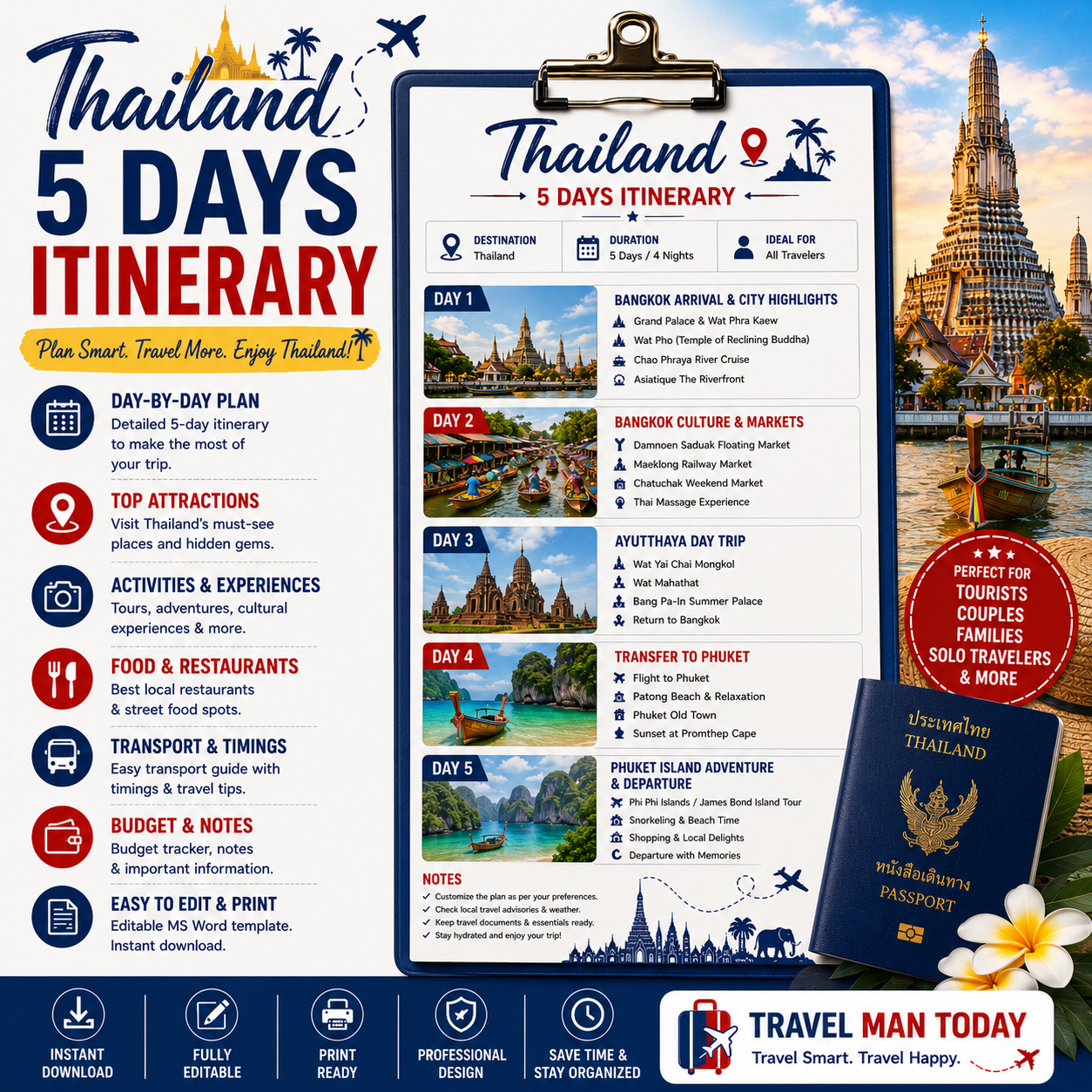
 Thailand Itinerary Indians 5 Days: Bangkok, Ayutthaya, Chiang Mai — ₹31,250 Cost Breakdown

Trusted Thailand 2026: What the Safety Certification Means for Indian Travelers
UAE Flights Disruption 2026: SpiceJet India Routes Delayed, Air Canada Suspends to March 2027
EU Hand Luggage Rules 2026: What Actually Changed — and What Hasn’t Yet
Thailand Itinerary Indians 5 Days: Bangkok, Ayutthaya, Chiang Mai — ₹31,250 Cost Breakdown
Trusted Thailand 2026: What the Safety Certification Means for Indian Travelers
UAE Flights Disruption 2026: SpiceJet India Routes Delayed, Air Canada Suspends to March 2027
EU Hand Luggage Rules 2026: What Actually Changed — and What Hasn’t Yet

Aaseem Bhardwaj is a journalist, seasoned traveler and IT professional based in India. With firsthand travel experience across Southeast Asia, East Asia, Middle East and Europe, Aaseem founded Travel Man Today to provide reliable visa updates and travel news for Indian passport holders. He has personally traveled to Thailand, Vietnam, Malaysia, Japan, Singapore, Hong Kong, South Korea, UAE and Europe. Follow his travel vlogs on YouTube at @travelmantoday



Templates for Indians



1 thought on “Thailand Korea Taiwan Tourism 2026: TAT Targets Tech-Economy Travelers”