Southeast Asia Budget Airlines 2026: AirAsia Cuts 25%, Scoot Loss Doubles
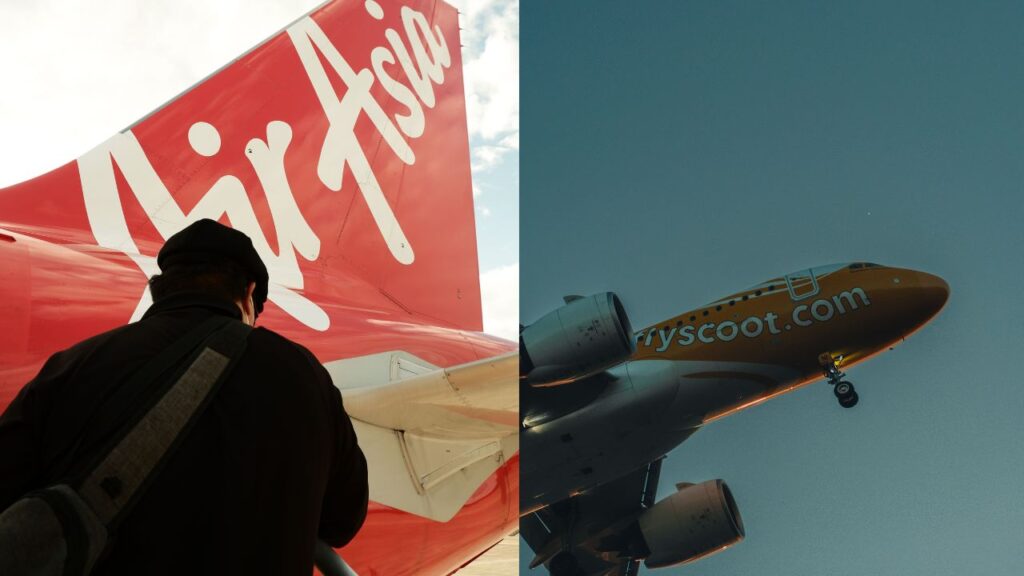
Southeast Asia budget airlines 2026 under fuel cost pressure — AirAsia CEO Bo Lingam announces a 20–25% Q3 seat capacity cut, return of 25 older aircraft, and suspension of the Sydney–Kuala Lumpur route from October, as average jet fuel prices reached US$183 per barrel in Q2 producing net losses at AirAsia, Cebu Pacific, and a near-doubled operating loss at Scoot.
Quick answer: Southeast Asia’s budget airlines are in a difficult H2 2026 — AirAsia cut seat capacity 20–25% in Q3, returned 25 older aircraft, and suspended its Sydney–KL route from October. Scoot’s operating loss nearly doubled to S$32 million. Cebu Pacific reported a net loss. All three were hit by US$183/barrel jet fuel in Q2. AirAsia expects Q4 recovery with forward bookings tracking in line with last year.
Southeast Asia budget airlines 2026 recovery story is complicated — budget carriers across the region are hoping the worst of the Middle East-driven fuel shock is behind them, but face a difficult second half as margins remain under pressure and strained household budgets threaten demand.
The latest quarterly results from Malaysia’s AirAsia, Singapore Airlines’ budget arm Scoot, and the Philippines’ Cebu Pacific showed that efforts to recoup soaring fuel costs through higher fares fell short.
The Southeast Asia budget airlines 2026 situation is a direct continuation of the fuel cost crisis that crushed Thai AirAsia’s Q2 results (THB 2 billion operating loss), devastated Thai Airways’ profits (-87%), and squeezed Bangkok Airways despite its hedging advantage. AirAsia and Cebu Pacific reported net losses, while Scoot’s operating loss nearly doubled — all three carriers absorbing the same US$183 per barrel average jet fuel price that has defined Q2 2026 across Asian aviation.
For Indian travelers who book AirAsia, Scoot, and Cebu Pacific for connections from Bangkok, Singapore, and Kuala Lumpur to secondary Asian destinations, the Southeast Asia budget airlines 2026 capacity cuts are directly affecting route availability and pricing. See our Thailand airlines fuel costs guide for the broader Q2 aviation results context.
The Structural Problem: Low-Cost Carriers and Fuel
The results exposed a squeeze at the heart of the low-cost model — fuel makes up a larger share of expenses for budget carriers than for full-service airlines, while their price-sensitive customers leave carriers less scope to lift fares without weakening demand.
This structural tension is the defining commercial challenge for Southeast Asia budget airlines 2026. Full-service carriers like Singapore Airlines, Thai Airways, and Cathay Pacific can pass fuel cost increases through to business class and premium economy passengers who are less price-sensitive. Budget carriers have no premium cabin buffer — every fare increase must be absorbed by passengers who chose the carrier specifically because of its low price point.
Currency declines added to the pressure as the Malaysian ringgit, Thai baht, Indonesian rupiah, and Philippine peso weakened against the dollar, increasing fuel and aircraft leasing costs simultaneously. Fuel is priced in US dollars globally. When Southeast Asian currencies weaken against the dollar
— as they have during the Middle East conflict period — the dollar-denominated fuel cost becomes even more expensive in local currency terms, compounding the per-barrel price increase with a currency translation loss. AirAsia’s net foreign exchange loss of approximately US$82 million in Q2 reflects exactly this mechanism.
AirAsia: 20–25% Capacity Cut, 25 Aircraft Returned, Sydney Route Suspended
AirAsia is bracing for a weak third quarter, which it says is typically the softest for regional travel. The airline plans to cut seat capacity by 20–25% year-on-year in Q3, return 25 older aircraft to lessors during 2026, and suspend its Sydney–Kuala Lumpur route from October as part of a broader network recalibration.
CEO Bo Lingam said in a statement that the airline was taking a “deliberate, tactical approach” to protect its bottom line after average jet fuel prices reached US$183 a barrel in Q2. AirAsia also recorded a net foreign exchange loss of about US$82 million from currency weakness against the dollar across its regional network.
Lingam said the airline expects to restore capacity to pre-conflict levels in the fourth quarter, with forward bookings tracking in line with last year. The Q4 recovery expectation is commercially significant — AirAsia’s forward booking data through October–December 2026 is tracking comparably to 2025, suggesting demand has not been structurally damaged by fare increases and that the Q3 capacity cuts are genuinely protective rather than reflecting a demand collapse.
The 20–25% Q3 capacity cut is AirAsia’s most significant single-quarter reduction since the pandemic. Returning 25 older aircraft to lessors reduces both operating costs — maintenance, insurance, crew requirements — and the financial commitment of maintaining an oversized fleet during a high-cost period.
Scoot: Adding Capacity But Costs Doubled, Loss Widens
Scoot’s position among Southeast Asia budget airlines 2026 is the most paradoxical — it has strong demand, it is adding capacity, and it still nearly doubled its operating loss. Scoot continued adding capacity in response to strong demand, but its passenger unit costs rose 21.7% in the three months to June, pushing its operating loss to S$32 million (US$25.2 million) from S$17 million a year earlier despite higher fares and fuel hedging by parent company Singapore Airlines.
The mechanism is straightforward: a 21.7% unit cost increase driven by fuel, even with Singapore Airlines’ hedging advantage, outpaced the fare increases Scoot could implement without suppressing the demand it was trying to serve. The S$32 million operating loss at Scoot contrasts sharply with the positive narrative around its parent SIA’s record revenue — it confirms that the fuel shock is hitting the budget aviation layer even where the parent has hedging infrastructure and genuine demand strength.
The fact that Scoot continues expanding despite the loss signals SIA’s strategic commitment to maintaining Scoot’s Singapore hub connectivity. Unlike AirAsia’s defensive capacity cut, Scoot is investing through the pain — betting that fuel costs will moderate in H2 and that the capacity it is adding now will be profitable by Q4.
| Southeast Asia Budget Airlines 2026 — Q2/Q3 Comparison | AirAsia | Scoot | Cebu Pacific |
|---|---|---|---|
| Q2 net result | Net loss | Operating loss S$32M (+88%) | Net loss |
| Jet fuel Q2 average | US$183/barrel | US$183/barrel | US$183/barrel |
| Currency impact | ~US$82M FX loss | Partial SIA hedging | Philippine peso pressure |
| Q3 capacity plan | Cut 20–25% YoY | Continuing to add | Recalibrating |
| Aircraft actions | Returning 25 to lessors | Expanding fleet | Fleet management |
| Route changes | Sydney–KL suspended Oct | Expanding | Selective suspensions |
| Q4 outlook | Recovery expected | Monitoring costs | Cautious |
Why Raising Fares Does Not Fully Solve the Problem
Attempts to recover higher fuel costs through increased fares proved insufficient, highlighting a structural weakness in the Southeast Asia budget airlines 2026 low-cost model. The mathematics of LCC fare increases are more constrained than they appear.
An AirAsia Bangkok–Kuala Lumpur flight at US$183/barrel fuel versus US$80/barrel pre-conflict means the fuel cost per seat may have increased by approximately US$15–25 on a 2.5-hour sector. To fully recover that fuel cost increase through fares, AirAsia would need to add US$15–25 per ticket. On a base fare of US$50–80, that is a 20–50% fare increase — a level that demonstrably suppresses booking volumes in price-sensitive Southeast Asian markets.
The result is partial recovery: fares go up enough to recover some of the fuel cost increase, but not enough to fully offset it, producing the losses reported across all three carriers while simultaneously weakening demand to the degree that capacity utilisation also falls. This is the double-bind that defines the Southeast Asia budget airlines 2026 financial position — and the reason AirAsia chose capacity reduction over fare maximisation as its primary response.
What This Means for Indian Travelers Booking Budget Flights
The Southeast Asia budget airlines 2026 capacity cuts have direct practical implications for Indian travelers using AirAsia, Scoot, and Cebu Pacific for regional connections.
Fewer route options in Q3. AirAsia’s 20–25% Q3 capacity cut and 25 aircraft returned to lessors means fewer flights on secondary routes. Indian travelers planning connections from Bangkok or KL to secondary Southeast Asian destinations — Bali, Phuket, Langkawi, Boracay, Koh Samui — should check current route availability and frequency before finalising itineraries. Some routes that operated daily in 2025 may now operate less frequently or have been suspended.
Higher fares than pre-2026. The fare increases that partially offset fuel costs mean budget carrier prices are structurally higher than the pre-February 28 baseline. Indian travelers comparing 2024 or early 2025 fare memories with 2026 prices will find a 15–25% premium across most AirAsia and Scoot routes. This is expected to partially normalise in Q4 if fuel costs moderate.
Q4 is the best booking window. AirAsia expects to restore capacity to pre-conflict levels in Q4 with forward bookings tracking in line with last year — suggesting Q4 will offer both more seat availability and competitive pricing as the airline rebuilds frequency to attract the returning demand it is counting on for financial recovery.
Scoot for Singapore connections. Scoot’s continued capacity addition despite the loss signals SIA’s strategic commitment to maintaining Scoot’s Singapore hub connectivity. Indian travelers using Scoot for Singapore–Southeast Asian connections can expect maintained frequency even during the current financial pressure period.
For confirmed flight reservations for visa applications, a legitimate booking is available at flyinghelpline.com/flight-reservation/ for ₹999. For travel insurance covering regional budget airline flights including cancellations and disruptions, SafetyWing Nomad Insurance provides comprehensive coverage at affordable daily rates for Indian travelers.
FAQs — Southeast Asia Budget Airlines 2026
Q: What financial results did AirAsia, Scoot and Cebu Pacific report for Q2 2026?
Southeast Asia’s budget carriers reported across-the-board losses in Q2 2026. AirAsia and Cebu Pacific reported net losses, while Scoot’s operating loss nearly doubled to S$32 million from S$17 million a year earlier despite higher fares and fuel hedging by parent Singapore Airlines. AirAsia paid an average of US$183 a barrel for jet fuel during Q2 and recorded a net foreign exchange loss of approximately US$82 million. All three carriers found that fare increases were insufficient to fully offset the fuel cost surge triggered by the Middle East conflict.
Q: What is AirAsia doing to recover from the fuel cost shock?
AirAsia is taking a deliberate, tactical approach under CEO Bo Lingam — cutting seat capacity by 20–25% year-on-year in Q3, returning 25 older aircraft to lessors during 2026, and suspending its Sydney–Kuala Lumpur route from October as part of a broader network recalibration.
The capacity reduction reduces operational costs while protecting yield on the routes that continue operating. AirAsia expects to restore capacity to pre-conflict levels in Q4 2026, with forward bookings currently tracking in line with the same period last year — suggesting demand fundamentals remain intact.
Q: Why can’t budget airlines simply raise fares to cover higher fuel costs?
The results exposed a squeeze at the heart of the low-cost model — fuel makes up a larger share of budget carrier expenses than at full-service airlines, while price-sensitive passengers leave carriers less scope to lift fares without weakening demand. Fully recovering the Q2 fuel cost increase through fares would require a 20–50% fare increase on typical Southeast Asian short-haul routes — a level that demonstrably suppresses bookings in markets where travelers chose the LCC specifically for low prices. Currency weakness against the dollar across the ringgit, baht, rupiah, and peso also increased the effective fuel cost beyond the per-barrel price alone.
Final Word
The Southeast Asia budget airlines 2026 story — AirAsia’s 20–25% Q3 capacity cut and 25 aircraft returned, Scoot’s doubled operating loss despite strong demand, Cebu Pacific’s net loss — is the LCC layer of the same Middle East fuel cost shock that hit Thai AirAsia, Bangkok Airways, and Thai Airways in Q2.
The structural squeeze is real: fuel costs that cannot be fully passed to price-sensitive customers, compounded by currency weakness against the dollar. AirAsia’s Q4 recovery expectation — capacity restored, forward bookings tracking last year — is the most commercially significant signal for Indian travelers planning year-end Southeast Asia trips. Book Q4. Expect better frequency, better fares, and an airline that has absorbed its most painful quarter and is rebuilding.
Also Read:
- Thailand Airlines Fuel Costs — Thai AirAsia THB 2B Loss Q2
- Singapore Airlines Air India Loss — SG$945M Annus Horribilis
- UAE Flight Updates August 2026 — Emirates Bahrain Cancelled
Official Sources:
- Bangkok Post — Southeast Asia’s Budget Airlines Eye Recovery But Fuel Scars Linger
- AirAsia Official Investor Relations
 Thailand Itinerary Indians 5 Days: Bangkok, Ayutthaya, Chiang Mai — ₹31,250 Cost Breakdown

Trusted Thailand 2026: What the Safety Certification Means for Indian Travelers

UAE Flights Disruption 2026: SpiceJet India Routes Delayed, Air Canada Suspends to March 2027
EU Hand Luggage Rules 2026: What Actually Changed — and What Hasn’t Yet
Thailand Itinerary Indians 5 Days: Bangkok, Ayutthaya, Chiang Mai — ₹31,250 Cost Breakdown
Trusted Thailand 2026: What the Safety Certification Means for Indian Travelers
UAE Flights Disruption 2026: SpiceJet India Routes Delayed, Air Canada Suspends to March 2027
EU Hand Luggage Rules 2026: What Actually Changed — and What Hasn’t Yet

Aaseem Bhardwaj is a journalist, seasoned traveler and IT professional based in India. With firsthand travel experience across Southeast Asia, East Asia, Middle East and Europe, Aaseem founded Travel Man Today to provide reliable visa updates and travel news for Indian passport holders. He has personally traveled to Thailand, Vietnam, Malaysia, Japan, Singapore, Hong Kong, South Korea, UAE and Europe. Follow his travel vlogs on YouTube at @travelmantoday






Templates for Indians


5 thoughts on “Southeast Asia Budget Airlines 2026: AirAsia Cuts 25%, Scoot Loss Doubles”