Japan Aviation Fuel Tax 2026: Ministry Proposes Freeze at 15,000 Yen to Shield Domestic Fares
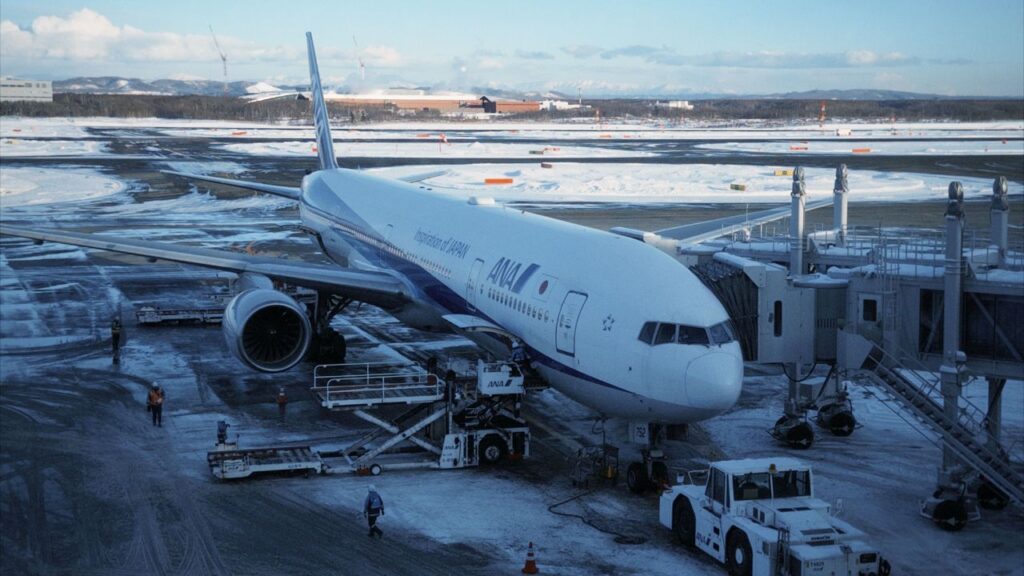
Japan aviation fuel tax 2026 freeze proposed — Japan's Ministry of Land, Infrastructure, Transport and Tourism is requesting that the aviation fuel tax rate remain at 15,000 yen per kilolitre rather than rising to 18,000 yen in fiscal 2027 (from April 2027), citing soaring Middle East conflict fuel prices as the reason to continue tax support for ANA, JAL, and Japanese domestic aviation.
Quick answer: Japan’s transport ministry is proposing to freeze the aviation fuel tax at 15,000 yen per kilolitre rather than allowing it to rise to 18,000 yen in fiscal 2027 (from April 2027). The freeze is a direct response to the Middle East conflict’s fuel price surge. Okinawa and remote island routes retain lower special rates. Airlines are separately considering domestic fuel surcharges. This affects Japan domestic airfares — relevant for Indian travelers using ANA or JAL for multi-city Japan itineraries.
Japan aviation fuel tax 2026 relief is being sought by the transport ministry — Japan’s Ministry of Land, Infrastructure, Transport and Tourism is proposing to delay a planned aviation fuel tax increase from 15,000 to 18,000 yen per kilolitre, which was scheduled to take effect when fiscal 2027 begins next April, citing soaring fuel prices from Middle East turmoil as the reason for retaining tax support for airlines.
The Japan aviation fuel tax 2026 proposal is the Japanese government’s direct response to the same Middle East conflict fuel cost crisis that has crushed Thai AirAsia with a THB 2 billion operating loss, driven AirAsia to cut 25% of its Q3 capacity, and pushed Southeast Asia’s budget carriers into net losses. Japan’s approach differs from Southeast Asian carrier responses — rather than cutting capacity, the Japanese government is proposing to use the tax system to absorb part of the fuel cost increase and prevent it from fully flowing through to passenger airfares.
For Indian travelers planning multi-city Japan itineraries that include domestic ANA or JAL flights between Tokyo, Osaka, Sapporo, Fukuoka, or Okinawa, the Japan aviation fuel tax 2026 freeze proposal is good news — it removes one planned upward pressure on domestic Japan airfares from April 2027. See our ANA Japan flights India 2026 guide for the current best fares on India–Japan routes.
The Tax Structure: Current Rate, Proposed Freeze, and Statutory Level
The Japan aviation fuel tax 2026 situation requires understanding the three-tier tax structure that Japan’s aviation fuel levy operates within.
The statutory level — the maximum rate set by legislation — is 26,000 yen per kilolitre for most domestic routes. This is the full legal rate that applies in the absence of any special concession or reduction measure.
The current applied rate is 15,000 yen per kilolitre, which has been in effect for both fiscal 2025 and fiscal 2026. This represents a significant reduction from the 26,000 yen statutory level, maintained through ongoing tax system reform requests by the transport ministry. The 15,000 yen rate includes a legacy from the COVID-19 support period — the rate was cut to 9,000 yen per kilolitre in fiscal 2021 as a pandemic relief measure and has been gradually restored since fiscal 2022, reaching its current 15,000 yen level.
The planned scheduled increase — without intervention — would raise the rate from 15,000 to 18,000 yen per kilolitre when fiscal 2027 begins in April 2027. This 3,000 yen per kilolitre increase, on a domestic fleet consuming tens of millions of kilolitres annually, would represent a significant cost addition for ANA and JAL, the two major Japanese carriers operating domestic routes.
The transport ministry’s proposal forms part of its fiscal 2027 tax system reform requests — the formal annual process through which Japanese ministries request tax adjustments from the ruling Liberal Democratic Party and the Ministry of Finance. The proposal will freeze the rate at 15,000 yen rather than allowing the scheduled 18,000 yen increase to take effect.
Special Rates: Okinawa and Remote Island Routes
Beyond the main domestic rate, the Japan aviation fuel tax 2026 proposal includes continuation of specific route-based reduced rates that serve Japan’s geographic connectivity priorities.
The rate for remote-island flights would remain at 11,250 yen per kilolitre rather than the statutory 19,500 yen, while services to and from Okinawa, the country’s southernmost prefecture, would continue at 7,500 yen per kilolitre instead of the statutory 13,000 yen.
Okinawa’s special rate reflects the island prefecture’s dependence on air connectivity — without affordable air services, Okinawa’s economic and social connection to mainland Japan would be significantly impaired. The 7,500 yen Okinawa rate versus the 13,000 yen statutory rate represents a 42% tax reduction that makes Okinawa routes commercially viable for both ANA and JAL at the frequencies the prefecture’s economy requires.
For Indian travelers planning an Okinawa extension to a Japan itinerary — the island chain’s coral reefs, Ryukyu heritage sites, and beach culture make it a genuinely distinctive add-on to the standard Tokyo–Osaka–Kyoto circuit — the Okinawa special tax rate helps maintain competitive domestic airfares on the Tokyo or Osaka to Naha route.
The Domestic Fuel Surcharge Risk: What Airlines Are Considering
Even with the transport ministry’s proposed tax freeze, the Japan aviation fuel tax 2026 story has a separate, passenger-unfriendly development.
Fuel surcharges currently added to international airfares may also appear on domestic tickets, an option airlines are examining in response to higher fuel prices. The likely major impact on household finances has led the ruling Liberal Democratic Party to ask the government for measures supporting airlines.
This is the commercial tension at the heart of Japan’s aviation fuel cost situation. The transport ministry is proposing a tax freeze to reduce the cost burden on airlines. But airlines are simultaneously considering adding domestic fuel surcharges — a fee structure currently applied to international tickets — to domestic Japan routes in response to the underlying jet fuel price increase from the Middle East conflict.
If domestic fuel surcharges are introduced on ANA and JAL domestic routes, the net effect for passengers would be higher domestic airfares even if the tax freeze is approved — because the surcharge and the tax are separate cost mechanisms, and the tax freeze does not prevent airlines from adding surcharges.
The LDP’s request to the government for measures supporting airlines — noted in the article — suggests that political pressure is being applied to prevent the most damaging passenger-facing outcomes from both the fuel cost increase and potential surcharges simultaneously.
What This Means for Indian Travelers Booking Japan Domestic Flights
The Japan aviation fuel tax 2026 proposal and the domestic fuel surcharge discussion have specific practical implications for Indian travelers booking multi-city Japan itineraries.
Book domestic Japan flights in advance for Q4 2026 and early 2027. The domestic surcharge is still under consideration — not yet implemented. Indian travelers booking ANA or JAL domestic Japan flights now for October–December 2026 and January–March 2027 travel avoid any potential surcharge introduction on future bookings. Japan’s domestic aviation market is priced dynamically — early booking consistently produces the best fares, and the fuel cost environment makes early booking even more advantageous than usual.
Okinawa remains affordable relative to mainland routes. The 7,500 yen Okinawa tax rate — if maintained under the proposed freeze — keeps ANA and JAL Okinawa flights more cost-efficient than comparable distance mainland routes. Naha from Tokyo is approximately 2.5 hours — comparable in distance to Tokyo–Sapporo — but benefits from the special tax rate that makes Okinawa a viable add-on for Indian travelers on a 10–14 day Japan trip.
The April 2027 tax decision timeline. The transport ministry’s proposal is a request — not yet a decision. The LDP and Ministry of Finance must approve the fiscal 2027 tax system reform package, typically finalised in December 2026. Indian travelers planning spring 2027 Japan trips (cherry blossom season, late March to early May) should monitor for the December 2026 tax decision and the potential domestic surcharge announcement before finalising domestic itinerary legs.
ANA vs JAL domestic pricing. Both ANA and JAL offer domestic discount fares — ANA Discount, ANA Value, and JAL SAVER equivalents — that are significantly cheaper than base fares when booked 45–75 days in advance. The Suica IC card covers local trains within cities; the JR Pass covers shinkansen and JR local trains between cities; ANA and JAL domestic flights cover point-to-point city pairs where shinkansen is significantly slower or unavailable (particularly Okinawa, Hokkaido, and some southern Kyushu destinations).
Japan requires a visa for Indian passport holders. Apply through the Embassy of Japan in New Delhi or Consulates in Mumbai, Chennai, Kolkata, or Bengaluru. For confirmed flight reservations for your Japan visa application, a legitimate booking is available at flyinghelpline.com/flight-reservation/ for ₹999. For travel insurance covering Japan domestic and international flights, SafetyWing Nomad Insurance provides comprehensive coverage at affordable daily rates for Indian travelers.
FAQs — Japan Aviation Fuel Tax 2026
Q: What is Japan’s transport ministry proposing on aviation fuel tax?
Japan’s Ministry of Land, Infrastructure, Transport and Tourism is proposing to delay a planned aviation fuel tax increase from 15,000 to 18,000 yen per kilolitre, which was scheduled to take effect when fiscal 2027 begins next April. Fuel prices have soared amid turmoil in the Middle East, leading the ministry to conclude that tax support for airlines should continue. The proposal will form part of the ministry’s fiscal 2027 tax system reform requests to the LDP and Ministry of Finance, typically finalised in December 2026.
Q: How does Japan’s aviation fuel tax affect domestic airfares?
Passengers ultimately bear the levy through domestic airfares, even though it is imposed on fuel consumed by domestic flights. Money collected is used for airport improvements and noise-control measures. The current rate of 15,000 yen per kilolitre is already significantly reduced from the statutory 26,000 yen level through ongoing ministry concession requests. If the 18,000 yen increase is allowed to take effect in April 2027 without the freeze, domestic Japan airfares on ANA and JAL would face additional upward pressure from the tax increase alongside the underlying Middle East fuel cost environment.
Q: Could Japan domestic flights get more expensive despite the tax freeze proposal?
Yes — fuel surcharges currently added to international airfares may also appear on domestic tickets, an option airlines are examining in response to higher fuel prices. Even if the transport ministry’s tax freeze proposal is approved, ANA and JAL are separately considering adding domestic fuel surcharges that are not covered by the tax concession. The tax freeze prevents one source of fare increases; a new domestic surcharge would create a separate source. The LDP has asked the government for measures to support airlines and protect household finances from the combined impact.
Final Word
The Japan aviation fuel tax 2026 freeze proposal is good news for domestic Japan airfares in isolation — preventing a 3,000 yen per kilolitre increase from flowing into ANA and JAL domestic ticket prices from April 2027. The simultaneous consideration of domestic fuel surcharges by airlines is the complicating factor — a development to monitor through the second half of 2026 as the fiscal 2027 tax reform package takes shape.
For Indian travelers building multi-city Japan itineraries with domestic flight legs, the practical advice is unchanged: book domestic segments early, consider the Okinawa extension at its maintained special tax rate, and watch for any domestic surcharge announcement from ANA or JAL before the December 2026 tax decision.
Also Read:
- ANA Japan Flights India 2026 — Hello Blue Sale Delhi from ₹40K
- Japan Haneda Airport Rules — 30-Min Bag Deadline September 1
- Southeast Asia Budget Airlines 2026 — AirAsia Cuts 25% Q3
Official Sources:
- Nation Thailand — Japan’s Transport Ministry Proposes Delaying Aviation Fuel Tax Rise
- Japan Ministry of Land, Infrastructure, Transport and Tourism
 Thailand Itinerary Indians 5 Days: Bangkok, Ayutthaya, Chiang Mai — ₹31,250 Cost Breakdown

Trusted Thailand 2026: What the Safety Certification Means for Indian Travelers

UAE Flights Disruption 2026: SpiceJet India Routes Delayed, Air Canada Suspends to March 2027
EU Hand Luggage Rules 2026: What Actually Changed — and What Hasn’t Yet
Thailand Itinerary Indians 5 Days: Bangkok, Ayutthaya, Chiang Mai — ₹31,250 Cost Breakdown
Trusted Thailand 2026: What the Safety Certification Means for Indian Travelers
UAE Flights Disruption 2026: SpiceJet India Routes Delayed, Air Canada Suspends to March 2027
EU Hand Luggage Rules 2026: What Actually Changed — and What Hasn’t Yet

Aaseem Bhardwaj is a journalist, seasoned traveler and IT professional based in India. With firsthand travel experience across Southeast Asia, East Asia, Middle East and Europe, Aaseem founded Travel Man Today to provide reliable visa updates and travel news for Indian passport holders. He has personally traveled to Thailand, Vietnam, Malaysia, Japan, Singapore, Hong Kong, South Korea, UAE and Europe. Follow his travel vlogs on YouTube at @travelmantoday






Templates for Indians