Cambodia Tourism Indians 2026: Angkor Wat Crowds Rising as China Visa-Free Trial Ends October 15
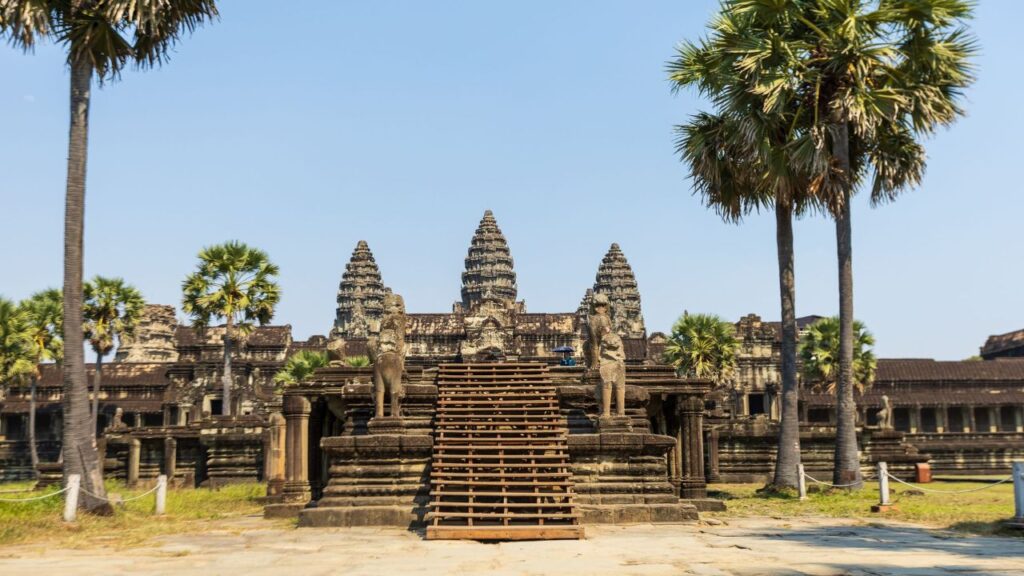
Cambodia tourism Indians 2026 — tourists photograph Angkor Wat at sunrise as Cambodia's June 16 to October 15 visa-free trial for Chinese nationals targets 600,000 visitors, with October 1-15 combining Golden Week (October 1-7) and the trial's final days to create the peak-crowd window Indian Navratri and Dussehra travelers should plan around with early-morning visits and the outer temple circuit.
Quick answer: Cambodia launched a 14-day visa-free trial for Chinese nationals from June 16 to October 15, 2026, targeting 600,000 Chinese visitors during the four-month trial period and 1.2 million for the full year 2026. Chinese arrivals in Jan-April 2026 were 331,199 — already Cambodia’s largest single source market. Indian travelers to Cambodia still require an e-Visa ($36 single entry). October will be peak-crowd season as both Chinese Golden Week and Indian Navratri overlap. Plan accordingly.
Cambodia tourism Indians 2026 has a specific context that every Indian traveler planning an Angkor Wat visit must understand — Cambodia launched a four-month visa-free trial for Chinese nationals from June 16 to October 15, 2026, targeting 600,000 Chinese visitors in the trial window and 1.2 million for the full year. With Thailand’s Golden Week bringing 250,000 Chinese tourists to Bangkok in the same October period, the broader Southeast Asia Chinese tourism recovery is reshaping crowd levels at every major destination — including Angkor Wat, Southeast Asia’s most visited heritage site.
The Cambodia tourism Indians 2026 picture is a combination of two separate stories — India’s own growing Cambodia outbound market and the Chinese tourism recovery that is rapidly pushing Angkor Wat toward and potentially beyond pre-pandemic crowd levels. Chinese arrivals to Cambodia in January-April 2026 already totalled 331,199, making China Cambodia’s largest single source market in the first four months of the year, and the visa-free trial was explicitly designed to push this further toward the 2.36 million record set in 2019.
For Indian travelers planning Angkor Wat visits — one of the most aspirational heritage tourism experiences for Indian passport holders, with the Angkor temples’ Hindu origins making them culturally resonant in a way few other international heritage sites are — October 2026 will be the most crowded month of the year. See our Philippines travel guide Indians 2026 for another Southeast Asian heritage destination comparison.
The Chinese Visa-Free Trial: What It Is and What It Means
The Cambodia tourism Indians 2026 context begins with the Chinese visa-free trial that launched June 16, 2026.
Cambodia started offering a visa-free trial for Chinese citizens on June 16, allowing Chinese nationals to enter Cambodia without a visa for stays of up to 14 days through October 15, 2026. Travelers can make multiple entries during the trial period. Cambodia’s Tourism Minister Huot Hak said authorities are targeting more than 600,000 Chinese visitors during the four-month pilot and hope to attract over 1.2 million Chinese tourists for the full year 2026.
The 600,000 target for the trial period alone — June 16 to October 15 is approximately 122 days — works out to approximately 4,900 Chinese visitors per day during the trial window. For reference, Angkor Wat’s daily capacity across the Angkor Archaeological Park is managed by ticketing — a one-day pass covers the core temples and a three-day pass covers all sites. Pre-pandemic peak Chinese visitor days at Angkor Wat exceeded 20,000 visitors, creating the queue and crowd conditions that prompted UNESCO concerns about heritage site management.
Cambodia’s country received around 1.2 million Chinese tourists in 2025, up from approximately 850,000 in 2024. However, arrivals remain well below the record 2.36 million Chinese visitors recorded in 2019. The 2026 target of 1.2 million for the full year represents flat growth versus 2025 — the visa-free trial is an attempt to accelerate the return toward 2019 levels.
What This Means for Indian Travelers at Angkor Wat
The Cambodia tourism Indians 2026 crowd context is significant for planning purposes — particularly the October timing overlap.
The October 1–7 Golden Week surge. As we covered in our Thailand China Golden Week 2026 article, Chinese tourism peaks during China’s October National Day Golden Week (October 1–7). Indian travelers planning October Cambodia visits for Navratri (October 2–12) or Dussehra (October 12) will be visiting Angkor Wat during exactly the same window as the largest Chinese tourism surge of the year. The combination of the visa-free trial’s October end-date rush and Golden Week creates the highest probability of crowded conditions at Angkor Wat in October 2026.
The practical planning response: Visit Angkor Wat at sunrise (gates open at 5:00am) rather than mid-morning — the sunrise reflection over the main temple from the western causeway is both the most photographed view and the time when the main temple is least crowded. The outer temples — Preah Khan, Ta Som, Neak Pean — see significantly fewer visitors than Angkor Wat and Bayon even at peak season and are equally extraordinary. Ta Prohm (the “Tomb Raider temple”) sees heavy Chinese tour group traffic throughout the day — visit early or late afternoon.
Siem Reap airport capacity. Siem Reap International Airport was fully replaced by Angkor International Airport (SAI) in November 2023 — located 48 km from Siem Reap city, approximately 45 minutes by road. Indian travelers arriving at Angkor International Airport should use pre-arranged hotel transfers or Grab Cambodia rather than unmetered taxis.
Cambodia Visa for Indian Travelers: e-Visa Required
The Cambodia tourism Indians 2026 visa situation is separate from the Chinese visa-free trial — Indian passport holders require a visa to enter Cambodia.
Cambodia e-Visa for Indians: Apply online at evisa.gov.kh before travel. The single-entry tourist e-Visa costs USD 36 (~₹3,240) including the processing fee. Processing typically takes 3 business days. The e-Visa is valid for 30 days from the date of arrival, with a 30-day permitted stay. One photograph and passport scan required during the application. The e-Visa is the recommended option — it is faster, cheaper, and more convenient than the Visa on Arrival.
Visa on Arrival at Siem Reap/Phnom Penh: Available for USD 30 (~₹2,700) cash only at Angkor International Airport and Phnom Penh International Airport. The VOA process takes 20–40 minutes at peak arrival times — the e-Visa queue is typically much faster.
Validity: Passport must have at least 6 months remaining validity from the date of entry. Check Indian child passports under the new Passports (Amendment) Rules 2026 — passports issued to children close to age 15 may have shorter effective validity than expected.
For confirmed flight reservations and hotel bookings for your Cambodia e-Visa application, a legitimate itinerary is available at flyinghelpline.com for ₹999. For travel insurance covering Cambodia visits including trip disruption and medical coverage, SafetyWing Nomad Insurance provides comprehensive coverage at affordable daily rates for Indian travelers.
Cambodia as a Destination for Indian Travelers
Cambodia tourism Indians 2026 has a specific cultural resonance that makes it more compelling for Indian visitors than a simple beach-and-temples Southeast Asia destination.
Angkor Wat — the Hindu connection. Angkor Wat was originally constructed in the 12th century by Khmer King Suryavarman II as a Hindu temple dedicated to Vishnu — the largest Hindu temple complex ever built and one of the most extraordinary architectural achievements in human history. The temple’s orientation (west-facing, unlike most Hindu temples), its bas-reliefs of scenes from the Ramayana and Mahabharata, its gallery of the Churning of the Ocean of Milk (Samudra Manthan), and its celestial dancer (apsara) carvings connect it directly to the Indian mythological tradition in a way that resonates deeply with Hindu Indian visitors. Angkor Wat is arguably more meaningful to an Indian traveler than to a Western tourist, precisely because the cultural references on every wall are part of the Indian visitor’s own heritage.
The broader Angkor Archaeological Park covers 400 square kilometres and contains over 1,000 temples ranging from the 9th to 15th centuries. The three-day Angkor Pass (USD 62 / ~₹5,580) is by far the best value — Day 1 covers the core circuit (Angkor Wat, Bayon, Baphuon), Day 2 the outer temples (Preah Khan, Ta Som, East Mebon, Pre Rup), and Day 3 Banteay Srei (the smallest and most intricately carved temple in the complex, 37km from Siem Reap) and the outer ring.
Phnom Penh — Cambodia’s capital 6 hours south of Siem Reap by road — adds the Royal Palace, National Museum, and the S-21 Genocide Museum to a comprehensive Cambodia itinerary. The S-21 and Choeung Ek (the Killing Fields) are among the most sobering and important historical sites in Asia, documenting the Khmer Rouge genocide of 1975-1979 that killed an estimated 2 million Cambodians.
Practical Cambodia tips for Indian travelers: The Cambodian Riel is used locally but USD is universally accepted throughout Cambodia for transactions above the smallest amounts. UPI does not work in Cambodia — carry USD cash. Siem Reap has excellent Indian restaurants around Pub Street and the Night Market area. The best time to visit is November to April (dry season); avoid May to October for Angkor trekking due to monsoon mud and path flooding.
The Southeast Asia Chinese Tourism Competition Context
Cambodia tourism Indians 2026 sits within a broader Southeast Asian competition for Chinese tourist market share that has been accelerating throughout 2026.
Thailand, Malaysia, Singapore, and now Cambodia have all eliminated or dramatically simplified visa requirements for Chinese nationals — competing for the Chinese outbound tourism recovery that is projected to reach 130 million trips annually once fully restored to pre-pandemic levels. Cambodia’s previous $30 visa requirement was a significant friction point versus Thailand’s visa-free access and Malaysia’s mutual exemption.
Cambodia is targeting Chinese tourists specifically because China remained Cambodia’s largest source of foreign tourists in the first four months of 2026 accounting for 331,199 arrivals — nearly double any other single country’s contribution. The visa-free trial is an explicit attempt to pull Chinese visitors who might otherwise choose Thailand’s more established Phuket and Bangkok product toward Cambodia’s Angkor Wat heritage circuit.
For Indian travelers, this competitive environment is a benefit — more Chinese tourism investment in Cambodia’s infrastructure, accommodation, and connectivity translates into better tourist facilities at Angkor Wat and in Siem Reap even for non-Chinese visitors.
| Cambodia Tourism Indians 2026 — Key Facts | Detail |
|---|---|
| Indian e-Visa cost | USD 36 (~₹3,240) at evisa.gov.kh |
| India Visa on Arrival cost | USD 30 (~₹2,700) cash only |
| Angkor 1-day pass | USD 37 (~₹3,330) |
| Angkor 3-day pass | USD 62 (~₹5,580) |
| Chinese visa-free trial period | June 16 – October 15, 2026 |
| Chinese tourist target 2026 | 1.2 million for full year |
| Chinese Golden Week peak | October 1–7 (visit early morning) |
| Best season for Indian visitors | November–April (dry season) |
| Airport serving Siem Reap | Angkor International Airport (SAI) |
| Currency | USD accepted everywhere |
FAQs — Cambodia Tourism Indians 2026
Q: Do Indian passport holders need a visa for Cambodia in 2026?
Yes. Indian passport holders require a visa to enter Cambodia. The recommended option is the Cambodia e-Visa, available online at evisa.gov.kh for USD 36 (~₹3,240) including processing fee. The e-Visa is single-entry, valid for 30 days from arrival, with a 30-day permitted stay, and takes approximately 3 business days to process. Visa on Arrival is also available at Angkor International Airport and Phnom Penh International Airport for USD 30 in cash but takes 20-40 minutes at peak times. The Chinese visa-free trial launched in June 2026 applies only to Chinese nationals and does not affect Indian passport holder visa requirements.
Q: Why will Angkor Wat be especially crowded in October 2026?
Cambodia launched a 14-day visa-free trial for Chinese nationals running from June 16 to October 15, 2026, targeting 600,000 Chinese visitors during the period. The trial ends on October 15 — meaning October 1-15 coincides with both China’s Golden Week National Day holiday (October 1-7) and the final two weeks of the visa-free trial. Indian travelers visiting Angkor Wat during Navratri (October 2-12) or Dussehra (October 12) will be at Angkor Wat during its peak annual Chinese visitor surge. Visit at sunrise (gates open 5am) and the outer temples — Preah Khan, Ta Som — to avoid peak crowds.
Q: Why is Angkor Wat particularly meaningful for Indian travelers?
Angkor Wat was originally constructed in the 12th century as a Hindu temple dedicated to Vishnu — the largest Hindu temple complex ever built. Its bas-reliefs depict scenes from the Ramayana, the Mahabharata, and the Churning of the Ocean of Milk (Samudra Manthan), connecting it directly to the Indian mythological tradition. Indian travelers find Angkor Wat more culturally resonant than most other international heritage sites precisely because the stories carved on every wall are part of Indian heritage — the same mythological episodes told in Indian epics, temples, and classical art.
Final Word
Cambodia tourism Indians 2026 — Chinese visa-free trial June 16 to October 15 targeting 600,000 visitors, China already Cambodia’s largest source market at 331,199 in Jan-April, Golden Week October 1-7 peak overlap, Indian e-Visa USD 36 required at evisa.gov.kh, Angkor Wat 3-day pass USD 62, dry season November-April best for Indian visitors, USD cash universally accepted — is a destination that delivers Southeast Asia’s most historically significant Hindu heritage experience in a country that is actively rebuilding its Chinese tourism base at the same time.
Plan early morning Angkor visits, book the 3-day pass, and avoid the October 1-7 Golden Week rush at peak sites if possible. The Angkor Archaeological Park is large enough that thoughtful timing makes even peak-season visits manageable.
Also Read:
- Thailand China Golden Week 2026 — 250,000 Tourists, THB 11.5B
- Vietnam e-Visa Indians 2026 — 90-Day e-Visa Full Guide
- Philippines Travel Guide Indians 2026 — Visa, Costs, Palawan
Official Sources:
- VnExpress — Cambodia Joins Malaysia, Singapore in Offering Visa-Free Entry to Chinese Tourists
- Cambodia e-Visa Official Portal
 Cambodia Tourism Indians 2026: Angkor Wat Crowds Rising as China Visa-Free Trial Ends October 15
AirAsia Fuel Crisis 2026: Costs Up 66%, Stock -70%, Fernandes Says No Bailout Needed

Uzbekistan Visa Free Indians 2026: 30 Days With US, UK or Schengen Visa — Full Eligibility Guide
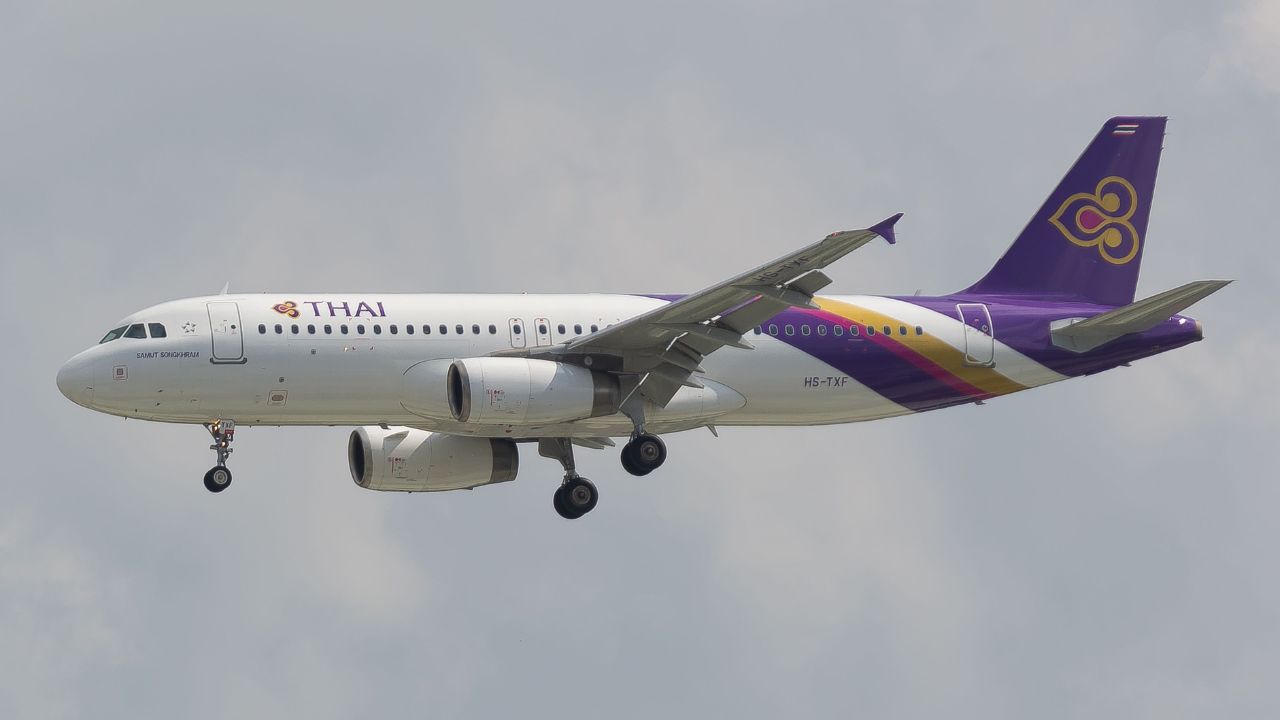
Thai Airways Ranking 2026: Top 10 in Travel + Leisure, Up From No.33 in Skytrax
Cambodia Tourism Indians 2026: Angkor Wat Crowds Rising as China Visa-Free Trial Ends October 15
AirAsia Fuel Crisis 2026: Costs Up 66%, Stock -70%, Fernandes Says No Bailout Needed
Uzbekistan Visa Free Indians 2026: 30 Days With US, UK or Schengen Visa — Full Eligibility Guide
Thai Airways Ranking 2026: Top 10 in Travel + Leisure, Up From No.33 in Skytrax

Aaseem Bhardwaj is a journalist, seasoned traveler and IT professional based in India. With firsthand travel experience across Southeast Asia, East Asia, Middle East and Europe, Aaseem founded Travel Man Today to provide reliable visa updates and travel news for Indian passport holders. He has personally traveled to Thailand, Vietnam, Malaysia, Japan, Singapore, Hong Kong, South Korea, UAE and Europe. Follow his travel vlogs on YouTube at @travelmantoday




Templates for Indians