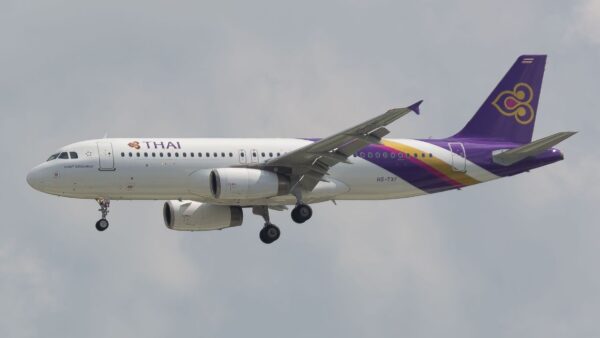
AirAsia Fuel Crisis 2026: Costs Up 66%, Stock -70%, Fernandes Says No Bailout Needed
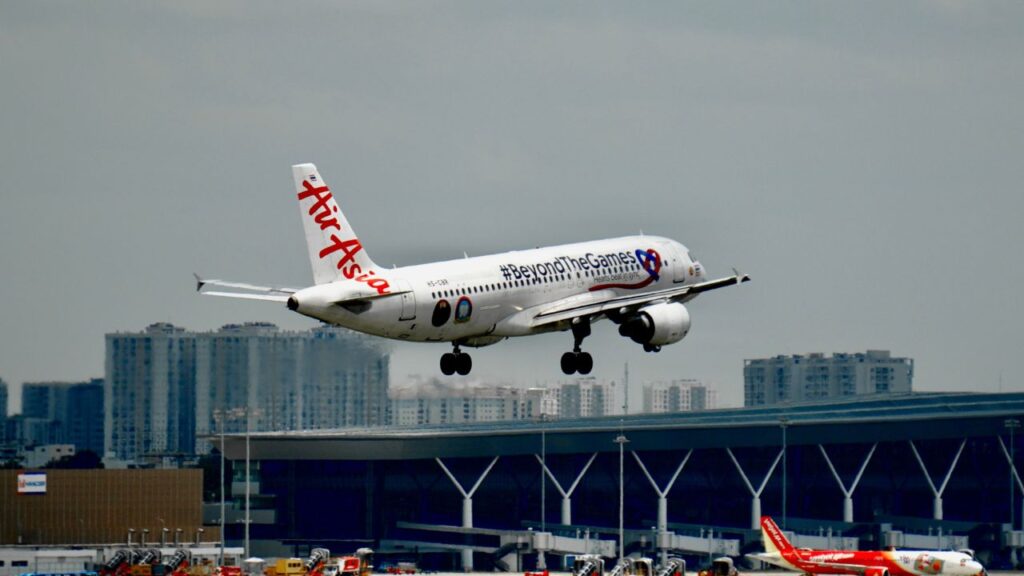
AirAsia fuel crisis 2026 — AirAsia aircraft on the tarmac at Kuala Lumpur International Airport Terminal 2 as co-founder Tony Fernandes addresses media on September 18, 2026, stating the airline does not need a government bailout despite fuel costs surging 66% in Q2 to $183 per barrel, shares falling 70% year-to-date, and current liabilities of RM18.4 billion against cash of RM954 million, with a $1 billion refinancing targeting completion by December or January.
Quick answer: AirAsia is facing its most serious financial pressure since COVID. Jet fuel costs surged 66% in Q2 2026 to $183 per barrel from the Iran war. AirAsia’s stock has fallen 70% year-to-date and 24% in two days after a Reuters report that Malaysia’s government asked rival airlines about absorbing AirAsia’s domestic market share. Current liabilities stand at RM18.4 billion against cash of RM954 million. Co-founder Tony Fernandes says no bailout is needed, $1 billion refinancing is underway, and demand remains strong with 80% load factor in Q3. For Indian travelers: AirAsia is still flying all routes. Monitor bookings closely.
AirAsia fuel crisis 2026 is the biggest financial story in Southeast Asian aviation since COVID — jet fuel costs driven by the Iran war have surged 66% in a single quarter to an average of $183 per barrel, pushing Southeast Asia’s largest low-cost carrier into a financial position that has rattled investors, triggered government scenario planning in Malaysia, and sent AirAsia’s stock to its lowest level since December 2022.
The AirAsia fuel crisis 2026 development matters directly to Indian travelers because AirAsia serves multiple India routes — AirAsia India (now part of Air India Express group), AirAsia Malaysia from Kuala Lumpur to Indian cities, and the AirAsia network across Thailand, Indonesia, and the Philippines that Indian travelers use for intra-Southeast Asia connections. The context: AirAsia controls about 60% of Malaysia’s domestic market and operates 100 aircraft in the country alone — a carrier of this size doesn’t disappear overnight, but understanding the financial situation is essential for anyone with upcoming bookings.
See our Southeast Asia budget airlines 2026 guide for the broader AirAsia capacity cut context we covered earlier this year.
The Financial Picture: What the Numbers Actually Show
The AirAsia fuel crisis 2026 balance sheet deserves careful reading — not alarm, but clear-eyed assessment.
AirAsia’s current liabilities stood at RM18.4 billion (US$4.52 billion) as of June 30, against cash and bank balances of RM954 million. The fuel costs surged 66% in the second quarter from the prior quarter to an average of $183 a barrel and it has no hedging in place.
The no-hedging position is the most commercially significant detail in the financial picture. Airlines use fuel hedging — buying fuel at fixed prices in advance through financial contracts — to protect against exactly this kind of sudden fuel price spike. AirAsia’s decision not to hedge means every dollar of fuel price increase hits its cost structure directly, with no buffer. When fuel went from approximately $110 per barrel in Q1 to $183 in Q2, AirAsia absorbed the full 66% increase in real-time operating costs.
For context: fuel typically represents 30–40% of an LCC’s total operating cost base. A 66% fuel cost increase is equivalent to a 20–26% increase in total operating costs in a single quarter, with no hedging protection. This is the commercial pressure Tony Fernandes is managing.
AirAsia’s shares have fallen about 24% since Reuters published its report on Wednesday, hitting the lowest level since December 2022. The stock has lost more than 70% of its value so far this year. The stock decline accelerated specifically after the Reuters report that Malaysia’s government had asked Malaysia Airlines and Batik Air whether they could absorb AirAsia’s domestic market share — a scenario planning exercise that, once public, triggered investor concern about whether the government anticipated a more serious AirAsia situation than the airline itself was disclosing.
What Fernandes Said: No Bailout, $1 Billion Refinancing, Strong Demand
The AirAsia fuel crisis 2026 response from Tony Fernandes at his Friday media briefing was direct and specific on four points.
On the financial situation relative to COVID: Fernandes said AirAsia was adept at managing cash and compared the current situation explicitly to COVID. “Covid was far, far worse than what we are dealing with now. We couldn’t fly then, but we can fly now and our demand is very strong.” The comparison is commercially sound — AirAsia’s current position, while strained, involves a functioning airline with 80% load factors, not a grounded fleet.
On the government and bailout: “We’ve never received any government support in the last 25 years. And as of today, we haven’t got any and that’s it. We do not need rescue, bailout, whatever.” Fernandes confirmed there had been no discussions with the Malaysian government about support. Malaysia’s finance ministry had hired Alton Aviation Consultancy to assess AirAsia’s funding needs — but this is monitoring and assessment, not a committed bailout.
On the $1 billion refinancing: AirAsia is advancing discussions with financial institutions, targeting up to $1 billion from international debt markets plus RM700 million in local credit facilities, primarily to restructure its debt. Fernandes clarified: “The refinancing is not raising fresh capital. It’s about bringing down costs.” The airline is also in talks with a major global bank on a bond transaction and has received an offer from a Middle Eastern investor for $1 billion with a term sheet signed pending due diligence — but is holding out for better terms.
On operational performance: The group’s load factor stood at 80% in Q3 and it sees strong bookings for Q4. Fernandes said he was optimistic about operations in Indonesia, the Philippines, and Thailand. No planes have been repossessed or their returns forced by lessors — 25 aircraft have been voluntarily returned to lessors as part of the restructuring, a commercial choice rather than a forced action.
The Restructuring: What AirAsia Is Actually Doing
The AirAsia fuel crisis 2026 response is not passive — the airline is executing a specific restructuring programme across four dimensions.
Route cuts. The carrier has been restructuring aggressively, cutting underperforming routes. This is the route reduction we covered in the Southeast Asia budget airlines article — AirAsia shed 444,200 seats in Q3 2026, a 15.7% reduction. Thai AirAsia specifically fell out of the Southeast Asian top 10 airlines by seat capacity in September 2026.
Fleet reduction. Twenty-five older, fuel-inefficient aircraft have been returned to lessors. For an airline with 100 planes in Malaysia alone, returning 25 aircraft is a significant operational scale-back — but it also eliminates the lease cost and maintenance cost of those aircraft, improving the per-aircraft economics of the remaining fleet.
A321LR/XLR strategy. AirAsia is accelerating its transition to the Airbus A321LR and A321XLR — next-generation single-aisle aircraft with significantly better fuel efficiency than the older A320ceos and A330s being retired. Fernandes said the airline expects “a pretty exciting announcement” with Airbus within the next month regarding its growth and strategy. The A321XLR’s extended range also opens medium-haul routes (India to Southeast Asia, Middle East to Southeast Asia) that the older aircraft cannot serve economically.
Fare adjustments. Fernandes forecast improving conditions as AirAsia adjusts fares to reflect higher fuel costs. This is the commercial mechanism that protects airlines from fuel cost spikes — passing some of the cost increase to passengers through higher ticket prices. Indian travelers booking AirAsia routes for Q4 2026 should expect fares on AirAsia sectors to be higher than equivalent 2025 prices.
What This Means for Indian Travelers With AirAsia Bookings
The AirAsia fuel crisis 2026 situation calls for informed caution rather than panic. Here is the specific guidance for each Indian traveler category.
Category 1 — You have upcoming AirAsia bookings. AirAsia is currently flying all routes with an 80% load factor. There is no cancellation risk in the near term — the airline is operational and commercially active. However, for bookings more than 3 months out, purchase comprehensive travel insurance that covers airline insolvency or flight cancellations. SafetyWing and most comprehensive travel insurance policies include airline failure coverage.
Category 2 — You are planning to book AirAsia routes. Book for Q4 2026 with confidence — Q4 shows strong bookings per Fernandes’s own statement. For 2027 bookings, consider that the airline’s financial resolution (whether through the $1 billion refinancing, Middle Eastern investor deal, or another mechanism) will be clearer by December 2026. Booking with a credit card rather than debit card gives charge-back protection if flights are later cancelled.
Category 3 — You use AirAsia for intra-Southeast Asia connections. The route cuts have already affected Thai AirAsia and some Malaysia-origin routes. Check that your specific AirAsia sectors are still operating before booking connecting itineraries — particularly on routes we covered in our Southeast Asia budget airlines article as having been reduced.
For travel insurance covering AirAsia bookings including airline disruption and insolvency coverage, SafetyWing Nomad Insurance provides comprehensive coverage at affordable daily rates for Indian travelers.
FAQs — AirAsia Fuel Crisis 2026
Q: Is AirAsia about to collapse in 2026?
No — AirAsia is under significant financial pressure but is not on the verge of collapse. The airline has an 80% Q3 load factor, strong Q4 bookings, and is actively executing a $1 billion refinancing. Co-founder Tony Fernandes stated clearly that “we do not need rescue, bailout, whatever” and that no planes have been repossessed. However, the balance sheet is stretched — RM18.4 billion in current liabilities against RM954 million cash — and the successful completion of the $1 billion refinancing is the key financial event to monitor. Spirit Airlines and airBaltic have both recently failed under comparable fuel cost pressures, confirming this is a genuine industry-wide risk, not just an AirAsia-specific narrative.
Q: Why has AirAsia’s fuel cost surged so dramatically in 2026?
AirAsia’s fuel costs surged 66% in Q2 2026 to an average of $183 per barrel, driven by a spike in jet fuel prices stemming from the Iran war that has affected airlines globally. The spike contributed to the collapse of U.S. carrier Spirit Airlines in May and a Chapter 11 bankruptcy filing by Latvia’s airBaltic. AirAsia has no fuel hedging in place, meaning the full cost of every dollar increase in jet fuel prices hits its operating costs directly without any financial buffer. The airline is responding by cutting routes, returning older fuel-inefficient aircraft, and adjusting fares upward.
Q: What is Malaysia’s government doing about AirAsia?
Reuters reported that Malaysia’s government asked Malaysia Airlines and Batik Air whether they could absorb AirAsia’s domestic market share — described as scenario planning while authorities monitor AirAsia’s financial health. Malaysia’s finance ministry hired Alton Aviation Consultancy to assess AirAsia’s funding needs. Fernandes stated there have been no discussions with the government and AirAsia has not received any government support. The Malaysian government’s monitoring reflects AirAsia’s systemic importance — controlling 60% of Malaysia’s domestic market with 100 planes — rather than an imminent intervention.
Final Word
AirAsia fuel crisis 2026 — fuel costs +66% to $183/barrel Q2, no hedging in place, stock -70% YTD and -24% in two days, RM18.4B current liabilities vs RM954M cash, Malaysia government scenario planning with rival airlines, $1B refinancing underway, Middle Eastern investor term sheet signed pending due diligence, 80% Q3 load factor, strong Q4 bookings, 25 aircraft returned to lessors, A321LR/XLR transition accelerating, Airbus announcement expected — is the most commercially significant aviation story in Southeast Asia right now.
For Indian travelers: AirAsia is flying, bookings are holding, and the airline’s management is executing a credible restructuring plan. Buy travel insurance with airline insolvency coverage for all AirAsia bookings. Monitor the $1 billion refinancing resolution — expected by December or January. The next month’s “exciting” Airbus announcement may be the positive catalyst that shifts the market narrative.
Also Read:
- Southeast Asia Budget Airlines 2026 — AirAsia Cuts 25% Q3
- Malaysia Thailand Tourism 2026 — Malaysia Edges Ahead 21.1M
- Malaysia Visa Indians 2026 — MEV Restricted, 30-Day Free Until Dec
Official Sources:
- VnExpress / Reuters — AirAsia Co-Founder Says Carrier Can Withstand Fuel Cost Spike
- AirAsia Official
 Cambodia Tourism Indians 2026: Angkor Wat Crowds Rising as China Visa-Free Trial Ends October 15

AirAsia Fuel Crisis 2026: Costs Up 66%, Stock -70%, Fernandes Says No Bailout Needed
Uzbekistan Visa Free Indians 2026: 30 Days With US, UK or Schengen Visa — Full Eligibility Guide

Thai Airways Ranking 2026: Top 10 in Travel + Leisure, Up From No.33 in Skytrax
Cambodia Tourism Indians 2026: Angkor Wat Crowds Rising as China Visa-Free Trial Ends October 15
AirAsia Fuel Crisis 2026: Costs Up 66%, Stock -70%, Fernandes Says No Bailout Needed
Uzbekistan Visa Free Indians 2026: 30 Days With US, UK or Schengen Visa — Full Eligibility Guide
Thai Airways Ranking 2026: Top 10 in Travel + Leisure, Up From No.33 in Skytrax

Aaseem Bhardwaj is a journalist, seasoned traveler and IT professional based in India. With firsthand travel experience across Southeast Asia, East Asia, Middle East and Europe, Aaseem founded Travel Man Today to provide reliable visa updates and travel news for Indian passport holders. He has personally traveled to Thailand, Vietnam, Malaysia, Japan, Singapore, Hong Kong, South Korea, UAE and Europe. Follow his travel vlogs on YouTube at @travelmantoday





Templates for Indians