South Korea China Flights 2026: 664 Weekly, First Increase in 7 Years, Japan Tourism Gap
South Korea China flights 2026 — an Air China Boeing 737 at Seoul Incheon International Airport as South Korea and China agreed in May 2026 to expand weekly passenger flight rights from 608 to 664 — the first increase in seven years — with Seoul Incheon-Beijing rising from 45 to 52 weekly and Incheon-Shanghai from 56 to 63 weekly, driven by a 27.1% surge in Chinese arrivals to Korea as mainland Chinese visits to Japan collapsed 56.4% in H1 2026.
Quick answer: China and South Korea agreed in May 2026 to expand weekly passenger flights from 608 to 664 — the first increase in bilateral flight rights in 7 years. Seoul Incheon-Beijing rises from 45 to 52 weekly; Incheon-Shanghai from 56 to 63 weekly. New routes added to Guangzhou, Dalian, Chengdu, Harbin, and regional Korean airports. H1 2026 Korea-China passenger traffic reached 9.54 million (+22% YoY), already exceeding pre-pandemic levels. Chinese visitors to South Korea grew 27.1% to 3.21 million in H1. Key driver: Chinese group travel to Japan fell 56.4% in H1 2026, redirecting Chinese tourists to South Korea.
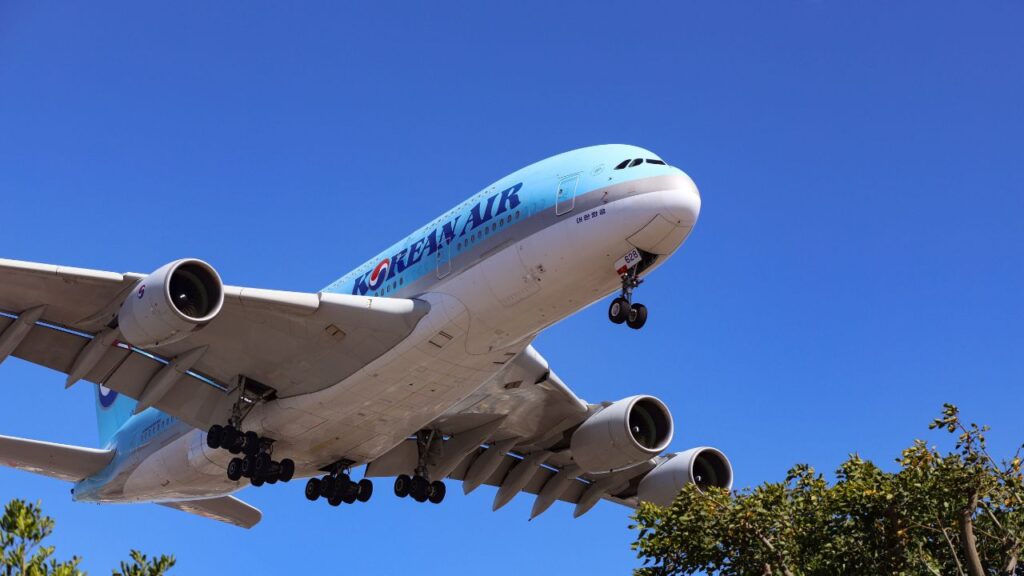
South Korea China flights 2026 are expanding for the first time since before the COVID pandemic — bilateral flight rights between the two countries increased from 608 to 664 weekly passenger flights under an agreement reached during bilateral aviation talks in Seoul in May 2026. The deal also raised maximum air freight flights from 54 to 68 weekly, bringing the total increase to 70 additional weekly services across both passenger and cargo categories.
The South Korea China flights 2026 expansion is the most significant bilateral aviation development in Northeast Asia for Indian travelers planning multi-destination trips combining South Korea and China — the same corridor that links Seoul’s Hallyu culture tourism with mainland China’s heritage and business travel. The driving force behind the expansion is extraordinary: Chinese group travel to Japan fell 56.4% in the first half of 2026 as diplomatic tensions and the weak yen’s reversal made Japan less attractive to Chinese tourists, redirecting that travel demand heavily toward South Korea.
For Indian travelers who visit both South Korea and China — or who use South Korea as a gateway to connect to China or onwards — the South Korea China flights 2026 expansion adds seat capacity and new route options on one of Asia’s most commercially significant bilateral aviation corridors. See our Seoul Incheon airport 2026 guide for the airport context.
The Numbers: What Changed and What It Means
The South Korea China flights 2026 agreement reached in May is the most specific and data-rich bilateral aviation story of the year in Northeast Asia.
Passenger flight rights: 608 → 664 weekly (+56 flights)
Cargo flight rights: 54 → 68 weekly (+14 flights)
Total increase: 70 additional weekly services
First expansion since: 2019 — a seven-year gap
The route-specific increases are where the expansion becomes commercially tangible:
Seoul Incheon to Beijing: 45 → 52 weekly
Seoul Incheon to Shanghai: 56 → 63 weekly
New capacity on: Seoul Incheon to Guangzhou, Dalian, Chengdu, and Harbin
Regional Korean airports: 87 → 101 weekly frequencies connecting South Korean regional cities (Gimhae, Daegu, Cheongju) with Chinese cities outside Beijing and Shanghai
The regional airport expansion is particularly significant — it distributes China-Korea connectivity beyond Seoul and beyond Beijing and Shanghai. The additional 14 weekly services reserved for routes connecting Korean regional airports with 10 Chinese cities means smaller Korean cities and secondary Chinese tourism destinations (Zhangjiajie, Qingdao, Yantai, Yichang) become directly accessible without Seoul transits.
Overall summer 2026 capacity between South Korea and mainland China reached approximately 2 million two-way seats in June 2026, up from 1.8 million a year earlier, with full summer 2026 capacity projected at 14.3 million two-way seats — a 14.2% year-on-year increase.
Why Now: The Japan Factor and China Tourism Redirect
The South Korea China flights 2026 expansion has a specific demand driver that makes the timing commercially rational — and that is largely absent from the mainstream English-language coverage of the story.
Chinese group travel to Japan fell 56.4% in the first half of 2026. Japan received approximately 21.1 million international visitors in H1 2026, 2% fewer than a year earlier — but mainland Chinese arrivals specifically plunged to approximately 2.06 million, well below any reasonable 2019 comparison. The reasons are multiple: China-Japan diplomatic friction, Chinese social media sentiment toward Japan related to the Fukushima water release controversy, the weakening yen making Japan less of a value destination as the perception gap with South Korea narrows, and active Chinese government promotion of South Korea as an alternative destination.
The beneficiary of this China-Japan tourism realignment is South Korea. Chinese visitor arrivals in Korea grew 27.1% to 3.21 million in H1 2026. In Q1 2026 alone, China led inbound travel to Korea with 1.4 million visitors — exceeding the comparable pre-pandemic Q1 2019 figure. Total Korea-China passenger traffic in Q1 2026 reached 4.39 million, already above the pre-pandemic Q1 2019 figure of 4.14 million.
South Korea, meanwhile, became Japan’s largest inbound source market during H1 2026, sending approximately 5.68 million visitors — an increase of 18.6%. South Korean tourists are flowing strongly to Japan while Chinese tourists flow away from Japan toward South Korea. This creates a clear bilateral tourism dynamic driving the South Korea China flights 2026 expansion.
The Route Expansion Beyond Seoul and Beijing
The South Korea China flights 2026 story’s most commercially interesting development is the distribution of new capacity beyond the traditional Seoul-Beijing and Seoul-Shanghai trunk routes.
Korean carriers are restoring routes suspended during the pandemic and exploring markets beyond Beijing and Shanghai, encouraged by the aviation rights increase. New and restored services have been announced to Yichang, Zhangjiajie, Qingdao, Yantai, and other Chinese cities that connect to tourism attractions beyond the coastal metropolises. Zhangjiajie — the Avatar Mountains of China’s Hunan province — is one of China’s most photographed natural landscapes. Yichang serves the Three Gorges region on the Yangtze River. Qingdao offers a German colonial port city combined with beach tourism.
Korean regional airports are also benefiting. The number of flights from Chinese cities to five Korean regional airports (Gimhae in Busan, Daegu, Cheongju near Daejeon, and others) increased 17.3% to 12,375 in H1 2026, while passenger traffic through these airports jumped 28.6% to approximately 665,000. In June specifically, arrivals through Korean regional airports surged 42.5% year-on-year — nearly twice the 18.2% growth rate at Seoul metropolitan area airports.
This regional distribution is a deliberate policy choice. South Korea’s Korea Tourism Organization has partnered with Eastar Jet to develop additional China routes and tourism products through regional airports, directing more international visitors toward Busan, Gyeongju, and other Korean destinations beyond Seoul that Indian Hallyu fans may not know as well.
What This Means for Indian Travelers Combining Korea and China
The South Korea China flights 2026 expansion has specific practical implications for Indian travelers building multi-destination Northeast Asia itineraries.
The Korea-China two-destination circuit. Indian travelers who want to combine Seoul with a China destination — Beijing (Forbidden City, Great Wall, Temple of Heaven), Shanghai (The Bund, Yu Garden, Pudong skyline), or Zhangjiajie (Avatar Mountains, Glass Bridge) — now have more direct flight options without routing through Tokyo or other intermediate hubs. The Incheon-Shanghai increase to 63 weekly flights provides near-daily-or-better frequency for the world’s most commercially significant bilateral, and the Incheon-Beijing increase to 52 weekly gives solid daily-equivalent access.
Visa requirements for both: South Korea requires a K-ETA (Korea Electronic Travel Authorisation) for eligible Indian passport holders. Check eligibility at k-eta.go.kr before departure. China requires an L (tourist) visa from the Chinese Embassy — apply through visaforchina.cn with 4 business days processing. Korea’s visa-free arrangements with China do not apply to Indian passport holders.
Connecting through Incheon from India. Incheon is consistently one of the world’s top 3 airports and rose to No.2 in the 2026 Skytrax rankings. Korean Air and Asiana Airlines serve multiple Indian cities (Delhi, Mumbai, Chennai, Bengaluru) to Incheon, and from Incheon the expanded China connectivity now provides onward access to 10+ Chinese cities. The Incheon transit itself is world-class — if you have a layover, the Incheon Transit Hotel and terminal facilities are among the best in global aviation.
For confirmed flight reservations for your Korean or Chinese visa applications, legitimate itinerary documents are available at flyinghelpline.com for ₹999. For travel insurance covering multi-destination Korea-China trips, SafetyWing Nomad Insurance provides comprehensive coverage at affordable daily rates.
For Korean and Chinese visa cover letter templates, visit travelmantoday.com/visa-templates/.
FAQs — South Korea China Flights 2026
Q: How many weekly flights now operate between South Korea and China?
Under an agreement reached during bilateral aviation talks in Seoul in May 2026, weekly passenger flight rights between South Korea and China expanded from 608 to 664 — the first increase in bilateral flight rights in seven years. Air freight rights increased from 54 to 68 weekly flights, bringing total additional weekly services to 70. Route-specific increases include Seoul Incheon-Beijing from 45 to 52 weekly, Seoul Incheon-Shanghai from 56 to 63 weekly, and new capacity on routes to Guangzhou, Dalian, Chengdu, Harbin, and Korean regional airports.
Q: Why are Chinese tourists shifting from Japan to South Korea in 2026?
Mainland Chinese arrivals to Japan fell 56.4% in H1 2026 to approximately 2.06 million, while Chinese visitor arrivals to South Korea grew 27.1% to 3.21 million in the same period. The drivers include China-Japan diplomatic friction, Chinese social media sentiment toward Japan related to the Fukushima water release controversy, and the narrowing value gap between the two destinations as Japan’s yen advantage has reduced. South Korea’s active Chinese tourism promotion — including K-drama and K-pop cultural pull — has made it the primary beneficiary of the China-Japan tourism realignment.
Q: Have Korea-China passenger numbers recovered to pre-pandemic levels?
Yes. Korea-China passenger traffic reached 9.54 million in H1 2026, up 22% year-on-year. In Q1 2026 specifically, total Korea-China passenger traffic reached 4.39 million — already exceeding the pre-pandemic Q1 2019 figure of 4.14 million. Chinese visitor arrivals to Korea in Q1 2026 reached 1.4 million, ahead of pre-pandemic numbers, making China Korea’s No.1 inbound market. South Korean visitors to China reached 2.66 million in Q1 2026, up 24.1% year-on-year.
Final Word
South Korea China flights 2026 — 608 to 664 weekly passenger flights under May 2026 bilateral agreement, first increase in 7 years, Incheon-Beijing 45→52, Incheon-Shanghai 56→63, new Guangzhou/Dalian/Chengdu/Harbin capacity, Korean regional airports +42.5% in June, H1 2026 Korea-China 9.54M passengers +22%, Chinese arrivals to Korea +27.1% to 3.21M, China-Japan tourist flows collapsing 56.4% while Korea surges — is the Northeast Asian aviation story that reshapes the region’s tourism map most dramatically in 2026.
For Indian travelers combining South Korea with China on multi-destination itineraries, the expanded flight rights create more frequency, more city-pair options, and more competitive fares on one of Asia’s highest-volume bilateral corridors. Apply for K-ETA and Chinese L visa before departure, and consider Incheon as the hub for your Northeast Asia circuit.
Also Read:
- Seoul Incheon Airport 2026 — World No. 2, Terminal 1 Renovation
- South Korea Tourist Complaints 2026 — Record 1,753 in 7 Months
- China Southern Delhi Guangzhou 2026 — Daily Flights From September 21
Official Sources:
- South China Morning Post — China, South Korea Boost Commercial Flights
- Aviation Week — China, South Korea Boost Air Services
 South Korea China Flights 2026: 664 Weekly, First Increase in 7 Years, Japan Tourism Gap
China US Flights 2026: Delta Adds Shanghai-LA to 5 Weekly From October 7
Singapore Indian Tourists 2026: 11.43M Arrivals Jan-Aug, India Growth Slows

Cambodia Tourism Indians 2026: Angkor Wat Crowds Rising as China Visa-Free Trial Ends October 15

South Korea China Flights 2026: 664 Weekly, First Increase in 7 Years, Japan Tourism Gap
China US Flights 2026: Delta Adds Shanghai-LA to 5 Weekly From October 7
Singapore Indian Tourists 2026: 11.43M Arrivals Jan-Aug, India Growth Slows
Cambodia Tourism Indians 2026: Angkor Wat Crowds Rising as China Visa-Free Trial Ends October 15

Aaseem Bhardwaj is a journalist, seasoned traveler and IT professional based in India. With firsthand travel experience across Southeast Asia, East Asia, Middle East and Europe, Aaseem founded Travel Man Today to provide reliable visa updates and travel news for Indian passport holders. He has personally traveled to Thailand, Vietnam, Malaysia, Japan, Singapore, Hong Kong, South Korea, UAE and Europe. Follow his travel vlogs on YouTube at @travelmantoday





Templates for Indians