Ebola Travel Restrictions 2026: 19 Countries — Entry Bans, 21-Day Quarantine, India Guide
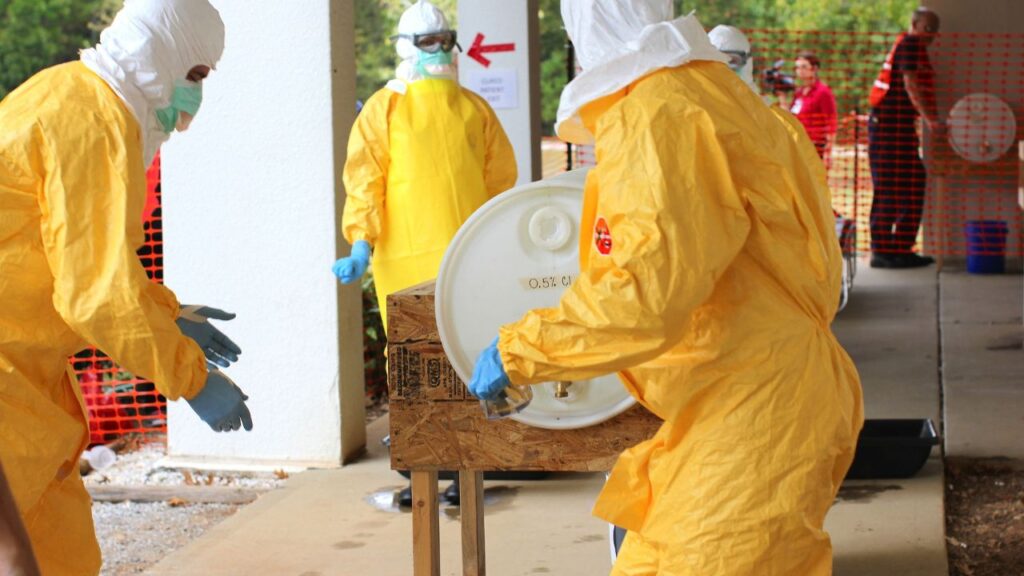
Ebola travel restrictions 2026 — health screening at an international airport departure hall as 19 countries introduce entry bans, 21-day quarantine requirements, and mandatory health declarations for travelers with recent links to the Democratic Republic of Congo, Uganda, and South Sudan, with major Indian transit hubs UAE (Dubai and Abu Dhabi), Bahrain, Qatar, Kuwait, and Saudi Arabia all imposing restrictions based on 21-30 day travel history regardless of the traveler's current point of departure, and India requiring all international arrivals to complete a Passenger Health Self-Declaration through AIR SUVIDHA 2.0.
Quick answer: As of October 2026, 19 countries have introduced Ebola travel restrictions targeting travelers with recent links to the Democratic Republic of Congo (DRC), Uganda, and South Sudan. Restrictions range from outright entry bans (Bahrain, Israel, Jordan, Kuwait, Qatar, Saudi Arabia, UAE) to health screening and 21-day quarantine (Canada, Philippines, Thailand, Trinidad and Tobago). India has introduced AIR SUVIDHA 2.0 health declarations for international arrivals. Critical for Indian travelers: UAE (Dubai/Abu Dhabi), Bahrain, Qatar, Kuwait, and Saudi Arabia — all major Gulf transit hubs — have entry restrictions that apply based on 21–30 day travel history, not just direct travel from affected countries. If you transited through DRC, Uganda, or South Sudan recently, you may be denied entry even at a Gulf connection.
Ebola travel restrictions 2026 — following the resurgence of Ebola disease in the Democratic Republic of Congo, Uganda, and South Sudan — have been introduced by 19 countries across Asia, the Middle East, the Americas, and the Pacific. The restrictions vary sharply in severity: some countries are imposing blanket entry bans, others are requiring 21-day quarantine, and some are using health screening and monitoring. What unites them is the trigger: recent travel history to affected countries, not just nationality.
The Ebola travel restrictions 2026 situation has a specific and urgent relevance for Indian international travelers that goes beyond those visiting Africa. Five of India’s most-used international transit hubs — the UAE (Dubai and Abu Dhabi), Bahrain, Qatar, Kuwait, and Saudi Arabia — have all introduced Ebola-linked travel restrictions. An Indian traveler who recently visited East or Central Africa for business, NGO work, or a safari, and is now routing home through Dubai, Abu Dhabi, or Doha, may be denied entry at the transit point if their travel history from the previous 21–30 days includes an affected country. This is the restriction that will catch the most Indian travelers off guard.
India itself has also introduced AIR SUVIDHA 2.0 — a mandatory health declaration covering travel history for the previous 21 days, applicable to all international arrivals in India, returning from any country. See our US visa wait times Indians 2026 guide for the broader travel documentation context.
The Critical Rule: Travel History, Not Just Destination
The Ebola travel restrictions 2026 most important principle for Indian travelers to understand is this: the restrictions are based on where you have been in the past 21–30 days, not where you are flying from today.
A traveler who flew Delhi–Nairobi–Kampala (Uganda) for a 5-day NGO conference two weeks ago, and is now flying home Delhi–Dubai–Delhi, may be denied entry at Dubai International Airport, because they have been in Uganda within 21 days — regardless of the fact that their current flight originates in India and their final destination is India.
Similarly, connecting through Thailand at Suvarnabhumi requires arriving travelers from DRC or Uganda to enter through Suvarnabhumi specifically and may subject them to daily medical screening and 21-day quarantine. For Indian travelers using Bangkok as a transit hub on India-Australia or India-Southeast Asia routes, this is only relevant if their recent travel history includes the affected countries — but they need to know it exists.
The six-check checklist before any international journey:
- Where have you been in the past 21-30 days?
- Does your itinerary route through a restricted country?
- Does your destination require a health declaration?
- Could quarantine apply on arrival?
- Has your airline introduced additional boarding checks?
- Have entry rules changed since you last checked?
The 19 Countries: What Each Requires
Countries With Entry Bans (Strictest)
Bahrain: Entry ban for travelers of any nationality arriving directly from DRC, South Sudan, or Uganda, or who visited these countries within the previous 30 days. Bahraini nationals can return but must quarantine. In force until further notice.
Israel: Entry ban for travelers arriving from DRC, South Sudan, or Uganda, or who have been in these countries within the previous 21 days. Israeli nationals and residents exempt.
Jordan: Entry ban for foreign travelers arriving directly from DRC or Uganda, or who visited within the previous 21 days. Jordanian nationals can return but must undergo 21-day quarantine at designated facilities or at home.
Kuwait: Entry ban for foreign travelers arriving from DRC, South Sudan, or Uganda, or who visited within the previous 21 days. Transit and connecting routes through affected countries are covered — the restriction applies regardless of the original point of departure.
Qatar: Entry ban for travelers arriving from DRC, South Sudan, or Uganda, or who have been in these countries within the previous 21 days. Qatari nationals and residents exempt.
Saudi Arabia: Entry ban for travelers arriving from DRC, Uganda, or South Sudan, or who stayed in these countries within the previous 21 days. Transit through a third country does not remove the restriction. Saudi Arabia has also suspended issuance of all visa categories linked to affected countries. Saudi nationals advised against travel to these countries.
UAE: From June 6, 2026, the UAE suspended issuance of new visas — including visit visas — for nationals of DRC, Uganda, and South Sudan. Entry restrictions also apply to travelers arriving from these countries. Travelers transiting through a third country can still be affected. Entry is permitted only for travelers who have spent more than 21 days outside the listed countries before arriving in the UAE.
Countries With Quarantine Requirements
Canada: Foreign nationals who were in DRC within the previous 21 days are prohibited from entering. Airlines must deny boarding to affected foreign nationals. Certain visa categories for residents of affected countries temporarily suspended. Travelers who entered Canada after being in an affected area within 21 days may need to quarantine for 21 days. Measures scheduled until November 27, 2026.
Jordan: (Also in entry ban category) — Jordanian nationals returning from affected countries must undergo 21-day quarantine.
Mauritius: Business and tourist travelers who visited or transited through DRC, South Sudan, or Uganda during the specified 21-day period not permitted to enter. Mauritian nationals, permanent residents, work permit holders, and spouses exempt — but may face mandatory 21-day quarantine after arrival.
Thailand: Travelers arriving from DRC or Uganda must enter through Suvarnabhumi Airport only. May face daily medical screening. Quarantine can be required for up to 21 days. Airline crew also covered.
Trinidad and Tobago: Travelers from or recently visiting DRC, South Sudan, or Uganda must undergo medical screening, followed by 21-day active monitoring. Depending on results, immediate isolation or quarantine may apply.
Countries With Screening and Monitoring
Bahamas: Enhanced health screening for travelers with recent links to DRC, South Sudan, or Uganda within 21 days (Bahamian nationals) or 30 days (foreign nationals). Isolation or quarantine may follow depending on results.
India: AIR SUVIDHA 2.0 requires all international arrivals to submit a Passenger Health Self-Declaration covering travel history for the previous 21 days, exposure history, and relevant symptoms. The declaration can be completed up to 24 hours before arrival. A registration number and acknowledgement — digital or printed — must be presented at the airport health desk.
Philippines: Medical screening for travelers arriving from or recently visiting DRC, South Sudan, or Uganda. Symptomatic travelers face further assessment and diagnostic testing and may be quarantined at a designated health facility. Asymptomatic travelers without known exposure continue to their destination but face 21-day health monitoring. Those with known exposure must quarantine for 21 days at a designated facility.
Countries With Nationality or Visa Restrictions
Curacao: Nationals of Angola, DRC, Rwanda, South Sudan, Tanzania, and Uganda not permitted to enter. Visa applications from these nationalities may be refused. Travelers who first travel to the Netherlands do not automatically become eligible — must have resided in Netherlands for at least 6 months first.
Lebanon: Nationals of DRC and Uganda not permitted to enter.
Rwanda: Travelers who visited or transited through DRC within 30 days before arrival suspended from entry. Rwandan nationals and residents can return but must undergo mandatory quarantine.
Taiwan: Nationals and residents of DRC and Uganda generally not permitted to enter. Exceptions for Taiwan passport holders, Taiwan Resident Certificate holders, certain degree students, family members, and emergency/humanitarian cases.
Uganda: Flights between Uganda and DRC suspended. Cross-border passenger transportation halted. Ferry services, buses, and public transportation between the two countries restricted.
The Complete Reference Table
| Ebola Travel Restrictions 2026 — Country Summary | Country | Entry Ban | Quarantine | Screening | Affected Countries | Days |
|---|---|---|---|---|---|---|
| Bahamas | No | Possible | Yes | DRC, South Sudan, Uganda | 21-30 | |
| Bahrain | Yes (foreign nationals) | Yes (nationals) | — | DRC, South Sudan, Uganda | 30 | |
| Canada | Yes (foreign nationals) | Yes | — | DRC | 21 | |
| Curacao | Yes (nationals of listed countries) | — | — | Angola, DRC, Rwanda, S Sudan, Tanzania, Uganda | — | |
| India | No | No | Yes — AIR SUVIDHA 2.0 | Any affected country | 21 | |
| Israel | Yes (foreign nationals) | — | — | DRC, South Sudan, Uganda | 21 | |
| Jordan | Yes (foreign nationals) | Yes (nationals) | — | DRC, Uganda | 21 | |
| Kuwait | Yes (foreign nationals) | — | — | DRC, South Sudan, Uganda | 21 | |
| Lebanon | Yes (nationals of DRC/Uganda) | — | — | DRC, Uganda | — | |
| Mauritius | Yes (tourists/business) | Yes (exempt travelers) | — | DRC, South Sudan, Uganda | 21 | |
| Philippines | No | Yes (exposed travelers) | Yes | DRC, South Sudan, Uganda | — | |
| Qatar | Yes (foreign nationals) | — | — | DRC, South Sudan, Uganda | 21 | |
| Rwanda | Yes (transit from DRC) | Yes (nationals) | — | DRC | 30 | |
| Saudi Arabia | Yes | — | — | DRC, Uganda, South Sudan | 21 | |
| Taiwan | Yes (listed nationals) | — | — | DRC, Uganda | — | |
| Thailand | No (Suvarnabhumi only) | Yes (up to 21 days) | Yes (daily) | DRC, Uganda | — | |
| Trinidad & Tobago | No | Yes (possible) | Yes | DRC, South Sudan, Uganda | 21 | |
| UAE | Yes + visa suspension | — | — | DRC, Uganda, South Sudan | 21 | |
| Uganda | Flights DRC suspended | — | — | DRC | — |
What Indian Travelers Must Do Right Now
The Ebola travel restrictions 2026 require four specific actions from any Indian traveler who has been to East or Central Africa in the past 30 days.
Action 1 — Check your travel history against the 21-30 day window. Have you been to DRC, Uganda, or South Sudan in the past 30 days? If yes, you may face restrictions at Gulf transit hubs (UAE, Bahrain, Qatar, Kuwait, Saudi Arabia), at your destination, or even at boarding.
Action 2 — Complete AIR SUVIDHA 2.0 before returning to India. All international arrivals into India must submit the health self-declaration covering 21-day travel history. Complete it up to 24 hours before arrival and have the acknowledgement ready at the health desk.
Action 3 — Contact your airline before travel. Airlines in several countries (Canada, Kuwait) are required to deny boarding to affected travelers. Your airline may have its own Ebola-linked boarding requirements beyond the destination country’s rules. Check your airline’s current health travel advisory before going to the airport.
Action 4 — Check Gulf transit rules before any Africa-routed itinerary. Indian travelers who regularly travel to East or Central Africa for business, development work, or research, and route through Gulf hubs, should specifically verify the UAE, Bahrain, Qatar, Kuwait, and Saudi Arabia rules before every trip until the Ebola outbreak is contained.
For travel insurance covering Ebola-related trip cancellations, quarantine costs, and medical expenses, SafetyWing Nomad Insurance provides comprehensive coverage including infectious disease provisions at affordable daily rates for Indian travelers.
FAQs — Ebola Travel Restrictions 2026
Q: Which Gulf transit hubs have Ebola travel restrictions in 2026?
Five major Gulf transit hubs used by Indian travelers have introduced Ebola travel restrictions as of October 2026. The UAE (Dubai and Abu Dhabi) suspended new visa issuance for nationals of DRC, Uganda, and South Sudan from June 6, 2026, and restricts entry for travelers from these countries or those who have been there within 21 days. Bahrain bans entry for travelers from DRC, South Sudan, or Uganda within the previous 30 days. Qatar and Kuwait ban entry for travelers from DRC, South Sudan, or Uganda within the previous 21 days — with Kuwait’s restriction explicitly covering transit and connecting routes. Saudi Arabia bans entry and has suspended all visa categories linked to affected countries. Indian travelers routing through any of these hubs who have recent Africa travel history should verify their eligibility before departure.
Q: What is India’s Ebola travel restriction for returning Indian travelers?
India has introduced AIR SUVIDHA 2.0 — a mandatory Passenger Health Self-Declaration for all international arrivals into India. The form covers travel history for the previous 21 days, exposure history, and relevant symptoms. It can be completed up to 24 hours before arrival and generates a registration number and acknowledgement — digital or printed — that must be presented at the airport health desk. India does not have an entry ban or quarantine requirement for Ebola, but the health declaration is mandatory for all international arrivals regardless of their origin country.
Q: Do Ebola travel restrictions apply to Indian travelers who transited through affected countries?
Yes — in several cases. Kuwait, Saudi Arabia, and the UAE explicitly state that transit through an affected country triggers the restriction regardless of the traveler’s original point of departure. Canada’s measures apply to those who “were in” an affected country within the window — transit is not explicitly excluded. The Thailand restriction applies to travelers “arriving from” DRC or Uganda, which may include transit passengers. Indian travelers who transited through Entebbe (Uganda), Kinshasa (DRC), or any other airport in the affected countries, even briefly, should treat their travel history as including those countries for the purposes of these restrictions.
Final Word
Ebola travel restrictions 2026 — 19 countries, entry bans at UAE/Bahrain/Qatar/Kuwait/Saudi Arabia/Israel/Jordan, 21-day quarantine at Canada/Thailand/Philippines/Jordan/Mauritius, AIR SUVIDHA 2.0 health declarations mandatory for all India arrivals, DRC/Uganda/South Sudan the three trigger countries, 21-30 day travel history window applies regardless of where you are flying from today, transit through affected countries counts in several jurisdictions
— requires every Indian international traveler who has visited East or Central Africa in the past month to actively check their routing against all 19 countries’ rules before departure. The Gulf hub issue is the most urgent: if you have been in DRC, Uganda, or South Sudan in the past 21-30 days and are routing home through Dubai, Abu Dhabi, Doha, Kuwait, Riyadh, Jeddah, or Bahrain, verify your entry eligibility before you board. The restriction can be applied at the connecting hub, not just the final destination.
Also Read:
- US Visa Wait Times Indians 2026 — B1/B2 Up to 12 Months
- Malaysia Visa-Free Indians 2026 — High Commission Warning
- South Africa ETA Indians 2026 — Complete Application Guide
Official Sources:
- Travelobiz — Ebola Travel Restrictions: 19 Countries With Entry Bans, Screening and Quarantine Rules
- WHO — Ebola Disease Information
 Ebola Travel Restrictions 2026: 19 Countries — Entry Bans, 21-Day Quarantine, India Guide
Thai Airways Operations Resume 2026: Full Schedule From October 3, Head Office Open Weekend
Bangkok Flood Update October 2026: Central Roads Clear, Eastern Districts Still Waterlogged
Air India Delhi Tel Aviv 2026: Nonstop Flights Resume December 1, 5 Weekly Boeing 777

Ebola Travel Restrictions 2026: 19 Countries — Entry Bans, 21-Day Quarantine, India Guide
Thai Airways Operations Resume 2026: Full Schedule From October 3, Head Office Open Weekend
Bangkok Flood Update October 2026: Central Roads Clear, Eastern Districts Still Waterlogged
Air India Delhi Tel Aviv 2026: Nonstop Flights Resume December 1, 5 Weekly Boeing 777

Aaseem Bhardwaj is a journalist, seasoned traveler and IT professional based in India. With firsthand travel experience across Southeast Asia, East Asia, Middle East and Europe, Aaseem founded Travel Man Today to provide reliable visa updates and travel news for Indian passport holders. He has personally traveled to Thailand, Vietnam, Malaysia, Japan, Singapore, Hong Kong, South Korea, UAE and Europe. Follow his travel vlogs on YouTube at @travelmantoday






Templates for Indians