Phuket Vegetarian Festival 2026: October 9–18, THB 1.4 Billion, Hotels at 80% — Indian Travel Guide
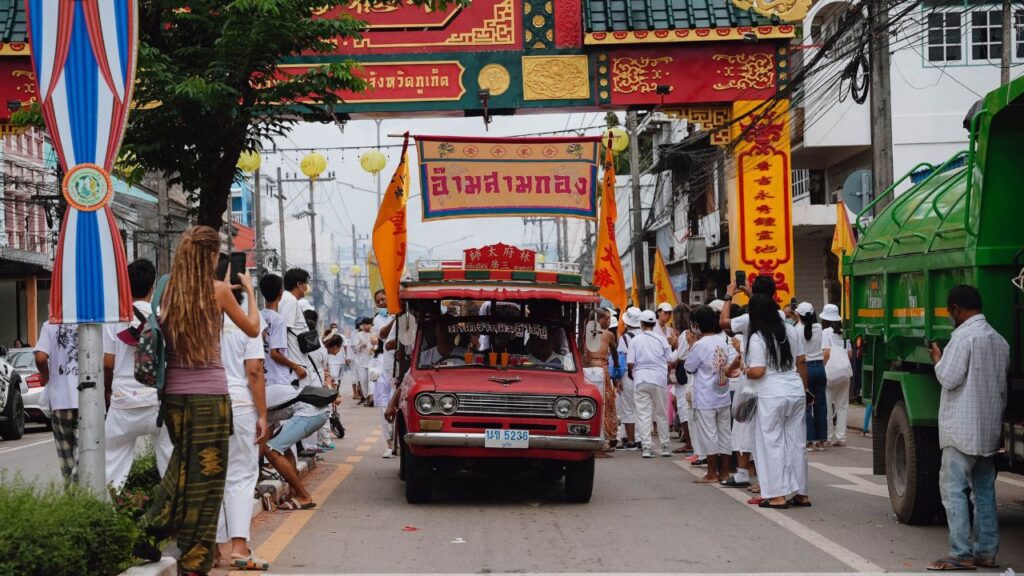
Phuket vegetarian festival 2026 — a dawn deity procession moves through Ranong Road in Phuket Old Town as the nine-day Taoist festival honouring the Nine Emperor Gods runs October 9–18, 2026, attracting 140,000–150,000 visitors and generating at least THB 1.4 billion in economic activity, with 40+ Chinese shrines across the island hosting ceremonies, and street food stalls serving no-meat, no-garlic, no-onion festival dishes at 30–80 THB per dish — overlapping with Navratri 2026 (October 2–12) and Dussehra (October 12).
Quick answer: Phuket’s annual Vegetarian Festival runs October 9–18, 2026 — nine days of Taoist ceremonies honouring the Nine Emperor Gods. Economic forecast: THB 1.4 billion (~₹3.5 billion) from 140,000–150,000 visitors. Phuket Town hotels already at 80% occupancy. Free to attend. More than 40 Chinese shrines participate across the island. Festival food: strictly no meat, no seafood, no dairy, no garlic, no onion — the closest thing in Southeast Asia to a Jain-diet food street. Dates overlap with Navratri 2026 (October 2–12) and Dussehra (October 12). Indian passport holders enter Thailand visa-free for 30 days from September 15, 2026.
Phuket vegetarian festival 2026 is arguably the single most India-compatible international festival on the Southeast Asia travel calendar — a nine-day Taoist spiritual observance that produces, entirely as a religious by-product, the largest concentration of meat-free, garlic-free, onion-free street food in Southeast Asia. The diet observed during the festival — no meat, no seafood, no dairy, no garlic, no onion, no strong spices — produces food that overlaps significantly with Jain dietary requirements and with the sattvic diet that many Hindus observe during Navratri.
The Phuket vegetarian festival 2026 dates — October 9 to 18 — land squarely in the Navratri-Dussehra period, with Navratri 2026 running October 2 to 12 and Dussehra on October 12. For Indian travelers who observe Navratri fasting or maintain a vegetarian diet during the festival period, Phuket in mid-October 2026 delivers a Thai street food environment where virtually every stall on Ranong Road serves Navratri-compatible food at prices of 30–80 THB (~₹75–200) per dish. That combination — Thailand’s most photogenic cultural festival, India’s most religious fortnight, and a visa-free entry that has been active since September 15 — makes October 2026 one of the strongest practical reasons to visit Phuket that has existed in years.
See our Thailand visa free 30 days 2026 guide for the September 15 India visa-free context.
What the Festival Is and Why It Happens
The Phuket vegetarian festival 2026 is not a food festival in the Western sense — it is a Taoist religious observance dedicated to the Nine Emperor Gods, conducted at Chinese shrines across Phuket by the Chinese-Thai community that has lived on the island for centuries.
The festival originated in Kathu — now a suburb of Phuket town — in the 19th century, when a visiting Chinese opera troupe fell ill and recovered after observing a strict nine-day vegetarian fast and religious practice. The local Chinese community adopted the observance, which has continued annually for over 150 years. Today it is the largest Chinese Taoist religious festival in Thailand, with over 40 shrines across Phuket hosting their own ceremonies, deity processions, and spiritual rituals.
The festival begins with the Go Teng pole raising — tall bamboo poles erected at each shrine at 5:00 PM on October 9, the eve of the first day, to invite the Jade Emperor and the Nine Emperor Gods to descend. The nine days of ceremonies follow: dawn processions leaving the shrines and moving through the streets of Phuket Old Town, Kathu, Sam Kong, Sapam, Tha Rue, and Cherng Talay; firecracker displays at the shrines; and the mediums — devotees who enter a trance state and pierce their cheeks, faces, and bodies with skewers, swords, and poles while apparently feeling no pain. The closing ceremony takes place at the eastern waterfront of Saphan Hin on the final evening.
All ceremonies and shrine events are free to attend and open to all visitors, regardless of nationality or religion.
The Economic Story: THB 1.4 Billion, 150,000 Visitors
The Phuket vegetarian festival 2026 economic projection published by Phuket authorities ahead of the festival confirms its commercial significance to the island’s October tourism economy.
Phuket is expecting between 140,000 and 150,000 visitors during the festival period, generating at least THB 1.4 billion (~₹3.5 billion) in economic circulation. The Tourism Authority of Thailand (TAT) Phuket office reports that accommodation bookings in Mueang Phuket District — the old town area where most festival events are concentrated — have already reached almost 80% occupancy.
Bookings in Kathu and Thalang districts remain at normal levels but are rising for October and November, reflecting the spillover of accommodation demand from the saturated Old Town area.
The largest visitor group is expected to be Thai nationals — domestic tourism to Phuket’s vegetarian festival is substantial, with Thai-Chinese families returning to Phuket for the festival as an annual pilgrimage. International visitors are expected primarily from Singapore and Malaysia — both countries have large Chinese-Thai diaspora communities with cultural and family connections to Phuket’s festival tradition.
For Indian travelers, the 80% occupancy figure in Phuket Town is the most important practical number in this article. Book Old Town accommodation now — boutique hotels in the heritage district that overlook the procession routes have historically been fully booked by early September. Beach area hotels in Patong and Karon are more available but require 30–40 minutes of transport to reach the Old Town festival events.
The Food: Why It Matters for Indian Travelers
The Phuket vegetarian festival 2026 food environment is the element that makes this festival uniquely accessible for Indian travelers, particularly those from vegetarian or Jain backgrounds.
During the festival, dozens of street food stalls line Ranong Road and the side streets of Phuket Old Town, operating under the full festival dietary rules: no meat of any kind, no seafood, no poultry, no dairy products, no garlic, no onion, no shallot, no leek, no chive, and no strong spices. The food produced under these rules — mock meat dishes made from gluten, tofu, and soy; rice dishes; noodle soups; stir-fried vegetables; curries made without garlic or onion — is the closest approximation to a Jain-compatible Thai food street that exists anywhere.
Indian travelers who visit Phuket outside the festival period typically struggle to find Thai food that avoids garlic and onion — both are foundational ingredients in Thai cooking. The festival period reverses this entirely. For nine days, garlic and onion disappear from Old Town cooking by religious requirement, and the food is more accessible to Indian dietary restrictions than any other time of year in Phuket.
Street food prices during the festival are among the lowest on the island: 30–80 THB (~₹75–200) per dish, with a full three-dish meal costing approximately 150–250 THB (~₹375–625) per person. This compares with standard restaurant prices in Phuket of 200–500 THB for a main dish — the festival’s street food economy is genuinely excellent value.
The Rituals: What Indian Visitors Will See
The Phuket vegetarian festival 2026 ritual programme runs on a daily schedule across nine days, with the most significant events concentrated in the early morning hours.
The dawn processions are the festival’s most extraordinary public spectacle. Each participating shrine sends its mediums and devotees through the streets in procession, beginning at dawn (around 5:00–6:00 AM) and continuing through the morning. The processions pass through specific streets in Phuket Old Town — Ranong Road, Thalang Road, and Dibuk Road are the primary routes — with the timing varying by shrine each day.
The mediums and the piercings are the element of the festival that produces the most striking photographs and the most visceral spectacle. Ma Song — mediums who have entered a trance state — pierce their cheeks and bodies with objects ranging from skewers to swords to elaborate ceremonial objects, apparently without pain or significant bleeding. While the medical explanation for this phenomenon is debated, the religious explanation is that the Nine Emperor Gods protect the mediums during the trance. Witnessing the piercing rituals requires composure — it is an intense visual experience — but the mediums are not in distress and the ceremony is conducted with order and devotion.
The firecrackers are deafening. Every procession is accompanied by strings of firecrackers discharged at each shrine gate and at intervals along the route. Ear protection is not required but is strongly recommended — the sustained firecracker noise during peak procession moments exceeds safe hearing levels for extended exposure. Carry earplugs.
The shrines — particularly Jui Tui Shrine and Bang Neow Shrine in Old Town, and Kathu Shrine in Kathu district — are the ceremonial centres. All are open to respectful visitors. Remove shoes before entering any shrine. White clothing is appropriate if you wish to observe the devout community’s dress code, though it is not required for visitors.
Practical Guide for Indian Travelers
The Phuket vegetarian festival 2026 logistics for Indian travelers coming from Delhi, Mumbai, Chennai, or Bengaluru require advance planning — this is not a last-minute trip.
Getting to Phuket from India: Direct charter flights from Delhi and Mumbai to Phuket operate during peak season — check availability. The regular routing is Delhi/Mumbai to Bangkok (Suvarnabhumi) on Air India, IndiGo, or Thai Airways, then Bangkok-Phuket on Thai Airways, Bangkok Airways, or AirAsia (approximately 1 hour 20 minutes). Note that Bangkok is currently experiencing significant flooding as of September 26-27 — the flooding situation should resolve before October, but monitor conditions.
Getting from Phuket Airport to Old Town: Grab from Phuket International Airport to Phuket Old Town costs approximately 450–600 THB (~₹1,125–1,500). During festival period, morning hours from approximately 6–10 AM daily see Old Town streets closed to vehicles for processions — plan your arrival and morning transport around the procession route closures.
Where to stay: Phuket Old Town boutique hotels are the priority booking — most are already at 80% for October 9-18. Properties on or near Dibuk Road, Thalang Road, and Ranong Road provide the best access to procession routes. If Old Town is fully booked, Kathu district hotels provide access to the second-largest shrine complex. Beach area hotels (Patong, Karon, Kamala) are fine for accommodation but require 30-40 minutes of transport to reach Old Town events.
Thailand entry: Indian passport holders enter Thailand visa-free for 30 days from September 15, 2026 — no visa required, no fee, no application for tourism visits of up to 30 days. Complete the THIM app TDAC within 72 hours before departure.
For travel insurance covering Phuket trips including medical coverage for the festival period, SafetyWing Nomad Insurance provides comprehensive coverage at affordable daily rates for Indian travelers.
| Phuket Vegetarian Festival 2026 — Essential Facts | Detail |
|---|---|
| Dates | October 9–18, 2026 (9 days) |
| Opening ceremony | Go Teng pole raising, 5:00 PM October 9 |
| Closing ceremony | Saphan Hin waterfront, October 18 |
| Shrines participating | 40+ across Phuket island |
| Expected visitors | 140,000–150,000 |
| Economic projection | THB 1.4 billion (~₹3.5 billion) |
| Old Town hotel occupancy | Already ~80% |
| Admission cost | Free — all ceremonies and processions |
| Street food price | 30–80 THB per dish (~₹75–200) |
| Diet rule | No meat, dairy, garlic, onion, leek, chive |
| Navratri 2026 overlap | October 2–12 (Navratri), October 12 (Dussehra) |
| India visa required | No — 30-day visa-free from September 15 |
FAQs — Phuket Vegetarian Festival 2026
Q: When is the Phuket Vegetarian Festival 2026 and how much does it cost to attend?
The Phuket Vegetarian Festival 2026 runs from October 9 to 18 — nine days of Taoist ceremonies honouring the Nine Emperor Gods. The Go Teng pole raising begins the festival at 5:00 PM on October 9, and the closing ceremony takes place at Saphan Hin on October 18. All festival events — shrine ceremonies, dawn processions, and public rituals — are entirely free to attend. More than 40 Chinese shrines across the island participate. Phuket authorities expect 140,000–150,000 visitors and at least THB 1.4 billion in economic activity during the festival period.
Q: Is Phuket’s Vegetarian Festival food suitable for Indian vegetarians and Jains?
The festival food is among the most accessible in Southeast Asia for Indian vegetarians and Jains. The festival dietary rules prohibit meat, seafood, poultry, and dairy entirely, and additionally prohibit the five pungent roots: garlic, onion, shallot, leek, and chive. Street food stalls on Ranong Road and throughout Old Town serve under these rules for the entire nine days. The absence of garlic and onion — both standard Thai cooking ingredients — makes the festival food unusually compatible with Jain dietary requirements and with the sattvic diet many Hindus observe during Navratri, which also falls in October 2026.
Q: Do Indian passport holders need a visa to attend the Phuket Vegetarian Festival 2026?
No. Indian passport holders can enter Thailand visa-free for up to 30 days following the September 15, 2026 implementation of the visa exemption. No visa application, no fee, and no advance processing is required for Indian tourists visiting Phuket for the festival. Complete the Thailand Digital Arrival Card (TDAC) through the THIM app or at tdac.immigration.go.th within 72 hours before your flight. The visa-free entry is for tourism purposes only — the October 9–18 festival period falls within the 30-day visa-free window that begins from your date of entry.
Final Word
Phuket vegetarian festival 2026 — October 9–18, nine days, Go Teng pole raising 5 PM October 9, 40+ shrines, 140,000–150,000 visitors, THB 1.4 billion economic activity, Phuket Town hotels at 80%, free to attend, street food 30–80 THB no garlic no onion no meat no dairy, Navratri overlap October 2-12, Dussehra October 12, India 30-day visa-free from September 15 — is the October 2026 event that most directly aligns Indian cultural and religious traditions with a Southeast Asian festival experience. Book Phuket Old Town accommodation today if you have not already — the 80% occupancy figure means the best properties are filling fast. For Indian vegetarian and Jain travelers in particular, this nine-day window in Phuket is as close as Southeast Asia gets to home cooking, at street food prices, in one of Thailand’s most visually striking cultural settings.
Also Read:
- Thailand Visa Free 30 Days 2026 — September 15 India Confirmed
- Thailand THIM App 2026 — TDAC, Visa Extension, 90-Day Report
- Bangkok Flooding 2026 — All 50 Districts Disaster Zones, Airports Open
Official Sources:
- Bangkok Post — Vegetarian Festival in Phuket to Net 1.4 Billion Baht
- Tourism Authority of Thailand — Phuket Vegetarian Festival 2026
 Austria Working Holiday Visa Indians: 18-30, 12 Months, No Job Offer, €195 — Complete Guide

Phuket Vegetarian Festival 2026: October 9–18, THB 1.4 Billion, Hotels at 80% — Indian Travel Guide
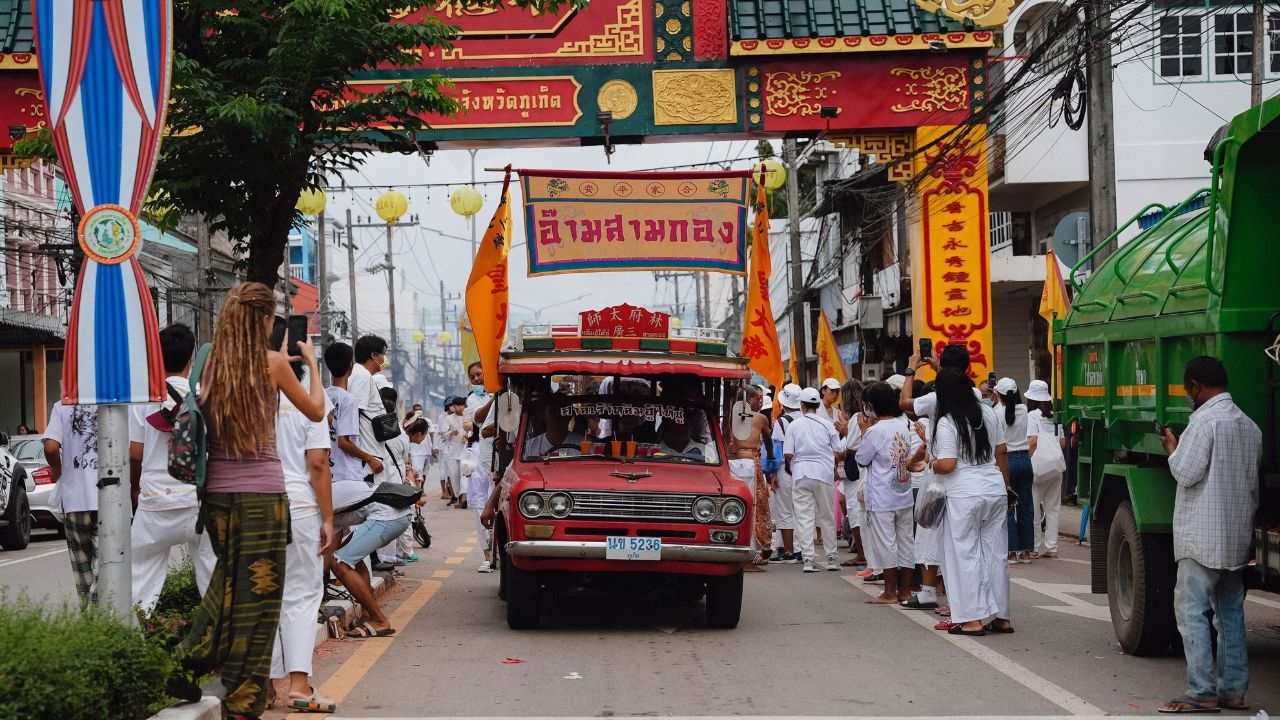
Bangkok Flood Update September 2026: 9 Roads Still Flooded, Recovery by October 2
Philippine Airlines India Manila 2026: Delhi 3 Weekly, Mumbai 4 Weekly From December
Austria Working Holiday Visa Indians: 18-30, 12 Months, No Job Offer, €195 — Complete Guide
Phuket Vegetarian Festival 2026: October 9–18, THB 1.4 Billion, Hotels at 80% — Indian Travel Guide
Bangkok Flood Update September 2026: 9 Roads Still Flooded, Recovery by October 2
Philippine Airlines India Manila 2026: Delhi 3 Weekly, Mumbai 4 Weekly From December

Aaseem Bhardwaj is a journalist, seasoned traveler and IT professional based in India. With firsthand travel experience across Southeast Asia, East Asia, Middle East and Europe, Aaseem founded Travel Man Today to provide reliable visa updates and travel news for Indian passport holders. He has personally traveled to Thailand, Vietnam, Malaysia, Japan, Singapore, Hong Kong, South Korea, UAE and Europe. Follow his travel vlogs on YouTube at @travelmantoday




Templates for Indians