UAE Airlines Power Bank Rules: Emirates, Etihad, flydubai and Air Arabia Guide
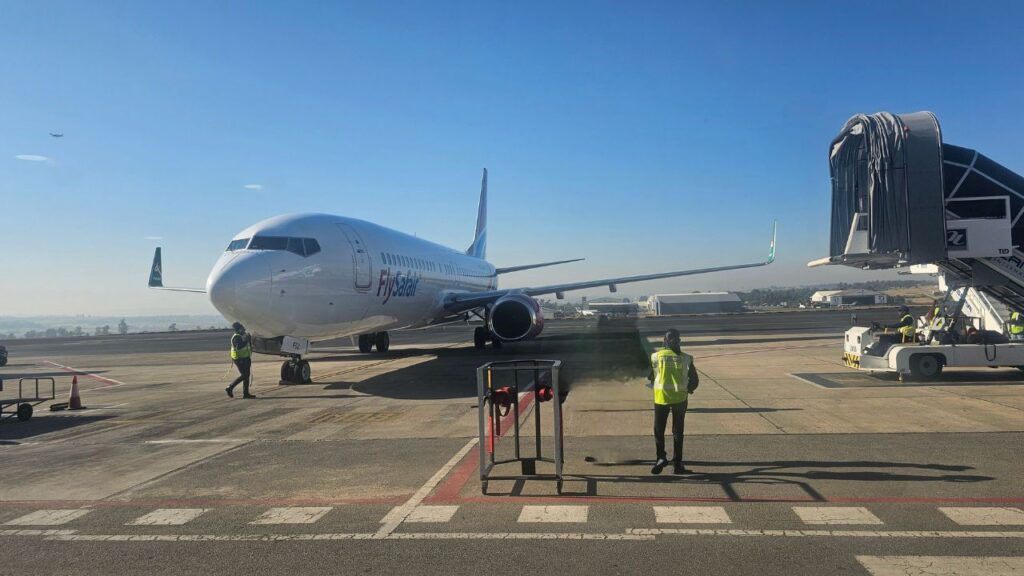
UAE airlines power bank rules apply across all four carriers — Emirates, Etihad, flydubai and Air Arabia limit power banks to 100Wh, cabin-only storage in seat pocket or under-seat bag with no onboard charging permitted.
UAE airlines power bank rules have become stricter — and a power bank fire aboard China Eastern Airlines Flight MU2421 on July 24, 2026 has brought the issue back into sharp focus. The fire started from a passenger’s portable charger inside a carry-on bag while the Airbus A320 was taxiing at Guiyang Longdongbao International Airport. Cabin crew extinguished the flames before anyone was hurt, but the aircraft sustained smoke damage and videos circulated widely online.
For Indian expats and travelers flying Emirates, Etihad, flydubai, or Air Arabia from Dubai, Abu Dhabi, or Sharjah, knowing the UAE airlines power bank rules before you reach the airport is not optional — it is the difference between boarding normally and having your power bank confiscated at the gate.
Why Power Banks Are Dangerous on Aircraft
Power banks contain lithium-ion or lithium-polymer batteries. If these batteries become damaged, overheat, or develop an internal fault, they can enter a process called thermal runaway — where temperatures rise rapidly and may lead to fire.
Because of this risk, airlines require power banks to remain inside the aircraft cabin at all times, where cabin crew can respond immediately if something goes wrong. They cannot go in the hold. They cannot be placed where crew cannot quickly reach them.
The China Eastern incident is exactly the scenario airlines are designing their UAE airlines power bank rules to prevent — a battery igniting in an overhead compartment, out of immediate reach of crew, with smoke and flames visible before any suppression is possible.
The Four Rules That Apply Across All UAE Carriers
Before the airline-specific breakdown, these four rules apply uniformly across Emirates, Etihad, flydubai, and Air Arabia.
1. Maximum 100Wh capacity. All four UAE carriers cap power banks at 100 watt-hours. This is the standard IATA limit for lithium battery devices carried by passengers.
2. Cabin only — never checked baggage. Power banks are banned from hold luggage on all four airlines without exception. If your power bank is found in checked baggage at screening, it will be removed.
3. No using it during the flight. All four carriers prohibit using your power bank to charge your phone, tablet, or laptop during the flight. The device must not be actively charging anything while airborne.
4. No overhead lockers. All four airlines either prohibit or strongly advise against placing power banks in overhead storage compartments. They must be in your seat pocket or under-seat bag — within reach of you and visible to cabin crew.
| UAE Airlines Power Bank Rules — At a Glance | Emirates | Etihad | flydubai | Air Arabia |
|---|---|---|---|---|
| Maximum capacity | 100Wh | 100Wh | 100Wh | 100Wh |
| Maximum number per passenger | 1 | 1 | 1 | Not specified |
| Carry in cabin | ✅ Yes | ✅ Yes | ✅ Yes | ✅ Yes |
| Checked baggage | ❌ No | ❌ No | ❌ No | ❌ No |
| Use onboard to charge devices | ❌ No | ❌ No | ❌ No | ❌ No |
| Recharge power bank onboard | ❌ No | ❌ No | ❌ No | ❌ No |
| Overhead locker | ❌ No | ⚠️ Avoid | ❌ No | ❌ No |
| Seat pocket or under-seat bag | ✅ Required | ✅ Required | ✅ Required | ✅ Required |
| Capacity must be marked on device | ✅ Yes | ✅ Yes | Not specified | Not specified |
Emirates: One Power Bank, Capacity Visible, No Charging
Emirates introduced updated power bank restrictions effective October 1, 2025, following a comprehensive internal safety review.
Passengers may carry one power bank with a maximum capacity of 100Wh. The battery’s capacity rating must be clearly visible on the device — if the watt-hour rating is not printed on the power bank, Emirates staff may not allow it onboard.
Emirates specifically prohibits using a power bank to charge phones, tablets, or laptops during the flight. You also cannot charge the power bank itself through the aircraft’s USB ports or power sockets. The power bank must not go in an overhead compartment. It must be stored in the seat pocket or inside a bag under the seat in front of you.
Etihad: Keep It Accessible and Within Reach
Etihad Airways follows the same 100Wh limit and one-power-bank-per-passenger rule. The watt-hour rating must be clearly marked on the device.
Etihad explicitly prohibits using the power bank onboard, charging the power bank, and using it to charge any other electronic devices. Economy passengers should place the power bank in a bag under the seat or in the seat pocket. First and Business Class passengers should use the seat’s built-in storage compartment.
Etihad’s specific language around overhead lockers is advisory rather than absolute — the airline says passengers should avoid placing power banks there because they may not be immediately accessible during an emergency. In practice, treat this as a prohibition.
flydubai: Must Be Switched Off Throughout the Flight
flydubai follows the 100Wh limit and one-power-bank rule. The airline adds a specific requirement not mentioned as explicitly by the other carriers: the power bank must remain switched off throughout the entire journey.
flydubai prohibits using the power bank to charge any devices and prohibits recharging the power bank through aircraft power. The device must be in the seat pocket or inside hand baggage under the seat — not in the overhead locker. Power banks are not permitted in checked baggage, and batteries exceeding 160Wh are not allowed onboard under any circumstances.
Air Arabia: Treats Power Banks as Spare Lithium Batteries
Air Arabia classifies power banks as spare lithium batteries — which means they fall under the airline’s dangerous goods policy for lithium cells rather than simply the electronics policy.
The practical implications are the same as the other carriers. Cabin baggage only, never checked luggage. Seat pocket or under-seat bag, not overhead locker. Switched off during the flight. Not used to charge any devices. Not charged using aircraft power.
Air Arabia does not specify a maximum number of power banks — but the 100Wh per-battery limit applies to each unit. Multiple power banks are technically not prohibited, but each must individually comply with the 100Wh limit.
How to Check Your Power Bank’s Watt-Hour Rating
Most passengers carrying a power bank do not know its watt-hour capacity — they know it by milliamp-hours (mAh), which is how retailers typically market them. The conversion formula is:
Wh = (mAh × voltage) ÷ 1,000
Most power banks operate at 3.7 volts. Common capacities in watt-hours:
- 10,000mAh at 3.7V = 37Wh — well within limit
- 20,000mAh at 3.7V = 74Wh — within limit
- 27,027mAh at 3.7V = 100Wh — exactly at the limit
- 30,000mAh at 3.7V = 111Wh — exceeds limit, not permitted
Check the label on your power bank. If the Wh rating is not printed on the device, Emirates and Etihad may refuse it. Buy a replacement from a reputable brand that clearly prints the Wh rating before your next flight.
What Indian Travelers Must Do Before Flying From the UAE
Indian travelers flying from Dubai, Abu Dhabi, or Sharjah face the UAE airlines power bank rules at check-in security and gate boarding.
Remove your power bank from your bag at security screening — it typically needs to go in a separate tray for X-ray, similar to a laptop. Place it in your seat pocket or under-seat bag immediately upon boarding — do not put it in the overhead locker. Do not plug it in during the flight on any UAE carrier.
For families traveling with multiple devices — an increasingly common situation for Indian families flying long-haul — one power bank per adult passenger is the maximum on Emirates and Etihad. Plan your charging strategy accordingly before the flight.
For travel insurance covering your UAE flights including personal electronics incidents, SafetyWing Nomad Insurance provides comprehensive coverage at affordable daily rates for Indian travelers. Remember UPI does not work in the UAE — carry UAE Dirhams or use a zero-forex card for any airport purchases.
FAQs — UAE Airlines Power Bank Rules 2026
Q: Can I bring a 20,000mAh power bank on Emirates, Etihad, flydubai, or Air Arabia?
Yes — a 20,000mAh power bank at standard 3.7 volts equals approximately 74Wh, which is within the 100Wh limit applied by all four UAE carriers. Ensure the watt-hour rating is clearly printed on the device — Emirates and Etihad specifically require this to be visible. The power bank must travel in cabin baggage only, stored in your seat pocket or under-seat bag, and must not be used to charge any devices during the flight.
Q: What happens if my power bank exceeds 100Wh on a UAE flight?
Power banks exceeding 100Wh are not permitted on Emirates, Etihad, flydubai, or Air Arabia under any circumstances. If a power bank exceeding 100Wh is detected at security screening or during boarding, it will be confiscated and will not be returned. You cannot check it into the hold as an alternative — it simply will not travel with you. Replace any power bank exceeding 100Wh before your next flight from the UAE.
Q: Can I charge my phone using a power bank on a UAE flight?
No — all four UAE carriers — Emirates, Etihad, flydubai, and Air Arabia — prohibit using a power bank to charge any device during the flight. You also cannot recharge the power bank itself through the aircraft’s USB ports or power sockets. The power bank must be switched off and stored in your seat pocket or under-seat bag throughout the flight. Use the aircraft’s built-in USB charging ports or seat power sockets to charge your devices instead.
Final Word
The UAE airlines power bank rules summarised here apply across Emirates, Etihad, flydubai, and Air Arabia — and the China Eastern incident on July 24 is a timely reminder of exactly why these rules exist. One power bank per passenger on Emirates and Etihad, maximum 100Wh, cabin only, seat pocket or under-seat bag, switched off, no charging permitted.
Check the Wh rating is printed on your device before you travel. Follow these rules exactly and there is nothing to worry about — ignore them and risk confiscation or worse. For Indian families flying from Dubai this summer, a quick check before packing is all it takes.
Also Read:
- UAE Travel Advisory July 2026 — Full Airline Status
- Dubai Customs Summer 2026 — 3 Million Passengers, 7-Second Screening
- SafetyWing Nomad Insurance — Full Review for Indians
Official Sources:
 EVA Air Delhi Taipei 2026: Nonstop Flights Launch December 1, Five Weekly
China India Business Visa 2026: Modi-Xi BRICS Signal Is Positive — But Watch Implementation

Thailand Tourist Behaviour Rules 2026: Bangkok Protest, First Deportation Order Active

China Southern Delhi Guangzhou 2026: Daily Flights Resume September 21 as Xi Meets Modi at BRICS
EVA Air Delhi Taipei 2026: Nonstop Flights Launch December 1, Five Weekly
China India Business Visa 2026: Modi-Xi BRICS Signal Is Positive — But Watch Implementation
Thailand Tourist Behaviour Rules 2026: Bangkok Protest, First Deportation Order Active
China Southern Delhi Guangzhou 2026: Daily Flights Resume September 21 as Xi Meets Modi at BRICS

Aaseem Bhardwaj is a journalist, seasoned traveler and IT professional based in India. With firsthand travel experience across Southeast Asia, East Asia, Middle East and Europe, Aaseem founded Travel Man Today to provide reliable visa updates and travel news for Indian passport holders. He has personally traveled to Thailand, Vietnam, Malaysia, Japan, Singapore, Hong Kong, South Korea, UAE and Europe. Follow his travel vlogs on YouTube at @travelmantoday






Templates for Indians


2 thoughts on “UAE Airlines Power Bank Rules: Emirates, Etihad, flydubai and Air Arabia Guide”