IndiGo Rahul Bhatia Airfares: Cut Taxes to Unlock Massive India Demand
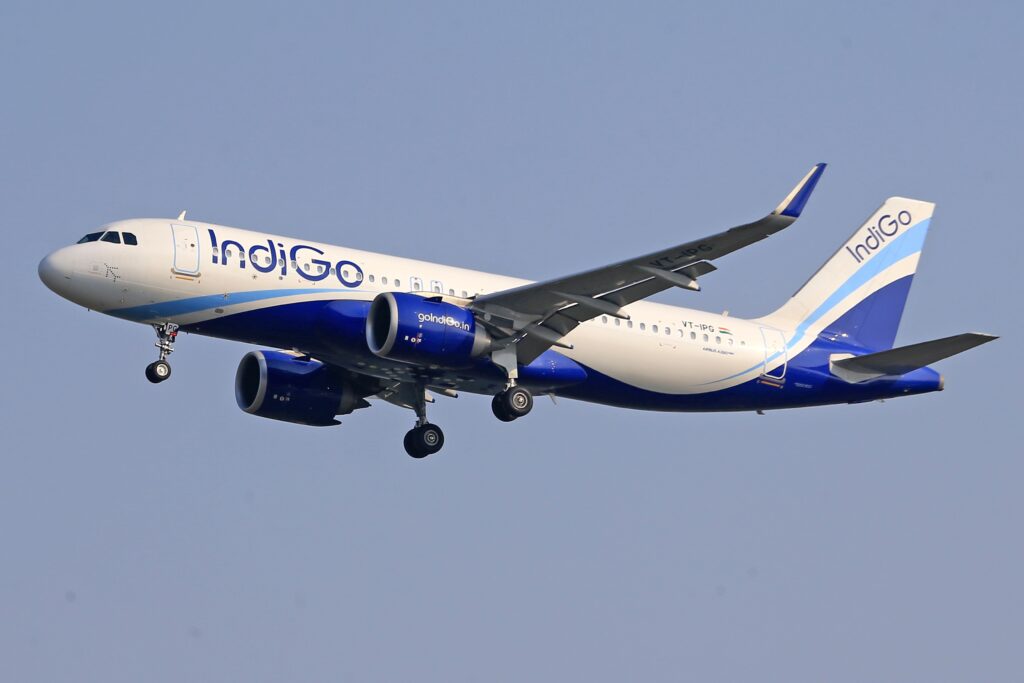
IndiGo Rahul Bhatia airfares argument July 30, 2026 — MD urges government to cut aviation taxes and rationalise airport charges, noting inflation rose 12% while airline-collected fares rose only 1–3% over three years.
IndiGo Rahul Bhatia airfares argument is one of Indian aviation’s most important policy calls of 2026 — the IndiGo Managing Director made a direct appeal to the government to reduce heavy aviation taxes and rationalise escalating airport charges, warning that treating flying as an elitist mode of transport while publicly calling it a public utility is a contradiction that is holding back massive demand growth.
“On the one side, we say that flying by air has become a public utility, yet we treat taxes on it as if it’s an elitist mode of transport,” Bhatia told PTI in an interview. “I think some of these things have to get rationalised. Because the Indian consumer is so price sensitive that if you can lower fares, you just open up a massive demand.”
The IndiGo Rahul Bhatia airfares argument is backed by a striking data point — one that reveals how much airlines have absorbed rather than passed on to passengers, and why the structural cost problem demands government action rather than airline-side efficiency gains alone.
The Three-Year Fare Absorption Story
The most powerful data point in the IndiGo Rahul Bhatia airfares argument is a simple three-year comparison.
Bhatia said airlines had largely absorbed cost pressures instead of passing them on to passengers. “So, in a time span of three years where inflation has risen by 12 per cent, airfares, which represent the fares that the airline collects for themselves, have gone up between 1 per cent and 3 per cent.”
This is a remarkable statement of operational restraint. While general consumer inflation in India rose 12% over three years — meaning everything from food to rent to fuel to goods became 12% more expensive — the airline portion of an airfare rose by only 1% to 3%. The gap between 12% inflation and 1–3% fare growth has been absorbed by IndiGo and other Indian carriers through fleet efficiency, network optimisation, and cost management.
Indian airlines absorb considerable operational cost surges caused by heavy levies and airport fees, eventually passing the remaining burden onto price-sensitive travelers.
The implication is clear. If taxes and airport charges remain at their current levels, the structural cost pressure will eventually transfer to passengers through higher fares. The alternative — which Bhatia is arguing for — is to reduce the tax and charge burden so that lower structural costs enable lower fares, which then unlocks demand that generates more revenue through volume rather than price.
The ATF Tax Problem: Aviation Turbine Fuel Levies
The single largest government-controlled cost for Indian airlines is Aviation Turbine Fuel taxation. ATF in India is subject to central excise duty and state Value Added Tax — and state VAT rates vary dramatically from state to state, creating structural cost inequality between airports based purely on geography.
Several Indian states levy ATF VAT rates of 20–25%. At the central level, ATF has historically been excluded from GST — which would have enabled input tax credit claims by airlines and reduced the cascading tax burden that currently makes Indian ATF among the most heavily taxed aviation fuel in Asia.
Bhatia’s call for rationalisation specifically targets this structural issue. Including ATF in GST — a reform the aviation industry has demanded for years — would immediately reduce airline cost structures and, if passed through, reduce base airfares for price-sensitive Indian consumers.
In April 2026, the Ministry of Civil Aviation announced a 25% reduction in landing and parking charges at all major airports for domestic flights — valid for three months. That interim relief confirms the government acknowledges the problem. Bhatia’s argument is that the interim measure needs to become a permanent structural reform.
IndiGo’s Fleet, Market Share, and the Dominance Question
IndiGo Rahul Bhatia airfares arguments also addressed the market concentration question that follows IndiGo’s scale. The airline held 66.3% domestic market share in June 2026 — a figure that inevitably attracts questions about whether concentration is reducing competitive pressure on fares.
Bhatia clarified that IndiGo deploys 34 percent of its capacity connecting 250 newly developed city pairs. Operating over 2,100 daily flights with a 400-aircraft fleet, the airline chief stressed that joint government-industry effort is essential for sustainable sector growth.
“If 34 per cent of your share is in unique markets, our share in markets that we compete in is only just in the early 40s, 42, 44 per cent…So, I think it’s a myth of sorts that we are too large,” he said.
The 250 unique city pairs point is important context. A third of IndiGo’s capacity is deployed on routes where IndiGo is the only airline — not because it has driven competitors out, but because IndiGo created those markets. Without IndiGo’s network investment in tier-2 and tier-3 connectivity, those city pairs would have no air service at all.
The competitive concentration question is therefore more nuanced than the headline share number suggests. IndiGo’s 66.3% market share includes a large portion of routes where it is the only operator — reducing that number by attacking IndiGo’s network rather than improving competitor capacity would not benefit consumers.
The Pilot Duty Rules Argument
Alongside the IndiGo Rahul Bhatia airfares argument, Bhatia also called for a review of India’s Flight Duty Time Limitation (FDTL) rules.
Bhatia has called for a review of India’s pilot flight duty time rules, saying these norms erode cockpit productivity, inflate airline costs and make the country’s aviation sector “uncompetitive” compared with global peers. “I think Flight Duty Time Limitations (FDTL) needs a review, and I think there’s enough conversation going on with the government. All we want to do is appeal to the government that we must follow the global best practices,” Bhatia told PTI.
India’s FDTL rules set lower flight hour limits for pilots than ICAO global standards — meaning Indian airlines require more crew per aircraft per day than comparable international carriers. This structural inefficiency inflates crew costs, reduces fleet utilisation, and ultimately adds to the cost base that produces higher fares.
The FDTL review argument is connected to the ATF and airport charge arguments — all three are structural cost inefficiencies in the Indian aviation regulatory framework that could be addressed through policy change rather than airline-side effort.
What This Means for Indian Air Travelers
The IndiGo Rahul Bhatia airfares argument has direct implications for Indian air travelers from Delhi, Mumbai, Bengaluru, Chennai, Hyderabad, and Kolkata — and especially for the hundreds of millions of aspirational travelers who have not yet flown.
India’s civil aviation market is the world’s third-largest by domestic passengers — but it still has enormous latent demand from the price-sensitive middle and lower-middle income segments. Bhatia’s argument is that the price elasticity of demand in India is exceptionally high — modest fare reductions produce disproportionate demand expansion because of the size of the population sitting just above and below the affordability threshold.
If ATF is brought into GST, state VAT rates are rationalised, airport charges are permanently reduced, and FDTL rules are aligned with ICAO global best practice — the compounded structural cost reduction could enable fares to fall by 10–20% on competitive routes, potentially adding tens of millions of first-time flyers to the market annually.
For Indian travelers planning domestic or international trips, monitoring the government’s response to Bhatia’s arguments is worthwhile — any ATF GST inclusion or permanent airport charge reduction would directly reduce the cost of flights from all Indian cities.
FAQs — IndiGo Rahul Bhatia Airfares 2026
Q: What is IndiGo MD Rahul Bhatia’s argument about Indian airfares?
IndiGo Managing Director Rahul Bhatia urged the government to cut taxes and rationalise airport charges, arguing that lower airfares would unlock “massive” demand in one of the world’s fastest-growing aviation markets and accusing policymakers of taxing flying as if it were “an elitist mode of transport”.
Bhatia noted that while inflation rose 12% over three years, airlines raised their portion of fares by only 1–3%, absorbing the difference through efficiency measures. He argued that structural cost reduction through tax and charge rationalisation — not airline-side action — is the correct policy lever.
Q: What is IndiGo’s market share in India and how does Bhatia defend it?
IndiGo held 66.3% domestic market share in June 2026. Bhatia defended this by noting that one-third of IndiGo’s capacity — 34% — is deployed on 250 unique city pairs where IndiGo is the only operator, having created those markets from scratch. “If 34 per cent of your share is in unique markets, our share in markets that we compete in is only just in the early 40s, 42, 44 per cent…So, I think it’s a myth of sorts that we are too large,” he said.
Q: What tax relief has the Indian government already given airlines in 2026?
In April 2026, the Ministry of Civil Aviation announced a 25% reduction in landing and parking charges at all major airports for domestic flights, valid for three months, citing the impact of rising global fuel prices on airline operational costs.
IndiGo’s Rahul Bhatia is arguing that this interim measure needs to become permanent structural reform — covering not just landing and parking but also ATF tax inclusion in GST and FDTL rule alignment with ICAO global standards.
Final Word
The IndiGo Rahul Bhatia airfares argument made on July 30, 2026 captures the central policy challenge for Indian aviation: a market with some of the world’s most powerful demand fundamentals being constrained by a tax and regulatory framework designed for a different era.
The three-year data point — 12% inflation, 1–3% fare increase — is the most compelling evidence that airlines have done their part. The public utility vs. elitist transport contradiction is the sharpest framing of what needs to change in government policy. Whether the government acts beyond the April 2026 interim airport charge reduction will determine whether India’s aviation market reaches its potential in this decade or the next.
📌 Also Read:
- India Flight Cancellation Rights — Ministry Advisory July 2026
- Air India Easy Connect Amritsar — 27 Global Destinations 2026
- Air India Delhi Toronto — Non-Stop Boeing 787-9 Launches August 1
🔗 Official Sources:
- Economic Times Travel — IndiGo’s Rahul Bhatia Urges Govt to Cut Taxes
- Business Standard — Pilot Duty Rules Make Aviation Uncompetitive

Aaseem Bhardwaj is a journalist, seasoned traveler and IT professional based in India. With firsthand travel experience across Southeast Asia, East Asia, Middle East and Europe, Aaseem founded Travel Man Today to provide reliable visa updates and travel news for Indian passport holders. He has personally traveled to Thailand, Vietnam, Malaysia, Japan, Singapore, Hong Kong, South Korea, UAE and Europe. Follow his travel vlogs on YouTube at @travelmantoday




Templates for Indians

2 thoughts on “IndiGo Rahul Bhatia Airfares: Cut Taxes to Unlock Massive India Demand”