Sydney Airport Near Collision 2026: Jetstar A320 and Qatar Airways 777 Stopped on Taxiway
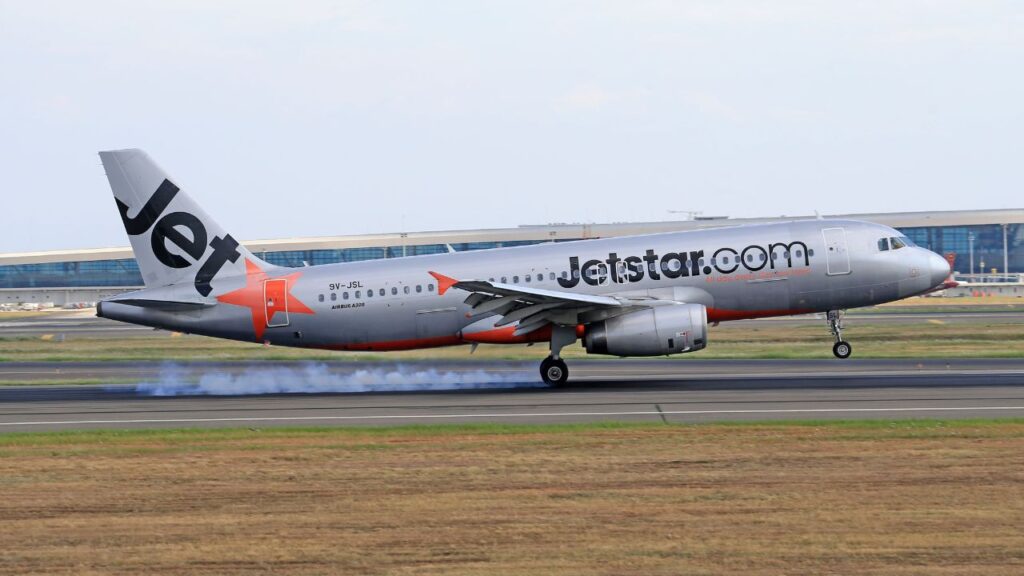
Sydney Airport near collision 2026 — Jetstar Airbus A320 taxiing to Gold Coast applies emergency braking at 7am August 9 after encountering Qatar Airways Boeing 777 being towed across a crossing taxiway, injuring a cabin crew member and damaging the Qatar aircraft's nose gear tug connection.
Sydney Airport near collision 2026 — a Jetstar passenger aircraft and a Qatar Airways plane narrowly avoided a collision at Sydney Airport on Sunday morning, prompting an investigation by Australian aviation safety authorities.
The Jetstar plane was taxiing for takeoff to Queensland state’s Gold Coast when its flight crew saw the Qatar Airways plane, which was being towed by an aircraft tug, very close on a crossing taxiway. Both aircraft were stopped abruptly.
The Sydney Airport near collision 2026 — involving a Jetstar Airbus A320 and a Qatar Airways Boeing 777 being towed across a taxiway at approximately 7am — resulted in one injured crew member, damage to the nose gear tug connection on the Qatar Airways aircraft, and an ATSB investigation that is now underway. The incident disrupted operations at Australia’s busiest airport throughout Sunday morning.
What Happened: The Full Sequence at Sydney Airport
The incident occurred at around 7am when a Jetstar Airbus A320 was taxiing ahead of a scheduled flight to the Gold Coast and encountered a Qatar Airways Boeing 777 being towed across a taxiway.
The encounter happened on a crossing taxiway — where two taxiway paths intersect. The Jetstar A320 was in active powered movement toward the runway under air traffic control instruction, while the Qatar Airways Boeing 777 was a towed aircraft — meaning it had no engines running, being moved by a ground vehicle called an aircraft tug.
According to the Australian Transport Safety Bureau (ATSB), both aircraft were brought to an abrupt stop. A Jetstar cabin crew member was injured during the incident, while no passengers were reported injured. Damage was also reported to the connection between the Qatar Airways aircraft’s nose gear and the tug towing it.
Jetstar said its aircraft had been following air traffic control instructions when the pilots were forced to brake firmly after the other aircraft came into close proximity.
The fractured hand detail — confirmed in The Week India’s reporting — provides the most specific description of the crew injury. The near-collision between a Jetstar A320 and a Qatar Airways Boeing 777 at Sydney airport was averted after the Jetstar pilot applied the brakes suddenly, resulting in a cabin crew member fracturing his hand.
An audio recording from the air traffic radio captured the immediate aftermath. On a radio call to Sydney Airport’s traffic control, a Jetstar crew member was heard saying that the pilot wanted to make sure the wing cleared the nose of the Qatari jet as it made the left turn — indicating that the crew was actively managing the proximity and communicating with controllers in real time.
🚨 JETSTAR CREW MEMBER HURT IN SYDNEY NEAR-COLLISION WITH QATAR JET SUNDAY MORNING.
— FL360aero (@fl360aero) August 9, 2026
A dramatic near-miss unfolded on the tarmac at Sydney Airport this morning when a Jetstar Airbus A320 and a Qatar Airways Boeing 777 came within feet of a collision.
✈️ The Jetstar aircraft… pic.twitter.com/UfWrMJl7jU
Why a Towed Aircraft Creates a Specific Safety Risk
The Sydney Airport near collision 2026 involves a configuration that is less immediately obvious to passengers but well-understood by aviation safety professionals — the intersection of a taxiing powered aircraft with a towed aircraft.
When a commercial aircraft is towed, it has no engines running and no active flight crew in control. The tug operator and a separate “brake rider” — a trained person seated at the aircraft’s controls to manage brake application — are responsible for controlling the aircraft’s movement. The tug does not have the manoeuvrability of a self-powered aircraft and cannot stop as quickly.
From the perspective of the Jetstar A320 pilots, they were following air traffic control instructions and had no forewarning that a towed aircraft — which would not appear on standard collision avoidance systems because it is not producing a transponder signal in the normal way — would emerge across a crossing taxiway.
The critical failure that investigations will examine is how the Jetstar A320 and the Qatar Airways towed 777 were simultaneously cleared to use the same crossing taxiway intersection. Either the air traffic controller, the tug operator, or the coordination between ground control and surface movement management failed to ensure separation at that crossing.
The ATSB Investigation: What Will Be Examined
Safety regulators launched an investigation on Sunday into a “near collision” between two passenger aircraft at Australia’s busiest airport that injured a crew member. Investigators are collecting data from both aircraft, air traffic control, and interviewing crew and tug operators to determine the cause of the near collision.
The ATSB’s investigation will focus on four specific evidence streams.
Air traffic control records and communications. All ATC radio transmissions and ground movement control instructions in the relevant time window will be reviewed. The audio recording already in circulation — in which Jetstar crew radio the tower about wing clearance — is part of this record.
Aircraft data. Both the Jetstar A320 and the Qatar Airways 777 carry flight data recorders and cockpit voice recorders. The A320’s CVR will capture the crew discussion and any crew advisories in the moments before emergency braking.
Surface movement surveillance data. Sydney Airport’s surface radar tracks all aircraft and vehicle movements on the apron and taxiway system. The surveillance data will show the precise positions and vectors of both aircraft at the time of the near collision.
Crew and tug operator interviews. All involved parties — the Jetstar flight crew, the Qatar Airways tug operator and brake rider, and the relevant ATC controllers — will be formally interviewed by ATSB investigators.
The investigation will not assign blame — ATSB investigations are safety investigations, not enforcement actions. Their purpose is to determine what happened and why, and to recommend systemic changes that prevent recurrence.
Australia’s Aviation Safety Scrutiny in 2026
The Sydney Airport near collision 2026 is the second significant Australian aviation safety incident of the week — following the ANA Haneda near miss on August 4, where a Boeing 767 came within 70 feet of a Japan Civil Aviation Bureau inspection aircraft.
Australia’s aviation safety record is generally strong, but incidents involving ground movement at Sydney Airport specifically have occurred before. Sydney Kingsford Smith Airport operates four parallel runways in a relatively compressed footprint for an airport handling 50+ million passengers annually, with intensive ground traffic and tight taxiway geometry.
The ATSB is one of the world’s most respected aviation safety investigation bodies — its reports are thorough, independent, and routinely cited internationally. The Sydney Airport near collision 2026 investigation will be conducted with the same rigour applied to all ATSB investigations.
What This Means for Indian Travelers on Sydney Airport Routes
The Sydney Airport near collision 2026 is relevant for Indian travelers for two specific reasons.
Qatar Airways is one of the primary carriers used by Indian travelers flying between India and Australia — Delhi, Mumbai, and Bengaluru to Sydney via Doha is one of the most heavily traveled India–Australia routes, operated by Qatar Airways with strong frequency. The Boeing 777 involved in the incident was a Qatar Airways aircraft — though passengers on board were not reported injured.
Jetstar operates extensively within Australia’s domestic network and between Australia and Southeast Asia — Jetstar’s Gold Coast–bound A320 in this incident is a typical domestic service configuration that Indian travelers in Australia may use for connecting domestic flights.
Both airlines have confirmed their investigations are proceeding alongside the ATSB investigation. Qatar Airways had no immediate passenger impact — the aircraft was being towed, not carrying passengers in normal service. The Jetstar A320’s passengers were on board during the taxiing when emergency braking was applied.
For Indian travelers transiting Sydney Airport on Qatar Airways or Jetstar connections, no ongoing disruption from this specific incident is expected. The investigation is ongoing but both aircraft have been assessed — subject to the nose gear tug connection damage on the Qatar 777 being repaired — and Sydney Airport continues normal operations.
For travel insurance covering Australia trips including aircraft incidents and related delays, SafetyWing Nomad Insurance provides comprehensive coverage at affordable daily rates for Indian travelers. For confirmed flight reservations needed for your Australian visa application, a legitimate booking is available at flyinghelpline.com/flight-reservation/ for just ₹999.
FAQs — Sydney Airport Near Collision 2026
Q: What happened between Jetstar and Qatar Airways at Sydney Airport on August 9?
A Jetstar passenger aircraft and a Qatar Airways plane narrowly avoided a collision at Sydney Airport on Sunday morning, prompting an investigation by Australian aviation safety authorities. The incident occurred at around 7am when a Jetstar Airbus A320 was taxiing ahead of a scheduled flight to the Gold Coast and encountered a Qatar Airways Boeing 777 being towed across a taxiway. Both aircraft were brought to an abrupt stop. A Jetstar cabin crew member was injured during the incident, while no passengers were reported injured. Damage was also reported to the connection between the Qatar Airways aircraft’s nose gear and the tug towing it.
Q: Who is investigating the Jetstar–Qatar Airways near collision at Sydney?
The Australian Transport Safety Bureau (ATSB) launched an investigation on Sunday. Investigators are collecting data from both aircraft, air traffic control, and interviewing crew and tug operators to determine the cause of the near collision. The ATSB investigation is a safety investigation — it will determine what happened and recommend systemic changes. Jetstar said its own investigation is also proceeding simultaneously. Qatar Airways had no immediate comment but the damage to the Boeing 777’s nose gear tug connection was confirmed by the ATSB.
Q: Were any passengers hurt in the Sydney Airport near collision?
No passengers were injured. A Jetstar cabin crew member was injured during the incident, while no passengers were reported injured. The near-collision between a Jetstar A320 and a Qatar Airways Boeing 777 at Sydney airport was averted after the Jetstar pilot applied the brakes suddenly, resulting in a cabin crew member fracturing his hand. The Qatar Airways 777 was being towed and did not have passengers on board during normal service.
Final Word
The Sydney Airport near collision 2026 on August 9 is serious — a fractured hand, nose gear damage, emergency braking on a live taxiway — but it is also the safety system working. The Jetstar crew saw the hazard, applied emergency braking in time, communicated with the tower, and managed the wing clearance on the turn.
The ATSB investigation will determine how the towed Qatar Airways 777 and the taxiing Jetstar A320 ended up on the same crossing taxiway simultaneously without adequate separation. That answer, when published, will likely contain a systemic recommendation that improves towing and taxiway coordination procedures at Sydney and other high-density airports.
For Indian travelers flying Qatar Airways through Sydney or using Jetstar domestically in Australia, this incident requires no change to travel plans — it requires confidence that the safety investigation system is working exactly as designed.
Also Read:
- ANA Haneda Near Miss 2026 — TCAS Saves NH968 at 70 Feet
- Air India Phuket Delhi Turbulence — AI2379 Drops 12 Injured
- SafetyWing Nomad Insurance — Full Review for Indians
Official Sources:
- Straits Times — Jetstar Plane Narrowly Avoids Collision at Sydney Airport
- Australian Transport Safety Bureau — ATSB
 Thai Airways Flood Waiver 2026: Free Date Change Sept 26–Oct 11, Same Route and Class
AirAsia Thailand 2026: Analysts Warn AAV Faces Risk From Malaysian Parent’s Fuel Crisis
Suvarnabhumi Baggage Delay 2026: Thai Airways Backlog Sept 26–27, Contact Numbers
Bangkok Flooding 2026: All 50 Districts Disaster Zones, Airports Still Operating

Thai Airways Flood Waiver 2026: Free Date Change Sept 26–Oct 11, Same Route and Class
AirAsia Thailand 2026: Analysts Warn AAV Faces Risk From Malaysian Parent’s Fuel Crisis
Suvarnabhumi Baggage Delay 2026: Thai Airways Backlog Sept 26–27, Contact Numbers
Bangkok Flooding 2026: All 50 Districts Disaster Zones, Airports Still Operating

Aaseem Bhardwaj is a journalist, seasoned traveler and IT professional based in India. With firsthand travel experience across Southeast Asia, East Asia, Middle East and Europe, Aaseem founded Travel Man Today to provide reliable visa updates and travel news for Indian passport holders. He has personally traveled to Thailand, Vietnam, Malaysia, Japan, Singapore, Hong Kong, South Korea, UAE and Europe. Follow his travel vlogs on YouTube at @travelmantoday




Templates for Indians