AirAsia Financial Crisis 2026 Indians: USD 1 Billion Funding Hunt, Malaysia Plans Route Backup
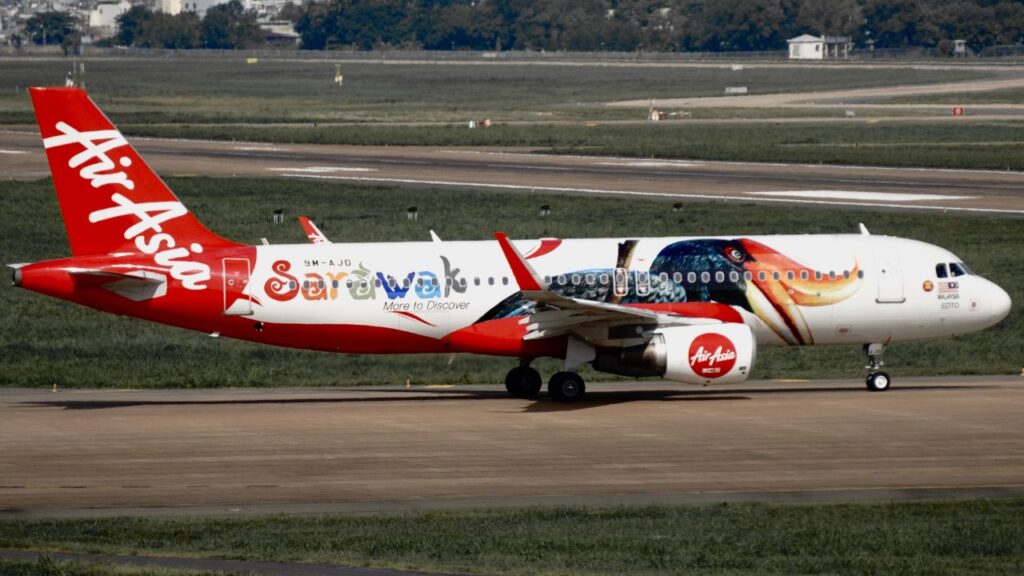
AirAsia financial crisis 2026 Indians — an AirAsia aircraft at Kuala Lumpur International Airport as Southeast Asia's largest low-cost carrier seeks USD 1 billion in international debt markets and RM700 million in local credit facilities amid a Q2 2026 net loss of RM830.5 million and current liabilities of RM18.4 billion against cash of RM954 million, with Malaysia's Finance Ministry hiring Alton Aviation Consultancy to assess funding needs and asking Malaysia Airlines and Batik Air to assess capacity to absorb AirAsia's routes if needed.
Quick answer: AirAsia — Southeast Asia’s largest low-cost carrier and one of the most heavily used airlines by Indian travelers to Malaysia, Thailand, and the rest of Southeast Asia — is facing a significant financial crisis in 2026. Key facts: RM830.5 million (~₹1,475 crore) net loss in Q2 2026; RM18.4 billion current liabilities against just RM954 million cash as of June 30; seeking USD 1 billion from international debt markets plus RM700 million local credit; Malaysia’s Finance Ministry has hired Alton Aviation Consultancy to assess funding needs and potential government support; Malaysia Airlines and Batik Air have been asked by the government to assess capacity to absorb AirAsia routes if needed; AirAsia is cutting seat capacity 20-25% in Q4 2026 and returning 25 aircraft. AirAsia says it is currently operational and that funding targets are sufficient — but the Malaysian government’s contingency planning is the clearest official signal that the situation is being taken seriously at the highest level.
AirAsia financial crisis 2026 Indians — the financial turbulence building around Southeast Asia’s largest budget carrier has direct and specific relevance for the millions of Indian travelers who use AirAsia to reach Kuala Lumpur, Bangkok, Bali, Singapore, Phuket, and dozens of regional Southeast Asian destinations every year. AirAsia is India’s most popular low-cost option for Southeast Asia travel, operating from Delhi, Mumbai, Chennai, Bengaluru, Hyderabad, Kochi, and other Indian cities to Kuala Lumpur and then onwards across the region.
The AirAsia financial crisis 2026 Indians story is not yet at the stage of route cancellations or ticket refunds for Indian passengers. AirAsia continues to operate and insists its funding strategy is on track. However, the Malaysian government’s decision to hire an independent aviation consultancy to assess AirAsia’s funding needs, and to simultaneously ask Malaysia Airlines and Batik Air whether they could absorb AirAsia’s routes and passenger load, is the kind of contingency planning that only happens when a government is genuinely concerned about an airline’s viability. Indian travelers with AirAsia bookings — particularly for trips more than 3 months ahead — should understand the situation clearly. See our Malaysia visa-free Indians 2026 guide for the broader Malaysia travel context.
The Financial Numbers: How Serious Is This
The AirAsia financial crisis 2026 Indians severity needs to be understood through the specific balance sheet numbers, not just headlines.
Q2 2026 net loss: RM830.5 million (~USD 205.5 million / ~₹1,475 crore)
This is not a small operating loss from a difficult quarter — this is a substantial net loss that follows a pattern of losses through 2025-2026 driven by surging jet fuel costs, foreign exchange losses (the Malaysian ringgit’s weakness against USD increases AirAsia’s fuel and leasing costs), and revenue falling 14.5% to RM5.09 billion.
Current liabilities vs cash (June 30, 2026):
Current liabilities: RM18.4 billion
Cash and bank balances: RM954 million
Net debt position: RM2.27 billion
This is the number that alarm bells ring around. RM18.4 billion in current liabilities against RM954 million in cash is a liquidity position that aviation analysts describe as severe. AirAsia’s current liabilities include aircraft leasing obligations, fuel hedging contracts, maintenance reserves, employee costs, and airport fees — all obligations that must be met regardless of revenue performance.
What AirAsia says: AirAsia emphasises that it raised USD300 million in March 2026 on improved terms to refinance debt and extend repayment deadlines. It states that the primary goal of its USD1 billion funding target is debt consolidation and refinancing — not covering an operational funding gap. Deputy group CEO Farouk Kamal told The Edge Malaysia that the airline intends mainly to refinance existing borrowings rather than increase overall debt, potentially consolidating into a single instrument with principal repaid at maturity.
What analysts say: Aviation analyst Shukor Yusof, founder of Endau Analytics, said it would be “very difficult” for AirAsia to secure the needed funding under its current financial structure without some form of government endorsement — because banks and institutional investors are becoming more selective about airline funding amid high fuel costs and market uncertainty.
The Malaysian Government’s Response: Contingency Planning in Action
The AirAsia financial crisis 2026 Indians government response is the clearest signal of how seriously the situation is being taken.
Step 1 — Alton Aviation Consultancy appointment (September 2026):
Malaysia’s Finance Ministry hired Alton Aviation Consultancy — a Canadian transport infrastructure advisory firm — to independently assess AirAsia’s funding requirements and evaluate what form of support the government could provide, if needed. The ministry provided an undertaking or guarantee to help Alton secure significant borrowings. This is not a routine advisory appointment — it is the government formally inserting itself into a private airline’s funding process.
Step 2 — Malaysia Airlines and Batik Air scenario planning (September 16, 2026):
The Malaysian government asked both Malaysia Airlines and Batik Air to assess whether they could absorb AirAsia’s domestic and regional routes and passengers if needed. Both airlines confirmed they would be willing to expand organically — not by acquiring AirAsia’s business, but by taking over routes and adding capacity. These discussions involve the Finance Ministry and Malaysia Airports Holdings Berhad (MAHB), which has already granted AirAsia repayment extensions on airport fees.
Why this matters for Indian travelers: AirAsia commands approximately 40% of Malaysia’s overall aviation market and 60% of domestic Malaysian flying. The airline is the largest provider of affordable regional air connectivity across Southeast Asia. If AirAsia were to significantly curtail operations, the routes most affected would include key Indian-traveler routes — Kuala Lumpur Hub connections to Bangkok, Bali, Singapore, Phuket, Ho Chi Minh City, Jakarta, and domestic Malaysian routes used by Indian workers in Malaysia. The contingency planning confirms the government understands this and is preparing an absorption plan — but absorption by Malaysia Airlines and Batik Air would inevitably mean higher fares on those routes.
What is NOT being discussed: The government has explicitly stated there are no current plans for a bailout or government guarantee for AirAsia’s fundraising. The discussions are about conditional support and independent assessment, not an unconditional rescue. The 2021 precedent — an 80% government-guaranteed loan of RM500 million with conditions including government board oversight — suggests any support that materialises will come with significant strings attached.
What AirAsia Is Doing: Capacity Cuts and Route Changes
The AirAsia financial crisis 2026 Indians operational changes are already visible in the airline’s network decisions.
Q4 2026 seat capacity cut of 20-25%: AirAsia is reducing its seat capacity by 20-25% year-on-year in Q4 2026. This is a significant capacity reduction that will tighten seat availability on popular routes and may push up fares on AirAsia’s network.
Returning 25 older aircraft: AirAsia is returning 25 older aircraft to lessors during 2026 — reducing its fleet size and cutting maintenance and leasing costs, but also reducing its capacity ceiling.
Sydney-Kuala Lumpur route suspended from October 2026: AirAsia suspended its Sydney-Kuala Lumpur route from October as part of its broader network adjustment. This is a high-cost long-haul route that was consuming more cash than it was generating given current fuel prices.
The pattern: These are all cash-conservation and cost-reduction moves consistent with an airline managing a liquidity crunch. They are not signs of imminent collapse — they are signs of active restructuring to reach the funding target.
What Indian Travelers Must Know and Do
The AirAsia financial crisis 2026 Indians practical guidance has five specific actions for different categories of Indian travelers.
If you have AirAsia flights booked within the next 4-6 weeks:
No immediate action needed. AirAsia is currently operational and there is no indication of imminent service suspension. Fly as planned. Keep your booking confirmation and contact details updated with AirAsia.
If you have AirAsia flights booked 3-6 months ahead:
Consider purchasing travel insurance that covers airline insolvency — this is the specific coverage that protects you if an airline ceases operations before your travel date. Standard travel insurance often excludes airline insolvency; confirm your policy covers it. SafetyWing and other travel insurance providers offer trip cancellation coverage — check the insolvency clause specifically.
If you are planning to book AirAsia for Southeast Asia trips:
Continue booking for near-term travel (next 1-2 months). For bookings 4-6 months ahead, consider whether a more financially stable alternative (Malaysia Airlines, IndiGo on India-Kuala Lumpur, Thai Airways, Singapore Airlines) at a slightly higher fare provides better booking security.
If you are an Indian worker or resident in Malaysia using AirAsia for India trips:
Monitor developments closely. If AirAsia’s situation deteriorates, Malaysia Airlines and Batik Air are the designated backup carriers. Both are more expensive than AirAsia but cover the same routes.
Credit card bookings: If you paid for AirAsia tickets by credit card, you typically have chargeback rights if the airline fails to provide the service. Debit card and cash bookings are harder to recover in airline failure scenarios. Future AirAsia bookings during this period of uncertainty are better made by credit card.
| AirAsia Financial Crisis 2026 Indians — Key Numbers at a Glance | Metric | Figure |
|---|---|---|
| Q2 2026 net loss | RM830.5 million (~₹1,475 crore) | |
| Current liabilities (June 30) | RM18.4 billion | |
| Cash and bank balances (June 30) | RM954 million | |
| Net debt position | RM2.27 billion | |
| Funding target (international) | USD 1 billion | |
| Funding target (local credit) | RM700 million | |
| March 2026 funding already raised | USD 300 million | |
| Q4 2026 capacity cut | 20-25% year-on-year | |
| Aircraft being returned | 25 older aircraft | |
| AirAsia’s Malaysia market share | ~40% overall, ~60% domestic | |
| Government action | Finance Ministry + Alton Aviation assessment | |
| Contingency | Malaysia Airlines + Batik Air route absorption discussions |
For travel insurance covering AirAsia flights that includes airline insolvency protection, check SafetyWing Nomad Insurance for Indian travelers — and specifically verify the insolvency clause before purchasing.
FAQs — AirAsia Financial Crisis 2026 Indians
Q: Is AirAsia about to shut down? Should Indians cancel their bookings?
No — AirAsia is currently operational and there is no indication of imminent shutdown. The airline is actively pursuing a USD1 billion international debt refinancing and has the support of Malaysia’s Finance Ministry in that process. In Q2 2026 alone, it raised USD300 million on improved terms. The Malaysian government’s contingency planning with Malaysia Airlines and Batik Air is scenario planning, not a shutdown announcement. Indian travelers with near-term AirAsia bookings should fly as planned. Travelers with bookings 4-6 months ahead should consider airline insolvency travel insurance as a prudent precaution, not as a response to imminent collapse.
Q: What happens to Indian travelers’ money if AirAsia stops operating?
If AirAsia were to cease operations — which is not currently expected — Indian travelers who booked through a credit card would have chargeback rights to reclaim the fare. Those who booked through an OTA (like MakeMyTrip, Ixigo, or EaseMyTrip) should check their refund policy for airline failure scenarios. Those who paid by debit card or bank transfer have fewer automatic protections. The best protection for forward bookings during a period of airline financial uncertainty is travel insurance with an explicit airline insolvency clause — not standard trip cancellation insurance. Check your policy terms carefully.
Q: Which airlines can replace AirAsia on India-Malaysia and Southeast Asia routes?
The Malaysian government has formally asked Malaysia Airlines and Batik Air to assess capacity absorption of AirAsia routes. On India-Malaysia routes, the primary alternatives are: Malaysia Airlines (full-service, higher fares), IndiGo (operates India-Kuala Lumpur direct), Air India Express (India-Kuala Lumpur), and Batik Air (budget, Malaysia-based). For AirAsia’s Kuala Lumpur hub connections to Bangkok, Bali, Singapore, Phuket, and regional Southeast Asia, the alternatives are: Thai Airways, Scoot (Singapore Airlines budget subsidiary), Batik Air, Citilink (Bali), and Vietnam Airlines. Fares on these alternatives are typically 20-40% higher than equivalent AirAsia fares.
Final Word
AirAsia financial crisis 2026 Indians — RM830.5 million Q2 2026 net loss, RM18.4 billion current liabilities vs RM954 million cash, seeking USD1 billion international + RM700 million local credit for debt refinancing and consolidation, Malaysia Finance Ministry hired Alton Aviation Consultancy to assess, Malaysia Airlines and Batik Air asked to assess route absorption capacity, 20-25% Q4 2026 seat capacity cut, 25 aircraft returned, Sydney-KL route suspended October, AirAsia holds 40% Malaysia overall market and 60% domestic, USD300 million already raised March 2026 on improved terms, government support conditional not guaranteed
— requires Indian travelers to understand this is a serious financial situation under active government monitoring, not an imminent collapse. Fly your near-term AirAsia bookings. Buy insolvency-clause travel insurance for forward bookings. Book credit card not debit for any new AirAsia purchases. Monitor TravelManToday for the funding outcome announcement — the Q4 2026 timeline is when AirAsia says it aims to complete its debt consolidation.
Also Read:
- Malaysia Visa-Free Indians 2026 — High Commission Job Scam Warning
- AirAsia Thailand 2026 — Financial Pressure, Seoul Route Terminated
- Best Economy Class Airlines 2026 — Full Top 10 Ranked
Official Sources:
- Bangkok Post — AirAsia in Talks With Malaysian Government Over Potential Funding Support
- Reuters via The Star — Malaysia’s Finance Ministry Hires Adviser to Assess AirAsia’s Funding Needs
 AirAsia Financial Crisis 2026 Indians: USD 1 Billion Funding Hunt, Malaysia Plans Route Backup
Thailand Tourist Fee 2026: 3 Airport Charges Indian Travelers Must Budget For

Singapore Haze 2026 Indians: PSI 192, Outdoor Tourism Down 30% — What to Know
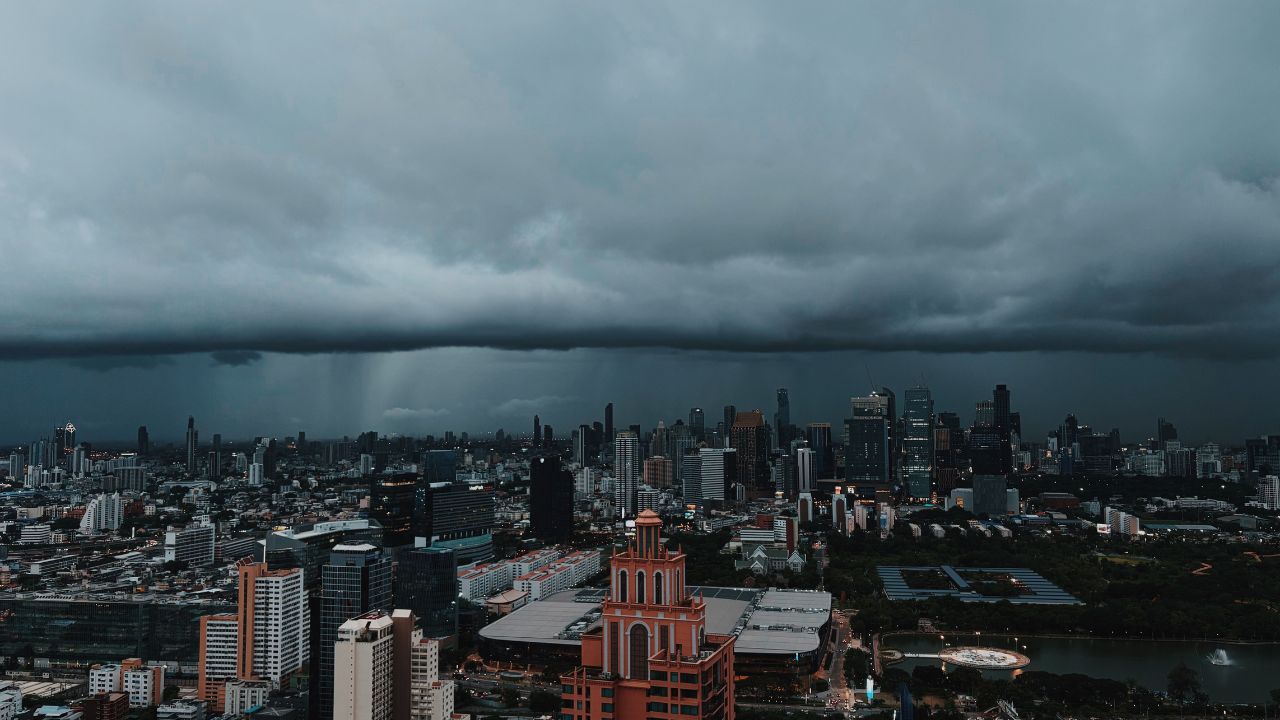
Bangkok Rain Warning October 2026: Heavy Rain Returns Tuesday, Flood Risk Elevated
AirAsia Financial Crisis 2026 Indians: USD 1 Billion Funding Hunt, Malaysia Plans Route Backup
Thailand Tourist Fee 2026: 3 Airport Charges Indian Travelers Must Budget For
Singapore Haze 2026 Indians: PSI 192, Outdoor Tourism Down 30% — What to Know
Bangkok Rain Warning October 2026: Heavy Rain Returns Tuesday, Flood Risk Elevated

Aaseem Bhardwaj is a journalist, seasoned traveler and IT professional based in India. With firsthand travel experience across Southeast Asia, East Asia, Middle East and Europe, Aaseem founded Travel Man Today to provide reliable visa updates and travel news for Indian passport holders. He has personally traveled to Thailand, Vietnam, Malaysia, Japan, Singapore, Hong Kong, South Korea, UAE and Europe. Follow his travel vlogs on YouTube at @travelmantoday



Templates for Indians