China Tourism Visa Free 2026: 22.9M Arrivals, 240-Hour Transit Now 57 Countries
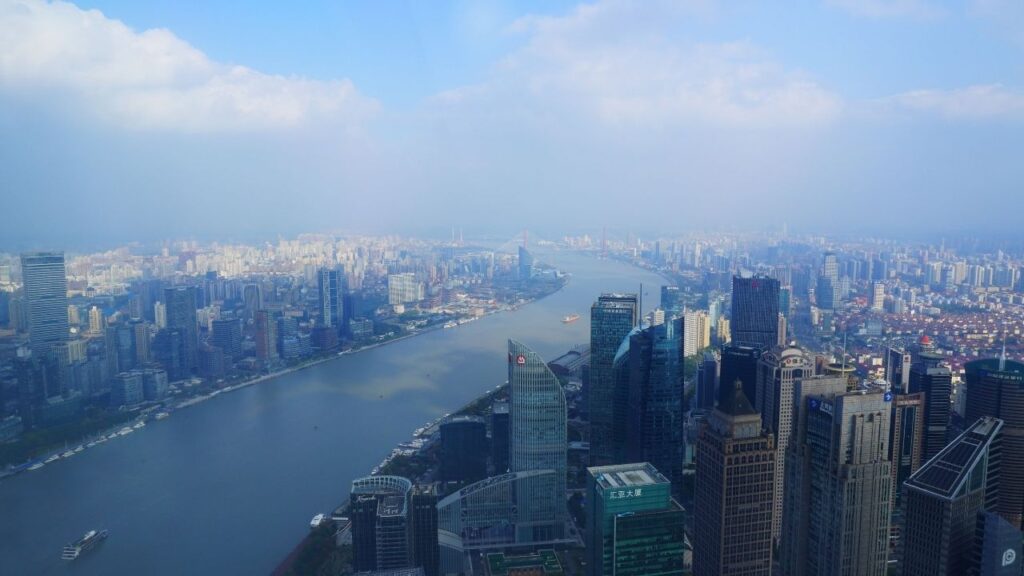
China tourism visa free 2026 — China's National Immigration Administration reports 22.91 million foreign arrivals in H1 2026, with 77.7% of the total (17.8 million travelers) entering visa-free, a 30.6% increase year-on-year, driven by expanding unilateral visa waivers for 50 countries and the 240-hour visa-free transit corridor now covering 57 nationalities at 65 designated ports.
Quick answer: China recorded 22.91 million foreign arrivals in H1 2026 — up 20.4% year-on-year, with 77.7% entering visa-free. The 240-hour (10-day) visa-free transit now covers 57 nationalities through 65 ports including Beijing, Shanghai, and Guangzhou. India is not on China’s unilateral visa-free list — but Indian passport holders can use the 240-hour transit to visit China for up to 10 days without a Chinese visa, if they have a confirmed onward ticket to a third country.
China tourism visa free 2026 is reshaping how the world travels to China — visa-free entries jumped 30.6% in the first half of 2026, driven by an aggressive sequence of unilateral visa waivers, an expanding 240-hour transit corridor, and an upgraded Hainan island visa-free scheme that together represent the most significant opening of Chinese borders to foreign travelers in two decades.
The China tourism visa free 2026 shift is happening fast enough that most travelers — including Indian passport holders planning China trips — are still working from pre-2024 assumptions about Chinese visa requirements, payment infrastructure, and practical accessibility. Those assumptions are systematically outdated. For Indian travelers specifically, the 240-hour transit rule creates a legal 10-day China visit window without a visa that most Indian travelers do not know exists. See our China India business visa 2026 guide for the separate business travel context.
The Numbers: 22.91 Million Arrivals, 77.7% Visa-Free
In the first half of 2026, China recorded 22.91 million entries by foreign nationals, up 20.4% year on year, according to the National Immigration Administration. More striking is the composition: 17.8 million of those arrivals — 77.7% of the total — entered visa-free, a 30.6% increase.
The 30.6% increase in visa-free entries — significantly outpacing the overall 20.4% total arrival growth — confirms that it is the visa policy changes driving China’s inbound tourism recovery rather than simply a general return of pre-pandemic demand. Travelers who previously could not or would not visit China because of the visa requirement are now arriving in significant numbers as that barrier is removed.
The top ten source markets — South Korea, Russia, Malaysia, Vietnam, Thailand, Singapore, the United States, Japan, Mongolia, and Australia — accounted for 62% of arrivals, a genuinely global spread that refutes the idea that only regional neighbors are coming.
India does not appear in the top ten. This reflects two factors: the 20–40% business visa approval rate collapse we covered in August (Chinese authorities restricting Indian executive visa approvals through administrative channels) and the absence of India from China’s unilateral visa-free list. Indian travelers who want to visit China without a visa must use the 240-hour transit corridor — which is specifically usable for tourism — or apply for a tourist visa through the Chinese Embassy or VFS Global.
The 240-Hour Transit: 10 Days in China Without a Chinese Visa
The single most commercially significant China tourism visa free 2026 development for Indian travelers is the 240-hour visa-free transit policy — a rule that is more usable than most travelers assume, and almost entirely unknown among Indian passport holders.
On August 20, China’s National Immigration Administration expanded the 240-hour visa-free transit policy to two more countries — Kyrgyzstan and Vietnam — bringing the number of eligible nationalities to 57. India is not currently on the 240-hour transit eligible list — check the current NIA list at nia.gov.cn before planning — but the policy framework illustrates what is possible and signals the likely direction of future expansion.
For the 57 nationalities currently eligible, the 240-hour transit rule works as follows: citizens holding an ordinary passport and a confirmed onward ticket to a third country or region can enter through any of 65 designated ports — including Beijing Capital, Beijing Daxing, Shanghai Pudong, Shanghai Hongqiao, and Guangzhou Baiyun — and stay up to 10 days (240 hours) without a Chinese visa. Tourism, business, and family visits are permitted during the transit period.
The critical constraint that most travelers misunderstand: you cannot fly home directly under the transit waiver. Your onward ticket must be to a third country or region — not back to your origin country. Delhi to Beijing to Singapore qualifies. Delhi to Beijing to Delhi does not. This single detail is the most common source of confusion in online forums about the 240-hour transit.
Ten days is enough for a serious first China trip: Beijing and Xi’an, or Shanghai and Chengdu, or a high-speed rail loop through the Yangtze Delta. The transit period is regionally constrained — you can explore the broader area served by the port of entry, not the whole country in one transit window.
What Has Actually Changed on the Ground
The China tourism visa free 2026 policy changes are accompanied by practical infrastructure improvements that make the on-the-ground experience significantly better than pre-2024 narratives suggest.
The cashless payment wall, long the biggest practical barrier, has largely crumbled: Alipay and WeChat Pay now accept international Visa and Mastercard, and both have built-in translation. For Indian travelers who arrive with a Visa or Mastercard international debit or credit card, the payment infrastructure is now functional at most tourist-facing merchants, transport systems, and restaurants.
China’s high-speed rail network now exceeds 40,000 kilometres — the world’s largest — with 350km/h service linking the major tourist corridors. Booking tickets with a foreign passport is straightforward through official channels, and English support has improved markedly. Didi works with foreign numbers. eSIM tourist packages from Chinese carriers mean a visitor can be online within minutes of landing, without hunting for a physical SIM.
The gap between policy and perception is now the primary barrier. Most English-language advice about visiting China was written between 2019 and 2023, when the experience was genuinely difficult. Much of that advice is now outdated: travelers following old guides miss that the 240-hour rule exists, or don’t know their passport qualifies, or still believe foreign cards don’t work in Alipay.
Connectivity for Western services still requires a VPN. Some smaller merchants remain cash-and-QR only. Weather, crowds, and language barriers haven’t changed. But the core proposition has: China is now easier to enter, cheaper to get around, and more navigable than at any point in the past two decades for those who have read the new rules.
The Hainan 30-Day Visa-Free Scheme
A parallel China tourism visa free 2026 development covers Hainan Island specifically — China’s tropical island province that is being developed as a free trade zone and premium leisure destination.
A parallel 30-day visa-free scheme for Hainan now covers 61 countries. India’s status on the Hainan list should be confirmed at the Hainan Free Trade Port official website before planning — eligibility for Hainan and mainland China visa-free are governed by separate regulations.
Hainan’s appeal for Indian travelers is straightforward: beach resort tourism comparable to Phuket or Bali, with China’s quality of infrastructure and a premium duty-free shopping environment (Hainan has the world’s largest duty-free shopping complex at Haikou). Direct flights from Delhi or Mumbai to Hainan Meilan Airport are not yet established — most routes connect via Guangzhou, Shanghai, or Beijing.
The Policy Trajectory: Expansion Every Few Months
The China tourism visa free 2026 expansion sequence has followed a consistent pattern throughout 2024–2026 — unilateral visa waivers expanding steadily, one batch at a time.
Unilateral visa waivers began in December 2023 with France, Germany, Italy, the Netherlands, Spain, and Malaysia, then expanded repeatedly through 2024 and 2025. In February 2026, the United Kingdom and Canada were added, taking the unilateral list to 50 countries through the end of the year.
The August 20 expansion — two countries at a time, every few months, like clockwork — suggests this trajectory will continue through at least 2027. India’s business visa approval rate difficulties (the 20–40% collapse we covered) reflect a separate bilateral tension track that runs parallel to the general visa-free expansion. Whether India is eventually added to the 240-hour transit eligible list or the unilateral visa-free scheme depends on the overall India-China bilateral relationship trajectory.
What Indian Travelers Must Know About Visiting China
The China tourism visa free 2026 situation for Indian passport holders requires understanding the current rules precisely.
Indian passports are NOT on China’s unilateral visa-free list. The 50-country unilateral visa-free scheme that covers the UK, Canada, France, Germany, and others does not include India. Indian travelers cannot enter mainland China for tourism visa-free without a Chinese visa.
The 240-hour transit eligibility for India. India’s eligibility for the 240-hour transit scheme should be verified at nia.gov.cn before planning — the list changes as new nationalities are added. If India is eligible, the transit allows up to 10 days in the regions around your entry port without a visa, provided you have a confirmed onward ticket to a third country.
Standard tourist visa route. Indian travelers who want to visit China without the transit constraint should apply for a Chinese Tourist Visa (L Visa) through the Chinese Embassy in New Delhi or through COVA (China Online Visa Application) at visaforchina.cn. Standard processing takes 4 working days. The L Visa requirements include confirmed return flights, hotel bookings, bank statements, and a cover letter — see our China visa cover letter guide for the complete application process.
Payment infrastructure. Alipay and WeChat Pay now accept international Visa and Mastercard. Indian travelers with Visa or Mastercard credit or debit cards issued by major Indian banks should work at most tourist-facing merchants. UPI does not work in China. Carry some Chinese Yuan (RMB) as a backup for smaller transactions.
For confirmed flight reservations for your China visa application, a legitimate itinerary is available at flyinghelpline.com/flight-reservation/ for ₹999. For travel insurance covering China trips, SafetyWing Nomad Insurance provides comprehensive coverage at affordable daily rates for Indian travelers.
FAQs — China Tourism Visa Free 2026
Q: How many foreign tourists visited China in H1 2026 and what percentage entered visa-free?
In the first half of 2026, China recorded 22.91 million entries by foreign nationals, up 20.4% year on year, according to the National Immigration Administration. More striking is the composition: 17.8 million of those arrivals — 77.7% of the total — entered visa-free, a 30.6% increase. The top ten source markets — South Korea, Russia, Malaysia, Vietnam, Thailand, Singapore, the United States, Japan, Mongolia and Australia — accounted for 62% of all arrivals.
Q: What is China’s 240-hour visa-free transit and how does it work?
Citizens of 57 countries holding an ordinary passport and a confirmed onward ticket to a third country or region can enter through any of 65 designated Chinese ports — including Beijing, Shanghai, and Guangzhou — and stay up to 10 days (240 hours) without a Chinese visa. Tourism, business, and family visits are permitted during the transit period. The key constraint is that your onward ticket must be to a third country or region — not back to your origin country. On August 20, 2026, China expanded the 240-hour transit policy to two more countries — Kyrgyzstan and Vietnam — bringing eligible nationalities to 57.
Q: Can Indian passport holders visit China without a visa in 2026?
India is not currently on China’s unilateral visa-free list of 50 countries. India’s eligibility for the 240-hour transit scheme should be verified at nia.gov.cn — if eligible, Indians can use it for up to 10-day China visits with an onward ticket to a third country. Indian travelers who want standard tourist access to mainland China should apply for a Chinese Tourist Visa (L Visa) through the Chinese Embassy in New Delhi or through visaforchina.cn. For the complete China visa cover letter format and documents checklist, see our China visa cover letter Indians guide.
Final Word
The China tourism visa free 2026 story — 22.91 million arrivals, 77.7% entering visa-free, the 240-hour transit expanding to 57 countries, Hainan covering 61 — is one of the decade’s most consequential travel policy shifts, happening at a pace most travelers have not registered. For Indian passport holders, China remains a visa-required destination for standard tourism — the 240-hour transit offers a 10-day exception if the entry and exit routing qualifies.
But the broader practical reality of 2026 China — Alipay accepting foreign cards, 40,000km of high-speed rail, eSIM packages on arrival — has changed dramatically from the difficult 2019–2023 era. Updated knowledge of current rules produces a genuinely different and better China trip than the old playbooks suggested was possible.
Also Read:
- China India Business Visa 2026 — Approvals Crash to 20–40%
- China Visa Cover Letter Indians — Sample Format 2026
- Vietnam Aviation Market 2026 — Overtakes Thailand at No. 2
Official Sources:
- Asia Times — China’s Visa-Free Boom Is Rewriting Inbound Tourism
- China National Immigration Administration
 ASEAN India Shoppers in Thailand 2026: TAT’s Big Discount Campaign Explained for Indians

Singapore Tourism Receipts 2026: S$7.21 Billion Drop — What It Means for Indians

Bangkok Flooding October 2026: Roads Submerged — What Indians Must Know

Laem Son National Park 2026: Thailand’s Hidden Beach Gem Opens for Tourism Season

ASEAN India Shoppers in Thailand 2026: TAT’s Big Discount Campaign Explained for Indians
Singapore Tourism Receipts 2026: S$7.21 Billion Drop — What It Means for Indians
Bangkok Flooding October 2026: Roads Submerged — What Indians Must Know
Laem Son National Park 2026: Thailand’s Hidden Beach Gem Opens for Tourism Season

Aaseem Bhardwaj is a journalist, seasoned traveler and IT professional based in India. With firsthand travel experience across Southeast Asia, East Asia, Middle East and Europe, Aaseem founded Travel Man Today to provide reliable visa updates and travel news for Indian passport holders. He has personally traveled to Thailand, Vietnam, Malaysia, Japan, Singapore, Hong Kong, South Korea, UAE and Europe. Follow his travel vlogs on YouTube at @travelmantoday






Templates for Indians



1 thought on “China Tourism Visa Free 2026: 22.9M Arrivals, 240-Hour Transit Now 57 Countries”