Singapore Airlines Q1 2026 Loss: S$76M Deficit Despite Record Revenue
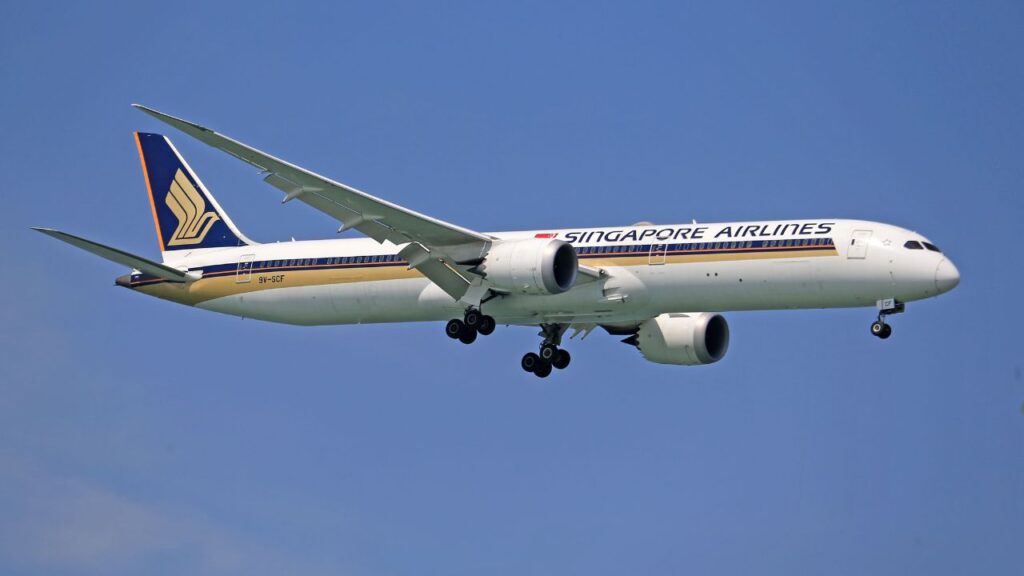
Singapore Airlines Q1 2026 loss of S$76M announced July 28 — the group's first quarterly net loss since March 2022 as 78.5% fuel cost surge and Air India losses outweigh record S$5.714 billion revenue.
Singapore Airlines Q1 2026 loss has been confirmed at S$75.8 million for the three months ending June 30, 2026 — the carrier’s first quarterly net loss since the pandemic quarter of March 2022, and a result that stands in stark contrast to the record S$5.714 billion in revenue the group generated in the same period.
The SIA Group achieved revenue of S$5.71 billion during the first quarter, an increase of 19.3% year-on-year, on strong demand and a 12% increase in passenger yields. Yet total expenditure grew faster — rising 27.9% to S$5.609 billion — driven by a fuel cost surge and continued Air India losses that turned an operating profit into a group net loss.
The Numbers: Record Revenue, Faster-Rising Costs
The Singapore Airlines Q1 2026 loss tells a story of a carrier whose commercial engine is firing strongly while two external forces — jet fuel costs and Air India — are overwhelming the gains.
SIA and its low-cost carrier Scoot carried a record 10.9 million passengers, up 6.3% from a year earlier, although passenger load factor slipped 0.5 percentage point to 87.1% as capacity growth outpaced traffic.
Passenger revenue was up 18.6% to S$4.58 billion. Group revenue hit a quarterly record of S$5.714 billion. Passenger yields rose 12% — meaning customers are paying meaningfully more per kilometre flown than a year ago.
Group expenditure rose 27.9%, driven mainly by a 78.5% jump in net fuel costs after jet fuel prices surged following the Middle East conflict. Operating profit consequently fell 73.8% to S$105.5 million, down from S$405 million a year earlier.
A S$42 million increase in losses related to the Air India investment then pulled the operating profit into a group net loss of S$76 million — compared to a S$186.1 million net profit in the same quarter last year.
| Singapore Airlines Q1 2026 Loss — Key Financial Data | Q1 FY2026-27 | Q1 FY2025-26 | Change |
|---|---|---|---|
| Group revenue | S$5.714 billion | S$4.789 billion | +19.3% |
| Passenger revenue | S$4.58 billion | — | +18.6% |
| Passengers carried (SIA + Scoot) | 10.9 million | 10.3 million | +6.3% |
| Passenger yields | — | — | +12.0% |
| Total group expenditure | S$5.609 billion | — | +27.9% |
| Net fuel cost change | — | — | +78.5% |
| Operating profit | S$105.5 million | S$405 million | -73.8% |
| Group net loss | -S$75.8 million | +S$186.1 million | Swing of S$262M |
Why Fuel Is the Central Issue
The Singapore Airlines Q1 2026 loss is fundamentally a fuel cost story — and the fuel cost story is a Middle East conflict story.
SIA said jet-fuel prices more than doubled after the Middle East conflict began on February 28, 2026. A 78.5% jump in net fuel costs is the single largest line item driving the expenditure increase. Non-fuel operating costs at Singapore Airlines and Scoot were actually well-controlled — passenger unit cost excluding fuel fell 1.7% at SIA and 2.4% at Scoot.
This matters for interpreting the result. The Singapore Airlines Q1 2026 loss is not evidence of structural commercial deterioration. The airline’s underlying operational efficiency improved. The 12% passenger yield increase shows meaningful pricing power — customers are paying more, and the airline’s revenue machine is responding. But a 78.5% jump in fuel costs cannot be absorbed through yield increases alone, at least not in a single quarter.
SIA said measures including adjusted passenger fares and increased cargo rates have not fully recovered the additional fuel cost — which is honest framing. They are recovering some of it, but not all of it yet.
Air India: A Second Drag on the Quarter
The Singapore Airlines Q1 2026 loss has a second important component beyond fuel — the Air India investment.
The group also booked a higher share of losses from Air India. The S$42 million increase in Air India losses added to the fuel cost pressure to pull the group from operating profit into net loss.
Singapore Airlines holds a 25.1% stake in Air India following the December 2024 Vistara merger. Air India posted a total loss of SG$3.56 billion for FY2026 — approximately US$2.8 billion — due to the Pakistan airspace closure, the Boeing 787 accident in June 2025, and Middle East conflict disruptions. SIA absorbed SG$945.2 million in losses from its Air India stake for FY2026 — and the Q1 FY2027 numbers show the losses continue into the new financial year.
CEO Goh Choon Phong has consistently maintained that SIA’s Air India investment is a “long game” — and the Q1 2027 result does not change that position. India’s aviation market growth trajectory remains the fundamental justification for the stake.
What SIA Is Investing In: Passenger Experience Upgrades
The Singapore Airlines Q1 2026 loss did not stop the airline from announcing a series of passenger experience improvements alongside the results. This is deliberate — airlines that cut product investment during a cost squeeze risk losing the yield premium that justifies premium pricing.
New Business Class cabin: Singapore Airlines is in the process of a S$1.1 billion A350 cabin retrofit programme. The new Business Class — featuring doors for suite privacy, parallel-to-aisle sleeping position, 4K screens, USB-C and wireless charging, Bluetooth audio, and enhanced bedding — has faced supply chain and certification delays and is now expected to debut in Q1 2027 rather than the originally planned Q2 2026. The first A350 long-haul retrofit is expected to complete in early 2027, with London Heathrow and Sydney among the probable launch routes.
First Class improvement: The new First Class is being fitted on the A350-900ULR fleet and has also been pushed back — to approximately February 2027 at the earliest.
Premium Economy enhancements: Premium Economy has already received meaningful improvements — including Book the Cook pre-order meals, Charles de Cazanove champagne after takeoff, and the Out of the Woods amenity kit on flights over seven hours. These are the first major Premium Economy soft product upgrades since the cabin launched in 2015.
Enhanced inflight connectivity: Faster Wi-Fi is being deployed across the fleet — a core functional improvement for business travelers and digital-connected premium leisure passengers.
What This Means for Indian Travelers
The Singapore Airlines Q1 2026 loss is relevant for Indian travelers on several dimensions.
Fares are rising. The 12% passenger yield increase means Singapore Airlines tickets — particularly Business and Premium Economy — are more expensive than a year ago. Indian travelers booking SIA for India-Singapore or India-Australia and India-Europe connections via Changi should expect fares to remain elevated while fuel costs stay above pre-conflict levels.
Scoot remains competitive. Low-cost subsidiary Scoot is the more price-accessible option for Indian leisure travelers on Southeast Asian routes and long-haul sectors to Australia and the UK. Scoot’s non-fuel unit costs fell 2.4% in Q1.
New cabin products are coming. The new Business Class suite on refitted A350s will be the most significant long-haul premium product upgrade SIA has launched in over a decade. Indian business travelers regularly on the Delhi, Mumbai, or Bengaluru to London, Sydney, or Los Angeles routes via Changi will benefit from this product when it arrives in 2027.
Air India losses affect SIA but not Indian travelers directly. The Air India losses hurt SIA’s financials but have no direct operational impact on Indian passenger services. Air India continues to operate independently — SIA’s 25.1% stake is a financial investment, not an operational control.
For travel insurance covering Singapore Airlines flights — including trip cancellations, delays, and medical emergencies — SafetyWing Nomad Insurance provides comprehensive coverage at affordable daily rates for Indian travelers.
FAQs — Singapore Airlines Q1 2026 Loss
Q: Why did Singapore Airlines report a loss despite record revenue in Q1 2026?
Singapore Airlines Group posted a net loss of 76 million Singapore dollars for the first quarter ended June 30 of financial year 2026-2027, as a sharp rise in fuel costs triggered by the Middle East conflict outweighed record revenue. Total expenditure rose 27.9%, driven by a 78.5% jump in net fuel costs.
A S$42 million increase in Air India losses further contributed. Group operating profit fell 73.8% to S$105.5 million, which a higher Air India loss share then turned into a net loss of S$76 million.
Q: Is this Singapore Airlines’ first quarterly loss in a long time?
Yes — the Singapore Airlines Q1 2026 loss is the group’s first quarterly net loss since the three months ending March 31, 2022, during the pandemic recovery period. That makes it the first quarterly loss in over four years. The result is particularly striking because it came alongside record revenue of S$5.714 billion and a record 10.9 million passengers carried by SIA and Scoot — making the loss a cost story rather than a demand story.
Q: Are Singapore Airlines passenger fares increasing as a result?
Passenger yields rose 12% year-on-year in Q1, meaning fares per revenue passenger-kilometre are already materially higher than a year ago. SIA said these fare increases and cargo rate increases have not fully recovered the additional fuel cost — meaning further adjustments are possible if fuel prices remain elevated.
Indian travelers booking Singapore Airlines on India-Changi and Changi-Europe or Changi-Australia routes should expect premium cabin fares to remain elevated while the Middle East conflict continues to pressure jet fuel prices.
Final Word
The Singapore Airlines Q1 2026 loss of S$76 million is a significant result — the first quarterly red ink in over four years — but it is a result that needs context to be understood correctly. Record revenue of S$5.714 billion, record 10.9 million passengers, 12% yield growth, and improving non-fuel cost efficiency are all genuine commercial achievements.
The losses are fuel-driven and Air India-driven — both external forces that SIA is managing through fare adjustments and strategic patience respectively. The airline’s product investment continues with the S$1.1 billion A350 cabin retrofit programme. The long-term commercial case for SIA’s position as Asia’s premium carrier remains intact. Watch Q2 2027 for the first signs of the new Business Class cabin impact — and Q4 2027 for whether the fuel headwinds begin to ease.
Also Read:
- Singapore Airlines Air India — SG$945M Loss and Why SIA Stays In
- Singapore Changi Airport Expansion — S$4B AI Overhaul 2026
- SafetyWing Nomad Insurance — Full Review for Indians
Official Sources:
- Straits Times — SIA Spruces Up Passenger Journey With New Offerings
- Singapore Airlines Investor Relations
 China India Business Visa 2026: Modi-Xi BRICS Signal Is Positive — But Watch Implementation

Thailand Tourist Behaviour Rules 2026: Bangkok Protest, First Deportation Order Active

China Southern Delhi Guangzhou 2026: Daily Flights Resume September 21 as Xi Meets Modi at BRICS
Thailand Visa Exemption Tourism 2026: No Work From September 15, Business Travelers Need Non-B Visa
China India Business Visa 2026: Modi-Xi BRICS Signal Is Positive — But Watch Implementation
Thailand Tourist Behaviour Rules 2026: Bangkok Protest, First Deportation Order Active
China Southern Delhi Guangzhou 2026: Daily Flights Resume September 21 as Xi Meets Modi at BRICS
Thailand Visa Exemption Tourism 2026: No Work From September 15, Business Travelers Need Non-B Visa

Aaseem Bhardwaj is a journalist, seasoned traveler and IT professional based in India. With firsthand travel experience across Southeast Asia, East Asia, Middle East and Europe, Aaseem founded Travel Man Today to provide reliable visa updates and travel news for Indian passport holders. He has personally traveled to Thailand, Vietnam, Malaysia, Japan, Singapore, Hong Kong, South Korea, UAE and Europe. Follow his travel vlogs on YouTube at @travelmantoday






Templates for Indians


5 thoughts on “Singapore Airlines Q1 2026 Loss: S$76M Deficit Despite Record Revenue”