Singapore Changi Transit Guide 2026: The No-Boarding Rule Changes Everything
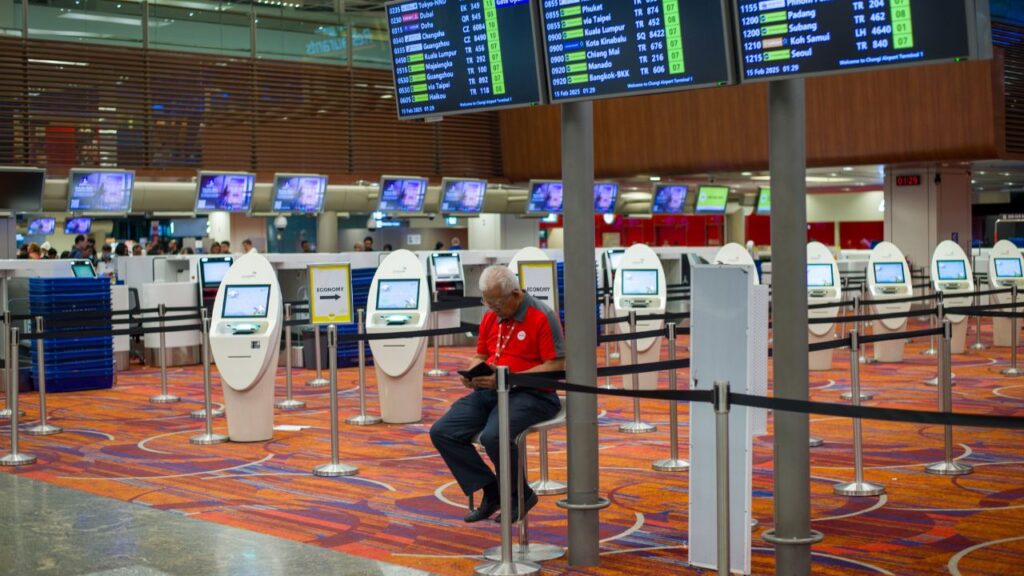
Singapore Changi transit guide 2026 — from January 30, the No-Boarding Directive means airline staff must deny boarding at your departure airport if transit documentation is incomplete.
Singapore Changi transit guide 2026 is essential reading before any flight that connects through Changi — because from January 30, 2026, a single visa misunderstanding or baggage mistake no longer gets resolved at Singapore immigration. It gets resolved at your departure airport, before you board. You do not reach Changi. You do not appeal. The flight leaves without you.
This Singapore Changi transit guide covers every dimension of transiting through Changi in 2026 — airside versus landside, baggage rules, low-cost carrier confusion, the VFTF facility for Indians, Jewel access, free city tours, and the new No-Boarding Directive that changes the entire risk profile of a Changi connection.
Airside Transit vs Landside Transit: The Fundamental Distinction
Every transit through Singapore Changi falls into one of two categories. Understanding which applies to you determines everything else — visa requirements, baggage procedures, and what you can do during your layover.
Airside Transit — No Visa Required
You stay inside the airport transit area throughout your connection. No Singapore visa is needed. No SG Arrival Card is required. Your flights must be on a single booking and your baggage must be tagged through to your final destination.
Within the airside area, you can move freely between Terminals 1, 2, 3, and 4 using the airside Skytrain. The transfer process is entirely within the secure zone.
Landside Transit — Immigration Rules Apply
The moment you exit the transit area, you enter Singapore as a visitor. Immigration rules apply in full — including visa requirements, the SG Arrival Card, and all standard entry conditions.
Most transit problems originate here. Travelers who plan a simple connection discover mid-journey that their baggage situation or booking structure requires them to clear immigration — and they are either not visa-eligible or have not completed the SG Arrival Card.
| Singapore Changi Transit — Two Categories | Visa Required? | SG Arrival Card? |
|---|---|---|
| Airside transit — single booking, bags through-checked | No | No |
| Landside transit — exiting transit area for any reason | Yes (or VFTF) | Yes |
| Visiting Jewel Changi | Yes (or VFTF) | Yes |
| Free city tour | Yes (or VFTF) | Yes |
| Separate ticket + bags NOT through-checked | Yes (or VFTF) | Yes |
SG Arrival Card: Mandatory If You Clear Immigration
If you clear immigration at Changi for any reason, the SG Arrival Card (SGAC) is mandatory — no exceptions, no exemptions.
Submit the SGAC through ICA’s SGAC e-Service within 3 days before your arrival in Singapore. Even passengers who qualify for visa-free entry under bilateral agreements must complete the SGAC before they clear immigration.
Missing the SGAC does not simply mean a delay at the counter. It means immigration denial — you will be turned away regardless of your visa status.
For Indian passport holders: the SGAC must be completed for any entry into Singapore, including transit entries. Complete it before your first departure leg, not at Changi.
The Baggage Rule That Decides Your Visa Requirement
Baggage handling is the single most misunderstood element of Changi transit — and the most common cause of transit denial.
If your baggage is through-checked to your final destination: You remain airside. No visa needed. Collect your onward boarding pass from the airline’s transfer desk inside the transit area and proceed to your gate.
If your baggage is NOT through-checked: You must clear immigration to collect your bags, then re-check them at a landside counter. This requires either a valid Singapore visa or eligibility under the Visa-Free Transit Facility (VFTF). There are no exceptions to this requirement.
The critical point — separate tickets on different PNRs do not automatically mean your bags are not through-checked. But they significantly increase the risk. If your first airline has an interline agreement with your connecting airline, through-checking may be possible. If not, you must collect and re-check.
The golden rule: Confirm baggage through-check status at your first departure airport before flying. Never assume it has been arranged. Get written confirmation on your boarding pass or from the check-in agent.
Low-Cost Carriers: Confirm Everything
Low-cost carriers including Jetstar and Scoot operate different baggage policies than full-service carriers — and they are the source of the majority of Changi transit surprises.
Most low-cost carriers require passengers to clear immigration to re-check baggage, especially on separate tickets. This is standard LCC policy, not an exception.
Some full-service carriers including Air India may through-check bags to LCC partners under specific interline agreements — but this is not guaranteed and varies by route and booking type. Never assume through-check applies. Confirm at your first check-in counter and carry any confirmation documentation with you.
Alliance dynamics matter. Air India and Singapore Airlines are both Star Alliance members — through-check on single or linked bookings is routine. Singapore Airlines may offer interline courtesy arrangements with Scoot or Jetstar, but separate ticket holders are not protected. The airline is under no obligation to through-check bags on separate tickets.
Jewel Changi Airport — Landside Only
Jewel Changi Airport — home to the HSBC Rain Vortex waterfall, the Shiseido Forest Valley, and dozens of dining and retail outlets — is a landside facility. You must clear immigration to access it.
This catches many Indian transit passengers who plan to visit the waterfall during a long layover without realising it requires full immigration clearance. If you do not have a Singapore visa or VFTF eligibility, you cannot enter Jewel.
Airside transfers between Terminals 1, 2, 3, and 4 are permitted when bags are through-checked. If your transfer requires bag re-check — immigration applies, twice.
Build significant buffer time into any itinerary that involves Jewel access during a transit connection. Allow for immigration queues, security re-screening, and the walk back to your departure gate.
Free City Tours and Long Layovers
Singapore’s Changi Airport occasionally offers free city tours for transit passengers with qualifying long layovers. These tours require exiting the airport — which means clearing immigration.
If you plan to take a free city tour or explore any part of Singapore outside the transit zone, you must either hold a valid Singapore visa or qualify under the Visa-Free Transit Facility. No visa eligibility means no exit.
For Indian passport holders planning a long layover: confirm your visa or VFTF status before booking any tour or planning any outside-the-airport activity.
VFTF for Indians: 96 Hours Without a Visa
The Visa-Free Transit Facility (VFTF) allows Indian passport holders to enter Singapore for up to 96 hours without a Singapore visa — subject to specific conditions.
VFTF conditions for Indian passport holders:
- A confirmed onward ticket departing Singapore within 96 hours to a third country
- A valid visa or long-term pass issued by the US, UK, Canada, Australia, Japan, Germany, Switzerland, or New Zealand
- Single-journey visas from these countries may be accepted if you are returning via Singapore after using them
- Completing the SG Arrival Card before arrival at Changi
VFTF is not automatic and not guaranteed — your eligibility is assessed at immigration. Verify your specific situation at ICA.gov.sg before relying on VFTF for any transit plan.
The 2026 No-Boarding Directive: The Rule That Changes Everything
The most important change in this Singapore Changi transit guide 2026 is the No-Boarding Directive, effective January 30, 2026.
From this date, Singapore’s Immigration and Checkpoints Authority (ICA) has shifted immigration verification to your departure airport — before you board. Airlines are required to verify passport validity, visa eligibility, and transit compliance before allowing passengers to board any flight connecting through Singapore.
If ICA flags a passenger — for any reason — the airline must stop that passenger from boarding. Even if the passenger is “just transiting.” The airline faces fines of SGD 10,000 per violation, and airline staff can face personal penalties including imprisonment for failing to comply.
The result: airlines will not take risks. Any ambiguity in your documentation, visa status, or transit eligibility will result in boarding denial at your departure airport. You will not reach Changi. There is no appeal process at Changi — because you will not get there.
What this means for every Indian traveler transiting through Singapore:
- Your passport must have at least 6 months validity from your entry date
- If you need a Singapore visa, it must be in hand before you travel — not arranged on arrival
- If you are relying on VFTF, confirm your eligibility fully before checking in
- If your transit requires immigration clearance, your SG Arrival Card must be submitted
- If denied boarding: contact ICA directly before attempting to rebook
For travel insurance covering Singapore transit disruptions including denied boarding and missed connections, SafetyWing Nomad Insurance provides comprehensive coverage at affordable daily rates for Indian travelers. If you need a confirmed flight reservation for your Singapore visa application, a legitimate booking is available at flyinghelpline.com/flight-reservation/ for just ₹999.
FAQs — Singapore Changi Transit Guide 2026
Q: Do Indian passport holders need a visa to transit through Singapore Changi?
For airside transit only — where bags are through-checked and you do not exit the transit zone — no visa is required. If you exit the transit area for any reason including bag re-check, Jewel Changi access, or a city tour, you need either a Singapore visa or VFTF eligibility. The VFTF allows Indian passport holders up to 96 hours in Singapore without a visa, provided you hold a valid visa or long-term pass from the US, UK, Canada, Australia, Japan, Germany, Switzerland, or New Zealand and have a confirmed onward ticket within 96 hours. Also Read: Singapore VFTF for Indians
Q: What is the 2026 No-Boarding Directive for Singapore Changi?
From January 30, 2026, airlines must verify passport validity, Singapore visa eligibility, and transit compliance at the departure airport before boarding — not at Changi on arrival. If ICA flags a passenger for any transit documentation issue, the airline must deny boarding. Airlines face SGD 10,000 fines per violation and staff face personal penalties for non-compliance. There is no appeal process at Changi because denied passengers will not reach Singapore. Verify all transit documentation before checking in for your first flight.
Q: What happens if my bags are not through-checked on separate tickets at Changi?
If your baggage is not through-checked to your final destination, you must clear immigration at Changi to collect your bags and re-check them at the landside counter. This requires either a valid Singapore visa or VFTF eligibility. Most low-cost carrier connections on separate tickets do not automatically include through-check. Confirm baggage status at your first check-in airport and carry written confirmation. Under the 2026 No-Boarding Directive, if your transit requires immigration clearance but you lack the necessary documentation, you may be denied boarding before reaching Singapore.
Final Word
The Singapore Changi transit guide 2026 has one overarching message: prepare everything before your first departure, not at Changi. The January 30, 2026 No-Boarding Directive has moved the checkpoint from Singapore’s immigration hall to your home airport check-in counter. Baggage through-check status determines your visa requirement. Jewel, city tours, and long layovers all require immigration clearance.
VFTF gives Indian passport holders 96 hours without a visa — but only with qualifying third-country visas. Get your SG Arrival Card submitted, carry your passport with 6 months validity, confirm baggage through-check at check-in, and know your VFTF status before you leave home. The transit that used to be forgiving has become one where preparation is the only insurance that works.
Also Read:
- Singapore Changi Airport Expansion — S$4B AI Overhaul 2026
- Singapore Travel Guide Indians 2026 — Visa, Money and Transport
- SafetyWing Nomad Insurance — Full Review for Indians
Official Sources:
 EVA Air Delhi Taipei 2026: Nonstop Flights Launch December 1, Five Weekly
China India Business Visa 2026: Modi-Xi BRICS Signal Is Positive — But Watch Implementation

Thailand Tourist Behaviour Rules 2026: Bangkok Protest, First Deportation Order Active
China Southern Delhi Guangzhou 2026: Daily Flights Resume September 21 as Xi Meets Modi at BRICS

EVA Air Delhi Taipei 2026: Nonstop Flights Launch December 1, Five Weekly
China India Business Visa 2026: Modi-Xi BRICS Signal Is Positive — But Watch Implementation
Thailand Tourist Behaviour Rules 2026: Bangkok Protest, First Deportation Order Active
China Southern Delhi Guangzhou 2026: Daily Flights Resume September 21 as Xi Meets Modi at BRICS

Aaseem Bhardwaj is a journalist, seasoned traveler and IT professional based in India. With firsthand travel experience across Southeast Asia, East Asia, Middle East and Europe, Aaseem founded Travel Man Today to provide reliable visa updates and travel news for Indian passport holders. He has personally traveled to Thailand, Vietnam, Malaysia, Japan, Singapore, Hong Kong, South Korea, UAE and Europe. Follow his travel vlogs on YouTube at @travelmantoday




Templates for Indians


1 thought on “Singapore Changi Transit Guide 2026: The No-Boarding Rule Changes Everything”