Singapore MICE Incentive Travel: Why Global Firms Keep Choosing the Lion City
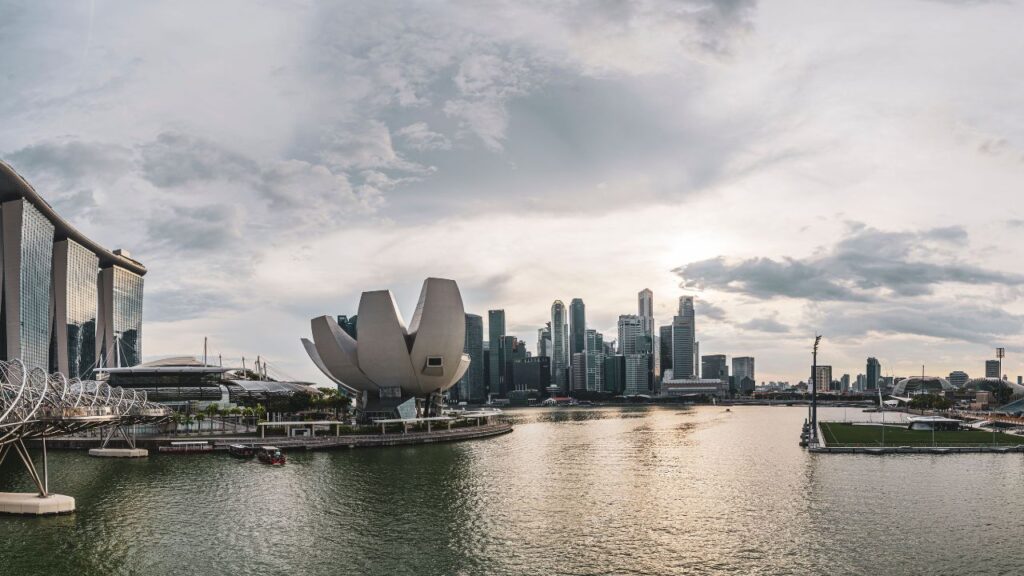
Singapore MICE incentive travel 2026 — OmniLife brings 2,000 Latin American attendees in November and Katsumata Group delivered 2,200 Japanese employees over a year-long anniversary programme, with River Wonders and Mandai providing exclusive after-hours buyouts.
Singapore MICE incentive travel is thriving in 2026 — and the city-state’s appeal goes far beyond hotel ballrooms and conference centres. From a Mandai Wildlife Reserve midnight excursion for 150 C-suite chemical industry executives to 2,200 Japanese employees celebrating a centennial anniversary over nearly a year of rolling events, Singapore is being chosen by global corporations as their premier incentive destination for one consistent reason: it delivers the unexpected within a framework that is operationally flawless.
The Singapore MICE incentive travel sector is one of the city-state’s most commercially significant but least publicly visible tourism segments — and it is growing with purpose, scale, and a strategic clarity that competitors across Southeast Asia have struggled to match.
What Incentive Travel Actually Means and Why Singapore Wins It
In the MICE acronym — Meetings, Incentives, Conferences, Exhibitions — the I for Incentive is the segment most underestimated by people outside corporate travel. Incentive travel is when a company rewards its top performers, distributors, or employees with a fully funded group trip. The destination is the reward. The experience is the message.
Getting the destination right is everything. Singapore MICE incentive travel wins this brief because it can deliver four things simultaneously that most competing destinations cannot — operational reliability, genuine novelty, luxury infrastructure, and a geographic position that makes it the natural Asia-Pacific reward for global corporate networks covering China, India, the Middle East, and Southeast Asia simultaneously.
Singapore’s volume of incentive business has remained steady, said Carrie Kwik, executive director of conventions, meetings and incentive travel at the Singapore Tourism Board.
“Unlike some international association meetings, there is a stronger possibility of corporate meetings and incentives returning to a destination,” said Kwik. “Rather than signalling a decline in interest, this dynamic rotation creates a steady pipeline of new groups.”
The rotation dynamic is critical to understanding how Singapore MICE incentive travel actually works commercially. Corporate groups rotate destinations to keep rewards fresh — so Singapore may host a company in 2024, see that company go to Tokyo in 2025, and then receive a different company’s incentive group in 2025 while the first company is away. The pipeline is always full even though no single company is always there.
OmniLife, Katsumata, and ChemCon: Who Is Coming and Why
Three recent Singapore MICE incentive travel groups illustrate the breadth and scale of what Singapore is attracting.
Mexican nutritional supplements company OmniLife will bring 2,000 attendees from its Latin American division in November 2026. This is a 2,000-person Latin American corporate incentive group choosing Singapore over destinations closer to home — a direct validation of Singapore’s appeal to global corporate networks that want to reward their top performers with an Asian destination that feels genuinely different and aspirational.
Japan’s Katsumata Group selected Singapore for its 100th anniversary incentive programme, bringing about 2,200 employees over nearly a year, from June 2025 to May 2026. A year-long rolling incentive programme — delivering employees in batches over 11 months — is a logistically complex commitment that only a destination with proven reliability can sustain. Singapore delivered.
When ChemCon Asia 2026 hosted around 150 C-suite executives and policymakers at the Hilton Singapore Orchard in June, attendees went through an intense daily programme of meetings and presentations from 8am to 7pm. The conference director looked beyond the traditional set-up to weave Singapore into the delegate experience. The centrepiece was a surprise mid-week excursion to Mandai, complemented by a daily in-house television programme featuring snippets of the day’s events and insights into Singapore, broadcast straight to delegates’ hotel rooms.
The Mandai excursion detail is instructive. ChemCon’s conference director could have offered a dinner cruise or a cocktail reception — but chose a wildlife reserve after-hours experience instead. That choice signals what premium corporate clients value in Singapore: experiences that cannot be replicated at home.
| Singapore MICE Incentive Travel — Recent Groups | Details |
|---|---|
| OmniLife (Mexico) | 2,000 attendees, Latin American division, November 2026 |
| Katsumata Group (Japan) | 2,200 employees, 100th anniversary, June 2025–May 2026 |
| ChemCon Asia 2026 | 150 C-suite executives, Hilton Orchard, June 2026 |
| STB incentive pipeline | Steady — dynamic rotation of corporate groups |
| Venue used for buyout | River Wonders — private after-hours exclusive access |
Venue Innovation: River Wonders, Mandai and the Private Buyout
One of the strongest operational assets in Singapore MICE incentive travel is the ability to conduct private, after-hours buyouts of iconic public attractions.
To accommodate large groups while maintaining public access, venues like River Wonders are available for private, after-hours buyouts. This means a corporate group of 500 or 1,000 people can have exclusive access to the River Wonders attraction — one of the world’s great river wildlife experiences — for an evening event that is simultaneously exclusive and spectacular.
Mandai Wildlife Reserve and its cluster of attractions — River Wonders, Singapore Zoo, Night Safari, and the upcoming Bird Paradise — offer a concentration of nature-based buyout options that no other city in the world can match at this scale and quality. For incentive travel planners, the ability to offer a group an exclusive after-hours Wildlife Reserve experience is a genuinely differentiated program element.
Singapore’s incentive venue landscape has also expanded significantly at the luxury end. Marina Bay Sands remains the anchor — 2,500 hotel rooms, the world’s largest atrium casino, the Sands SkyPark observation deck, multiple Michelin-starred restaurants, and 120,000 square metres of convention space under one roof.
The Capella on Sentosa, the Raffles Singapore, the Shangri-La, and the new luxury hotel pipeline including properties opening ahead of Wynn Al Marjan Island’s 2027 equivalent standard — all feed into Singapore MICE incentive travel’s reputation for delivering accommodation that itself becomes part of the reward.
STB’s 2040 Strategy: Tripling MICE Receipts
The Singapore Tourism Board has set a formal ambition to triple Singapore MICE incentive travel receipts by 2040 through high-quality, high-impact trade events. This is not aspirational language — it is an operational target embedded in Singapore’s Tourism 2040 vision, backed by concrete infrastructure investment.
The S$4 billion AI overhaul of Changi’s air navigation system, the Greater Sentosa Master Plan, the Terminal 5 expansion targeting 140 million passengers, the HarbourFront terminal’s biometric arrival upgrade — all of these feed into MICE infrastructure. The Singapore MICE incentive travel client arriving for a three-day corporate programme at Marina Bay Sands is arriving through the world’s best transit airport, clearing immigration through biometric gates, and accessing a city that has specifically optimised itself for their experience.
Singapore ranked second across Asia-Pacific in the 2025 Global Destination Sustainability Index — the only major Southeast Asian city in the top tier. For global corporations with ESG commitments, choosing Singapore for incentive travel includes a sustainability narrative that competitors in the region cannot yet match.
What This Means for Indian Corporate Travel and Incentive Planners
Singapore MICE incentive travel is highly relevant for Indian corporate travel managers, incentive planners, and multinational companies with Indian operations.
India is one of Singapore’s fastest-growing MICE source markets. Direct flights from Delhi, Mumbai, Bengaluru, Hyderabad, Kochi, and Chennai to Changi Airport make Singapore the most logistically convenient Asian incentive destination for Indian corporate groups — shorter travel time than Tokyo or Seoul, closer than Sydney or Melbourne, and with the STB’s network of Indian-market specialists to support program design.
Singapore’s Little India neighbourhood provides a culturally comfortable base for Indian incentive groups — familiar food, familiar faces, familiar products — alongside the global luxury and novelty that makes the destination feel like a genuine reward. The combination of familiarity and novelty is precisely what great incentive destinations offer.
For Indian pharmaceutical companies, technology firms, financial services groups, and FMCG companies planning their next annual incentive programme, the OmniLife and Katsumata Group examples set benchmarks for what Singapore can deliver — 2,000 people from Latin America, 2,200 people from Japan, managed seamlessly and rewarded memorably.
Remember UPI does not work in Singapore — Indian corporate groups should plan for SGD cash or ensure participants have international Visa and Mastercard cards for personal spending. For travel insurance covering corporate incentive trips to Singapore, SafetyWing Nomad Insurance provides comprehensive coverage at affordable daily rates for Indian travelers.
FAQs — Singapore MICE Incentive Travel 2026
Q: Why do global companies choose Singapore for incentive travel over other Asian destinations?
Singapore MICE incentive travel wins the corporate brief consistently because it delivers operational reliability, genuine novelty, luxury infrastructure, and geographic accessibility for global corporate networks simultaneously.
STB’s Carrie Kwik confirmed that Singapore’s volume of incentive business has remained steady despite the dynamic rotation pattern where corporate groups change destination every few years to keep rewards fresh.
Private after-hours buyouts at attractions like River Wonders and Mandai Wildlife Reserve, combined with Marina Bay Sands’ integrated resort facilities, provide experiential program options unavailable at comparable quality elsewhere in Asia.
Q: What large incentive groups are coming to Singapore in 2026?
Mexican nutritional supplements company OmniLife will bring 2,000 attendees from its Latin American division in November 2026. Japan’s Katsumata Group brought approximately 2,200 employees over nearly a year for its 100th anniversary incentive programme running from June 2025 to May 2026. ChemCon Asia 2026 hosted around 150 C-suite chemical industry executives and policymakers at the Hilton Singapore Orchard in June 2026, with a mid-week Mandai excursion as the event centrepiece.
Q: What is Singapore’s MICE target for 2040?
The Singapore Tourism Board has set an ambition to triple Singapore MICE incentive travel receipts by 2040 through high-quality, high-impact business events. This target is embedded in Singapore’s Tourism 2040 vision and supported by concrete infrastructure investment — the S$4 billion Changi AI overhaul, Greater Sentosa Master Plan, Terminal 5 expansion to 140 million passenger capacity, and the HarbourFront biometric terminal upgrade — all of which enhance the experience of MICE delegates arriving in Singapore.
Final Word
Singapore MICE incentive travel is not a tourism category that generates viral social media moments — it operates in boardrooms, travel agent pitches, and STB relationship meetings with Fortune 500 procurement teams. But its commercial impact is enormous: 2,000 Latin American OmniLife employees in November, 2,200 Japanese Katsumata employees over a year, 150 global chemical industry C-suite executives at Mandai after dark.
Each group experiences Singapore as a reward, leaves as an advocate, and generates booking conversations that spread the destination’s reputation through the corporate networks that matter most.
For Indian incentive planners, Singapore’s combination of operational perfection, cultural familiarity, and genuine novelty makes it the strongest corporate incentive option in Asia — and the STB’s 2040 tripling target suggests the investment to maintain that position will only accelerate.
Also Read:
- Greater Sentosa Master Plan — Brani, Imbiah and 34M Visitors
- Singapore Changi Airport Expansion — S$4B AI Overhaul 2026
- Singapore Travel Guide Indians 2026 — Visa, Money and Transport
Official Sources:
- Straits Times — Unpacking the I in MICE: Why Global Firms Choose Singapore
- Singapore Tourism Board — MICE
 Egypt Visa Indians 2026: $15 Administrative Levy From January 2027, Digital VOA Now Live
Southeast Asia Busiest Airports 2026: Changi No.1, Hanoi Fastest Growing
Riyadh Air Bangkok India 2026: Fleet Grows to 13, Five Indian Cities Confirmed
Thailand China Golden Week 2026: 250,000 Chinese Tourists, THB 11.5B Revenue Expected
Egypt Visa Indians 2026: $15 Administrative Levy From January 2027, Digital VOA Now Live
Southeast Asia Busiest Airports 2026: Changi No.1, Hanoi Fastest Growing
Riyadh Air Bangkok India 2026: Fleet Grows to 13, Five Indian Cities Confirmed
Thailand China Golden Week 2026: 250,000 Chinese Tourists, THB 11.5B Revenue Expected

Aaseem Bhardwaj is a journalist, seasoned traveler and IT professional based in India. With firsthand travel experience across Southeast Asia, East Asia, Middle East and Europe, Aaseem founded Travel Man Today to provide reliable visa updates and travel news for Indian passport holders. He has personally traveled to Thailand, Vietnam, Malaysia, Japan, Singapore, Hong Kong, South Korea, UAE and Europe. Follow his travel vlogs on YouTube at @travelmantoday


Templates for Indians