Singapore Tourist Arrivals 2026: Growth Forecast Cut to 0.5% on US-Iran Conflict
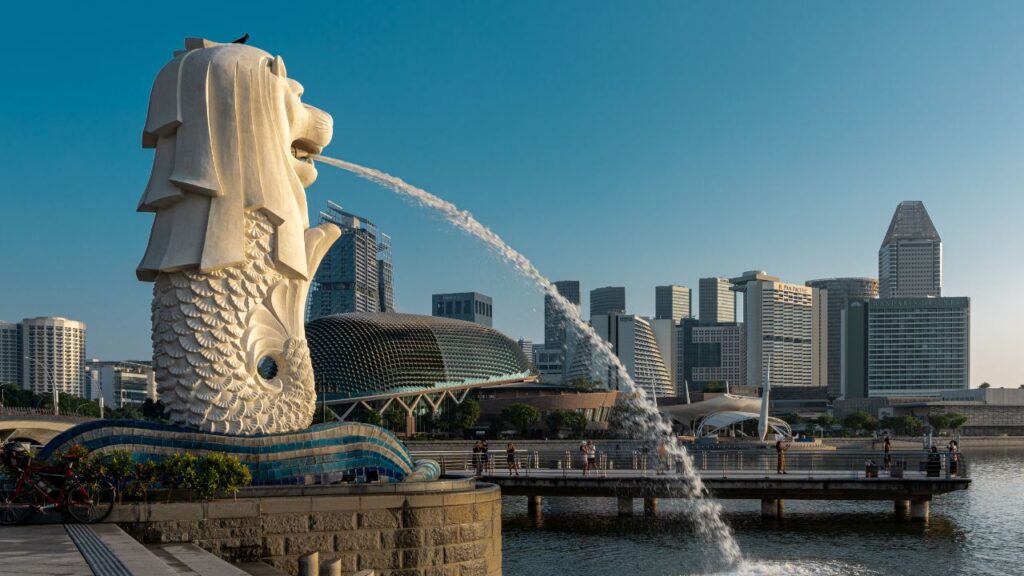
Singapore tourist arrivals 2026 downgraded — BMI Country Risk and Industry Research cuts Singapore's 2026 growth forecast from 4.5% to 0.5%, projecting 17 million arrivals after four consecutive monthly declines including a 2.9% drop in July as the US-Iran conflict suppresses regional travel demand.
Quick answer: Singapore’s 2026 tourist arrival growth forecast has been cut from 4.5% to 0.5%, with 17 million arrivals now expected for the year. July arrivals fell 2.9% year-on-year — the fourth consecutive monthly decline. The cause: the unresolved US-Iran conflict is weighing on regional travel willingness. January-July total is 9.8 million, still 11.7% below 2019 pre-pandemic levels.
Singapore tourist arrivals 2026 forecast has been significantly downgraded — Singapore’s tourism arrivals are expected to grow just 0.5 percent year on year in 2026 to 17 million, down from the previous forecast of 4.5 percent, as regional travel demand remains subdued amid the unresolved U.S.-Iran conflict, BMI Country Risk and Industry Research said on Monday.
The Singapore tourist arrivals 2026 downgrade from 4.5% to 0.5% growth is one of the most significant single-year forecast revisions for any major Asian tourism destination in 2026 — and it reflects the same Middle East conflict dynamic that has devastated Thai Airways’ profitability, suppressed Gulf aviation capacity, and altered international travel patterns across the Indo-Pacific region.
For Indian travelers planning Singapore visits, the Singapore tourist arrivals 2026 data carries two practical messages — fewer crowds at major attractions during a period of suppressed international travel, and more competitive hotel and flight pricing as Singapore’s tourism industry responds to lower-than-expected demand. See our Singapore Grab Travel Pass guide for the latest STB-backed offers available during this period.
The Numbers: Four Consecutive Monthly Declines
Singapore recorded 1.63 million visitor arrivals in July, down 2.9 percent from a year earlier, according to Singapore Tourism Board data. BMI noted that this marked the fourth consecutive month of decline in arrival numbers. For January-July, arrivals totalled 9.8 million, down 1.9 percent year on year and 11.7 percent below the corresponding 2019 level before the pandemic.
The four consecutive monthly decline pattern — April, May, June, July all showing year-on-year falls — indicates this is not a single-month anomaly from a specific event but a sustained demand suppression that began when the US-Iran conflict escalated in late February 2026.
The January-July total of 9.8 million, running 1.9% below the same period in 2025 and 11.7% below 2019, tells the full recovery story. Singapore’s tourism had been on a strong trajectory toward pre-pandemic 2019 levels throughout 2024 and early 2025 — the conflict has not merely slowed that recovery but reversed it. The 11.7% gap to 2019 means Singapore is still handling fewer visitors than it did seven years ago, which is a remarkable position for one of Asia’s most developed tourism infrastructure markets.
For context — Singapore hosted 19.1 million visitor arrivals in 2019, its pre-pandemic peak. At the 17 million 2026 forecast, the city-state would still be nearly 11% below that peak. Full recovery to 2019 levels, at BMI’s revised 2.4% average annual growth forecast, would now take until 2029 rather than 2027 as previously modelled.
Why the Conflict Is Suppressing Singapore Tourism Specifically
The Singapore tourist arrivals 2026 decline requires explanation — Singapore is not in the Middle East, has no direct involvement in the US-Iran conflict, and is geographically distant from the affected airspace. Why is a conflict in the Persian Gulf suppressing arrivals at Changi Airport?
“The revision reflects our assumption that the unresolved U.S.-Iran conflict will continue to weigh on travellers’ willingness to route through the region,” BMI said.
The mechanism is indirect but commercially powerful. Singapore’s tourism market is heavily dependent on long-haul arrivals from Europe, North America, and the Middle East — all of which route through or near Gulf airspace. European carriers have suspended or rerouted Gulf services, making Singapore less accessible from European origin cities without connection through the Gulf. Middle Eastern visitor flows — particularly from the UAE, Saudi Arabia, and Qatar — have been directly suppressed by the conflict’s domestic economic and security impact.
Additionally, Singapore Airlines’ own network has been affected — the Gulf airspace disruptions have altered SIA’s routing and capacity, while the carrier’s record revenue has been accompanied by squeezed margins from fuel cost increases that have affected reinvestment in Singapore’s tourism promotion.
The psychological “regional risk” factor that BMI identifies is also real. Uncertainty about travel safety in the broader Indo-Pacific corridor — even when Singapore itself is entirely safe — creates hesitation among discretionary international travelers who have multiple destination options.
The Long-Term Forecast Cut: 2.4% Instead of 3.9% Through 2030
BMI also cut its average tourism arrivals growth forecast for 2026–2030 to 2.4 percent from 3.9 percent, pushing back expectations for a full recovery to pre-pandemic levels.
The five-year average cut from 3.9% to 2.4% is the more significant long-term signal. BMI is not forecasting a quick snap-back once the conflict resolves — it is building in a structural downward revision to Singapore’s tourism recovery trajectory.
At 2.4% average annual growth from a 17 million 2026 base, Singapore would reach approximately 18.9 million by 2030 — still short of the 2019 peak of 19.1 million. Full recovery to pre-pandemic levels would require either the growth rate accelerating above forecast in later years, or new source markets materially expanding (India being the most cited candidate).
The India market is the clearest structural growth opportunity within Singapore’s accessible regional tourism base. India’s outbound travel is growing faster than any other major Asian source market, Indian passport holders have strong Singapore appeal (the city’s multicultural environment, food, shopping, and connectivity), and the India-Singapore aviation corridor is one of the most heavily served in Asia. STB has been investing in India-facing promotion and the Grab Travel Pass campaign specifically targets Southeast Asian travelers including the growing Indian market.
What This Means for Indian Travelers Visiting Singapore
The Singapore tourist arrivals 2026 forecast cut has direct practical implications for Indian travelers planning Singapore visits in the remainder of 2026.
Hotel rates and availability. When a destination runs 11.7% below its 2019 visitor volume, hotels have more vacant rooms and more pricing flexibility. Singapore’s hotel market — which peaked in occupancy in 2023–2024 — is now operating at meaningfully lower occupancy. Indian travelers booking Singapore hotels for Q3 and Q4 2026 should find better rates and availability than in previous peak years. Book early for the best rates, as the high season (October–November for the Formula One period and year-end holidays) will still see occupancy spikes.
Shorter queues at attractions. Gardens by the Bay, Universal Studios Singapore, Jewel Changi, and the major Sentosa attractions all receive fewer visitors during a period of suppressed international arrivals. The practical experience for Indian families visiting Singapore right now is shorter queues and less crowded attractions than the 2023–2024 peak.
Airline pricing. Singapore Airlines, Air India, and IndiGo are all operating on the Delhi–Singapore and Mumbai–Singapore corridors. With overall Singapore arrival demand suppressed, yield management on these routes may produce more competitive fares in the back half of 2026 compared to the peak demand years.
STB promotional campaigns. Singapore Tourism Board’s response to suppressed demand has been to accelerate promotional activity — the Grab Travel Pass, the Clarke Quay nightlife formalisation, the Royal Caribbean year-round deployment, and other initiatives we have covered this month are all evidence of STB’s active effort to attract and retain visitors despite the demand headwind. Indian travelers who engage with these programmes get disproportionate value relative to what Singapore offers in a peak demand year.
Singapore requires a visa for Indian passport holders — apply through the Singapore High Commission in New Delhi or VFS Global centres. Complete the Singapore SG Arrival Card (SGAC) within 3 days of arrival. Remember UPI does not work in Singapore — carry Singapore Dollars or a zero-forex international card. For travel insurance covering Singapore trips, SafetyWing Nomad Insurance provides comprehensive coverage at affordable daily rates for Indian travelers.
FAQs — Singapore Tourist Arrivals 2026
Q: Why has Singapore’s tourism forecast been cut for 2026?
Singapore’s tourism arrivals are expected to grow just 0.5 percent year on year in 2026 to 17 million, down from the previous forecast of 4.5 percent, as regional travel demand remains subdued amid the unresolved U.S.-Iran conflict. “The revision reflects our assumption that the unresolved U.S.-Iran conflict will continue to weigh on travellers’ willingness to route through the region,” BMI Country Risk and Industry Research said.
Q: How many visitors has Singapore received in 2026 so far?
Singapore recorded 1.63 million visitor arrivals in July, down 2.9 percent from a year earlier, marking the fourth consecutive month of decline in arrival numbers. For January-July, arrivals totalled 9.8 million, down 1.9 percent year on year and 11.7 percent below the corresponding 2019 level before the pandemic. BMI has cut its full-year 2026 forecast to 17 million arrivals and cut the 2026–2030 average annual growth forecast from 3.9% to 2.4%.
Q: Is Singapore still worth visiting for Indian travelers despite the 2026 tourism slowdown?
Yes — a period of suppressed international arrivals is actually a commercially favourable time to visit Singapore. Hotel rates and availability are better than during peak demand years, major attractions have shorter queues, and STB is actively running promotional campaigns including the Grab Travel Pass after-dark vouchers, the Clarke Quay 4am nightlife extension, and the Royal Caribbean year-round cruise season. The 0.5% growth forecast means 17 million arrivals — Singapore is still a very busy city. The comparison is to Singapore at its 2023–2024 peak, which was significantly more congested.
Final Word
The Singapore tourist arrivals 2026 downgrade — from 4.5% to 0.5% growth, from confident recovery to a holding pattern 11.7% below 2019 — is the clearest quantification yet of what the Middle East conflict has cost Asian tourism beyond the immediate Gulf region. Singapore has no direct exposure to the conflict.
Yet the routing disruption, the psychological uncertainty, and the economic suppression of key Gulf source markets have combined to cut Singapore’s 2026 tourism growth by 89% relative to the prior forecast. For Indian travelers, the practical takeaway is inverted from the headline: visit Singapore in 2026 and enjoy shorter queues, better hotel rates, and a city that is actively spending on promotional incentives to attract the visitors it needs. The conflict will resolve. The crowds will return.
Also Read:
- Singapore Grab Travel Pass — STB Precinct Vouchers August 2026
- Singapore Clarke Quay Nightlife 2026 — 4am Trading Permanent
- Royal Caribbean Singapore 2026 — Navigator Goes Year-Round
Official Sources:
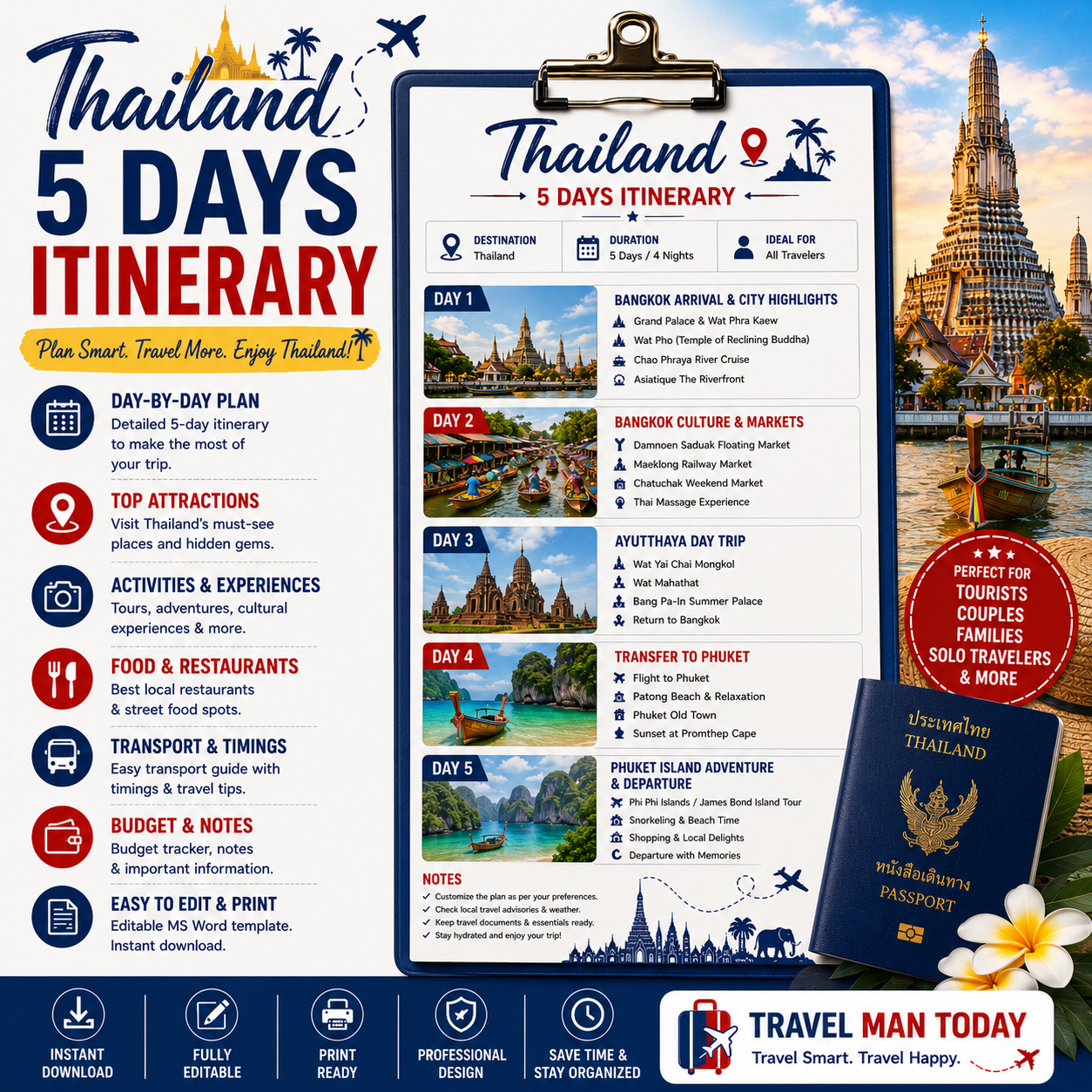
 Thailand Itinerary Indians 5 Days: Bangkok, Ayutthaya, Chiang Mai — ₹31,250 Cost Breakdown
Trusted Thailand 2026: What the Safety Certification Means for Indian Travelers
UAE Flights Disruption 2026: SpiceJet India Routes Delayed, Air Canada Suspends to March 2027
EU Hand Luggage Rules 2026: What Actually Changed — and What Hasn’t Yet
Thailand Itinerary Indians 5 Days: Bangkok, Ayutthaya, Chiang Mai — ₹31,250 Cost Breakdown
Trusted Thailand 2026: What the Safety Certification Means for Indian Travelers
UAE Flights Disruption 2026: SpiceJet India Routes Delayed, Air Canada Suspends to March 2027
EU Hand Luggage Rules 2026: What Actually Changed — and What Hasn’t Yet

Aaseem Bhardwaj is a journalist, seasoned traveler and IT professional based in India. With firsthand travel experience across Southeast Asia, East Asia, Middle East and Europe, Aaseem founded Travel Man Today to provide reliable visa updates and travel news for Indian passport holders. He has personally traveled to Thailand, Vietnam, Malaysia, Japan, Singapore, Hong Kong, South Korea, UAE and Europe. Follow his travel vlogs on YouTube at @travelmantoday


Templates for Indians

3 thoughts on “Singapore Tourist Arrivals 2026: Growth Forecast Cut to 0.5% on US-Iran Conflict”