Suvarnabhumi Auto Gates 2026: 31 More Countries By End of August — India Not Yet Confirmed
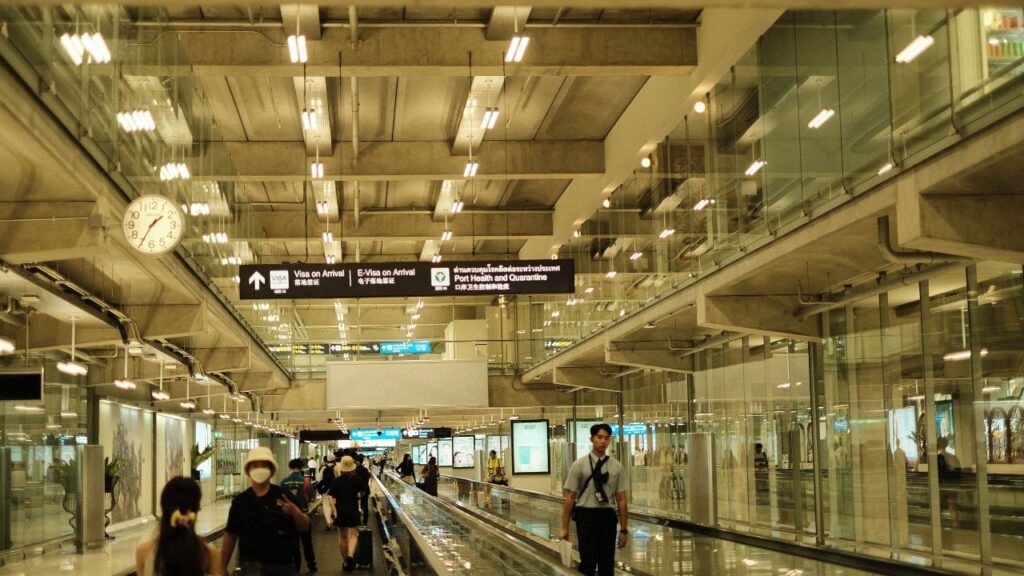
Suvarnabhumi Auto Gates 2026 expansion — Deputy Prime Minister Suphajee Suthumpun sits with senior transport, tourism and immigration officials during an inspection of Suvarnabhumi Airport's immigration operations that triggered the approval of 31 additional nationalities for automated passport gates by end of August.
Quick answer: Suvarnabhumi Airport will expand automated passport gates to 31 additional nationalities by end of August 2026, taking the total eligible to 53% of all international arrivals. The specific 31 countries have not been officially published. India is not on the current Auto Gate list — check immigration.go.th for the confirmed nationality list before your trip.
Suvarnabhumi Auto Gates 2026 expansion has been approved — Thailand plans to expand automated passport control at Suvarnabhumi Airport to travellers from 31 additional nationalities by the end of August, potentially allowing more than half of international arrivals to use the system.
The Suvarnabhumi Auto Gates 2026 initiative follows a high-level site inspection led by Deputy Prime Minister Suphajee Suthumpun alongside officials from the Tourism and Sports and Transport ministries, triggered by severe immigration overcrowding at Thailand’s busiest international gateway. The Immigration Bureau has approved the expansion in principle and is waiting on final signatures.
For Indian travelers — the largest single nationality group arriving at Suvarnabhumi from South Asia — the critical question is whether Indian passports are included in the 31. The answer as of August 19 is: not confirmed. See our Thailand travel update for Indians for all current entry requirements.
The Scale of the Problem: 70,000 International Arrivals, 6,000 Per Hour
The Suvarnabhumi Auto Gates 2026 expansion is a direct response to a documented and worsening congestion problem that Indian travelers experience firsthand every peak season.
The airport handles about 190,000 passengers a day in peak season, and 140,000 to 150,000 a day in low season. International arrivals account for roughly 70,000 passengers a day. Immigration is busiest between 1pm and 5pm, when 5,000 to 6,000 passengers an hour pass through.
Six thousand passengers per hour arriving at a single immigration hall is a genuinely extreme processing challenge. Even with Suvarnabhumi’s sizeable counter capacity, that arrival rate creates queues that Indian travelers departing from Delhi, Mumbai, or Bengaluru on late-morning departures — arriving at Suvarnabhumi in the 1pm–5pm peak window after a 4–6 hour flight — regularly experience as 45–90 minute immigration waits.
As an immediate measure, Suvarnabhumi and the Immigration Bureau will improve the use of all three immigration zones by directing passengers toward less crowded areas, opening a central hall to help disperse crowds and deploying additional officers during peak flight periods.
The three-zone distribution improvement is a temporary measure that does not require new equipment or nationality eligibility decisions. It is already being implemented. The Auto Gates expansion — which does require equipment readiness, biometric data, and the final nationality list — is the medium-term fix.
How the Auto Gates Work and Who Currently Uses Them
The Suvarnabhumi Auto Gates 2026 system is a biometric e-gate that allows eligible passport holders to clear immigration without interacting with an immigration officer. Passengers scan their passport, look into a camera for facial recognition verification, and the gate opens — the entire process taking under 30 seconds for most users.
In addition to the electronic entry for Thai citizens, roughly a year or so ago, Thailand opened the option for repeat visitors holding Singapore and Hong Kong passports to use the e-gates as well.
The current Auto Gate eligibility list — before the 31-country expansion — covers Thai nationals and a limited list of other nationalities including Singapore and Hong Kong. The system requires that the traveler’s biometric data is available to Thai Immigration’s database, which is the reason the expansion has eligibility criteria beyond simply “low-risk nationality.”
First-time visitors may still need to undergo biometric registration. This is a critical caveat for the 31-country expansion. Even when a nationality is approved for Auto Gates, first-time visitors to Thailand from that nationality who have no previous biometric record in Thai Immigration’s system may still need to process at a staffed counter on their first visit — the Auto Gate becoming available from the second visit onwards once the biometric record is established.
The Selection Criteria: How the 31 Countries Were Chosen
The Thai Immigration Bureau has approved the expansion in principle, with nationalities selected on the basis of entry-refusal statistics, the Henley Passport Index, and legal and security considerations. Globe
The three-criteria selection framework tells us which types of nationalities are most likely in the 31 — and, by inference, the India question.
Entry-refusal statistics. Countries whose nationals are rarely refused entry to Thailand rank highly. Indian nationals currently have a non-trivial refusal rate at Thai ports of entry — primarily from cases involving insufficient funds, unclear travel purpose, or overstay history. This metric is one of the factors working against Indian passport inclusion in the initial 31.
Henley Passport Index. The Henley Index measures the number of destinations a passport allows visa-free access to — a proxy for passport strength and the reliability of the issuing country’s vetting of its own citizens. India ranks 83 on the Henley Passport Index as of 2026, with access to 58 destinations visa-free. Singapore (rank 1–4 globally), Japan (rank 2), Germany (rank 2), and other high-ranking passport nations are the strongest candidates for the 31.
National security parameters. The security assessment is not publicly defined but is a standard element of any automated border control eligibility decision.
As of now, the government has not officially published the final list of the 31 eligible countries. The absence of a published list means Indian travelers cannot confirm eligibility through official channels as of August 19 — the list is pending final signatures.
| Suvarnabhumi Auto Gates 2026 — Expansion Summary | Details |
|---|---|
| Target date | End of August 2026 |
| New nationalities added | 31 additional countries |
| Status | Approved in principle — awaiting final signatures |
| Current eligible | Thai nationals + Singapore + Hong Kong (and select others) |
| Post-expansion eligible | ~53% of all international arrivals |
| Additional travelers eligible | ~6.5 million annually |
| Long-term visa holders | ~900,000 additional eligible |
| Selection criteria | Entry-refusal stats + Henley Index + security |
| 31-country list published | ❌ Not yet — pending final signatures |
| India included | ❌ Not confirmed — list not yet published |
| First-time visitors | May need biometric registration before Auto Gate eligible |
| Immediate congestion fixes | Three-zone distribution + central hall + more officers 1pm–5pm |
The TDAC Scam Warning: A Separate But Critical Announcement
Alongside the Suvarnabhumi Auto Gates 2026 announcement, Thai authorities issued a separate warning that every Indian traveler visiting Thailand must see.
The government also warned travellers that the Thailand Digital Arrival Card is free when submitted through official channels. The warning followed reports that unofficial websites were charging fees or potentially misleading users. Airlines will be asked to direct passengers to the official TDAC website before departure.
The TDAC scam operates through unofficial websites that appear in Google search results — often above the official Thai government portal — and charge fees of USD 5–20 for “processing” the TDAC submission. This is fraud. The TDAC is completely free at the official site: tdac.immigration.go.th.
Indian travelers booking through third-party Thailand travel agents or package tour operators should specifically verify that the TDAC link provided is the official government URL — not a lookalike site. The fake sites use domains like “thailand-arrival-card.com,” “thaidac.net,” and similar names that imply official status.
What Indian Travelers Must Do at Suvarnabhumi Immigration Right Now
While waiting for the 31-country list to be confirmed, Indian travelers arriving at Suvarnabhumi can take specific steps to minimise immigration processing time.
Fly into Suvarnabhumi before 1pm or after 5pm if possible. The 1pm–5pm window is the extreme peak period. Indian travelers departing Delhi before 9am on Air India, Thai Airways, or IndiGo can arrive before the midday surge begins. Those on later departures should expect the peak queue conditions.
Complete TDAC before departure. The Thailand Digital Arrival Card at tdac.immigration.go.th — free, mandatory — must be completed within 72 hours before departure. Completing it before departure means no queue at the TDAC completion kiosks inside Suvarnabhumi, which adds 10–15 minutes during peak periods.
Use the correct immigration lane. The three-zone distribution that Suvarnabhumi is now implementing actively directs passengers to less-crowded zones. Follow staff directions toward the less-busy zones rather than defaulting to the nearest counter.
Monitor Auto Gate eligibility. Once the final 31-country list is signed and published — expected before end of August 2026 — check immigration.go.th for the updated eligible nationality list. If India is included, Indian passport holders can use the Auto Gate from their next Thailand visit — or may need biometric registration on the first Auto Gate use.
Before any Thailand trip, confirm current entry requirements at thaievisa.go.th. India’s 30-day visa-free entry approved July 14 awaits Royal Gazette publication. UPI does not work in Thailand — carry Thai Baht or a zero-forex card. For travel insurance covering Thailand trips, SafetyWing Nomad Insurance provides comprehensive coverage at affordable daily rates for Indian travelers.
FAQs — Suvarnabhumi Auto Gates 2026
Q: When will the 31-country Suvarnabhumi Auto Gate expansion take effect?
Suvarnabhumi Airport plans to expand its automated passport control, or Auto Gate, system to travelers from 31 additional nationalities by the end of August, as the government moves to ease congestion at Thailand’s main international gateway. The Immigration Bureau has approved the expansion in principle and is waiting on final signatures. The expansion is expected before the end of August 2026. Once confirmed, it will make approximately 6.5 million additional travelers annually eligible for the automated gates, alongside 900,000 long-term visa holders — taking the proportion of eligible arrivals to 53%. Nation Thailand
Q: Is India included in the 31 new Suvarnabhumi Auto Gate countries?
As of now, the government has not officially published the final list of the 31 eligible countries. India is not currently on the Suvarnabhumi Auto Gate eligibility list. Whether India is included in the 31 new nationalities depends on the entry-refusal statistics, Henley Passport Index ranking, and security assessment criteria used — none of which strongly favour India’s inclusion in the initial expansion. Monitor immigration.go.th for the confirmed nationality list once final signatures are completed by end of August 2026.
Q: What should Indian travelers do to speed up Suvarnabhumi immigration right now?
Complete the free TDAC at tdac.immigration.go.th within 72 hours before departure — do not use unofficial sites that charge fees. Fly into Suvarnabhumi before 1pm or after 5pm to avoid the 5,000–6,000 passengers per hour peak period. Follow immigration staff direction to the less-crowded zones from the three-zone distribution improvement now being implemented. The airport handles about 190,000 passengers a day in peak season, and immigration is busiest between 1pm and 5pm, when 5,000 to 6,000 passengers an hour pass through.
Final Word
The Suvarnabhumi Auto Gates 2026 expansion to 31 more nationalities by end of August is good news for international travel flow in Thailand — 53% of all international arrivals being processed through automated lanes would significantly reduce the 1pm–5pm peak congestion that Indian travelers arriving on afternoon flights currently experience. The critical unknown for the Indian travel community is whether India is in the 31. Given the Henley Index ranking and entry-refusal history, Indian passport inclusion in the initial 31 cannot be assumed. Watch immigration.go.th for the confirmed list. Complete TDAC free at the official site only. And for now, fly before 1pm or after 5pm when you can.
Also Read:
- Thailand Travel Update Indians — Visa-Free, Baggage, Hotel Tax
- Thailand Baggage Inspection Rules — Bags Open Without Owner Oct 16
- India Thailand Visa Waiver — 30 Days Free, Arrivals to Surge
Official Sources:
- Pattaya Mail — Suvarnabhumi to Open Automated Passport Gates to 31 More Nationalities
- Thai Immigration Bureau — immigration.go.th

Aaseem Bhardwaj is a journalist, seasoned traveler and IT professional based in India. With firsthand travel experience across Southeast Asia, East Asia, Middle East and Europe, Aaseem founded Travel Man Today to provide reliable visa updates and travel news for Indian passport holders. He has personally traveled to Thailand, Vietnam, Malaysia, Japan, Singapore, Hong Kong, South Korea, UAE and Europe. Follow his travel vlogs on YouTube at @travelmantoday





Templates for Indians


1 thought on “Suvarnabhumi Auto Gates 2026: 31 More Countries By End of August — India Not Yet Confirmed”