Thailand Covid Update 2026: Phuket Third-Highest Rate, DDC Says Illness Remains Mild
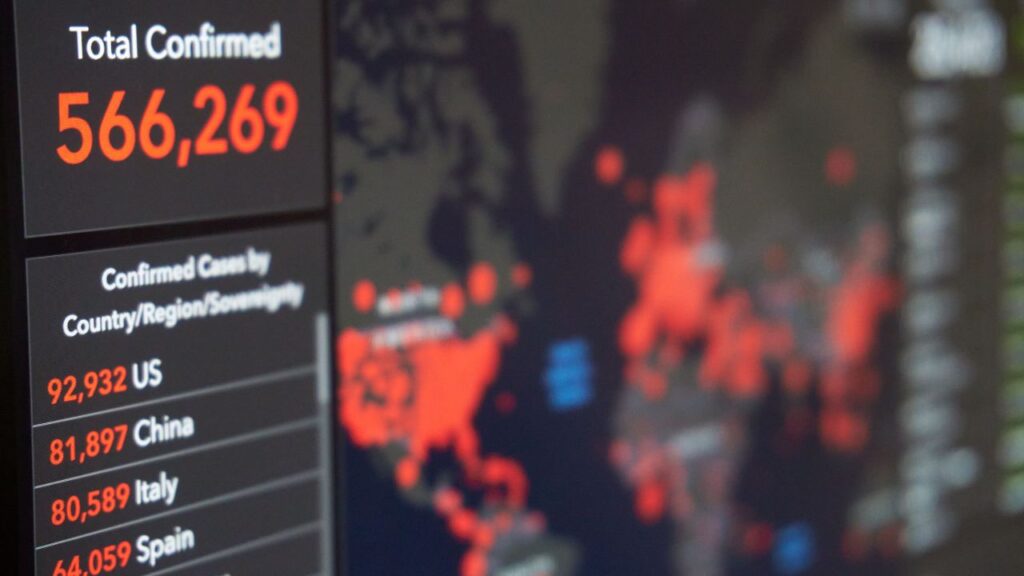
Thailand Covid update 2026 — DDC spokesperson Dr Veerawat Manosutthi confirms that despite Phuket recording the third-highest Covid-19 incidence rate nationally at 514.85 cases per 100,000 population as of August 31, the dominant NB.1.8.1 Omicron subvariant causes illness resembling a common cold with no evidence of greater severity.
Quick answer: Phuket recorded 514.85 Covid-19 cases per 100,000 population as of August 31 — third-highest in Thailand behind Bangkok (643.65) and Chon Buri (530.52). Nationally, 99,691 cases and 15 deaths January 1 to August 31. The dominant variant is NB.1.8.1 (Omicron subvariant). DDC confirms: no evidence of greater severity, symptoms resemble a common cold. No entry restrictions for Indian travelers. No festival or event cancellations.
Thailand Covid update 2026 — Thailand’s Department of Disease Control has issued its latest assessment confirming that Covid-19 continues to circulate across Thailand but illness caused by the currently dominant variant remains generally mild, with most patients experiencing symptoms similar to a common cold.
The Thailand Covid update 2026 data released September 1 covers the January 1 to August 31 period — 99,691 Covid-19 cases nationally and 15 deaths over eight months. Phuket recorded the third-highest incidence rate in Thailand at 514.85 cases per 100,000 population, behind Bangkok at 643.65 and Chon Buri at 530.52. The DDC’s consistent position across all September 2026 communications is unambiguous: no evidence of greater severity, no need for the public to be concerned about specific variant names, and no cancellation of any events or activities.
For Indian travelers currently planning Thailand trips — India is third-largest Thailand source market at 1.45 million arrivals through August 15 — the Thailand Covid update 2026 picture is a reassuring one. Thailand does not require Covid-19 vaccination certificates or negative tests for Indian passport holders. The illness currently circulating resembles a common cold or influenza in most cases. See our Thailand visa free 30 days 2026 guide for the current September 15 entry rules.
The Numbers: What the Data Actually Shows
The Thailand Covid update 2026 national data covers January 1 to August 31, 2026.
Nationally, Thailand recorded 99,691 Covid-19 cases and 15 deaths between January 1 and August 31. For context on scale: 99,691 cases over 243 days is approximately 410 cases per day nationally across a country of 70 million people. The 15 deaths over the same period is a fatality rate that reflects the dramatically reduced clinical severity of Omicron subvariant infections compared with earlier pandemic waves.
Phuket’s 514.85 cases per 100,000 population rate — giving it the third-highest provincial incidence — does not mean Phuket is more dangerous to visit than other Thai provinces. The DDC specifically noted that Phuket’s comparatively high rate is linked in part to its status as a major tourist destination and its high population density, both of which can push up case rates when measured against the resident population alone. A tourist-heavy destination with a relatively small permanent resident population produces higher cases-per-100,000 numbers than a large inland province, even if the absolute number of cases is comparable.
Bangkok’s 643.65 per 100,000 rate is the highest nationally — and Bangkok has the highest population of any Thai province, meaning the case rate reflects genuine city-wide circulation rather than a tourist-denominator distortion.
The Variant: NB.1.8.1, What It Is, What It Does
The dominant variant in Thailand’s September 2026 Covid monitoring is NB.1.8.1.
The dominant variant under surveillance in Thailand remains the Omicron subvariant NB.1.8.1, which accounted for 524 cases, or 50.14%, of surveillance data. The variant has circulated continuously in Thailand since mid-2025, and the DDC confirmed there is no evidence it causes more severe illness, although it may spread more easily than earlier strains.
NB.1.8.1 is an Omicron descendent lineage — part of the same family of subvariants that has dominated global Covid-19 circulation since Omicron replaced Delta in late 2021. All Omicron family subvariants share the same fundamental characteristic: significantly reduced severity compared with earlier pandemic strains, at the population level. The higher transmissibility of NB.1.8.1 noted by the DDC is consistent with the general Omicron pattern of trading reduced severity for increased spread.
The DDC stressed that the emergence of new Covid-19 subtypes does not automatically mean the disease has become more severe, and said the public does not need to be concerned about the names of individual subvariants. This is the DDC’s consistent scientific position — and it is correct. Variant names are surveillance tools for epidemiologists, not severity indicators for the general public.
Symptoms and Who Is at Risk
The Thailand Covid update 2026 clinical picture from DDC spokesperson Dr Veerawat Manosutthi is consistent with what has been observed globally with Omicron family variants since 2022.
Current symptoms remain broadly similar to those seen with earlier variants. Patients typically report coughing, sore throat, a runny nose and fever, with many describing an illness resembling a common cold or influenza.
For the vast majority of healthy adults — including the Indian travelers who make up Phuket’s third-largest source market — NB.1.8.1 infection presents as a respiratory illness of similar severity to seasonal influenza or a common cold. Most cases resolve without medical intervention within 5–7 days.
The DDC specifically identified its “Group 608” as the population at greater risk of severe illness — people who should take extra precautions regardless of the low overall severity picture:
Group 608 includes:
- People aged 60 and over
- Pregnant women at 12 weeks’ gestation or more
- People with chronic respiratory disease
- People with cardiovascular disease
- People with chronic kidney failure
- People who have had a stroke
- People with obesity
- People with cancer
- People with diabetes
For Indian families traveling with elderly members or family members with any of the above conditions, the Group 608 designations are the relevant clinical guidance. Extra precaution for these group members — masking in crowded indoor settings, avoiding large crowds if unwell — is the DDC’s specific recommendation.
What the DDC Advises: Practical Guidance
The DDC’s advice for travelers and residents covers three scenarios.
If you are healthy: Continue normal daily life while taking reasonable precautions. There is no need to avoid Thailand, cancel bookings, or change travel plans based on the current Covid-19 situation.
If you become ill: Rest and limit close contact with others. Get sufficient rest, monitor your condition, and avoid close contact with elderly people, young children, those with underlying medical conditions, and people with weakened immune systems. Avoid crowded places where possible. If contact with others is unavoidable, wear a mask and wash hands frequently.
When to seek medical attention: Anyone whose symptoms fail to improve within one or two days should seek medical attention. People experiencing difficulty breathing, shortness of breath, chest tightness, severe lethargy, or a worsening condition should seek medical help immediately. In Phuket, Bangkok Hospital Phuket, Mission Hospital Phuket, and Vachira Phuket Hospital are the primary hospital facilities for visitors.
No Entry Requirements for Indian Travelers
The Thailand Covid update 2026 situation has zero impact on Thailand’s entry requirements for Indian passport holders. Thailand does not require Covid-19 vaccination certificates, Covid-19 negative tests, or health declarations related to Covid-19 for any arriving passenger. The TDAC (Thailand Digital Arrival Card) is required but covers immigration details only, not health status.
Indian travelers planning Thailand trips for the post-September 15 period — when the 30-day visa-free entry takes effect — do not need to factor Covid-19 into their entry planning in any way. The entry requirements are as covered in our Thailand visa free 30 days 2026 guide: Indian passport, TDAC completed free at tdac.immigration.go.th, and arrival within the validity of the visa-free scheme.
| Thailand Covid Update 2026 — Key Facts | Detail |
|---|---|
| National cases Jan 1–Aug 31 | 99,691 |
| National deaths Jan 1–Aug 31 | 15 |
| Dominant variant | NB.1.8.1 (Omicron subvariant, 50.14% of surveillance) |
| Phuket incidence rate | 514.85 per 100,000 (3rd highest nationally) |
| Bangkok incidence rate | 643.65 per 100,000 (highest nationally) |
| Chon Buri incidence rate | 530.52 per 100,000 (2nd highest) |
| Severity assessment | Mild — common cold/influenza-like symptoms |
| Evidence of greater severity | None confirmed by DDC |
| Festival/event cancellations | None — DDC explicitly confirmed no cancellations |
| Entry requirements for Indians | None — no vaccination or test required |
| Group 608 (higher risk) | Over 60, pregnant, chronic disease, compromised immunity |
| When to seek medical attention | If symptoms worsen after 2 days or breathing difficulty |
What Indian Travelers Visiting Phuket and Thailand Should Do
The Thailand Covid update 2026 information translates into five practical actions for Indian travelers.
No need to cancel or change plans. The DDC has explicitly stated there is no need for the public to panic over changes in circulating variants, and people should continue their normal daily lives while taking reasonable precautions. This applies equally to visitors. Phuket’s third-highest provincial rate reflects tourist density, not a health crisis.
Standard respiratory hygiene. Hand washing, avoiding touching your face in crowded settings, and masking in very crowded enclosed spaces (like the Chatuchak Weekend Market or packed shopping malls) are sensible precautions against all respiratory illnesses — not just Covid-19 — during Thailand’s September monsoon season when respiratory illness rates typically rise alongside rainy-season indoor crowding.
Group 608 travelers — extra precaution. Indian families traveling with anyone in the Group 608 categories (over 60, pregnant, chronic conditions) should carry masks for crowded settings and monitor symptoms more carefully. Seek medical attention if symptoms are concerning rather than waiting.
Travel insurance with medical coverage. For any Thailand trip, travel insurance with medical coverage is a standard recommendation. For Group 608 travelers specifically, ensure your policy covers pre-existing conditions and provides direct-billing arrangement with major Thai hospitals. For travel insurance covering Thailand trips including medical expenses, SafetyWing Nomad Insurance provides comprehensive coverage at affordable daily rates for Indian travelers.
Complete TDAC before departure. The Thailand Digital Arrival Card at tdac.immigration.go.th is required for all arrivals and must be completed within 72 hours before departure. It is free — use only the official government portal.
FAQs — Thailand Covid Update 2026
Q: Is Covid-19 dangerous in Thailand right now?
The Department of Disease Control confirmed that illness caused by the currently dominant variant remains generally mild, with most patients experiencing symptoms similar to a common cold. Nationwide, Thailand recorded 99,691 Covid-19 cases and 15 deaths between January 1 and August 31. The DDC said there is no evidence the current variant NB.1.8.1 causes more severe illness. The public does not need to be concerned about the names of individual subvariants, and there is no need to cancel normal activities or travel.
Q: Why does Phuket have a high Covid-19 rate compared to other provinces?
Phuket recorded 514.85 cases per 100,000 population — the third-highest in Thailand. The DDC specifically noted that Phuket’s comparatively high rate is linked in part to its status as a major tourist destination and its high population density, both of which can push up case rates when measured against the resident population alone. A tourist-heavy destination with a relatively small permanent resident population produces higher cases-per-100,000 numbers even when the absolute case count is comparable to larger provinces.
Q: Do Indian travelers need any Covid-19 documentation to enter Thailand?
No. Thailand does not require Covid-19 vaccination certificates, negative tests, or any health declarations related to Covid-19 for arriving passengers. From September 15, 2026, Indian passport holders enter Thailand visa-free for 30 days. The only required pre-arrival document is the TDAC (Thailand Digital Arrival Card), which covers immigration information only and is completed free at tdac.immigration.go.th within 72 hours before departure.
Final Word
The Thailand Covid update 2026 picture from the DDC is consistent and clear — 99,691 cases nationally over eight months, NB.1.8.1 dominant but causing mild common cold-like illness, no evidence of greater severity, no event cancellations, no entry requirements.
Phuket’s third-highest provincial incidence rate reflects its tourist-density denominator effect rather than a clinical risk elevation. For Indian travelers — no change needed in travel plans, standard respiratory hygiene is sensible, Group 608 travelers take extra precautions, and everyone carries travel insurance as standard. Thailand is open, the visa-free entry activates September 15, and the DDC’s own guidance is to continue normal daily life while taking reasonable precautions.
Also Read:
- Thailand Visa Free 30 Days 2026 — September 15 India Confirmed
- Phuket Tourist Arrivals 2026 — India Third, Revenue THB 310B
- Thailand Travel Update Indians — August 2026 Five Changes
Official Sources:
- The Thaiger — DDC Says Phuket Covid Cases Remain Mild Despite Surge
- Thailand Department of Disease Control
 Singapore Tourism Receipts 2026: S$7.21 Billion Drop — What It Means for Indians
Bangkok Flooding October 2026: Roads Submerged — What Indians Must Know

Laem Son National Park 2026: Thailand’s Hidden Beach Gem Opens for Tourism Season

Japan Saudi Arabia Travel Alert 2026: Essential Warning for Indians Visiting the Kingdom
Singapore Tourism Receipts 2026: S$7.21 Billion Drop — What It Means for Indians
Bangkok Flooding October 2026: Roads Submerged — What Indians Must Know
Laem Son National Park 2026: Thailand’s Hidden Beach Gem Opens for Tourism Season
Japan Saudi Arabia Travel Alert 2026: Essential Warning for Indians Visiting the Kingdom

Aaseem Bhardwaj is a journalist, seasoned traveler and IT professional based in India. With firsthand travel experience across Southeast Asia, East Asia, Middle East and Europe, Aaseem founded Travel Man Today to provide reliable visa updates and travel news for Indian passport holders. He has personally traveled to Thailand, Vietnam, Malaysia, Japan, Singapore, Hong Kong, South Korea, UAE and Europe. Follow his travel vlogs on YouTube at @travelmantoday




Templates for Indians