Thailand Long Stay Visa Indians 2026: DTV, LTR, Privilege and Retirement — Which One is Right for You?
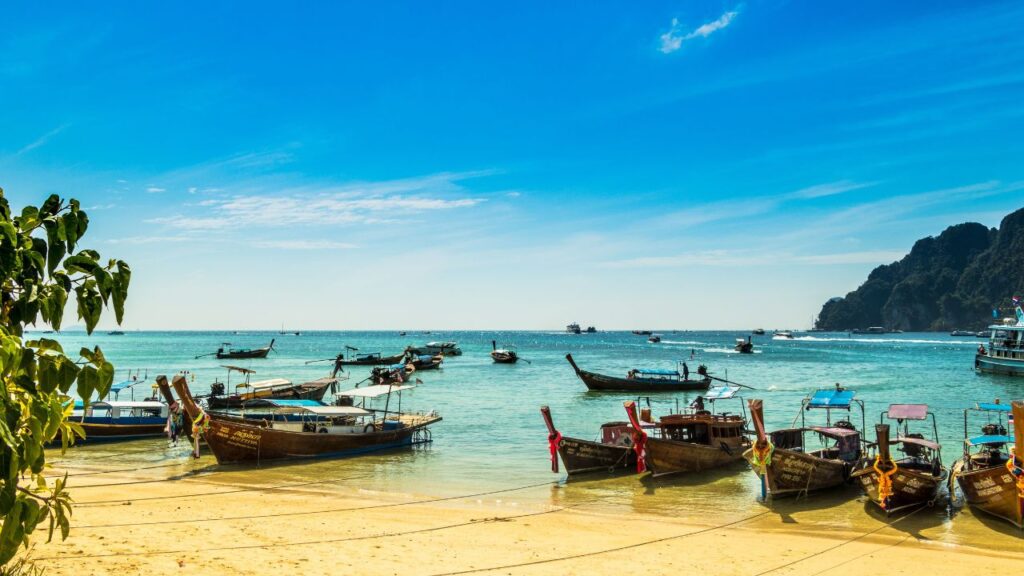
Thailand long stay visa Indians 2026 — four pathways for Indian passport holders to live legally in Thailand for five to twenty years: the DTV at ₹25,000 for freelancers and remote workers, the LTR for corporate employees earning $80,000+ at listed companies, the Thailand Privilege Visa from ₹22 lakh for high-net-worth retirees, and the Retirement Visa for Indians aged 50+ with ₹19.5 lakh in a Thai bank account or ₹1.6 lakh per month in certified pension income.
Quick answer: Thailand offers four main long-stay visa options for Indian passport holders in 2026 — DTV (Destination Thailand Visa, ₹25,000, 5 years, best for freelancers and remote workers), LTR (Long-Term Resident, 10 years, requires $80,000 salary from listed company), Thailand Privilege Visa (₹22 lakh minimum, 5–20 years, zero work rights), and Retirement Visa/Non-Immigrant O-A (age 50+, ₹19.5 lakh in Thai bank, indefinite renewal). For 90% of Indian applicants, the DTV is the right choice. Here is the complete comparison.
Thailand long stay visa Indians 2026 — Thailand has overhauled its immigration framework to offer Indian passport holders four distinct pathways to live legally in the country for five, ten, or even twenty years. Each visa category is designed for a completely different type of applicant, with different costs, income requirements, work rights, and lifestyle restrictions. Choosing the wrong one does not just cost money — it can trigger unexpected tax residency, result in a border rejection, or lock up ₹19–22 lakh in funds that could be earning returns elsewhere.
The Thailand long stay visa Indians 2026 comparison is a question the site gets asked constantly: with Thailand now offering Indians 30-day visa-free entry from September 15, the DTV and LTR are the natural next step for those who want to go beyond tourism and live, work remotely, or retire in Bangkok, Chiang Mai, or the Thai islands. Understanding what each visa actually requires — not what the visa agent’s brochure says, but the real bank balance, salary, age, and paperwork demands — is what this guide delivers. See our Thailand DTV embassy rules 2026 guide for the specific embassy-by-embassy DTV application context.
The Four Thailand Long-Stay Visas: Quick Overview
Before going deep on each, here is the complete side-by-side picture that the Thailand long stay visa Indians 2026 decision requires.
| Thailand Long Stay Visa Indians 2026 — Comparison | DTV | LTR | Privilege | Retirement (O/O-A) |
|---|---|---|---|---|
| Cost | ~₹25,000 (10,000 THB) | ~₹1.2 lakh (processing) | ₹22L+ (900,000 THB, 5yr) | 1,900 THB/yr renewal |
| Duration | 5 years | 10 years | 5–20 years | Annual, indefinite |
| Stay per entry | 180 days | Continuous | Continuous | Continuous (365/yr) |
| Work rights | Remote/freelance YES | Corporate digital work permit | NONE | NONE |
| Age requirement | None | None | None | 50+ only |
| Income/funds needed | 500,000 THB in bank | $80,000 salary (listed company) | 900,000–5,000,000 THB fee | 800,000 THB in Thai bank OR 65,000 THB/month pension |
| Best for | Freelancers, creators, nomads | Corporate employees at listed multinationals | High-net-worth, retirees who hate paperwork | Retirees 50+ with savings or pension |
Option 1 — DTV (Destination Thailand Visa): Best for 90% of Indians
The Thailand long stay visa Indians 2026 most accessible option is the DTV — and for most Indian applicants, it is the right default choice.
What it costs and what it covers: The DTV costs approximately 10,000 THB (~₹25,000) for a 5-year multiple-entry visa. Each entry allows a 180-day stay. You must leave Thailand — or pay for a single 180-day extension at an immigration office — before re-entering. A weekend trip to Malaysia, Vietnam, or Cambodia resets the 180-day counter. Over five years, multiple entries with 180-day stays each time allow for a practically continuous Thailand lifestyle with minimal departure disruptions.
Who qualifies: The DTV requires proof of remote work, a freelance portfolio, a creative pursuit (Muay Thai training, culinary arts, yoga), or enrollment in a legitimate long-stay educational programme. The key financial requirement is 500,000 THB (~₹12 lakh) in your bank account — not invested, not in property, but in a liquid savings or current account — to demonstrate self-sufficiency. The Thai Embassy in India (New Delhi) scrutinises both the bank balance documentation and the remote work evidence closely. A clean bank statement for the preceding 3 months and a clear freelance portfolio or remote employment contract are the minimum.
The 180-day tax trap: This is the DTV’s most important caveat for Indian applicants. Spending more than 180 days per calendar year inside Thailand technically triggers Thai tax residency status. As a Thai tax resident, you become liable to report global income to Thailand’s Revenue Department — though enforcement for foreign remote workers is currently inconsistent and the tax treaty between India and Thailand provides some protection. The practical guidance: plan your Thailand time in blocks under 180 days per calendar year if tax residency complications concern you.
Family: The DTV allows the main applicant’s spouse and biological children under 20 to accompany as dependents — one of its strongest advantages over alternatives for Indian families considering a Thailand relocation.
For DTV cover letter templates and supporting document formats ready for the Thai Embassy application, visit travelmantoday.com/visa-templates/.
Option 2 — LTR Visa (Long-Term Resident): For Corporate Elite Only
The Thailand long stay visa Indians 2026 premium employment track is the LTR — a 10-year visa with continuous stay, a flat 17% income tax rate for qualifying workers, and a digital work permit that makes Thailand employment completely legal.
Why most Indian applicants cannot qualify: The LTR has requirements that exclude the vast majority of Indian applicants. Remote professionals must show an annual salary of at least $80,000 (~₹72 lakh) from an employer that is either publicly listed on a major stock exchange or has annual revenue of at least $150 million. This rules out startup employees, small company staff, and most freelancers immediately. The “Wealthy Global Citizen” category requires $500,000 invested in Thai property or government bonds alongside $1 million in global assets — a threshold that eliminates most middle-class Indian applicants.
What it offers those who do qualify: Genuine corporate privileges. A flat 17% income tax rate instead of Thailand’s progressive rates (which reach 35% at higher income brackets) saves qualifying high-earners significant money annually. A digital work permit that legally allows Thai-based employment. Fast-track immigration lanes at Suvarnabhumi and Don Mueang airports. Exemption from the Thai Labour Department’s usual requirement that companies hire four Thai employees for every one foreign employee — critical for small teams or startups that employ the applicant directly.
Processing cost: LTR processing fees alone exceed ₹1.2 lakh — before any salary or investment requirements are met. The total cost of qualification for an LTR makes it exclusively relevant for Indian professionals at the very top of the income distribution who are employed by globally significant companies.
Option 3 — Thailand Privilege Visa: The Luxury Non-Worker
The Thailand long stay visa Indians 2026 premium lifestyle track is the Thailand Privilege Visa — the visa that trades maximum money for maximum convenience.
What it costs: The Thailand Privilege Visa starts at 900,000 THB (~₹22 lakh) for a 5-year membership. Longer tiers go up to 5,000,000 THB (~₹1.24 crore) for 20 years. All fees are completely non-refundable — unlike a property investment or bond purchase where capital can be recovered, the Privilege Visa fee disappears the moment it is paid. There is no investment return, no interest, no residual value.
What it provides in return: The application process is minimal — a basic criminal background check and payment. Once approved, the holder receives multiple-entry visa stamps valid for the duration of the membership, free annual health check-ups, VIP limousine transfers between the airport and hotel, a personal Thailand Privilege liaison who handles immigration paperwork, and priority immigration lanes. The experience of holding a Thailand Privilege Visa is genuinely different from navigating standard immigration — it is the VIP concierge version of Thai residency.
The absolute zero work rights: The Thailand Privilege Visa explicitly prohibits paid employment, freelance work for Thai clients, and running a physical business in Thailand. Indian applicants who intend to do any income-generating activity — even remote work for foreign clients, even selling products online — cannot legally do so on this visa. The Privilege Visa is exclusively for those who live on existing wealth, investment income, pensions, or passive income that does not require active work in Thailand.
Who it is right for: High-net-worth Indian retirees or investors aged 50+ who have sufficient passive income, find immigration paperwork stressful, want the VIP airport experience, and plan to spend significant time in Thailand annually. For the right applicant — a retired Indian entrepreneur with passive investment income, for instance — the Privilege Visa’s convenience value is real. For anyone who works, even remotely, it is the wrong visa.
Option 4 — Thailand Retirement Visa (Non-Immigrant O / O-A): The Traditional Workhorse
The Thailand long stay visa Indians 2026 route for Indian retirees is the Retirement Visa — available as Non-Immigrant O (if applied from inside Thailand) or Non-Immigrant O-A (if applied at the Thai Embassy in India).
Age and financial requirements: Must be 50 years old or above. Two financial routes to qualify: either deposit 800,000 THB (~₹19.5 lakh) in a personal Thai bank account (the savings route), or demonstrate certified monthly pension or passive income of at least 65,000 THB (~₹1.6 lakh per month) — the income route. A combination approach is also accepted.
The continuous stay advantage: Unlike the DTV’s 180-day exit requirement, the Retirement Visa allows genuine year-round continuous residence. An Indian retiree on the Retirement Visa can live in Chiang Mai or Phuket for 365 days a year without leaving Thailand, renewing annually at a local immigration office for just 1,900 THB (~₹4,600).
The capital lock problem: The savings-route 800,000 THB (~₹19.5 lakh) must sit in a Thai bank account at near-zero interest — in place 2 months before applying, maintained for 3 months after approval, and never dropping below 400,000 THB at any point. For Indian investors accustomed to FD rates of 6–7% or equity market returns, having ₹19.5 lakh frozen in a Thai savings account represents significant opportunity cost.
The O-A insurance trap: Indian applicants who apply at the Thai Embassy in New Delhi receive the Non-Immigrant O-A category, which mandates Thai health insurance with at least 3,000,000 THB (~₹73 lakh) in coverage. For Indian applicants over 60, annual Thai health insurance premiums at this coverage level can run ₹1.5–2.5 lakh per year — a substantial ongoing cost on top of the capital lock requirement.
Zero work rights: The Retirement Visa carries absolute zero work rights — no employment, no freelancing, no running a business. An Indian retiree with a small consulting practice or an online business cannot legally earn income through it while on this visa.
Which Thailand Long-Stay Visa Is Right for You?
The Thailand long stay visa Indians 2026 decision tree is simpler than it first appears.
Choose the DTV if: You are a freelancer, content creator, remote worker, developer, digital consultant, or anyone with provable remote income, aged under 50, with ₹12 lakh in the bank. The DTV is the right answer for 90% of Indian applicants who want to stay in Thailand longer than 30 days.
Choose the LTR if: You earn more than $80,000 per year from a publicly listed company or a company with $150M+ revenue, and you want to work legally for a Thai entity or need the 17% flat tax rate. Most Indian applicants do not qualify.
Choose the Privilege Visa if: You are 50+ with substantial passive income or existing wealth, hate paperwork, want the VIP airport experience, and will NOT do any paid work in Thailand. Budget at least ₹22 lakh for the minimum 5-year membership.
Choose the Retirement Visa if: You are 50+, retired with either ₹19.5 lakh you can lock in a Thai bank account or ₹1.6 lakh/month in certified pension income, and you want year-round continuous stay without border runs. Factor in the O-A insurance cost if applying from India.
For travel insurance covering your Thailand long-stay period including medical coverage and evacuation, SafetyWing Nomad Insurance provides comprehensive long-stay coverage accepted as health insurance documentation for DTV applications, at affordable daily rates for Indian travelers.
FAQs — Thailand Long Stay Visa Indians 2026
Q: Which Thailand long-stay visa is best for Indian freelancers and remote workers in 2026?
The DTV (Destination Thailand Visa) is the best option for Indian freelancers and remote workers in 2026. It costs approximately ₹25,000 (10,000 THB) for a 5-year multiple-entry visa, allows 180-day stays per entry, and explicitly permits remote work, digital nomadism, and creative pursuits. The key requirement is 500,000 THB (~₹12 lakh) in liquid bank savings. The main caveat: spending more than 180 days per calendar year in Thailand triggers Thai tax residency status, which Indian remote workers should factor into their planning.
Q: Can I work in Thailand on a Retirement Visa or Thailand Privilege Visa?
No. Both the Thailand Retirement Visa (Non-Immigrant O/O-A) and the Thailand Privilege Visa carry absolute zero work rights. Paid employment, freelance work for Thai or foreign clients, and running a physical business inside Thailand are all prohibited on these visas. For Indian applicants who want to do any income-generating activity — including remote work — the DTV or LTR Visa are the only legal options. The DTV permits remote/freelance work; the LTR provides a full digital work permit but requires $80,000 annual salary from a qualifying company.
Q: How much does the Thailand Privilege Visa cost for Indians in 2026?
The Thailand Privilege Visa starts at 900,000 THB (~₹22 lakh) for a 5-year membership and goes up to 5,000,000 THB (~₹1.24 crore) for a 20-year membership. All fees are completely non-refundable — unlike investment visas where capital can be recovered, the Privilege Visa fee is a sunk cost with no residual value. In exchange, the visa provides guaranteed approval (subject to criminal background check), VIP airport limousine service, free annual health check-ups, personal immigration liaison assistance, and priority immigration lanes.
Final Word
Thailand long stay visa Indians 2026 — DTV at ₹25,000 for freelancers and remote workers (5 years, 180-day entries, 500,000 THB bank balance), LTR for corporate elite at $80,000 salary from listed company (10 years, continuous, 17% flat tax), Privilege Visa from ₹22 lakh for wealthy retirees (5–20 years, continuous, zero work rights), Retirement Visa for 50+ with ₹19.5 lakh in Thai bank or ₹1.6 lakh/month pension (annual renewal, continuous, zero work rights, watch the O-A insurance trap) — covers every realistic Indian applicant profile. For 90% of readers: the DTV is the right choice.
It is the most affordable, the most flexible, and the most accessible route to a legal, long-term Thailand lifestyle that India’s growing class of remote workers, content creators, and freelancers can actually qualify for.
Also Read:
- Thailand DTV Embassy Rules 2026 — Varies by Mission, Check First
- Thailand Visa Free 30 Days 2026 — September 15 India Confirmed
- Thailand Visa Land Border 2026 — Sep 15 Does NOT Reset Count
Official Sources:
 Thailand Long Stay Visa Indians 2026: DTV, LTR, Privilege and Retirement — Which One is Right for You?
Singapore Cruise Centre 2026: New HarbourFront Terminal Open, 720,000 Passengers in 10 Weeks
Bangkok Flood October 2026: Receding Across Capital, Suvarnabhumi 18% Backlog Cleared
China Accommodation Registration 2026: Indians Can Now Register Online, No Police Visit Needed

Thailand Long Stay Visa Indians 2026: DTV, LTR, Privilege and Retirement — Which One is Right for You?
Singapore Cruise Centre 2026: New HarbourFront Terminal Open, 720,000 Passengers in 10 Weeks
Bangkok Flood October 2026: Receding Across Capital, Suvarnabhumi 18% Backlog Cleared
China Accommodation Registration 2026: Indians Can Now Register Online, No Police Visit Needed

Aaseem Bhardwaj is a journalist, seasoned traveler and IT professional based in India. With firsthand travel experience across Southeast Asia, East Asia, Middle East and Europe, Aaseem founded Travel Man Today to provide reliable visa updates and travel news for Indian passport holders. He has personally traveled to Thailand, Vietnam, Malaysia, Japan, Singapore, Hong Kong, South Korea, UAE and Europe. Follow his travel vlogs on YouTube at @travelmantoday




Templates for Indians