Thailand Overstay 2026: Why the Immigration System Knows But Rarely Acts
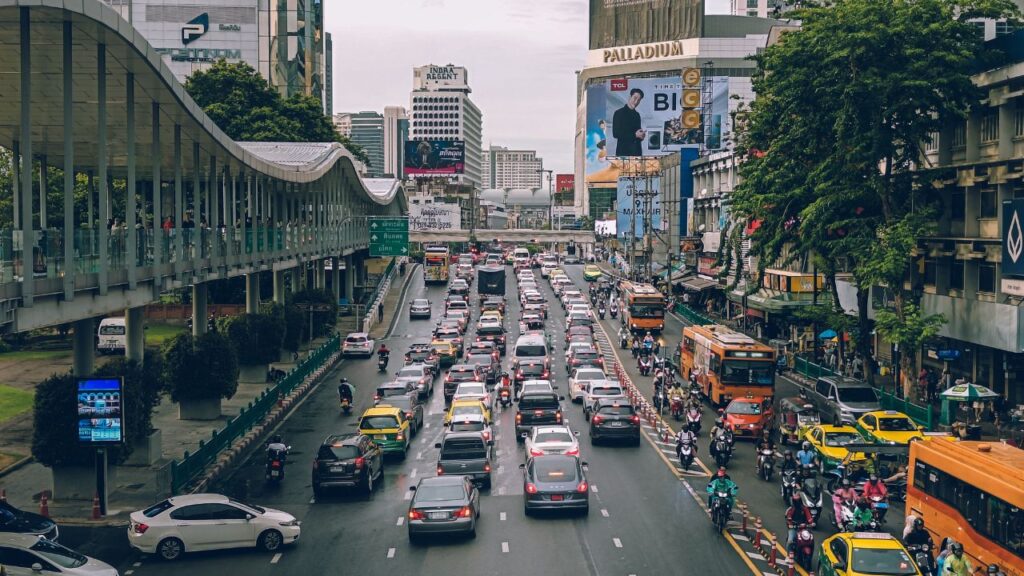
Thailand overstay 2026 crackdown is underway — over 14,000 arrests between January and May 2026 under the "No Entry, No Stay, No Escape" campaign.
Thailand overstay 2026 is one of the country’s most discussed immigration problems, and the answer to why it persists is more uncomfortable than most people expect. Every time a foreigner is arrested in Thailand for a crime — only for police to reveal that the suspect had been living illegally in the country for months or even years — the same question surfaces. If the Thai state stamps every passport, scans every face, and records every arrival, how does anyone manage to disappear for so long? The answer is that Thailand almost always knows who has overstayed. What it has consistently struggled to do is act on that knowledge in a timely and systematic way.
How Thailand Tracks Every Arrival — And Still Loses People
Thailand overstay 2026 enforcement begins with a system that looks impressive on paper. The Immigration Bureau captures fingerprints and facial images at every point of entry, and since May 2025, all foreign arrivals must complete the Thailand Digital Arrival Card (TDAC) — the mandatory electronic replacement for the old paper TM6 form. Long-stay residents must report their address to immigration every 90 days, and landlords are legally required to notify authorities when a foreigner moves in through the TM30 system. From 2026, officials state that permitted stay is calculated automatically through a centralised database, meaning the moment an arrival has no matching departure record, that person is flagged as a Thailand overstay case in the system.
The data exists. A foreigner who entered Thailand and never left is not invisible to the Immigration Bureau — the record sits in a database, flagged and waiting. The problem is not the data. The problem is what happens — or more accurately, what does not happen — after that flag appears. A passive database entry does not send an immigration officer to anyone’s door, and that gap between knowing and acting is where Thailand’s overstay enforcement problem actually lives.
| Thailand Immigration Tracking System | Status |
|---|---|
| Biometric fingerprints and facial scan at entry | Active at all international airports |
| Thailand Digital Arrival Card (TDAC) | Mandatory since May 2025 |
| 90-day address reporting for long-stay visa holders | Active — applies to legal residents only |
| TM30 landlord notification system | Active — compliance varies |
| Centralised overstay auto-flag system | Active from 2026 |
| Biometric database capacity | Maxed at 50 million records — upgrade in progress |
When Thailand Overstay Cases Actually Get Caught
The uncomfortable reality of Thailand overstay 2026 enforcement is that most overstayers are not caught because immigration officers acted on a flagged database record. They are caught at a handful of specific trigger points that have little to do with proactive enforcement. The most common is when they finally try to leave — airport departure systems flag the overstay immediately, and the person is detained before boarding. Beyond that, overstayers surface during immigration raids and roadside checkpoints, when reported by a neighbour or through a tip, or when they commit a separate offence and their immigration status is checked as part of a routine criminal investigation.
Two cases from June 2026 illustrate this pattern precisely. In Pattaya, police detained a 40-year-old British man after he allegedly threw acid at an apartment caretaker, leaving her seriously injured. When officers checked his immigration status, they found he had been living in Thailand on a permit that expired in February 2026 — four months earlier. The violence was what brought him to the bureau’s attention. The overstay, on its own, never would have triggered any action. In Udon Thani the same month, police arrested a foreign couple in connection with the death of a two-week-old infant. A check of immigration records revealed both had overstayed since March. The overstay was discovered only because a serious criminal investigation led officers to their door — not because any automatic system acted on the flagged records.
A foreigner who overstays quietly, keeps a low profile, avoids trouble, and gives authorities no reason to look can remain in Thailand for a very long time. The system has the record. It simply waits for a reason to open the file.
The Structural Weaknesses Behind the Thailand Overstay Problem
Several specific weaknesses turn this passive enforcement pattern into a chronic condition. The 90-day reporting requirement, widely cited as a tracking tool, only applies to people on valid long-stay visas — meaning anyone who has already slipped into illegal status has no incentive to keep checking in with immigration at all. The biometric system itself has hit a hard ceiling, with bureau officials telling a House committee in early 2025 that the database had maxed out at 50 million records. This forced officers to process approximately 17 million arrivals manually across 2023 and 2024, creating exactly the kind of gap that a wanted person or a Thailand overstay case can fall through undetected.
A lawmaker warned at the same committee hearing that without proper storage capacity, authorities could struggle to track criminals who change their name, passport, or nationality after committing a crime — the precise loophole that allows a wanted person to reappear in Thailand as someone new. A replacement database system with unlimited capacity is currently in development, budgeted at around THB 3 billion (approximately ₹7,500 crore) with completion estimated at 29 months from the contract date. Until that system is operational, the manual gaps remain open and the Thailand overstay enforcement problem continues to be structural, not just operational.
| Thailand Overstay Penalties | Details |
|---|---|
| Overstay fine | THB 500 per day |
| Maximum fine cap | THB 20,000 (~₹50,000) |
| Re-entry ban — overstay under 90 days, self-reported | 1 year |
| Re-entry ban — overstay 90 days to 1 year, caught | 3 years |
| Re-entry ban — overstay 1 to 3 years, caught | 5 years |
| Re-entry ban — overstay over 3 years, caught | 10 years |
| Voluntary departure discount | Shorter ban vs being caught |
The 2026 Crackdown — Real Numbers, Real Raids
Thailand overstay 2026 enforcement has intensified dramatically under the current government’s “No Entry, No Stay, No Escape” campaign. The Immigration Bureau reported that between January and May 2026, 29,490 foreigners were denied entry, 668 student visas were revoked for misuse, and 14,161 overstayers and illegal workers were arrested and processed for deportation. Nationwide raids hit 190 high-risk zones, with Chonburi — including Pattaya — leading with 147 operations. Detention centres in Bangkok were reported to be holding over 600 foreigners awaiting deportation, the highest figure in five years according to officials. The cabinet also scrapped the 60-day visa exemption for 93 countries in May 2026, tightening entry rules as part of the same broader security drive.
On the ground, the crackdown has produced visible results. In Koh Samui, immigration officers and tourist police arrested four Russian men fitting out a building as a bar while working as electricians and builders without proper permits — two of the four had overstayed by around three months. In the border province of Tak, a Cameroonian man found to have overstayed by more than a year was detained during a targeted check rather than being flagged by any automatic system. The same campaign has moved against Chinese grey-capital networks, revoking visas of individuals using long-stay and retirement visas as cover for illegal business operations. The numbers are impressive — but they are episodic. A bureau capable of arresting over 14,000 people in five months is not a bureau that cannot find overstayers. It is a bureau that chooses when to look hard.
Why Crackdown-and-Relax Enforcement Hurts Thailand Tourism
The deeper problem with Thailand overstay 2026 enforcement is its rhythm rather than its technology. Thai immigration enforcement does not run at steady pressure — it swings in cycles tied to political priorities. The 2014 coup brought a border-run crackdown. In late 2018, the then-immigration chief declared there would be no overstayers left in the kingdom by November of that year. Then came the pandemic, and from 2020 to 2023, enforcement relaxed significantly as Thailand fought to revive tourism arrivals. The current 2026 crackdown is the pendulum swinging hard the other way, folded into a broader security drive targeting scam networks and transnational crime.
This approach carries a real cost for tourism. Arrivals fell approximately 7% in 2025 — the first annual decline outside the pandemic years — driven mainly by a Chinese visitor slump and a series of security concerns rather than immigration policy alone. But industry leaders complained that genuine tourists were being refused entry without clear explanation while entry rules shifted with little public notice, adding uncertainty to a sector still trying to recover. Enforcement that is harsh but unpredictable manages to frustrate law-abiding travelers without reliably catching the people it targets. The signal it sends internationally is confusion, not deterrence — and for Indian travelers planning trips to Bangkok, Phuket, Chiang Mai, or Koh Samui from Delhi, Mumbai, Chennai, or Bangalore, the practical lesson is simple: ensure your visa is valid for your full intended stay before you travel, complete your mandatory TDAC digital arrival card before departure, and never overstay even by a single day — the penalties and re-entry bans are significant and enforced at departure with no exceptions.
FAQs — Thailand Overstay 2026
Q: What happens if you overstay your visa in Thailand in 2026?
A: A Thailand overstay 2026 carries a fine of THB 500 per day, capped at a maximum of THB 20,000 (approximately ₹50,000). Beyond the fine, overstayers face a re-entry ban that scales with the length of the overstay and whether the person left voluntarily or was caught — ranging from one year for a short, self-reported overstay to ten years for overstays exceeding three years when caught by authorities. Being caught during a raid or criminal investigation typically results in detention, deportation, and the longer end of the ban scale. Leaving voluntarily and paying the fine at the airport results in a shorter ban than being arrested.
Q: Can Thailand actually track visa overstayers in real time?
A: Yes — Thailand’s immigration system flags a person as a Thailand overstay case automatically once their permitted stay period ends with no matching departure record in the database. The data exists and is current. The practical problem is that the system is passive — a flag in a database does not trigger an officer to knock on anyone’s door. Most overstayers are only caught when they try to leave, are swept up in a raid, are reported by someone, or come to police attention through an unrelated offence. A person who lives quietly and avoids trouble can remain undetected for extended periods despite being flagged in the system.
Q: What is Thailand doing to fix the overstay enforcement problem in 2026?
A: The current “No Entry, No Stay, No Escape” campaign has produced tangible results — over 14,000 Thailand overstay arrests and deportations between January and May 2026 alone. On the technology side, a new biometric database with unlimited capacity is in development, budgeted at THB 3 billion and estimated to take 29 months to complete, which will close the gap created by the current system’s 50-million-record ceiling. Longer term, officials are working on better integration between immigration records, police databases, and Interpol systems so that a flagged overstayer who comes to police attention for any reason is identified instantly rather than discovered by accident.
Final Word
The Thailand overstay 2026 enforcement gap is not a failure of data — Thailand has more immigration data than most countries in the region collect. It is a failure of institutional design, where enforcement arrives in politically motivated waves rather than as a consistent, depoliticised administrative function. For travelers, the practical message is unambiguous: comply fully with your visa conditions, complete the mandatory TDAC digital arrival card before every trip, and leave Thailand before your permitted stay expires. The penalties are severe, the re-entry bans are long, and the crackdown currently underway means the chances of being caught are higher in 2026 than they have been in years. Thailand is a remarkable destination for Indian travelers — just make sure your paperwork is as clean as your travel plans.
Also Read:
- Thailand Travel 2026 New Rules — Complete Guide
- Thailand Visa Runs 2025 New Rules
- How to Book a Dummy Ticket Online Free
Official Sources:
 Thai Airways Flood Waiver 2026: Free Date Change Sept 26–Oct 11, Same Route and Class

AirAsia Thailand 2026: Analysts Warn AAV Faces Risk From Malaysian Parent’s Fuel Crisis

Suvarnabhumi Baggage Delay 2026: Thai Airways Backlog Sept 26–27, Contact Numbers
Bangkok Flooding 2026: All 50 Districts Disaster Zones, Airports Still Operating

Thai Airways Flood Waiver 2026: Free Date Change Sept 26–Oct 11, Same Route and Class
AirAsia Thailand 2026: Analysts Warn AAV Faces Risk From Malaysian Parent’s Fuel Crisis
Suvarnabhumi Baggage Delay 2026: Thai Airways Backlog Sept 26–27, Contact Numbers
Bangkok Flooding 2026: All 50 Districts Disaster Zones, Airports Still Operating

Aaseem Bhardwaj is a journalist, seasoned traveler and IT professional based in India. With firsthand travel experience across Southeast Asia, East Asia, Middle East and Europe, Aaseem founded Travel Man Today to provide reliable visa updates and travel news for Indian passport holders. He has personally traveled to Thailand, Vietnam, Malaysia, Japan, Singapore, Hong Kong, South Korea, UAE and Europe. Follow his travel vlogs on YouTube at @travelmantoday






Templates for Indians