Air India Pilot Dope Test: AI2379 Captain Tests Positive After Phuket-Delhi Turbulence
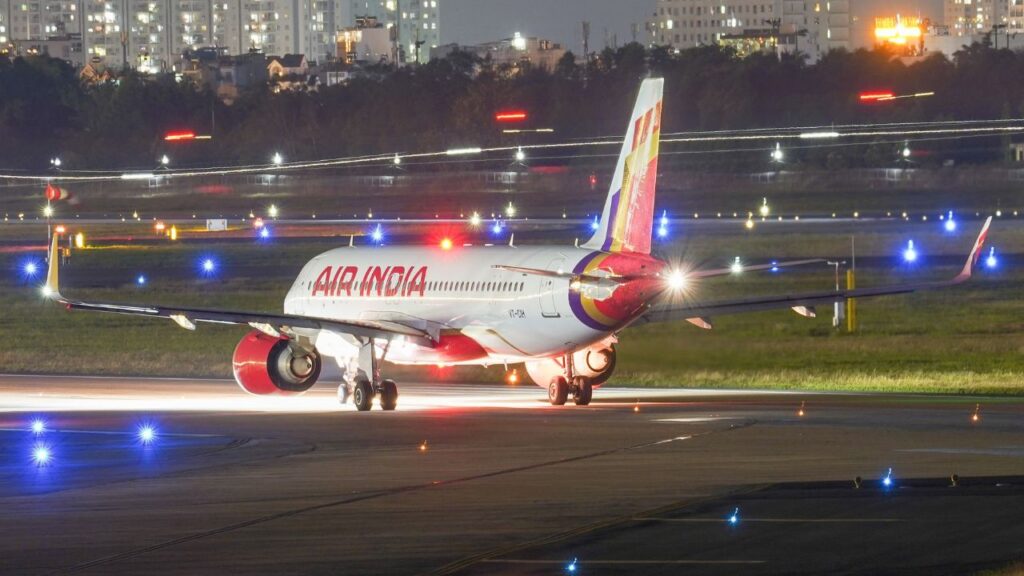
Air India pilot dope test positive — AI2379 captain tests positive for psychoactive substance after Phuket-Delhi flight drops 300 feet with 17 injured, as DGCA launches multi-angle investigation and both pilots are removed from flying duties.
Air India pilot dope test result has emerged as the most significant development in the AI2379 Phuket-Delhi turbulence investigation — one of the two pilots operating Air India flight AI2379, which encountered severe turbulence and a sudden drop in altitude earlier this week, has failed a post-flight dope test, sources told India Today on Sunday.
The Air India pilot dope test positive result — attributed to the captain of the aircraft — has led to both pilots being de-rostered and removed from flying duties. The DGCA is now conducting a multi-angle investigation into an incident that began as a weather and safety story and has escalated into India’s most consequential aviation regulatory case since the Ahmedabad crash of June 2025.
What the Dope Test Found and What Happens Next
One of the two pilots of Air India flight AI2379 tested positive for a psychoactive substance during a post-flight dope test, sources told India Today. Both pilots have been de-rostered and taken off flying duties pending the outcome of an inquiry.
The captain of the Air India flight reportedly tested positive for psychoactive substances in a post-flight dope test conducted after the aircraft landed in Delhi, Times of India reported. Air India, however, said it cannot comment on the finding as it had not received the test results.
Air India’s formal response was careful and precisely bounded: “We are aware that a post-flight screening test was conducted on the pilots in accordance with applicable protocols. However, the results of the test have not been shared with Air India, and we are therefore not in a position to comment on any findings.”
This is the procedural reality — under DGCA regulations, post-flight screening results are transmitted by the testing authority to DGCA and the relevant regulatory bodies, not to the airline first. Air India is legally constrained from commenting on findings it has not officially received.
DGCA rules state that pilots testing positive should be referred for de-addiction and rehabilitation. They will be able to return to active duty after a negative drug test.
The de-addiction and rehabilitation pathway is the prescribed regulatory response — not permanent licence revocation in the first instance. A pilot who tests positive enters a structured return-to-duty programme that includes mandatory rehabilitation, a supervised period of drug-free status, and a clean drug test before any return to operational flying.
The captain operating Air India’s turbulence-hit Phuket-Delhi flight on Tuesday (Aug 4) reportedly tested positive in a psychoactive substances (dope) test conducted on arrival, according to multiple sources. The airline did not either confirm or deny it, saying while the tests… pic.twitter.com/PKGjZVW33p
— The Times Of India (@timesofindia) August 9, 2026
The Escalating Injury Count: 17 Injured, Spinal and Neck Damage
The Air India pilot dope test development has emerged alongside an updated and more severe injury picture from the turbulence event itself.
The incident occurred on August 5, 2026, when Air India Flight AI2379, an Airbus A320 carrying 137 passengers and eight crew members, encountered severe mid-air turbulence. The sudden loss of altitude resulted in injuries to at least 17 individuals onboard, including 13 passengers and four cabin crew members. Civil Aviation Minister K. Rammohan Naidu confirmed that a few crew members sustained severe injuries, including spinal impacts near the tailbone and neck, and were advised extended medical rest.
The injury count of 17 — 13 passengers and four crew — is significantly higher than the 12 initially reported when the article was first written on August 4. The spinal and neck injury detail, confirmed at ministerial level, indicates that some of the injuries are more serious than the initial “minor” characterisation suggested. Extended medical rest for crew members with spinal impacts near the tailbone indicates compression-type injuries from the rapid altitude drop.
The aircraft experienced turbulence for around four to five minutes, according to Civil Aviation Minister K Rammohan Naidu. The flight had 137 passengers and eight crew members on board.
Five minutes of severe turbulence — during which the aircraft dropped 300 feet — is an unusually prolonged event. Most severe turbulence encounters are measured in seconds. A five-minute encounter suggests a sustained weather system rather than a single clear-air turbulence spike.
The DGCA Multi-Angle Investigation
The aviation regulator is examining the decision to continue the flight to Delhi instead of diverting to a closer airport. The DGCA is examining the incident from multiple angles, including how the crew handled the turbulence, whether the incident was entirely weather-related, and whether the aircraft sustained any damage.
This three-pronged examination is revealing in what it implies.
Was the turbulence entirely weather-related? The Air India pilot dope test positive result naturally raises the question of whether the psychoactive substance detected in the captain’s system had any operational impact on the crew’s management of the turbulence event. Investigators will examine the cockpit voice recorder, flight data recorder, and ATC communications to assess crew performance before, during, and after the turbulence encounter.
Was the decision to continue to Delhi correct? The turbulence occurred over airspace near Odisha. Diverting to Bhubaneswar or another closer airport rather than continuing to Delhi is a standard consideration in severe turbulence events with injuries on board. The DGCA will examine whether the continuing-to-Delhi decision was operationally appropriate given the altitude drop, the injuries, and the condition of the aircraft.
Was the aircraft damaged? A 300-foot altitude drop in a sustained severe turbulence event creates structural stress beyond normal flight loads. The DGCA and Air India engineers will inspect the Airbus A320’s airframe for fatigue indicators, control surface integrity, and any structural impacts from the event.
A senior Ministry of Civil Aviation source said the findings of the DGCA probe will help determine whether the case needs to be referred to the Aircraft Accident Investigation Bureau (AAIB) for further investigation.
The AAIB referral threshold is significant. AAIB investigations are more formal, more comprehensive, and produce binding safety recommendations. If the DGCA concludes that the AI2379 event meets the AAIB threshold — which depends on injury severity, structural factors, and any regulatory compliance failures — the investigation escalates to a level comparable to a serious incident investigation.
The Psychoactive Substance: What DGCA Regulations Say
The Air India pilot dope test positive result triggers a specific regulatory pathway under DGCA’s Drugs and Alcohol Testing Programme.
India’s DGCA conducts random psychoactive substance testing of pilots, cabin crew, and air traffic controllers as part of a programme introduced in 2023. Random testing is conducted pre-flight and post-flight. A positive psychoactive substance test result triggers immediate suspension from flying duties, mandatory referral for clinical assessment, and a structured de-addiction and rehabilitation programme.
The critical regulatory question is whether the detected psychoactive substance was present before the flight or only entered the captain’s system after landing — a question the testing protocols are designed to address through the specific substances detected, their metabolite levels, and the testing timeline relative to flight completion.
Air India conducts regular drug testing as per civil aviation regulations, and pilots testing positive are subject to de-addiction and rehabilitation before returning to duty. The return-to-duty pathway requires a negative drug test and clinical clearance.
| Air India Pilot Dope Test — Regulatory Response Summary | Detail |
|---|---|
| Test type | Post-flight psychoactive substance screening |
| Test result | Positive — captain of AI2379 |
| Substance category | Psychoactive substance (specific substance not disclosed) |
| Both pilots’ status | De-rostered — removed from flying duties |
| DGCA investigation angles | Turbulence handling, weather determination, diversion decision, aircraft damage |
| Possible referral | AAIB — if DGCA determines serious incident threshold met |
| Return to duty pathway | De-addiction and rehabilitation — negative drug test required |
| Air India’s position | Cannot comment — test results not shared with airline |
| Injury count update | 17 total — 13 passengers, 4 crew — spinal and neck injuries confirmed |
What Indian Travelers Need to Know
The Air India pilot dope test positive result raises legitimate questions for Indian travelers who fly AI2379 or similar Air India short-haul routes from Southeast Asia.
The regulatory system is working as it is designed to work. The post-flight screening protocol exists precisely for situations like this — identifying whether crew on an incident-involved flight were in compliance with aviation substance rules. The positive result has triggered immediate de-rostering, an active DGCA investigation, and potential AAIB referral. These are not cosmetic responses — they are meaningful regulatory actions.
Indian travelers booking Air India routes from Phuket, Bangkok, Kuala Lumpur, Singapore, and other Southeast Asian destinations should note that DGCA’s active investigation and Air India’s cooperation with the regulatory process are both proceeding without obstruction. Air India is under Tata Group ownership, which has been committed to safety culture improvement across the carrier’s operations.
The turbulence event itself — regardless of the dope test — is consistent with the documented severe clear-air turbulence patterns over the Bay of Bengal during the Indian monsoon season. Seatbelt discipline during cruise remains the most effective passenger protection measure against turbulence injury, independent of any crew factors.
For travel insurance covering Air India flights including turbulence-related medical expenses and trip disruptions, SafetyWing Nomad Insurance provides comprehensive coverage at affordable daily rates for Indian travelers.
FAQs — Air India Pilot Dope Test 2026
Q: What did the Air India AI2379 pilot dope test reveal?
One of the two pilots operating Air India flight AI2379 has failed a post-flight dope test, according to sources. Both pilots have since been de-rostered and removed from flying duties while an investigation into the incident is underway. The captain of the Air India flight reportedly tested positive for psychoactive substances in a post-flight dope test conducted after the aircraft landed in Delhi. Air India said it cannot comment on the finding as it had not received the test results.
Q: How many people were injured on Air India flight AI2379?
The sudden loss of altitude resulted in injuries to at least 17 individuals onboard, including 13 passengers and four cabin crew members. Civil Aviation Minister K. Rammohan Naidu confirmed that a few crew members sustained severe injuries, including spinal impacts near the tailbone and neck, and were advised extended medical rest. This is an updated figure — initial reports cited 12 injuries. The aircraft dropped 300 feet during five minutes of severe turbulence over airspace near Odisha on August 4–5, 2026.
Q: What happens to the Air India pilot who tested positive?
DGCA rules state that pilots testing positive should be referred for de-addiction and rehabilitation. They will be able to return to active duty after a negative drug test. Both pilots remain de-rostered pending the investigation outcome. A senior Ministry of Civil Aviation source said the findings of the DGCA probe will help determine whether the case needs to be referred to the Aircraft Accident Investigation Bureau (AAIB) for further investigation.
Final Word
The Air India pilot dope test positive result on AI2379’s captain is a serious regulatory development — but the response it has triggered is precisely what the system is designed to produce. Immediate de-rostering, DGCA investigation across multiple dimensions, possible AAIB referral, and a mandatory de-addiction pathway before any return to duty.
The turbulence event over Odisha — now confirmed at 17 injured with spinal and neck damage in the crew — deserves full investigation regardless of the dope test result. The dope test adds a layer of complexity to that investigation. For Indian travelers, the practical messages remain unchanged from the turbulence article: fasten your seatbelt during cruise, every flight, without exception.
Also Read:
- Air India Phuket Delhi Turbulence — AI2379 Drops 12 Injured August 4
- India Flight Cancellation Rights — Ministry Advisory July 2026
- SafetyWing Nomad Insurance — Full Review for Indians
Official Sources:
- NDTV — Air India Pilot Likely Failed Dope Test After Turbulence-Hit Flight
- India Today — Air India Phuket-Delhi Pilot Fails Dope Test
 Cambodia Tourism Indians 2026: Angkor Wat Crowds Rising as China Visa-Free Trial Ends October 15

AirAsia Fuel Crisis 2026: Costs Up 66%, Stock -70%, Fernandes Says No Bailout Needed
Uzbekistan Visa Free Indians 2026: 30 Days With US, UK or Schengen Visa — Full Eligibility Guide

Thai Airways Ranking 2026: Top 10 in Travel + Leisure, Up From No.33 in Skytrax
Cambodia Tourism Indians 2026: Angkor Wat Crowds Rising as China Visa-Free Trial Ends October 15
AirAsia Fuel Crisis 2026: Costs Up 66%, Stock -70%, Fernandes Says No Bailout Needed
Uzbekistan Visa Free Indians 2026: 30 Days With US, UK or Schengen Visa — Full Eligibility Guide
Thai Airways Ranking 2026: Top 10 in Travel + Leisure, Up From No.33 in Skytrax

Aaseem Bhardwaj is a journalist, seasoned traveler and IT professional based in India. With firsthand travel experience across Southeast Asia, East Asia, Middle East and Europe, Aaseem founded Travel Man Today to provide reliable visa updates and travel news for Indian passport holders. He has personally traveled to Thailand, Vietnam, Malaysia, Japan, Singapore, Hong Kong, South Korea, UAE and Europe. Follow his travel vlogs on YouTube at @travelmantoday





Templates for Indians

1 thought on “Air India Pilot Dope Test: AI2379 Captain Tests Positive After Phuket-Delhi Turbulence”