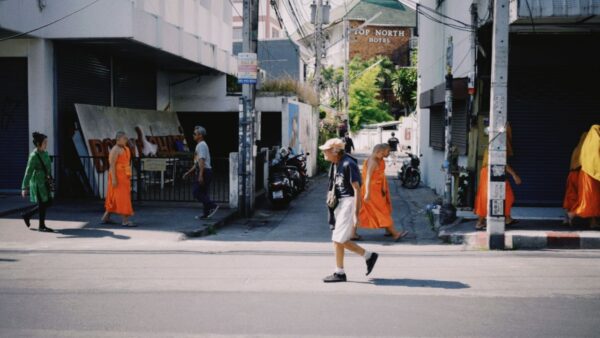
Thailand Tourism 2026: Why the 33 Million Visitor Target Is Out of Reach This Year

Thailand tourism 2026 is heading for a second straight annual shortfall, with foreign arrivals at 25.5 million through October — well below the TAT's 33 million target.
Thailand tourism 2026 is heading for a second straight annual shortfall, with foreign arrivals falling behind target despite hopes of a post-pandemic rebound. Thailand’s Tourism Authority set an ambitious goal of 33 million foreign visitors for 2026 — a number that now looks increasingly out of reach as the year enters its final weeks.
From January to October 2026, the country recorded just 25.5 million foreign arrivals, down 4.6% year on year. Even if November and December perform as strongly as they did in 2019 — when those two months brought in roughly 7.3 million visitors — the full-year total would still fall just short of 2025’s 32.9 million. For Indian travellers, this slowdown carries a surprising silver lining: more room in popular destinations, possible deals on accommodation, and growing pressure on Thailand to stay competitive.
Thailand Tourism 2026: Why the 33 Million Target Is Slipping Away
Thailand tourism 2026 is being squeezed from multiple directions at once. The Bank of Thailand now expects around 32 million visitors for the full year, while the Thai Hotels Association has forecast 31.5 to 32 million — both projections sitting comfortably below the official target.
If confirmed, this would mark the first back-to-back annual decline in Thai tourism outside the pandemic period since at least 1995. That is a significant moment for one of Southeast Asia’s most tourism-dependent economies, where international visitor revenue shapes everything from hotel room rates to currency strength.
The reasons for the shortfall are layered. The ongoing conflict in West Asia disrupted airspace for months, cutting European connections routed through regional hubs and forcing several low-cost carriers to trim flights into Bangkok and Phuket. Rising fuel costs added pressure to already thin airline margins, particularly for budget operators.
Meanwhile, Vietnam has emerged as a sharper competitor — cheaper hotels, faster infrastructure development, and a reputation for hassle-free travel have drawn tourists who might previously have defaulted to Thailand. Thai authorities have also adopted a tougher stance on rule-breaking tourists, with higher rates of deportation and enforcement actions that have made some markets more cautious.
| Forecast Source | 2026 Visitor Estimate | vs. 33M Target |
|---|---|---|
| Bank of Thailand | ~32 million | Shortfall of ~1 million |
| Thai Hotels Association | 31.5–32 million | Shortfall of 1–1.5 million |
| Official TAT Target | 33 million | — |
| Jan–Oct 2026 Actual | 25.5 million | Down 4.6% YoY |
Which Markets Are Dragging Thailand Tourism 2026 Numbers Down
Thailand tourism 2026 faces headwinds from its two biggest source markets: China and Malaysia. Chinese arrivals rose 12% through October to 4.2 million — a seemingly positive figure, until October itself showed a 14% decline, the first monthly fall in nine months. Analysts link this to a warning issued by the Chinese embassy cautioning citizens about kidnapping and trafficking risks connected to scam centres operating along Thailand’s borders.
Kasikorn Research Center now expects only 4.9 million Chinese visitors for the full year — less than half the roughly 11 million who visited in 2019. That gap alone explains much of the tourism shortfall.
Malaysia, Thailand’s largest neighbouring market, has been equally disappointing. Arrivals from Malaysia fell 16% through October to 3.2 million. Tourism managers in southern Thailand point to lingering memories of flooding that hit the region in 2025, which made Malaysian travellers — many of whom do short road trips into Hat Yai and southern provinces — reluctant to return during the rainy season.
The combination of a weakened Chinese market and a bruised Malaysian market has left a hole that arrivals from other regions have not been able to fill.
| Source Market | Jan–Oct 2026 Arrivals | Year-on-Year Change |
|---|---|---|
| China | 4.2 million | +12% overall; Oct: −14% |
| Malaysia | 3.2 million | −16% |
| All Foreign Visitors | 25.5 million | −4.6% |
| Kasikorn Full-Year China Forecast | 4.9 million | vs. ~11M in 2019 |
What the Tourism Slowdown Means for the Thai Economy and Hotels
International tourism revenue in Thailand has fallen around 3% so far this year — a meaningful drop for an economy that depends heavily on visitor spending. The number that is rising, however, is average spend per visitor, which climbed 1.8% through October.
This reflects a broader shift in Thailand’s tourism mix: luxury hotels are performing well and commanding strong rates, while properties dependent on group tours — the bread-and-butter business that Chinese package tourism once delivered — remain under severe pressure. Accommodation revenue is still expected to rise by about 2.6% for the full year according to Kasikorn, but the picture beneath that headline is uneven.
The stress on Thailand’s hospitality sector is real. In the first nine months of 2026, 148 accommodation businesses registered closures — a 42% jump compared to the same period a year earlier. Smaller guesthouses, family-run hotels and mid-range properties in areas that relied on group-tour traffic are bearing the brunt.
Bill Barnett, managing director of hospitality consultancy C9 Hotelworks, summed up the mood bluntly: “Maybe the metric needs to be reset to a reasonable level.” Thailand’s government has quietly acknowledged the pressure too — a planned THB 1,000 (approximately ₹2,500) departure tax was postponed in October, and a proposed THB 450 (approximately ₹1,125) arrival fee for foreign visitors remains under review and has not been adopted.
What This Means for Indian Travellers Visiting Thailand in 2026–27
For Indian passport holders, Thailand tourism 2026’s struggles are not entirely bad news. With overall visitor numbers down and hotel occupancy softer than expected in many segments, India-based travellers are finding better value at mid-range and upscale properties — particularly in Chiang Mai, Krabi, and the quieter parts of Phuket.
The postponed departure tax and unadopted arrival fee mean that at the time of writing, Indians visiting Thailand face no new entry charges beyond the existing visa-free arrangement, which continues to allow a 60-day stay for Indian passport holders.
Flights from India remain well-connected. IndiGo and Air India operate direct services to Bangkok from Delhi and Mumbai, with connecting options from Chennai, Bangalore, Hyderabad, and Kolkata. Thai AirAsia and Vietjet add budget options on key routes.
When booking, carry USD or THB for expenses in Thailand — UPI and Indian debit cards are not reliably accepted outside premium hotels and large shopping malls. For currency exchange, airport kiosks in Bangkok generally offer fair rates; avoid exchanging rupees in India before departure as THB rates are more competitive in Thailand.
Thailand’s draft tourism plan for 2028–2032 targets at least THB 4 trillion in tourism revenue, up from THB 2.7 trillion in 2025, with an explicit focus on higher-spending visitors and spreading tourism beyond the established Bangkok-Phuket-Chiang Mai triangle. For Indians, this signals that Thailand will continue investing in quality experiences — meaning the destinations that Indian tourists love are likely to become more polished over the next few years, even if the mass-market crowd thins out.
Also Read:
- Thailand Visa Free 30 Days 2026: What Indian Travellers Need to Know
- Thailand Long Stay Visa for Indians 2026: Complete Guide
- Thailand New Tour Buses 2026: Updated Routes and What’s Changed
Official Source: Tourism Authority of Thailand — TAT Newsroom
 Cambodia Scams 2026: 8 Tourist Traps Every Indian Traveller Must Avoid
Thailand Tourism 2026: Why the 33 Million Visitor Target Is Out of Reach This Year

Vietnam Airlines India Flights 2026: Delhi and Bengaluru Go Daily from December
Thailand Ebola Screening 2026: What Indian Travelers Must Know Before Flying
Cambodia Scams 2026: 8 Tourist Traps Every Indian Traveller Must Avoid
Thailand Tourism 2026: Why the 33 Million Visitor Target Is Out of Reach This Year
Vietnam Airlines India Flights 2026: Delhi and Bengaluru Go Daily from December
Thailand Ebola Screening 2026: What Indian Travelers Must Know Before Flying

Aaseem Bhardwaj is a journalist, seasoned traveler and IT professional based in India. With firsthand travel experience across Southeast Asia, East Asia, Middle East and Europe, Aaseem founded Travel Man Today to provide reliable visa updates and travel news for Indian passport holders. He has personally traveled to Thailand, Vietnam, Malaysia, Japan, Singapore, Hong Kong, South Korea, UAE and Europe. Follow his travel vlogs on YouTube at @travelmantoday





Templates for Indians