Thailand Tourism Fee 2026: Why Airlines Can’t Collect It — and What Happens Next
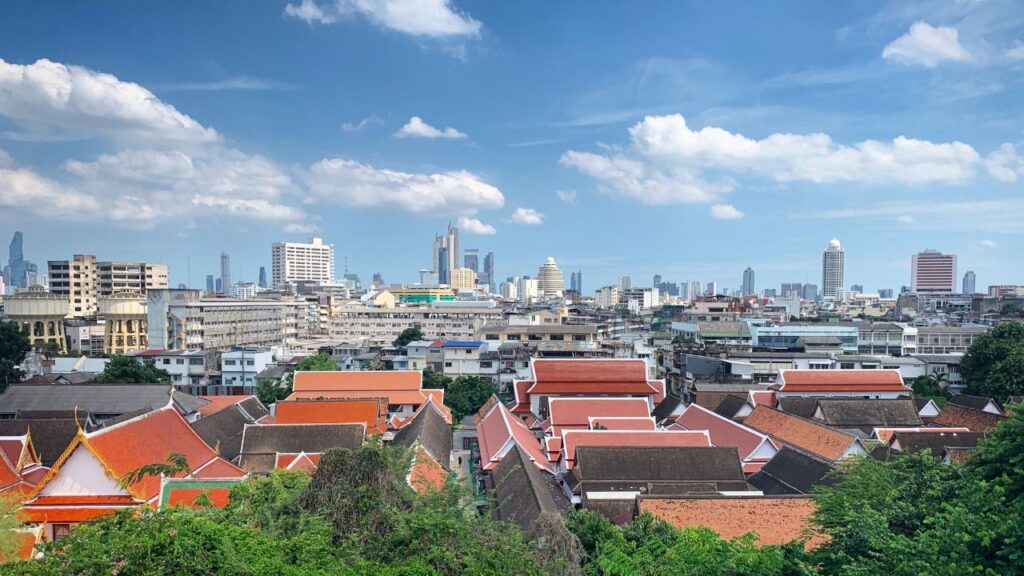
Thailand tourism fee collection through airlines has been declared infeasible — aviation bodies now back TDAC as the preferred mechanism.
Thailand tourism fee collection through airlines has hit a major technical wall — and the aviation industry is now pushing back hard with a clear alternative. The Tourism and Sports Ministry’s plan to use airlines as intermediaries to collect a minimum THB 300 tourist entry fee from all arriving foreign visitors has been declared infeasible by aviation bodies, with the Thailand Digital Arrival Card (TDAC) now emerging as the preferred collection mechanism instead.
The Thailand tourism fee has been debated, delayed, and revised since it was first proposed in 2020. It has never been implemented. This latest development — confirmed at a meeting between the Airlines Association of Thailand (AAT), airports, regulators, and the Tourism Ministry — adds another layer of complexity to what was already one of Thailand’s most persistently delayed policy initiatives. For Indian travelers planning trips to Bangkok, Phuket, Chiang Mai, or Koh Samui, the key message is that the fee is not yet active — but understanding why it keeps stalling matters for planning future trips.
Why the Thailand Tourism Fee Cannot Be Collected Through Airlines
The Airlines Association of Thailand (AAT) and the International Air Transport Association (IATA) both delivered the same verdict at the recent ministry meeting: embedding the Thailand tourism fee into airline tickets is not technically viable.
The core problem is that Thai airlines alone operate with different back-office reservation and billing systems. Add more than 100 foreign airlines flying into Thailand — each with their own separate IT infrastructure, pricing engines, and booking platforms — and the complexity of embedding a government levy into every fare becomes unworkable.
Airline ticketing systems are not designed to function as government tax collection intermediaries, particularly for a levy that applies only to foreign nationals and not to Thai passport holders.
This creates a second, more fundamental problem. The National Tourism Policy Act — the legislation that governs the tourism fee — legally exempts Thai nationals from paying the levy. Airlines during the booking process typically do not collect passenger nationality, passport details, or residential address. They have no practical mechanism to identify which passengers are Thai and which are foreign at the point of ticket purchase. T
he ministry’s proposed workaround was to charge all passengers a standard fee and subsequently reimburse Thai nationals — with the government covering the administrative cost of processing millions of individual refunds. IATA’s Sheldon Hee, regional vice-president for Asia-Pacific, described this approach as creating additional complications that make it impractical to implement.
| Why Airline Collection of Thailand Tourism Fee Fails | Details |
|---|---|
| Thai airlines back-office systems | All different — cannot be standardised |
| Foreign airlines in Thailand | 100+ carriers, each with separate IT |
| Thai nationals exemption | Airlines cannot identify nationality at booking |
| Proposed workaround | Charge all, reimburse Thais — operationally impractical |
| IATA position | Infeasible — creates additional complications |
| AAT position | Agreed — TDAC is a better option |
Thailand Tourism Fee Via TDAC: The Preferred Alternative
The solution that both aviation bodies and the AAT have coalesced around is collection through the Thailand Digital Arrival Card (TDAC) — the mandatory digital immigration form that every foreign visitor to Thailand must complete before arrival.
The TDAC is already administered directly by the Immigration Bureau, which reports to the government rather than operating as an independent private entity like airlines. Every foreign visitor — regardless of which airline they fly, which country they come from, or whether they booked directly or through a travel agent — must complete the TDAC before entering Thailand. This universal touchpoint makes it a natural collection mechanism for a fee that applies to all foreign arrivals by air.
The practical advantages are significant. The TDAC already captures nationality, passport details, and flight information — exactly the data needed to correctly apply the fee to foreign travelers while excluding Thai nationals.
The government controls the platform directly, removing the complexity of coordinating with 100+ independent airline systems. Revenue flows directly into government accounts without requiring airline intermediaries to manage financial flows on the state’s behalf.
This conclusion has broad support from across the aviation industry. Whether the ministry will formally adopt the TDAC route — and on what timeline — remains subject to Cabinet consideration.
A Fee Six Years in the Making: The Full Timeline
The Thailand tourism fee has one of the longest implementation timelines of any tourism policy in Southeast Asia. Understanding the history helps explain why industry skepticism about a firm launch date remains high even as technical solutions are being identified.
The fee was first proposed in 2020, when Thailand began exploring how to generate dedicated revenue for tourist insurance and infrastructure maintenance. It was never implemented. Thailand’s Cabinet gave the fee in-principle approval in February 2023, setting the amount at THB 300 for air arrivals and THB 150 for land and sea arrivals. It was still not implemented.
In July 2025, the Tourism Ministry delayed the rollout again — citing weaker-than-expected arrival numbers and economic uncertainty — and targeted mid-2026 as the new implementation window. In March 2026, Deputy Prime Minister Phiphat confirmed it would be tabled at the new government’s first Cabinet meeting.
As of May 2026, the fee was still awaiting formal Cabinet approval. Now, in July 2026, the collection mechanism itself has been declared unworkable through airlines — sending implementation back to the drawing board on the operational side.
| Thailand Tourism Fee — Implementation Timeline | Status |
|---|---|
| 2020 | First proposed — not implemented |
| February 2023 | Cabinet gives in-principle approval — THB 300 air / THB 150 land/sea |
| July 2025 | Implementation delayed — mid-2026 targeted |
| March 2026 | New government confirms it will go to Cabinet |
| May 2026 | Fee amount potentially higher than THB 300 due to inflation |
| May 2026 | Still awaiting formal Cabinet approval |
| July 2026 | Airline collection declared infeasible — TDAC proposed as alternative |
What the Fee Is Supposed to Cover
When — if — the Thailand tourism fee is finally implemented, its purpose is straightforward. The majority of the revenue will go toward tourist accident insurance that activates from the moment a foreign visitor enters Thailand. This insurance is intended to offset the approximately THB 2.5 billion in unpaid medical bills that Thai hospitals absorb annually from foreign tourists who cannot pay for treatment.
The remaining revenue will fund maintenance of tourist attractions, infrastructure improvements at high-footfall sites, and general visitor safety systems. Tourism Minister Surasak Phancharoenworakul has indicated the final amount could exceed THB 300 because of inflation and rising insurance costs at private hospitals, where the fee’s medical component would need to adequately cover treatment expenses. The THB 70 per visitor that was earmarked for insurance in earlier proposals may need to increase to make the coverage meaningful.
For Indian travelers, this insurance component is worth noting. Once the fee is operational, it would provide a base level of accident and medical coverage for the duration of a Thailand stay — separate from, and not a substitute for, comprehensive travel insurance.
What Indian Travelers Should Know Right Now
The most practical takeaway from the Thailand tourism fee latest development is simple: the fee is not currently active, and no confirmed start date exists. Indian travelers planning trips to Bangkok, Phuket, Chiang Mai, or Koh Samui in 2026 do not need to budget for this charge right now.
However, the fee is closer to implementation than at any previous point. Once the TDAC collection mechanism is formally approved and the Cabinet announces a start date, the charge — currently proposed at a minimum of THB 300, approximately ₹700 — will apply to every foreign air arrival including Indian passport holders.
Keep an eye on official announcements from Thailand’s Ministry of Tourism and Sports before booking any late 2026 or 2027 Thailand trips.
Separately, check the current Thailand visa entry requirements at thaievisa.go.th — the 60-day exemption for Indian passport holders is pending Royal Gazette publication of Cabinet-approved changes, and entry rules may differ from what applied on your previous Thailand trip.
Remember that UPI does not work in Thailand — carry Thai Baht or use a zero-forex international card. For comprehensive travel insurance covering your Thailand trip, SafetyWing Nomad Insurance provides reliable coverage at affordable daily rates. If you need a confirmed flight booking for visa purposes, a dummy ticket reservation is available at flyinghelpline.com/flight-reservation/ for ₹999.
FAQs — Thailand Tourism Fee 2026
Q: Is the Thailand tourism fee of THB 300 currently active for Indian travelers?
No — the Thailand tourism fee is not currently active. As of July 2026, the fee is still awaiting formal Cabinet approval and has no confirmed start date or collection mechanism. The latest development confirms that collecting the fee through airlines is infeasible, with the TDAC digital arrival card now proposed as the alternative collection method. Indian travelers visiting Thailand in 2026 do not need to pay or budget for this fee until an official government announcement confirms the activation date and collection system.
Q: Why can’t Thailand collect the tourism fee through airline tickets?
The airline collection method was declared infeasible by the Airlines Association of Thailand and IATA for two main reasons. First, Thai airlines and the 100+ foreign carriers flying to Thailand all operate different back-office systems, making standardised fee embedding technically unworkable across the industry. Second, the National Tourism Policy Act exempts Thai nationals from the fee, but airlines do not collect nationality or passport data during booking — making it impossible to distinguish Thai from foreign passengers at the point of ticket purchase without creating a complex and costly refund system for Thai travelers.
Q: What is the TDAC and why is it better for collecting the Thailand tourism fee?
The TDAC — Thailand Digital Arrival Card — is the mandatory digital immigration form that every foreign visitor must complete before entering Thailand. It is administered directly by the Immigration Bureau, which reports to the government. Unlike airlines, the TDAC platform already captures nationality, passport details, and flight information — precisely the data needed to apply the fee to foreign tourists while automatically excluding Thai nationals. Both the AAT and IATA agreed at the recent ministry meeting that the TDAC is a more feasible and operationally simpler collection mechanism than embedding the levy in airline tickets.
Final Word
The Thailand tourism fee story is a reminder that good policy intent and workable implementation are two very different things. Six years after it was first proposed, the fee has Cabinet approval in principle, strong public policy rationale, and now a clearer technical path through the TDAC — but still no confirmed start date. For Indian travelers, the fee remains a watch-this-space item rather than an immediate budgeting concern. When it does launch — and it will eventually — the THB 300 charge represents less than ₹700 per person per trip, a modest addition to what remains one of Southeast Asia’s most competitively priced destinations. Stay updated through official Ministry of Tourism announcements, and plan your Thailand trips with the possibility of this charge applying from late 2026 or 2027 onwards.
Also Read:
- Thailand Travel 2026 New Rules — Complete Guide
- Thailand Visa Free Indians 2026 — Still Valid, Official Proof
- Thailand Overstay 2026 — Why the System Knows But Rarely Acts
Official Sources:
- Bangkok Post — Planned Tourism Fee Hits a Snag in Implementation
- Thailand Ministry of Tourism and Sports
 Air India Singapore Airlines 2026: Standalone Bookings From October 15, Loyalty Upgrade Q2 2027
AirAsia Financial Crisis 2026 Indians: USD 1 Billion Funding Hunt, Malaysia Plans Route Backup
Thailand Tourist Fee 2026: 3 Airport Charges Indian Travelers Must Budget For

Singapore Haze 2026 Indians: PSI 192, Outdoor Tourism Down 30% — What to Know
Air India Singapore Airlines 2026: Standalone Bookings From October 15, Loyalty Upgrade Q2 2027
AirAsia Financial Crisis 2026 Indians: USD 1 Billion Funding Hunt, Malaysia Plans Route Backup
Thailand Tourist Fee 2026: 3 Airport Charges Indian Travelers Must Budget For
Singapore Haze 2026 Indians: PSI 192, Outdoor Tourism Down 30% — What to Know

Aaseem Bhardwaj is a journalist, seasoned traveler and IT professional based in India. With firsthand travel experience across Southeast Asia, East Asia, Middle East and Europe, Aaseem founded Travel Man Today to provide reliable visa updates and travel news for Indian passport holders. He has personally traveled to Thailand, Vietnam, Malaysia, Japan, Singapore, Hong Kong, South Korea, UAE and Europe. Follow his travel vlogs on YouTube at @travelmantoday





Templates for Indians