Thailand Tourist Fee 2027: THB 450 Per Person, Air Arrivals from Q1 2027
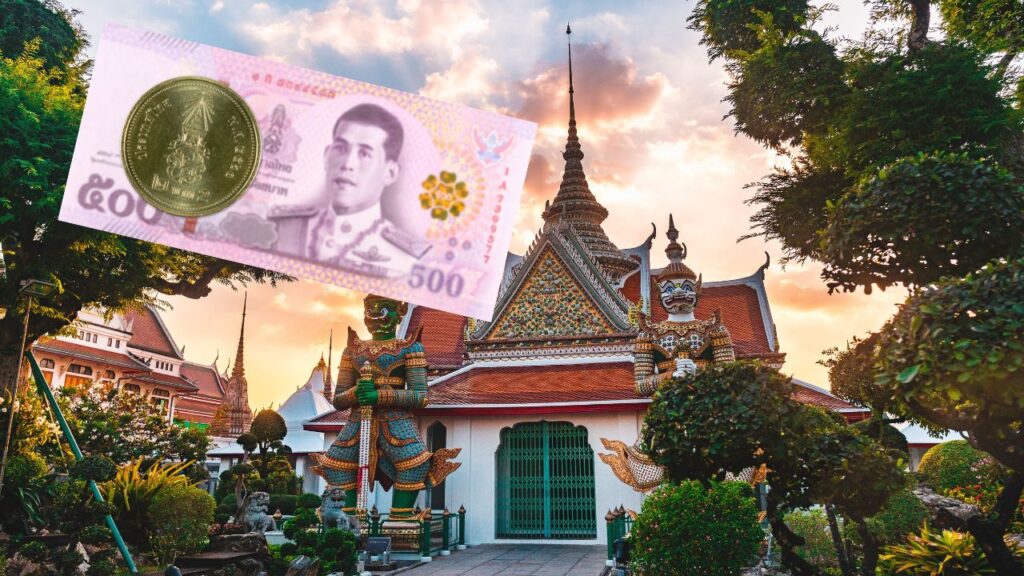
Thailand tourist fee 2027 endorsed at THB 450 per person by the National Tourism Policy Committee on August 15 — air travelers pay from Q1 2027 following a 180-day Royal Gazette countdown, with land and sea arrivals following in a second phase approximately 360 days later.
Thailand tourist fee 2027 — the proposed charge for foreign visitors entering Thailand has moved from concept to formal policy process. Thailand’s National Tourism Policy Committee has endorsed the draft principles for a 450-baht foreign visitor fee, allowing the plan to proceed to a 30-day public hearing before seeking final Cabinet approval.
The Thailand tourist fee 2027 announcement on August 15 by Deputy Prime Minister Suphajee Suthumpun provides the clearest picture yet of what India’s millions of Thailand-bound travelers can expect — a THB 450 (~₹1,080) charge per person, collected from air travelers first in Q1 2027, with land and sea arrivals following approximately 12 months later.
This is the first time a specific amount, collection method, and implementation timeline have been confirmed at a senior government level. Previous iterations of the Thailand visitor fee — including the August 10 proposal we reported — did not specify any amount, collection mechanism, or start date. Today’s announcement changes all three.
The Confirmed Details: What Is Now Known
Tourism and Sports Minister Surasak Phancharoenworakul explained that the proposed rate was 450 baht per person for foreign visitors entering Thailand by air, land or sea.
Natthriya Thaweevong, permanent secretary for tourism and sports, noted that the proposed 450-baht rate was based on research and calculations using a standard model designed to reflect current economic conditions. The amount is higher than the rates previously considered under an earlier framework, which proposed charging 300 baht for air arrivals and 150 baht per person for travellers entering by land or sea.
The unification of the land, sea, and air rate at THB 450 is a simplification from the previous tiered proposal — and a higher rate for land and sea travelers than the THB 150 previously discussed.
The implementation timeline:
Under the planned rollout, the fee would initially be collected from air travellers. Collection would take effect 180 days after the relevant notification is published in the Royal Gazette. Collection from visitors arriving by land or sea would follow in the second phase, around 360 days later.
Working through the timeline: 30-day public hearing, then back to committee, then Cabinet submission. If Cabinet approves in September or October 2026 and the Royal Gazette publishes shortly after, the 180-day countdown begins. That places Q1 2027 as the realistic window for air arrival fee collection to begin — consistent with the government’s stated Q1 2027 target.
The government is preparing to conduct a 30-day public hearing to gather opinions from the private sector and all relevant stakeholders. The proposal will subsequently be presented to the Cabinet, with actual collection expected to begin in the first quarter of 2027.
The Revenue Purpose: Three Specific Uses
The Thailand tourist fee 2027 revenue has three confirmed purposes — none of which involve going into Thailand’s general government budget.
The revenue would be channelled into a fund for tourism development. Its principal purposes would be to provide insurance protection for tourists, including safety and health coverage; develop tourist attractions and create new visitor experiences; and support research, conferences and the development of tourism personnel.
The insurance protection for tourists dimension is the most commercially significant for Indian travelers. Thailand does not currently require inbound tourists to carry travel insurance — unlike Schengen visa applications or some other destinations. The visitor fee fund will apparently provide a basic insurance cover for foreign visitors rather than requiring them to purchase their own independently.
This changes the value proposition of the fee from a pure revenue measure to a service-with-levy structure — closer to the airport improvement fees or tourism levies in Bhutan, New Zealand, and other destinations where the charge is associated with a tangible tourism service improvement.
The Payment Methods Under Consideration
Payment arrangements must prioritise convenience for foreign visitors. Options under consideration include incorporating the fee into ticket prices, paying through a website or mobile application, using a fee-payment kiosk or mobile device, and other methods specified by the fund’s management committee.
The ticket price incorporation option — embedding THB 450 into the airfare at point of booking — would make the Thailand tourist fee 2027 effectively invisible to most travelers, who would see a slightly higher ticket price and never interact with a separate payment process. This is the model used in many countries for tourism levies and is the lowest-friction collection mechanism.
The website or mobile app payment option — where travelers pay before arrival — would create a Thai tourism equivalent of the TDAC digital arrival card process or New Zealand’s NZeTA system. This is a higher-friction option but gives travelers a digital receipt they can present at immigration.
The kiosk option at airports is the highest-friction approach and is likely to create queuing problems at Suvarnabhumi, Don Mueang, and Phuket during peak periods unless significant investment is made in kiosk deployment.
The Border Congestion Problem: Why Land Arrivals Come Later
The 360-day delay for land and sea arrivals — approximately 12 months after the air arrival collection begins — reflects a specific and acknowledged operational challenge.
This would give the government time to address congestion at border checkpoints, particularly those along the Malaysian border, so the fee collection system does not worsen crowding.
Thailand’s Malaysian border crossings — at Sadao-Bukit Kayu Hitam, Padang Besar, and Wang Prachan among others — already handle massive daily volumes of cross-border workers, traders, and tourists. Adding a fee collection process to these crossings without adequate infrastructure would create bottlenecks that damage the cross-border economy and generate significant regional diplomatic friction with Malaysia.
For frequent travellers who repeatedly enter and leave Thailand, including those using land crossings, officials are considering a multiple-entry arrangement linked to the duration of their insurance coverage. For example, a visitor covered by a one-month insurance policy might need to pay only once despite making multiple entries and exits during that period.
The multiple-entry arrangement for frequent land crossers — paying once for a period rather than per crossing — is both practically sensible and commercially important. Indian travelers who do land border runs from Thailand — for example, those on long-stay visa arrangements who cross at Hat Yai into Malaysia and return — would not be charged THB 450 on each exit and re-entry under this model.
| Thailand Tourist Fee 2027 — Confirmed Details as of August 15 | Status |
|---|---|
| Fee amount | THB 450 (~₹1,080) per person |
| Previous proposal | THB 300 air / THB 150 land-sea (now unified at THB 450) |
| National committee endorsement | ✅ August 15, 2026 |
| 30-day public hearing | Starting soon — stakeholder consultations |
| Cabinet approval required | Yes — after public hearing |
| Air arrival collection start | Q1 2027 — 180 days after Royal Gazette publication |
| Land/sea arrival collection | Q2 2028 — 360 days after air phase starts |
| Revenue uses | Tourist insurance, attraction development, research |
| Collection method | Under consideration — ticket price, app, kiosk |
| Multiple-entry provision | Under consideration for frequent land crossers |
| Not yet confirmed | Exact Royal Gazette date, exact payment mechanism |
What Changed From Previous Reports
The Thailand tourist fee 2027 announcement updates three things we reported in our previous coverage.
Amount confirmed. Previous coverage noted that no fee amount had been announced. THB 450 is now the endorsed amount — higher than the previously floated THB 300-air/THB 150-land tiered structure, and unified at THB 450 for all entry modes.
Timeline confirmed. Previous coverage noted no implementation date. Q1 2027 for air arrivals and approximately Q2 2028 for land/sea arrivals are now the confirmed phased targets.
Process confirmed. Previous coverage noted the fee was a proposal for subcommittee discussion. It has now been endorsed by the National Tourism Policy Committee and is proceeding to a 30-day public hearing — a formal step in Thai legislative process, not a preliminary discussion.
What has not changed: the fee is not yet law. Cabinet approval has not been granted. The Royal Gazette has not published. Indian travelers currently visiting or booking Thailand trips for 2026 and early Q1 2027 do not need to budget for this fee yet.
What This Means for Indian Travelers
At THB 450 (~₹1,080) per person, the Thailand tourist fee 2027 is a meaningful but not prohibitive addition to the cost of a Thailand trip. For a family of four, the fee adds approximately THB 1,800 (~₹4,320) to the total trip cost — roughly the price of a decent Bangkok street food dinner for four.
The insurance provision embedded in the fee’s stated purpose is the most practically relevant element for Indian travelers. Thailand does not currently require tourists to hold travel insurance. If the fee fund provides health and safety coverage for foreign visitors, Indian travelers who previously visited without insurance may find the fee provides value they would otherwise have had to purchase separately.
The air arrival-first, land/sea-later implementation sequence means Indian travelers arriving at Suvarnabhumi, Don Mueang, or Phuket airports will encounter the fee before those arriving overland from Malaysia. The vast majority of Indian tourists to Thailand fly in — making Q1 2027 the relevant planning horizon for most Indian visitors.
Before any Thailand trip, confirm current entry requirements at thaievisa.go.th. India’s 30-day visa-free entry is approved but awaiting Royal Gazette publication. Complete the mandatory TDAC digital arrival card within 72 hours before departure. Remember UPI does not work in Thailand — carry Thai Baht or a zero-forex international card. For travel insurance covering Thailand trips, SafetyWing Nomad Insurance provides comprehensive coverage at affordable daily rates for Indian travelers.
FAQs — Thailand Tourist Fee 2027
Q: How much is Thailand’s proposed tourist fee and when does it start?
The proposed rate was 450 baht per person for foreign visitors entering Thailand by air, land or sea. Under the planned rollout, the fee would initially be collected from air travellers, taking effect 180 days after the relevant notification is published in the Royal Gazette. Collection from visitors arriving by land or sea would follow in the second phase, around 360 days later. The government is preparing to conduct a 30-day public hearing, with actual collection expected to begin in the first quarter of 2027.
Q: What will the Thailand tourist fee revenue be used for?
The revenue would be channelled into a fund for tourism development. Its principal purposes would be to provide insurance protection for tourists, including safety and health coverage; develop tourist attractions and create new visitor experiences; and support research, conferences and the development of tourism personnel. The fund is specifically designed so the tourism sector does not have to rely solely on limited state-budget funding.
Q: Do Indian travelers need to pay the Thailand tourist fee now?
No — as of August 15, 2026, the Thailand tourist fee 2027 has been endorsed by the National Tourism Policy Committee but has not received Cabinet approval and has not been published in the Royal Gazette. A 30-day public hearing must be completed first, followed by Cabinet submission. The government is preparing to conduct a 30-day public hearing to gather opinions from the private sector and all relevant stakeholders. The proposal will subsequently be presented to the Cabinet, with actual collection expected to begin in the first quarter of 2027. Indian travelers booking Thailand trips through the end of 2026 do not need to pay the fee.
Final Word
The Thailand tourist fee 2027 has moved decisively from proposal to policy process on August 15 — THB 450 per person, Q1 2027 air arrival start, Q2 2028 land/sea follow, 30-day public hearing next, Cabinet submission after that. For Indian travelers, THB 450 (~₹1,080) is a meaningful but proportionate addition to Thailand trip costs — and the insurance provision embedded in its stated revenue purpose may deliver tangible value in exchange. The fee is not yet active. Monitor thaievisa.go.th and official Tourism and Sports Ministry announcements for the Royal Gazette publication date, which triggers the 180-day countdown to collection.
Also Read:
- Thailand Tourist Fee Subsidy 2026 — Levy and Plus Explained
- Thailand Travel Update Indians — Visa-Free, Baggage, Hotel Tax
- India Thailand Visa Waiver — 30 Days Free, Arrivals to Surge
Official Sources:
- Nation Thailand — Thailand Advances Proposed 450-Baht Tourist Fee Towards Early 2027 Collection
- Tourism Authority of Thailand
 China Accommodation Registration 2026: Indians Can Now Register Online, No Police Visit Needed

Thailand Baggage Screening 2026: Checked Bags Can Be Opened Without You From October 16
Thailand THIM App 2026: One Platform for TDAC, Visa Extension, 90-Day Report and Discounts

US Visa Wait Times Indians 2026: B1/B2 Up to 12 Months — All 5 Consulates Compared
China Accommodation Registration 2026: Indians Can Now Register Online, No Police Visit Needed
Thailand Baggage Screening 2026: Checked Bags Can Be Opened Without You From October 16
Thailand THIM App 2026: One Platform for TDAC, Visa Extension, 90-Day Report and Discounts
US Visa Wait Times Indians 2026: B1/B2 Up to 12 Months — All 5 Consulates Compared

Aaseem Bhardwaj is a journalist, seasoned traveler and IT professional based in India. With firsthand travel experience across Southeast Asia, East Asia, Middle East and Europe, Aaseem founded Travel Man Today to provide reliable visa updates and travel news for Indian passport holders. He has personally traveled to Thailand, Vietnam, Malaysia, Japan, Singapore, Hong Kong, South Korea, UAE and Europe. Follow his travel vlogs on YouTube at @travelmantoday





Templates for Indians