Singapore Airlines Air India Loss: SG$945M for FY26, Q1 Loss Widens Further
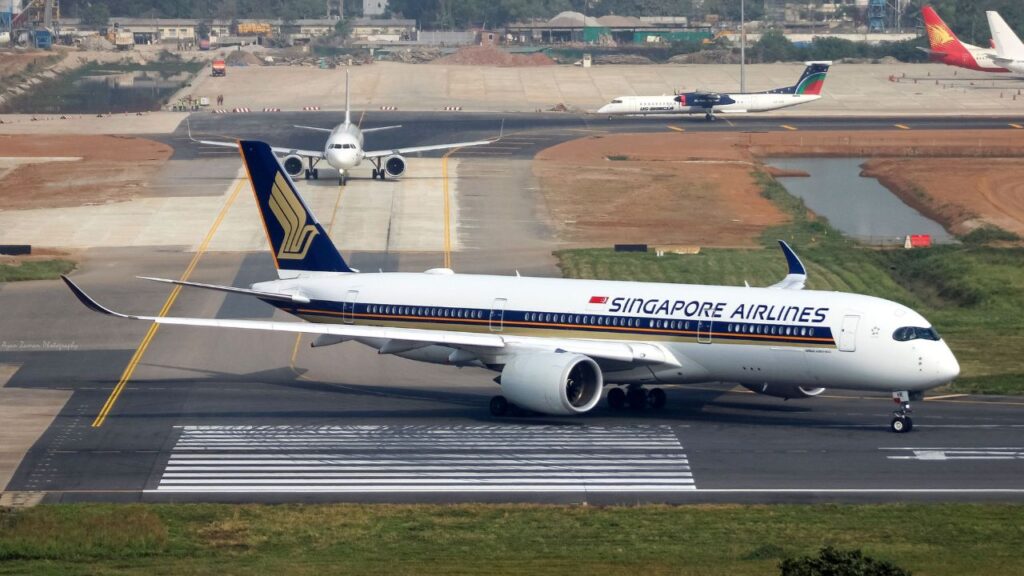
Singapore Airlines Air India loss of SG$945 million for FY2025-26 contributed to a 57.4% decline in SIA net profit to SG$1.18 billion, as an SIA executive described the period as an "annus horribilis" driven by the AI171 crash, Pakistan airspace closures, Middle East fuel costs, and the Vistara integration.
Singapore Airlines Air India loss for the year ended March 2026 reached SG$945 million — approximately US$738 million — the largest annual charge Singapore Airlines has ever taken on a strategic investment, as Air India’s transformation programme collided simultaneously with the AI171 crash of June 2025, Middle East conflict airspace disruptions, Pakistan airspace closures, fuel cost surges, and supply chain disruptions.
The Singapore Airlines Air India loss story did not end with the March 2026 financial year. In the following three months to June 2026, the loss increased by a further S$41 million compared with the previous quarter, contributing to SIA Group’s net loss of S$76 million for April-June — the group’s first quarterly loss since the fourth quarter of its 2021-22 fiscal year, more than four years ago.
A Singapore Airlines executive described the period as an “annus horribilis” for Air India and said the carrier was attempting a transformation on a scale rarely seen in the airline industry while facing several additional problems at the same time.
The Full Scale of the Loss: FY26 and Q1 FY27
The carrying value of Singapore Airlines’ stake fell from US$2.02 billion to US$1.13 billion as of March 31, 2026, after Air India reported a US$3.77 billion net loss and US$1.02 billion in net liabilities during the financial year.
Singapore Airlines Group absorbed a loss of SG$945.2 million on its Air India investment for the financial year ended March 31, 2026 — a figure that contributed directly to SIA’s net profit falling 57.4% year-on-year from SG$2.78 billion to SG$1.18 billion.
SIA reported a record revenue of SG$20.5 billion for its financial year ended March 31, as operating profit surged 39% to SG$2.38 billion on higher demand, higher yields and lower full-year net fuel cost. However, net profit plunged 57.4% year-on-year to SG$1.18 billion — mainly owing to Air India’s losses and an accounting gain in the previous year.
This is the central paradox of SIA’s FY26 result — its own airline business was exceptional, posting record revenue and 39% operating profit growth. The Air India investment erased the majority of that achievement at the net profit line.
Revenues for the Singapore Airlines and Scoot parent were up almost a fifth at S$5.7 billion during the April-June quarter. But costs over the same period jumped 28% to S$5.6 billion. Group operating profit in the quarter was squeezed to S$106 million from S$405 million a year before.
| Singapore Airlines Air India Loss — Key Financial Summary | FY2025-26 | Q1 FY2026-27 |
|---|---|---|
| SIA share of Air India loss | SG$945.2 million (~US$738M) | SG$41-42 million additional |
| Air India total net loss | US$3.77 billion (~₹31,400 crore) | — |
| Air India net liabilities | US$1.02 billion | — |
| SIA stake carrying value (start) | US$2.02 billion | — |
| SIA stake carrying value (end) | US$1.13 billion | — |
| SIA Group net profit | SG$1.18 billion | Net loss SG$76 million |
| SIA net profit change vs prior year | -57.4% | First quarterly loss in 4+ years |
| SIA Group revenue | SG$20.5 billion (record) | SG$5.7 billion (+~20%) |
| SIA operating profit growth | +39% | Squeezed to SG$106M from SG$405M |
Why “Annus Horribilis”: The Five Overlapping Crises
The Singapore Airlines Air India loss reflects not one problem but five simultaneous crises converging on a carrier already attempting aviation’s most complex transformation.
The AI171 Crash (June 2025). Air India Flight 171 crashed shortly after take-off from Ahmedabad on June 12, 2025, killing 260 people, including all but one of the 242 people aboard. The Boeing 787-8 was operating a service from Ahmedabad to London when the accident occurred. Following the crash, Air India reduced its schedule while conducting inspections of its Boeing 787 fleet and increasing pre-flight checks. The investigation into the accident has not yet reached a final conclusion.
The crash triggered intensified regulatory scrutiny, fleet deployment slowdown, and management pressure at a critical phase of the transformation. Air India announced cancellations of approximately 27% of its international flights — roughly 150 weekly services — between June and August 2026, aimed at improving network stability and reducing last-minute passenger disruption.
Middle East Conflict Airspace Disruptions. The US-Iran conflict beginning February 28, 2026 closed Gulf airspace to several carriers and significantly disrupted routing across the Middle East — a critical corridor for Air India’s Delhi-Europe long-haul network. Airspace rerouting added hours and fuel cost to trans-Gulf sectors.
Pakistan Airspace Closures. Several factors affected Air India’s financial performance, including Pakistan airspace closures affecting Indian carriers. Closure of Pakistani airspace forces Indian carriers to route westbound flights the long way — adding 2–3 hours to Delhi-Europe journeys, burning extra fuel, and requiring additional crew rest arrangements.
Fuel Costs. High aviation fuel prices from the Middle East conflict, the depreciation of the Indian rupee against the US dollar, and global supply-chain disruptions all hit Air India simultaneously. The Q2 2026 fuel price environment that devastated Thai Airways — 104.6% year-on-year increase — hit Air India equally.
The Transformation Itself. Air India is simultaneously integrating Vistara (merged December 2024), absorbing AIX Connect, rebranding its full fleet, deploying entirely new cabin products, retraining all customer-facing staff, and building a technology and operational infrastructure from near-scratch after decades of government ownership. “Air India is trying to undergo a major transformation — the likes of which have probably never been seen in the airline industry — while also dealing with all these other issues. The timing could not have been worse,” the SIA executive said.
Will Singapore Airlines Inject More Capital?
The most commercially significant question raised by the Singapore Airlines Air India loss is whether SIA will be required to invest additional capital into Air India.
The scale of the losses has intensified concerns among analysts about whether Air India will require further shareholder funding. Hashim Osman, an analyst at Phillip Securities, said the central concern for Singapore Airlines is whether it will be called upon to invest more in Air India. He said the carrier remains cash-flow negative and that the need for another capital injection is high.
Air India reported a FY26 loss above INR220 billion, equivalent to roughly SGD3.0 billion, materially wider than earlier expectations, signalling a sharper deterioration in operating performance. SIA contribution for this round likely higher than initial expectations, increasing risk to dividend capacity.
Singapore Airlines has not confirmed a capital injection but has not ruled one out either. SIA CEO Goh Choon Phong has been unequivocal: SIA is not walking away. This is a “long game” with no shortcuts, and India’s aviation market is too strategically important to abandon during the inevitable turbulence of a major airline transformation.
Jason Sum, an analyst at DBS, said he did not expect Air India to become profitable over the next few years. The DBS analyst’s profitability timeline — several years out at minimum — frames the scale of patience that the Tata Group and SIA are committing to. Aaseem Bhardwaj
Why SIA Stays In Despite the Losses
The Singapore Airlines Air India loss is significant — but the strategic rationale for staying in India’s aviation market is even more significant for SIA’s long-term commercial position.
India is adding 100 million new air travelers per decade. Its middle class is the fastest-growing consumer aviation market in the world. The Tata Group — Air India’s primary owner and one of India’s most capital-disciplined conglomerates — has committed to making Air India a world-class carrier and has the financial scale and patience to fund that transformation.
For Singapore Airlines, a meaningful minority stake in India’s flagship carrier — with code-share connectivity, loyalty programme integration, and access to India’s bilateral traffic rights — is a strategic asset worth the transformation pain. The alternative is watching India’s aviation market develop without SIA participation, which is commercially worse than the current losses.
There is no indication that the announcement will affect existing flight schedules, ticket validity or passenger services. Air India continues to operate its network.
What Indian Travelers on Air India Need to Know
The Singapore Airlines Air India loss announcement is a corporate finance story — not an operational safety or reliability story for Indian passengers. Air India continues to operate its full international and domestic network.
The 27% international flight reduction between June and August 2026 — approximately 150 weekly services — is a real operational impact that Indian travelers planning Air India international bookings should check carefully. Verify your specific flight’s operational status on airindia.com before departure.
The AI171 investigation is ongoing — DGCA, AAIB, and the US NTSB (given the Boeing aircraft type) are all involved. Air India has completed its Boeing 787 fleet inspection following the crash and has enhanced pre-flight check protocols. Passengers on Air India’s long-haul Boeing 777 and 787 network can book with the same factual basis as any other airline — the investigation is in progress, and Air India’s current safety protocols are under regulatory oversight.
For travel insurance covering Air India flights including disruptions from schedule changes, SafetyWing Nomad Insurance provides comprehensive coverage at affordable daily rates for Indian travelers.
FAQs — Singapore Airlines Air India Loss 2026
Q: How much has Singapore Airlines lost on its Air India investment?
For the year ended March 2026, Singapore Airlines recorded a SG$945 million, or about US$738 million, loss associated with its Air India investment. In the following three months, the loss increased by a further SG$41 million compared with the previous quarter. The carrying value of Singapore Airlines’ stake fell from US$2.02 billion to US$1.13 billion as of March 31, 2026, after Air India reported a US$3.77 billion net loss and US$1.02 billion in net liabilities during the financial year.
Q: Why has Air India lost so much money in FY26?
Several factors affected Air India’s financial performance, including high aviation fuel prices arising from unrest in the Middle East, the depreciation of the Indian rupee against the US dollar, global supply-chain disruptions, Pakistan airspace closures affecting Indian carriers, and operational challenges following the AI171 accident. The airline is also investing heavily in fleet renewal, service improvements, and the integration of Vistara — a transformation programme of unprecedented scale in aviation history.
Q: Will Singapore Airlines put more money into Air India?
Singapore Airlines has confirmed it remains open to injecting additional capital into Air India, subject to board assessment. The scale of the losses has intensified concerns among analysts about whether Air India will require further shareholder funding, with one analyst noting the carrier remains cash-flow negative and that the need for another capital injection is high. Singapore Airlines CEO Goh Choon Phong has stated this is a long-term investment in India’s aviation market — the strategic rationale remains intact despite the near-term losses.
Final Word
The Singapore Airlines Air India loss story — SG$945 million for FY26, a further SG$41 million in Q1 FY27, record SIA revenue swamped at the net profit line, the first SIA quarterly loss in four years, and the “annus horribilis” diagnosis from SIA’s own executive — is the most commercially significant India aviation story of 2026. The losses are real. The transformation challenges are real.
The AI171 crash, Pakistan airspace, Middle East fuel costs, and the Vistara integration all landed simultaneously. And Singapore Airlines is staying — because India’s aviation market at 100 million annual passengers and growing is strategically non-negotiable for any global airline with ambitions in Asia. The question is not whether SIA stays in. The question is how long and how much more the transformation costs before Air India turns the corner.
Also Read:
- Singapore Airlines Q1 2026 Loss — Record Revenue, Fuel Surge
- Air India Pilot Dope Test — AI2379 Captain Tests Positive
- Air India Easy Connect Amritsar — 27 Global Destinations
Official Sources:
- MoneyControl — Singapore Airlines Air India Bet Racks Up Nearly $800 Million Loss
- Singapore Airlines Investor Relations
 Thai Airways Flood Waiver 2026: Free Date Change Sept 26–Oct 11, Same Route and Class
AirAsia Thailand 2026: Analysts Warn AAV Faces Risk From Malaysian Parent’s Fuel Crisis
Suvarnabhumi Baggage Delay 2026: Thai Airways Backlog Sept 26–27, Contact Numbers
Bangkok Flooding 2026: All 50 Districts Disaster Zones, Airports Still Operating

Thai Airways Flood Waiver 2026: Free Date Change Sept 26–Oct 11, Same Route and Class
AirAsia Thailand 2026: Analysts Warn AAV Faces Risk From Malaysian Parent’s Fuel Crisis
Suvarnabhumi Baggage Delay 2026: Thai Airways Backlog Sept 26–27, Contact Numbers
Bangkok Flooding 2026: All 50 Districts Disaster Zones, Airports Still Operating

Aaseem Bhardwaj is a journalist, seasoned traveler and IT professional based in India. With firsthand travel experience across Southeast Asia, East Asia, Middle East and Europe, Aaseem founded Travel Man Today to provide reliable visa updates and travel news for Indian passport holders. He has personally traveled to Thailand, Vietnam, Malaysia, Japan, Singapore, Hong Kong, South Korea, UAE and Europe. Follow his travel vlogs on YouTube at @travelmantoday






Templates for Indians