USCIS Missing Documents Indians Must Not Submit — Instant Denial From August 5
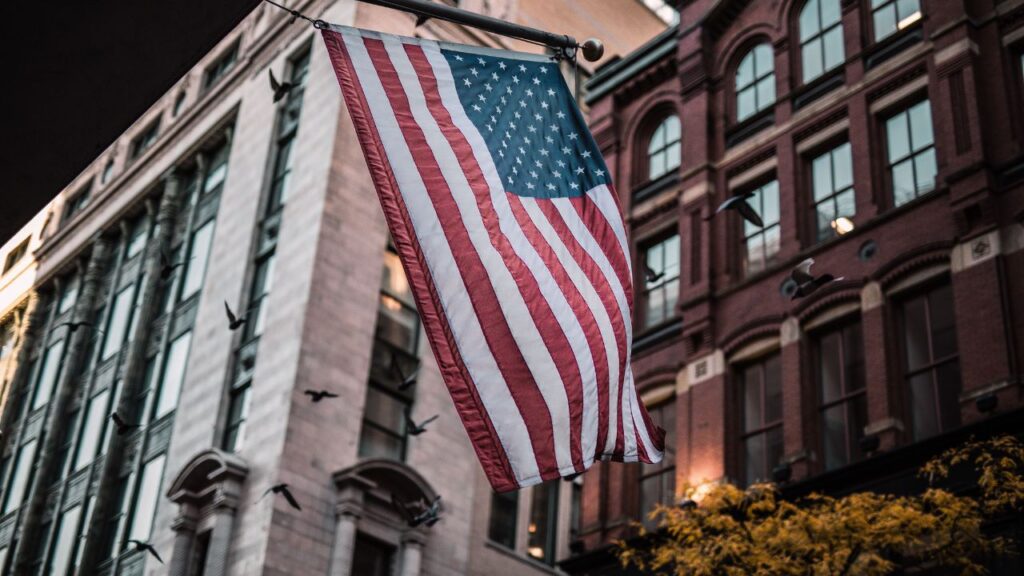
USCIS missing documents Indians risk from August 5, 2026 — USCIS restored officer discretion to deny incomplete applications instantly without issuing an RFE or NOID, affecting H-1B petitions, I-485, I-140 and all other USCIS benefit applications.
USCIS missing documents Indians and all international applicants submit could now trigger instant denial without a second chance — the United States Citizenship and Immigration Services implemented a critical policy change on August 5, 2026 that removes the near-automatic safety net that millions of applicants have relied on for years.
The updated policy restores immigration officers’ discretion to deny benefit requests at the time of filing if applicants fail to prove eligibility or submit all required initial evidence. Applicants can no longer expect USCIS to automatically ask for missing documents before making a decision. If your application is incomplete, it could simply be rejected — with no Request for Evidence (RFE) and no Notice of Intent to Deny (NOID) giving you the opportunity to correct the error.
For Indian nationals — who file more US immigration applications than almost any other nationality globally — this is the single most consequential USCIS procedural change of 2026.
What Changed on August 5: The RFE Safety Net Is Gone
To understand what the USCIS missing documents policy change means, it helps to understand what the previous system allowed.
Under the previous policy, if a USCIS officer reviewing an application found that a document was missing, the evidence was incomplete, or the eligibility demonstration was insufficient, they would typically issue a Request for Evidence (RFE) — a formal notice giving the applicant 87 days to supply the missing material. In some cases, where the officer was ready to deny the application, they would issue a Notice of Intent to Deny (NOID), again giving the applicant an opportunity to respond.
The RFE system created an informal second submission window. Some applicants — and some immigration attorneys — used it strategically, submitting applications knowing they were incomplete and relying on the RFE to flag exactly what additional evidence was needed.
The August 5, 2026 policy change closes that window. USCIS has restored immigration officers’ discretion to deny benefit requests at the time of filing if applicants fail to prove eligibility or submit all required initial evidence.
The word “restored” is important. This is not a new policy invented by the current administration. It returns USCIS to the original regulatory framework under Department of Homeland Security rules — where officers always had discretion to deny at initial review. The previous practice of near-automatic RFE issuance was a policy accommodation, not a legal requirement.
According to USCIS, the move brings agency practice back in line with long-standing Department of Homeland Security regulations. Officials say the previous policy encouraged incomplete or placeholder applications that consumed resources and slowed decisions for applicants who had submitted complete files.
Which Applications Are Affected
The USCIS missing documents policy change applies to both new applications and many cases already pending with USCIS as of August 5, 2026.
The most significant categories for Indian applicants include:
H-1B petitions. India accounts for the overwhelming majority of H-1B visa applications — well over 70% of annual H-1B beneficiaries are Indian nationals. An H-1B petition missing a required document — the employer’s LCA (Labor Condition Application), the beneficiary’s degree certificate, the specialty occupation justification, or the employer’s support letter — could now be denied without the employer receiving an RFE to supply it.
L-1 intracompany transfer petitions. Indian IT multinationals and their US operations file substantial volumes of L-1A and L-1B petitions. Missing organisational charts, qualifying relationship evidence, or specialised knowledge documentation could trigger instant denial.
I-485 Adjustment of Status applications. Indian nationals on long-priority-date employment green card queues file I-485 applications when their priority date becomes current. Missing medical examination reports (I-693), civil documents, or affidavit of support forms (I-864) could lead to immediate rejection.
I-140 Immigrant Petition for Alien Workers. Missing evidence of job offer, employer ability to pay, or beneficiary qualifications in EB-2 or EB-3 petitions.
I-130 Family-based petitions. Missing relationship evidence — marriage certificates, birth certificates, or proof of US citizen or LPR petitioner status.
I-765 Employment Authorization. Missing evidence of underlying status, prior authorisation documents, or supporting forms.
| USCIS Missing Documents Indians — High-Impact Application Types | Risk Level |
|---|---|
| H-1B specialty occupation petition | Very High — LCA, degree, job description must be complete |
| L-1A/L-1B intracompany transfer | Very High — qualifying relationship, specialised knowledge |
| I-485 Adjustment of Status | High — medical exam, civil docs, I-864 all required |
| I-140 Immigrant Petition | High — employer ability to pay, beneficiary credentials |
| I-130 Family petition | High — relationship evidence, identification |
| I-765 Employment Authorization | Medium — underlying status evidence |
| OPT/STEM OPT extension | Medium — timing-critical with strict documentation |
Why This Matters More for Indian Applicants
The USCIS missing documents policy shift falls particularly heavily on Indian applicants for structural reasons.
India consistently accounts for the largest single-country volume of USCIS applications across all major employment-based categories. In fiscal year 2025, Indian nationals filed or were the primary beneficiaries of an estimated 200,000+ H-1B petitions, over 100,000 green card priority registrations, and tens of thousands of I-485, I-140, and other benefit applications.
The sheer volume means that even a small percentage of applications with missing documents represents tens of thousands of affected cases. Under the previous system, those cases were salvageable through the RFE process. Under the August 5 policy, many will simply be denied — requiring full re-filing with new fees.
Filing fees for US immigration applications are significant. An H-1B petition with premium processing costs USD 4,620 (~₹3.85 lakh). Re-filing after an avoidable denial doubles that cost while also delaying the applicant’s ability to work, travel, or extend status.
The Practical Pre-Filing Checklist Every Indian Applicant Must Follow
The USCIS missing documents risk is entirely preventable with disciplined pre-filing preparation.
Step 1 — Download the official form instructions. Every USCIS form has a published set of instructions on uscis.gov that lists required supporting documents. Download the current version — instructions are updated when forms are revised.
Step 2 — Build a document checklist from the instructions. Create a physical or digital checklist with every required document listed as a separate line item. Check off each document as you gather it.
Step 3 — Verify signatures. Unsigned forms are one of the most common grounds for rejection. Every signature block — petitioner, beneficiary, attorney — must be completed. Check that dates accompany all signatures.
Step 4 — Verify filing fees. Incorrect fees are an immediate rejection trigger. Use the USCIS fee calculator at uscis.gov/fees for the exact amount required for your specific form, category, and whether premium processing applies.
Step 5 — Do not rely on RFE. Treat your first submission as your only submission. Every document that could be requested in an RFE should already be included.
Step 6 — Use a qualified immigration attorney. For complex employment-based petitions and green card applications, use an experienced immigration attorney registered with the USCIS-recognised bar. The cost of an attorney is a fraction of the cost of a denial and re-filing.
What Happens If You Are Denied
If your application is denied under the new USCIS missing documents policy, you generally cannot appeal an administrative denial at filing level — you must re-file with a complete package and pay new fees.
For H-1B applications subject to the annual cap, a denial does not preserve your place in the H-1B lottery — you would need to re-register in the following year’s lottery.
For I-485 Adjustment of Status applications, a denial while your priority date remains current allows re-filing immediately. For applications where priority date windows are narrow, a denial and re-filing cycle could result in your date retrogressing during the gap.
For any application currently pending with USCIS as of August 5, 2026 that has not yet been adjudicated, USCIS has confirmed that officers can apply the new discretion to those pending files as well. If you have a pending application you know is incomplete, contact your immigration attorney immediately.
For confirmed flight reservations needed for your US visa interview documentation, a legitimate booking is available at flyinghelpline.com/flight-reservation/ for just ₹999. For travel insurance covering trips to the United States, SafetyWing Nomad Insurance provides comprehensive coverage at affordable daily rates for Indian travelers.
FAQs — USCIS Missing Documents Indians 2026
Q: What is the USCIS policy change that took effect on August 5, 2026?
USCIS has restored immigration officers’ discretion to deny benefit requests at the time of filing if applicants fail to prove eligibility or submit all required initial evidence. The updated policy took effect on August 5, 2026, and applies to both new applications and many cases already pending with USCIS. Applicants can no longer expect USCIS to automatically issue a Request for Evidence (RFE) or Notice of Intent to Deny (NOID) before making a decision on an incomplete application.
Q: Which Indian applicants are most affected by the USCIS missing documents change?
Indian nationals filing H-1B petitions, L-1 intracompany transfer petitions, I-485 Adjustment of Status applications, I-140 Immigrant Petitions, I-130 family-based petitions, and I-765 Employment Authorization applications are all affected. India accounts for the overwhelming majority of H-1B beneficiaries annually, making Indian applicants the single largest group exposed to this policy change. An H-1B petition denied for missing documents requires complete re-filing with new fees — including premium processing at USD 4,620 (~₹3.85 lakh).
Q: What can Indian applicants do to avoid denial under the new USCIS policy?
Treat your first submission as your only submission. Download the official form instructions from uscis.gov and build a document checklist from every listed required item. Verify all signatures and dates. Use the USCIS fee calculator to confirm exact filing fees. Do not include placeholder documents or rely on an RFE to correct omissions. For complex employment-based petitions and green card applications, use a qualified immigration attorney. The cost of professional representation is a fraction of the cost of denial, re-filing fees, and delayed status.
Final Word
The USCIS missing documents Indians and all applicants previously relied on RFE to correct is now a direct denial risk. August 5, 2026 is the date the safety net was removed. The policy logic is reasonable — complete applications should not be penalised by the queue-clogging effect of placeholder submissions.
But the practical consequence for Indian H-1B, L-1, and green card applicants is significant: your first submission must be your best and most complete submission. Download the form instructions, build a checklist, verify fees and signatures, and if the application is complex, work with a qualified immigration attorney before you file. The RFE is no longer something you can count on.
Also Read:
- South Korea Workcation Visa — 3 Years, Lower Income Rules
- South Africa ETA Indians — ZAR 500 Fee From August 17 2026
- SafetyWing Nomad Insurance — Full Review for Indians
Official Sources:
 Cambodia Tourism Indians 2026: Angkor Wat Crowds Rising as China Visa-Free Trial Ends October 15

AirAsia Fuel Crisis 2026: Costs Up 66%, Stock -70%, Fernandes Says No Bailout Needed
Uzbekistan Visa Free Indians 2026: 30 Days With US, UK or Schengen Visa — Full Eligibility Guide

Thai Airways Ranking 2026: Top 10 in Travel + Leisure, Up From No.33 in Skytrax

Cambodia Tourism Indians 2026: Angkor Wat Crowds Rising as China Visa-Free Trial Ends October 15
AirAsia Fuel Crisis 2026: Costs Up 66%, Stock -70%, Fernandes Says No Bailout Needed
Uzbekistan Visa Free Indians 2026: 30 Days With US, UK or Schengen Visa — Full Eligibility Guide
Thai Airways Ranking 2026: Top 10 in Travel + Leisure, Up From No.33 in Skytrax

Aaseem Bhardwaj is a journalist, seasoned traveler and IT professional based in India. With firsthand travel experience across Southeast Asia, East Asia, Middle East and Europe, Aaseem founded Travel Man Today to provide reliable visa updates and travel news for Indian passport holders. He has personally traveled to Thailand, Vietnam, Malaysia, Japan, Singapore, Hong Kong, South Korea, UAE and Europe. Follow his travel vlogs on YouTube at @travelmantoday






Templates for Indians