Madrid Tourism Record 2026: €10 Billion in H1 International Spending, Up 11.4%
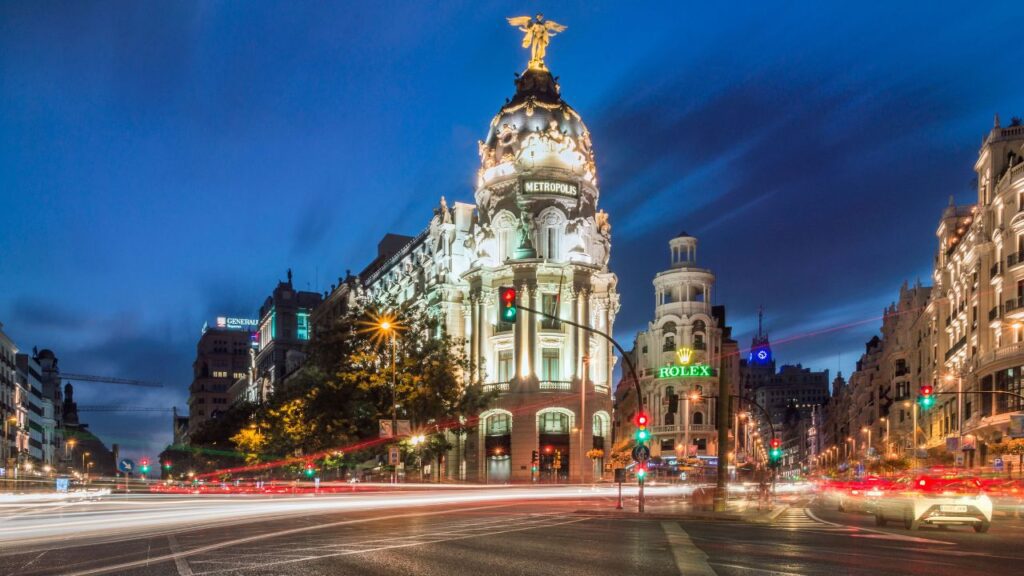
Madrid tourism record 2026 confirmed by Spain's INE — €10.007 billion in H1 international spending, up 11.4%, with 5.66 million visitors and the United States as the top source market and Brazil as the fastest-growing at 30%.
Madrid tourism record 2026 has been set — the Spanish capital closed the first half of 2026 with international tourism generating €10.007 billion in spending, up 11.4% compared to the same period a year earlier, according to Spain’s National Statistics Institute (INE).
The Madrid tourism record 2026 is particularly striking in the context of a European travel environment disrupted by the Middle East conflict — with Southern European cities like Rome and Barcelona facing headwinds from disrupted Gulf carrier connectivity, Madrid’s appeal to American, Brazilian, Italian, and British visitors has delivered a historic first-half result that puts the Spanish capital in Europe’s top tier of global destination cities.
The Numbers: 5.66 Million Visitors, €10 Billion Spent, 59% Foreign
Between January and June 2026, the capital welcomed 5.66 million tourists, 4.1% more than a year earlier, with foreign markets as the main driver: they now account for 59% of arrivals and generated two out of every three hotel nights. In total, overnight stays were just shy of 12 million, with an average stay of 2.38 nights among international visitors.
The spending-to-arrivals ratio embedded in these numbers is commercially striking. If 5.66 million visitors generated €10.007 billion in spending, that is an average of approximately €1,768 per visitor for a 2.38-night average stay — roughly €743 per person per night. This is significantly above the European city tourism average and confirms Madrid’s positioning as a premium rather than budget urban destination.
The head of tourism, Almudena Maíllo, pointed out that the sector’s growth has an impact that goes beyond the economic data, breathing new life into neighbourhoods, creating jobs and strengthening the city’s services.
The 15,249 tourism sector workers recorded at end of H1 — a 5.4% increase year-on-year — reflect the employment multiplier effect of sustained high tourism spending rather than simply visitor volume growth.
| Madrid Tourism Record 2026 — H1 Key Metrics | H1 2026 | Change |
|---|---|---|
| International tourism spending | €10.007 billion (~₹90,000 crore) | +11.4% YoY |
| Total tourists | 5.66 million | +4.1% YoY |
| Foreign visitors’ share of arrivals | 59% | Up from prior year |
| Foreign visitors’ share of hotel nights | Two out of every three | — |
| Total overnight stays | Nearly 12 million | — |
| Average stay — international visitors | 2.38 nights | — |
| Hotel establishments | 920 | — |
| Hotel rooms | Nearly 48,600 | — |
| Tourism sector workers | 15,249 | +5.4% YoY |
Who Is Visiting: USA First, Brazil the Fastest Growing
Madrid continues to widen its international appeal, with the United States as its leading source market. In the first half of 2026, American travellers exceeded 567,000, with more than 1.3 million overnight stays, while Italy and the United Kingdom rounded out the top three foreign visitor markets.
The top three — USA, Italy, and UK — reflect Madrid’s deep connectivity to English-speaking and Western European markets. But the fastest-growing market tells a more interesting commercial story.
The biggest leap came from Brazil, which became the fastest-growing market, with a 30% increase in visitors and a 24% rise in overnight stays. Portugal also gained ground, strengthening Madrid’s links with European and Latin American markets.
Brazil’s 30% visitor surge reflects a combination of direct flight growth between São Paulo, Rio de Janeiro, and Madrid, and the cultural and linguistic proximity between Brazil and Spain that makes Madrid one of the most natural international destinations for Brazilian travelers. Madrid has increasingly become what Euronews described as the new destination for wealthy Latin Americans — and Brazil’s 30% growth in H1 2026 is the data confirming that positioning.
Why Madrid is Breaking Records While Other Cities Struggle
The Madrid tourism record 2026 stands out because it has been achieved in a year when many European cities and regions are underperforming.
The Middle East conflict that began on February 28 disrupted Gulf aviation — and cities like Barcelona, Rome, Lisbon, and Athens that rely heavily on Gulf carrier connectivity saw their Southern European tourist flows compressed. Madrid, by contrast, has strong direct transatlantic connectivity from the US and Latin America that does not route through Gulf hubs — making its tourism flows largely insulated from the Gulf aviation crisis.
Spain’s broader summer travel demand story also reinforces Madrid’s H1 result. Greece, Spain, and Italy drove the surge in summer 2026 travel demand according to multiple travel industry reports — with Spain outperforming the group due to the combination of FIFA World Cup legacy interest, Madrid’s cultural upgrade through major museum investments, and the city’s growing luxury hospitality offer.
Madrid was also named Europe’s Best Destination for 2026 earlier in the year — a designation from European Consumers Choice that drives significant organic search and booking interest from European and intercontinental markets.
What Madrid Offers: The Case for Visiting
The Madrid tourism record 2026 is built on a destination offer that has been deepening significantly over the past five years. Madrid is not simply a great-value European city — it has become one of the world’s most culturally complete urban destinations.
The Golden Triangle of Museums. The Prado, the Reina Sofía, and the Thyssen-Bornemisza Museum are within 15 minutes walk of each other. The Prado holds Velázquez, Goya, and Rubens in depth that no other museum in the world can match. The Reina Sofía has Picasso’s Guernica. The Thyssen has the broadest private collection in Europe across every Western art movement from the Middle Ages to Pop Art.
Gastronomy. Madrid’s food scene has transformed over the past decade. The Mercado de San Miguel and the Mercado de San Antón bring artisan food vendors under covered markets. The Gran Vía corridor has seen Michelin-starred restaurants and high-end Spanish tapas bars open at pace. Chueca’s neighbourhood restaurants offer the most authentic Madrid cooking — cocido madrileño, callos, and bocadillos de calamares — at prices that remain competitive by any European city standard.
Nightlife and culture. Madrid operates on a schedule that baffles most Northern European and North American visitors. Dinner at 9:30pm, pre-drinks at midnight, dancing from 2am to 6am — and brunch on Sunday afternoon before it begins again. The Malasaña and Lavapiés neighbourhoods are the most authentic Madrid neighbourhoods for arts, music, and counterculture, while the Salamanca district is the city’s upscale fashion and gastronomy quarter.
What Indian Travelers Need to Know About Visiting Madrid
Madrid is becoming a priority destination for Indian outbound travelers — particularly from Delhi, Mumbai, and Bengaluru — as Air India has reinstated direct Delhi–Madrid service and Emirates, Qatar Airways, and Iberia all offer comfortable one-stop connections from Indian cities.
Indian passport holders require a Schengen visa to enter Spain. Apply through VFS Global at least 4–6 weeks before your planned travel date. A Spain Schengen visa covers all 26 Schengen Area member states. For confirmed flight reservations needed for your Schengen visa application, a legitimate booking is available at flyinghelpline.com/flight-reservation/ for just ₹999.
Indian travelers will find Madrid’s food scene highly accessible — the city has a growing Indian restaurant community, particularly in the Lavapiés neighbourhood, and Spanish cuisine’s emphasis on rice, legumes, and grilled meats offers plenty of vegetarian and pescatarian options even in traditional restaurants.
The Spanish summer is hot — Madrid in August typically sees temperatures of 32–38°C during the day. Plan outdoor sightseeing for early morning before 10am and late afternoon after 5pm. The major museums are air-conditioned and excellent for midday. Madrid’s metro system is modern, affordable, and fully air-conditioned — use a 10-trip carnet card purchased at any station for significant fare savings over single tickets.
For travel insurance covering Spain and Schengen Area trips, SafetyWing Nomad Insurance provides comprehensive coverage at affordable daily rates for Indian travelers.
FAQs — Madrid Tourism Record 2026
Q: How much did international tourists spend in Madrid in H1 2026?
Madrid saw a historic boost in international tourism in the first half of 2026, with spending reaching €10 billion, up 11.4% year on year, according to Spain’s National Statistics Institute (INE). The city welcomed 5.66 million tourists in total, with foreign visitors accounting for 59% of arrivals and two out of every three hotel nights. Total overnight stays reached nearly 12 million, with an average stay of 2.38 nights for international visitors.
Q: Which country sends the most tourists to Madrid in 2026?
The United States is Madrid’s leading source market. In the first half of 2026, American travellers exceeded 567,000, with more than 1.3 million overnight stays, while Italy and the United Kingdom rounded out the top three foreign visitor markets. The biggest leap came from Brazil, which became the fastest-growing market, with a 30% increase in visitors and a 24% rise in overnight stays.
Q: Do Indian travelers need a visa for Madrid?
Yes — Indian passport holders require a Schengen visa to visit Spain. Apply through VFS Global at least 4–6 weeks before travel. A Spain Schengen visa covers all 26 Schengen Area countries. Required documents include a confirmed hotel booking, return flight reservation, travel insurance covering at least €30,000, bank statements for the past 3–6 months, and the visa application form. Connections to Madrid from India are available on Air India (direct), Emirates, Qatar Airways, Etihad, and Iberia via their respective hubs.
Final Word
The Madrid tourism record 2026 — €10.007 billion in H1 international spending, 5.66 million visitors, 11.4% growth — is one of Europe’s most impressive single-city tourism data points of the year. It is built on a destination that has invested in its museum infrastructure, gastronomy scene, hotel capacity, and transatlantic connectivity over a decade — and is now harvesting the results of that investment at scale.
For Indian travelers with Spain on their travel list, Madrid in 2026 is the ideal time to visit — the city is operating at its most complete and most connected, and the data from six million international visitors confirms what the city itself already knows: Madrid belongs in the conversation with Paris, Rome, and London as Europe’s must-visit capitals.
Also Read:
- Schengen Visa Cover Letter Indians — Complete Guide
- Croatia Alcohol Ban Tourists — Makarska First City to Act 2026
- SafetyWing Nomad Insurance — Full Review for Indians
Official Sources:
 Uzbekistan Visa Free Indians 2026: 30 Days With US, UK or Schengen Visa — Full Eligibility Guide

Thai Airways Ranking 2026: Top 10 in Travel + Leisure, Up From No.33 in Skytrax
India Child Passport Rules 2026: Valid 5 Years or Until Age 18, Whichever Comes First
IndiGo Add-On Charges 2026: Infant Fee ₹3,000, Baggage ₹800/kg From September 17
Uzbekistan Visa Free Indians 2026: 30 Days With US, UK or Schengen Visa — Full Eligibility Guide
Thai Airways Ranking 2026: Top 10 in Travel + Leisure, Up From No.33 in Skytrax
India Child Passport Rules 2026: Valid 5 Years or Until Age 18, Whichever Comes First
IndiGo Add-On Charges 2026: Infant Fee ₹3,000, Baggage ₹800/kg From September 17

Aaseem Bhardwaj is a journalist, seasoned traveler and IT professional based in India. With firsthand travel experience across Southeast Asia, East Asia, Middle East and Europe, Aaseem founded Travel Man Today to provide reliable visa updates and travel news for Indian passport holders. He has personally traveled to Thailand, Vietnam, Malaysia, Japan, Singapore, Hong Kong, South Korea, UAE and Europe. Follow his travel vlogs on YouTube at @travelmantoday






Templates for Indians


1 thought on “Madrid Tourism Record 2026: €10 Billion in H1 International Spending, Up 11.4%”