Air India New CEO 2026: Tewolde Gebremariam, Ethiopian Airlines Builder, Takes the Helm
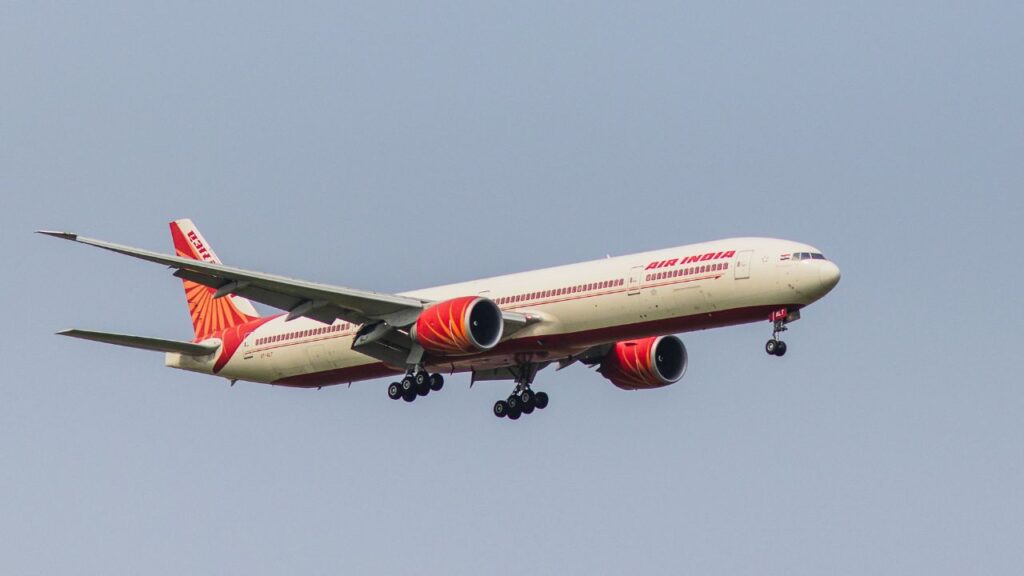
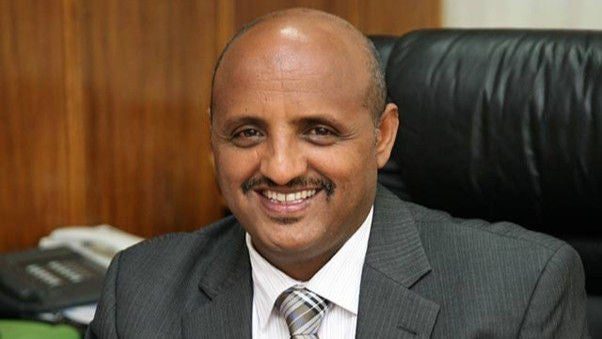
Air India new CEO 2026 — Tewolde Gebremariam, 61, former Ethiopian Airlines Group chief executive who grew the carrier's revenue fourfold and nearly tripled its fleet, appointed as Air India CEO and MD succeeding Campbell Wilson.
Air India new CEO 2026 is Tewolde Gebremariam — the former Ethiopian Airlines Group chief executive who transformed a regional African carrier into the continent’s largest and most profitable airline group, growing revenue more than fourfold and nearly tripling the fleet during his decade-plus tenure.
Air India has appointed former Ethiopian Airlines Group chief executive Tewolde Gebremariam as its new chief executive officer and managing director, succeeding Campbell Wilson, as the Tata Group-owned carrier enters the next phase of its turnaround and global expansion strategy. The appointment follows a global search overseen by a dedicated committee of Air India’s Board, which evaluated both internal and external candidates before unanimously selecting Gebremariam to lead the airline.
The Air India new CEO 2026 announcement ends a four-month search that began when Wilson’s April 2026 resignation was announced — a resignation that Wilson had actually communicated to Chairman N. Chandrasekaran in 2024, giving Air India an unusually long runway to identify and recruit a successor of this calibre.
Who Is Tewolde Gebremariam: The Ethiopian Airlines Transformation Record
The Air India new CEO 2026 selection cannot be understood without the Ethiopian Airlines story — because it is precisely that story that made Gebremariam the right candidate for Air India’s next phase.
Tewolde Gebremariam is 61 years old, spent more than 36 years at Ethiopian Airlines Group, and became CEO of the group in 2010. When he took the role, Ethiopian Airlines was a respected but regionally contained African carrier. When he left in 2022, it was the largest, most profitable, and most globally decorated airline group on the African continent.
During his decade-plus tenure as CEO of Ethiopian Airlines Group, he spearheaded a multi-billion-dollar expansion, transforming a regional carrier into Africa’s largest, most profitable, and decorated airline group — growing revenue by more than fourfold and fleet size nearly threefold.
The Ethiopian Airlines transformation under Gebremariam involved building an Addis Ababa hub that now handles connections between Africa, Asia, Europe, and the Americas — a connecting hub strategy that is directly analogous to what Air India aspires to at Delhi and Mumbai. Ethiopian’s profitable hub model, built in a challenging operational environment, is why Air India’s board chose Gebremariam over internal candidates and other external names.
After leaving Ethiopian Airlines in 2022, Gebremariam founded TGM Advisory Services LLC and has been serving as a senior strategic adviser to Delta Air Lines — maintaining direct aviation industry engagement between his two CEO roles.
What Gebremariam Himself Said
Tewolde Gebremariam, incoming CEO and Managing Director, said: “It is a profound honour to be entrusted with leading Air India at such a historic moment in its journey. Air India carries an incredible legacy, and the opportunity to build a world-class global airline that reflects India’s extraordinary economic potential is uniquely exciting. I look forward to working closely with Chairman Chandrasekaran, the Board, our employees, and all government and industry partners to deliver exceptional operational reliability, warm Indian hospitality, and sustained profitable growth for Air India.”
The three pillars he named — operational reliability, warm Indian hospitality, and sustained profitable growth — map precisely onto the three dimensions where Air India’s transformation has been most incomplete as Campbell Wilson’s tenure ends.
Operational reliability has been strained by the AI171 crash of June 2025, the subsequent 787 fleet inspection and scheduling impact, and the 27% international flight cut between June and August 2026. Warm Indian hospitality — the service quality transformation that the Vistara merger was supposed to accelerate — remains a work in progress on the older Air India fleet. And profitable growth has been elusive, with the SG$945 million Singapore Airlines equity write-down in FY26 capturing the financial reality of Air India’s current position.
What Chandrasekaran Said: The Board’s Strategic Intent
Chairman Chandrasekaran said: “Tewolde’s track record in building one of the world’s most efficient and profitable airline groups makes him uniquely suited to lead Air India. His operational expertise, commitment to safety, and vision for hub development will be instrumental as we establish Air India as a premier global carrier and a source of national pride.”
Three words from Chandrasekaran deserve particular attention: “hub development.” The explicit mention of hub strategy in the appointment rationale signals that Air India’s next phase is about building Delhi and Mumbai into genuine international transit hubs — not just origin-destination carriers.
Ethiopian Airlines’ Addis Ababa hub is profitable because it captures connecting traffic between continents that would otherwise have no efficient routing option. India’s geographic position — between Europe and Southeast Asia, between the Gulf and East Asia, between Africa and North Asia — is even better positioned than Addis Ababa for hub traffic. The question is whether Air India can build the network density, the operational reliability, and the product quality to compete for that connecting traffic against Emirates, Qatar Airways, and Singapore Airlines.
Gebremariam has already solved that exact problem at scale, in a harder market. That is why he is sitting in this chair.
Campbell Wilson: What He Built in Four Years
The Air India new CEO 2026 transition also closes the Campbell Wilson chapter — one of the most consequential four-year tenures in Indian aviation history.
Wilson took charge in July 2022, months after Tata Sons regained control of Air India from the Indian government. During Wilson’s tenure, he oversaw the merger and integration of Air India and Vistara, the integration of Air India Express, and the launch of fleet modernisation — the 600-aircraft order that will define Air India’s next decade.
Wilson resigned in April with more than a year remaining in his tenure, after leading Air India for nearly four years. He had informed Chandrasekaran in 2024 of his intention to step down in 2026, giving the board time to manage the transition professionally.
The appointment places Gebremariam in charge of a transformation that has already combined four Tata-owned airlines into two, added aircraft, renewed technology and service systems, and begun replacing or refurbishing older cabins. The remaining task is to turn those investments into a more consistent operation and a financially sustainable global network.
Wilson built the platform. Gebremariam’s job is to make it fly profitably.
The Search Process: What the Board Was Looking For
The objective of the Board was clearly stated: to identify a leader with a proven record of managing mega-scale airline turnarounds, delivering operational excellence, fostering a strong culture of safety and service, and driving profitable expansion.
The board evaluated both internal and external candidates from across the globe. Reuters had reported last month that Air India’s chief commercial officer Nipun Aggarwal and Singapore Airlines executive Vinod Kannan were among the frontrunners to succeed Wilson.
The board’s unanimous selection of Gebremariam over the internal candidates and Vinod Kannan signals a deliberate choice of transformation experience over institutional familiarity. Kannan has deep Singapore Airlines credentials — the world’s best-managed long-haul carrier — but has never run an airline at the scale Air India will become with its 600-aircraft fleet. Gebremariam has already run that transformation, at Ethiopian, in a harder operating environment.
What This Means for Indian Air Travelers
The Air India new CEO 2026 appointment is the most significant leadership change in Indian aviation since N. Chandrasekaran took over the Tata Group itself. For Indian passengers flying Air India, the Gebremariam appointment signals a sustained commitment to the transformation rather than a change in direction.
The immediate operational priorities Gebremariam inherits are specific and urgent. The AI171 investigation is ongoing — DGCA, AAIB, and NTSB involvement is active and the outcome will have regulatory implications for Air India’s 787 operations. The 27% international flight reduction between June and August 2026 needs to be restored as fleet confidence is rebuilt. The Vistara service standard needs to propagate across the full Air India fleet rather than remaining concentrated on the legacy Vistara aircraft.
The medium-term priority — hub development at Delhi and Mumbai — is where Gebremariam’s specific Ethiopian Airlines experience is most directly applicable. The Delhi hub connecting India to Southeast Asia, East Africa, and Europe is the prize that the 600-aircraft order, the new cabin products, and the Vistara merger are all building toward.
For Indian business travelers booking Air India — which now includes former Vistara routes — the Gebremariam appointment is a reason for cautious optimism. A CEO who built Ethiopian from a regional carrier to Africa’s global champion knows what a profitable hub-and-spoke airline looks like. Air India’s transformation is now in his hands.
For travel insurance covering Air India flights, SafetyWing Nomad Insurance provides comprehensive coverage at affordable daily rates for Indian travelers.
FAQs — Air India New CEO 2026
Q: Who is Air India’s new CEO appointed in August 2026?
Air India has appointed former Ethiopian Airlines Group chief executive Tewolde Gebremariam as its new chief executive officer and managing director, succeeding Campbell Wilson. Gebremariam is 61 years old and spent more than 36 years at Ethiopian Airlines Group, serving as CEO from 2010 to 2022. During his decade-plus tenure as CEO of Ethiopian Airlines Group, he spearheaded a multi-billion-dollar expansion, transforming a regional carrier into Africa’s largest, most profitable, and decorated airline group — growing revenue by more than fourfold and fleet size nearly threefold. After leaving Ethiopian Airlines, he founded TGM Advisory Services and served as a senior strategic adviser to Delta Air Lines.
Q: Why did Air India choose Tewolde Gebremariam over other candidates?
The objective of the Board was to identify a leader with a proven record of managing mega-scale airline turnarounds, delivering operational excellence, fostering a strong culture of safety and service, and driving profitable expansion. The board evaluated both internal and external candidates before unanimously selecting Gebremariam. His specific Ethiopian Airlines transformation — building Addis Ababa into a profitable connecting hub between Africa, Asia, Europe, and the Americas — is directly analogous to what Air India aspires to achieve at Delhi and Mumbai. Chairman Chandrasekaran specifically cited his vision for hub development as a key appointment rationale.
Q: What does Tewolde Gebremariam inherit as Air India CEO?
Gebremariam inherits a transformation that has already combined four Tata-owned airlines into two — Air India and Air India Express — added aircraft through the 600-aircraft order, renewed technology and service systems, and begun replacing or refurbishing older cabins. The remaining task is to turn those investments into a more consistent operation and a financially sustainable global network. Immediate priorities include restoring the 27% international flight reduction, navigating the ongoing AI171 investigation, and propagating Vistara’s service standards across the full Air India fleet.
Final Word
The Air India new CEO 2026 appointment — Tewolde Gebremariam, 61, Ethiopian Airlines architect, hub builder, profitable growth deliverer — is the most strategically coherent leadership hire Air India has made since the Tata Group regained ownership. The Ethiopian Airlines parallel is not decorative:
Addis Ababa to Delhi is the same story told twice, from a weaker starting point to a stronger one, in a better geography with more capital behind it. Gebremariam built one of aviation’s great hub airlines from challenging conditions.
Now he does it again, for the country with the world’s fastest-growing aviation market. If he succeeds, Air India becomes what its 600 aircraft and its geographic position suggest it should be. If he fails, the Tata Group has the balance sheet to try again. Either way, Air India’s next chapter has its author.
Also Read:
- Singapore Airlines Air India Loss — SG$945M Annus Horribilis
- Air India Pilot Salary 2026 — 9–17% Hike From October
- Air India Phuket Delhi Turbulence — AI2379 Drops 12 Injured
Official Sources:
- Air India Official Newsroom — Tewolde Gebremariam Appointment
- Straits Times — Air India Appoints Ex-Ethiopian Airlines Chief as New CEO
 Thailand Baggage Screening 2026: Checked Bags Can Be Opened Without You From October 16
Thailand THIM App 2026: One Platform for TDAC, Visa Extension, 90-Day Report and Discounts

US Visa Wait Times Indians 2026: B1/B2 Up to 12 Months — All 5 Consulates Compared
Austria Working Holiday Visa Indians: 18-30, 12 Months, No Job Offer, €195 — Complete Guide

Thailand Baggage Screening 2026: Checked Bags Can Be Opened Without You From October 16
Thailand THIM App 2026: One Platform for TDAC, Visa Extension, 90-Day Report and Discounts
US Visa Wait Times Indians 2026: B1/B2 Up to 12 Months — All 5 Consulates Compared
Austria Working Holiday Visa Indians: 18-30, 12 Months, No Job Offer, €195 — Complete Guide

Aaseem Bhardwaj is a journalist, seasoned traveler and IT professional based in India. With firsthand travel experience across Southeast Asia, East Asia, Middle East and Europe, Aaseem founded Travel Man Today to provide reliable visa updates and travel news for Indian passport holders. He has personally traveled to Thailand, Vietnam, Malaysia, Japan, Singapore, Hong Kong, South Korea, UAE and Europe. Follow his travel vlogs on YouTube at @travelmantoday





Templates for Indians

1 thought on “Air India New CEO 2026: Tewolde Gebremariam, Ethiopian Airlines Builder, Takes the Helm”