Pattaya Airport Rail Link: Operators Back Any Speed as U-Tapao Needs It
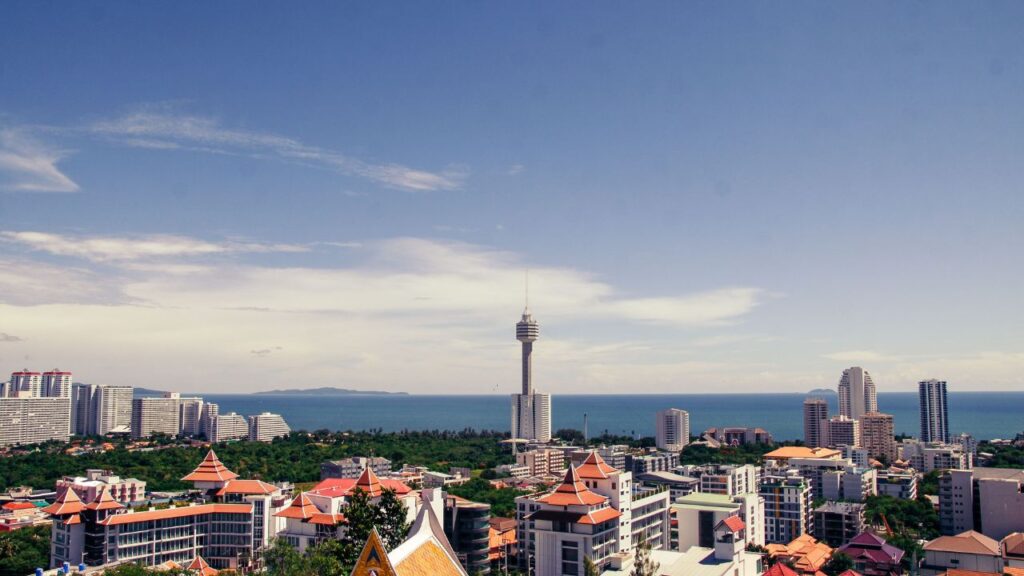
Pattaya airport rail link backed by Chonburi Tourism Federation president Thanet Supornsahasrungsi — rail at any speed is essential for U-Tapao Airport to fulfil its Eastern Economic Corridor aviation ambitions.
Pattaya airport rail link support is now unambiguous — tourism operators in Pattaya say that the rail link connecting the three airports, regardless of its speed, remains essential for boosting traffic at U-Tapao Airport, as tourism in the eastern region alone cannot attract the large number of visitors needed to fulfil the airport’s planned capacity.
The statement from Thanet Supornsahasrungsi, president of the Association of the Chonburi Tourism Federation, is a direct and politically significant message to the government as it considers what to do with the long-delayed three-airport high-speed rail project that has stalled for seven years.
The Pattaya airport rail link issue is not about speed — it is about connectivity. Without a rail link, U-Tapao cannot function as a genuine international gateway. With one — even at medium speed — the Eastern Economic Corridor’s aviation ambitions become achievable.
The Rail Project: Where It Stands in August 2026
The Pattaya airport rail link project that Thanet and Pattaya operators are backing is the three-airport high-speed rail line connecting Don Mueang Airport, Suvarnabhumi Airport, and U-Tapao International Airport in Rayong — a 220-kilometre corridor designed to integrate Bangkok’s two main airports with the Eastern Economic Corridor’s aviation hub.
The long-delayed high-speed rail project linking Don Mueang, Suvarnabhumi and U-Tapao airports still faces uncertainty and is reportedly subject to potential changes, including the possibility that it may no longer be a high-speed rail service.
The Asia Era One consortium led by CP Group has been in negotiation with the government since the joint investment contract was signed in October 2019. Not a single metre of construction has begun. The concession is now widely expected to be terminated — the government and EECO have been in discussions about replacing the original 250 km/h high-speed rail concept with a more affordable 160 km/h medium-speed railway that could be built within four years using existing railway infrastructure upgrades.
Thailand is preparing to abandon its long-delayed high-speed rail project linking Don Mueang, Suvarnabhumi and U-Tapao airports, replacing it with a more affordable 160 km/h medium-speed railway that could begin operating within four years. Rather than launching a fresh tender for the original 250 km/h high-speed rail project — a process expected to take at least two years and cost significantly more — the government is proposing to upgrade existing railway infrastructure to accelerate delivery. Thailand-construction
Two operating models are being considered: a public-private partnership (PPP) under a net-cost arrangement, or allowing private operators to lease track access from the SRT under Thailand’s Rail Transport Act.
What Pattaya Operators Are Saying: Speed Doesn’t Matter, Connectivity Does
Thanet’s statement cuts through the technical debate about high-speed versus medium-speed rail with a commercially grounded argument.
The rail project plan can be adjusted to suit the current context, but there should still be a rail system that helps link the three airports more conveniently, particularly as the Eastern Economic Corridor has already set its development goals.
This is the essential commercial logic. U-Tapao was positioned as the EEC’s dedicated aviation hub — with expansion plans targeting 60 million passengers annually in its ultimate phase. That ambition cannot be delivered by road transport alone. The expressway from Pattaya to Suvarnabhumi during peak hours can take 3–4 hours. A train — even at 160 km/h rather than 250 km/h — reduces that to under 45 minutes.
Without the Pattaya airport rail link, U-Tapao’s passenger base is limited to the Pattaya and Rayong tourism market — which generates perhaps 10–15 million visitors annually. With a rail connection to Suvarnabhumi, U-Tapao becomes a genuine overflow and secondary airport with access to Bangkok’s full international passenger base of 95 million annual passengers.
| Pattaya Airport Rail Link — Project Status August 2026 | Details |
|---|---|
| Original project | Three-airport high-speed rail — Don Mueang, Suvarnabhumi, U-Tapao |
| Original concession | Asia Era One (CP Group consortium) — signed October 2019 |
| Construction status | Zero — not a single metre built in 7 years |
| Contract status | Expected termination — EECO/government in discussions |
| Proposed replacement | 160 km/h medium-speed electrified railway |
| Delivery timeline if approved | Within 4 years of new decision |
| Route length | Approximately 220 kilometres |
| Pattaya operator position | Support any speed — connectivity is what matters |
| U-Tapao planned capacity | 60 million passengers annually (ultimate phase) |
| Current U-Tapao capacity | Severely limited without Bangkok rail connection |
The Indian Market: Pattaya’s Most Resilient Source
The Bangkok Post article contains one data point of enormous relevance to Indian travelers and to TravelManToday readers specifically.
Thanet said the Indian market is the only one that has remained unfazed by recent events.
This is a significant statement in the context of Pattaya’s mid-2026 environment. The Middle East conflict has disrupted European long-haul travel. Russian charter flights have been partially withdrawn — only two of four Russian operators have confirmed resumption for the upcoming high season. The Chinese market has grown 15–20% but has shifted from mass groups to individual travelers, now accounting for 70% of visitors from mainland China.
Against this backdrop, Indian travelers are described as uniquely steady — neither deterred by the regional aviation disruption that has cut European arrivals, nor affected by the economic uncertainty that has tempered some markets.
This aligns with broader TAT data showing India as Thailand’s third-largest source market throughout 2026 — maintaining positive trajectory even through the May VOA policy setback — and with the India 30-day visa-free restoration approved July 14 that is expected to accelerate Indian bookings into peak season.
The Russian Market: Charter Flight Uncertainty
For the upcoming high season, only two of the four Russian operators have confirmed that they will resume their charter flights, while the others have opted to cooperate with scheduled airlines bound for Bangkok instead.
The Russian charter flight situation is a specific commercial concern for Pattaya — the city has historically relied heavily on Russian charter traffic for its beach resort economy, with a large year-round Russian expatriate and long-stay visitor community.
The partial withdrawal of charter operators — diverting to scheduled Bangkok services instead — means Russian visitors arrive into Suvarnabhumi rather than U-Tapao, reducing the volume of high-spending tourists who land directly in the Pattaya catchment area. This routing change further reinforces why the Pattaya airport rail link is commercially vital — a fast train from Suvarnabhumi to Pattaya-Rayong would recover much of the connectivity lost when charters divert to Bangkok.
The recent murder of two Russian siblings in Chon Buri has not materially impacted the tourism market. Given the recent murder case involving two Russian siblings in Chon Buri, which involved long-term residents rather than tourists, the incident has yet to affect the tourism market, with the slowdown mainly driven by other economic factors.
The Chinese Market: Mass Groups to Individual Travelers
The Chinese market, which has grown by 15-20%, has shifted from mass tour groups to individual travellers, who now account for 70% of visitors from mainland China.
This structural shift in the Chinese market is one of the most commercially significant changes in Pattaya’s tourism landscape. Mass tour groups typically use fixed-price packages that generate lower per-visitor retail and F&B spending and concentrate within hotel-to-attraction circuits. Individual travelers spend more across the local economy — restaurants, bars, beach clubs, retail, entertainment, and transport.
The 70% individual traveler composition in Chinese visitors to Pattaya is a positive development for the local SME economy even as total arrivals grow at a more modest 15–20% pace.
What This Means for Indian Travelers Visiting Pattaya
For Indian travelers planning Pattaya trips, the Pattaya airport rail link situation has direct practical implications for access — and the news about India being Pattaya’s most resilient market has direct implications for value.
On access. Currently, getting to Pattaya from Suvarnabhumi requires either a taxi or minivan — typically 1.5 to 2 hours in normal traffic, 3+ hours during peak periods. Bell Travel, Pattaya Cabs, and BRT Airport Minivans are the standard options at THB 150–250 per person for shared services and THB 1,500–2,000 for private taxis. Until the Pattaya airport rail link is built — in whatever form it eventually takes — this road-based transfer remains the only option.
On value. India being described as Pattaya’s most resilient market means Indian travelers are arriving in a city where operators are competing for their bookings more actively than in recent high seasons. Low season hotel occupancy at 30–40% means Pattaya’s resort and hotel pricing is at its most competitive. Indian families from Delhi, Mumbai, Bengaluru, and Chennai visiting in August and September will find accommodation pricing significantly below peak season rates.
Before any Pattaya trip, confirm current Thailand entry requirements at thaievisa.go.th. India now has 30-day visa-free entry approved July 14 — awaiting Royal Gazette publication. Complete the mandatory TDAC digital arrival card within 72 hours before departure. Remember UPI does not work in Thailand — carry Thai Baht or a zero-forex international card. For travel insurance covering Pattaya trips, SafetyWing Nomad Insurance provides comprehensive coverage at affordable daily rates for Indian travelers.
FAQs — Pattaya Airport Rail Link 2026
Q: What is the current status of the Pattaya airport rail link project?
The long-delayed high-speed rail project linking Don Mueang, Suvarnabhumi and U-Tapao airports still faces uncertainty and is reportedly subject to potential changes, including the possibility that it may no longer be a high-speed rail service. The Asia Era One concession with CP Group is expected to be terminated. The government and EECO are studying a replacement — a 160 km/h medium-speed electrified railway using existing infrastructure that could be delivered within four years of a new decision.
Q: Why do Pattaya operators say they support the rail link regardless of speed?
Tourism operators in Pattaya say that the rail link connecting the three airports, regardless of its speed, remains essential for boosting traffic at U-Tapao Airport, as tourism in the eastern region alone cannot attract the large number of visitors needed to fulfil the airport’s planned capacity. Without a rail connection to Bangkok’s airports, U-Tapao is limited to the Pattaya-Rayong regional market. With a rail link, it can function as a genuine overflow and secondary gateway for Bangkok’s 95 million annual airport passengers.
Q: Is Pattaya safe for Indian tourists in 2026 and is demand strong?
Thanet said the Indian market is the only one that has remained unfazed by recent events. India is Pattaya’s most resilient source market in mid-2026 — unaffected by the Middle East aviation disruption that cut European arrivals and by the economic uncertainty that has deterred some markets. India’s 30-day visa-free entry restoration approved July 14 — awaiting Royal Gazette publication — is expected to further strengthen Indian arrivals into peak season.
Final Word
The Pattaya airport rail link debate has a clear commercial answer from the people who run the tourism economy that depends on U-Tapao — build something, at any speed, that connects the three airports. Whether that is the original 250 km/h high-speed concept or the proposed 160 km/h medium-speed replacement is a question of execution, not principle.
The principle is settled: U-Tapao cannot fulfil its EEC ambitions on road transport alone. For Indian travelers, the more immediate message is that Pattaya’s Indian market is holding steady as the city’s most resilient source — and that translates into competitive pricing, warm welcome, and good value for Indian families planning Pattaya visits in the months ahead.
Also Read:
- Pattaya Tourism Reforms 2026 — Operators Demand Crackdown
- Pattaya Low Season 2026 — Rain Warning and Nightlife Holds On
- India Thailand Visa Waiver — 30 Days Free, Arrivals to Surge
Official Sources:
- Bangkok Post — Pattaya Operators Back Airport Rail Link
- Pattaya Mail — Thailand Backs Faster Pattaya U-Tapao Rail Link
 Thailand Tourist Fee 2027: 450 Baht (~₹1,125) From Q1 2027, Air First
Thailand Visa Land Border 2026: Two Entries Per Calendar Year — September 15 Does NOT Reset Your Count
Belarus e-Visa Indians 2026: India Added to Eligible List, Fee and Validity Not Yet Published

South Korea Tourist Complaints 2026: Record 1,753 in 7 Months — Taxis, Hotels, Overcharging
Thailand Tourist Fee 2027: 450 Baht (~₹1,125) From Q1 2027, Air First
Thailand Visa Land Border 2026: Two Entries Per Calendar Year — September 15 Does NOT Reset Your Count
Belarus e-Visa Indians 2026: India Added to Eligible List, Fee and Validity Not Yet Published
South Korea Tourist Complaints 2026: Record 1,753 in 7 Months — Taxis, Hotels, Overcharging

Aaseem Bhardwaj is a journalist, seasoned traveler and IT professional based in India. With firsthand travel experience across Southeast Asia, East Asia, Middle East and Europe, Aaseem founded Travel Man Today to provide reliable visa updates and travel news for Indian passport holders. He has personally traveled to Thailand, Vietnam, Malaysia, Japan, Singapore, Hong Kong, South Korea, UAE and Europe. Follow his travel vlogs on YouTube at @travelmantoday





Templates for Indians