Thailand Hotel Tax Bangkok: THA Urges BMA to Start at 0.5–1%, Not 3%
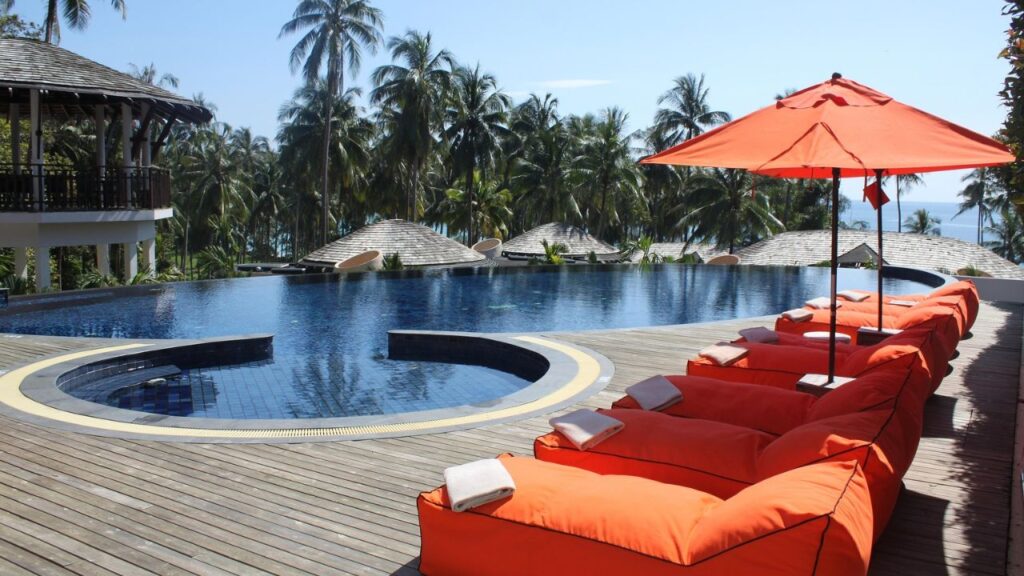
Thailand hotel tax Bangkok — Thai Hotels Association president Thienprasit urges the Bangkok Metropolitan Administration to start at 0.5–1% rather than the proposed 3% during a period of tourism slowdown linked to the Middle East conflict.
Thailand hotel tax Bangkok debate has intensified — as the Bangkok Metropolitan Administration plans to introduce a 3% hotel tax to increase revenue, the Thai Hotels Association has urged the authority to begin with a lower rate of 0.5–1% and provide additional support to help tourism operators affected by the Middle East conflict. Bangkok Post
The Thailand hotel tax Bangkok proposal is part of a broader national taxation push targeting the tourism sector simultaneously from multiple directions — including the long-pending 300-baht tourist entry fee, the Airports of Thailand passenger service charge increase, and the possible Phuket hotel tax hike from 1% to 3%. The timing — as Thailand’s tourist arrivals run 3.19% below 2025 levels — is the core tension the Thai Hotels Association is pushing back on.
What Bangkok Governor Chadchart Is Proposing
Bangkok Governor Chadchart Sittipunt has proposed amendments to the BMA Act that would give the Bangkok Metropolitan Administration the legal authority to levy new local taxes — authority it currently does not hold.
The authority said the BMA currently lacks the legal authority to impose a hotel tax, which could generate 1 billion baht in annual revenue, while provincial administrative organisations already have such authority.
The 3% hotel tax — applied on hotel and accommodation room charges — would bring Bangkok into line with what Phuket’s Provincial Administrative Organisation is already permitted to charge and is considering expanding from 1% to 3%. Neighbouring Phangnga province already charges a hotel tax rate of 2%.
The BMA’s revenue argument is straightforward. Bangkok handles more than 30 million international visitors annually in a normal year — even at reduced 2026 arrival rates, a 3% hotel tax on the city’s extensive accommodation stock could generate the projected 1 billion baht figure. That revenue, the Governor’s office argues, could fund tourism infrastructure, safety, and city services improvements.
What the Thai Hotels Association Is Saying
Thai Hotels Association president Thienprasit Chaiyapatranun said hotel operators in Bangkok are not opposed to a new levy, but the proposed rate would place too much of a burden on businesses during the tourism slowdown.
The THA’s position is constructive rather than oppositional — the association is not blocking the hotel tax concept. It is arguing for a phased approach: start at 0.5–1%, assess the commercial impact, then incrementally increase if the market is recovering.
Three specific THA arguments stand out.
Revenue reinvestment. The authority should consider how to reinvest tax revenue in the hospitality and tourism industry, such as by supporting hotel sustainability standards or funding marketing campaigns to attract more tourists. The THA wants a direct link between the revenue generated and the tourism sector that pays it — not a general BMA fund from which hotels get no specific benefit. Bangkok Post
Unlicensed accommodation. The proposal also highlights unfair competition between licensed hotels and illegal accommodations, as the latter can avoid such taxes. The majority of rooms in Bangkok sold via online travel agents are in illegal accommodation. This is one of the most commercially significant points in the debate.
If 3% is added to licensed hotel room prices but the majority of OTA-listed Bangkok rooms — in illegal apartments, modified buildings, and unlicensed guesthouses — continue paying nothing, the tax creates a structural competitive disadvantage for compliant operators without levelling the playing field.
Enforcement quid pro quo. “If the BMA raises this tax, the THA wants to know how it plans to tackle illegal operators, particularly those using modified buildings that could compromise guest safety.”
Thienprasit has linked the hotel tax question directly to enforcement — the message being that licensed hotels will accept a new tax only if accompanied by credible enforcement against the unlicensed segment that currently free-rides. Bangkok Post
The Illegal Accommodation Problem
The Thailand hotel tax Bangkok debate surfaces a structural problem that has been building across Thailand’s tourism economy for a decade: the unlicensed accommodation sector has grown so large that it undermines any attempt to tax or regulate the formal hotel industry.
“Whenever the authorities seek to raise revenue, they first turn to businesses that comply with the law, whether through new taxes or higher labour costs,” said Mr Thienprasit. Bangkok Post
This is a globally familiar complaint from the formal hotel sector about the short-term rental and unlicensed accommodation economy — and in Bangkok’s case, it is grounded in measurable data.
The ACTF has separately documented that more than 70% of accommodation in Chon Buri and Phuket operates without hotel licences. Bangkok’s figure — while not separately published — is likely comparable given the city’s massive Airbnb and OTA-listed apartment stock.
The practical result is that any hotel tax falls primarily on international hotel chains, mid-range branded properties, and formally registered Thai guesthouses — while the large segment of OTA-listed serviced apartments, condotels, and unlicensed guesthouses continues to operate without contributing to the tax base.
The Broader Thai Tourism Tax Landscape
The Thailand hotel tax Bangkok is one thread in a much broader taxation conversation that Thailand’s tourism industry is navigating simultaneously.
300-baht tourist entry fee. Approved by Cabinet in principle in 2023, delayed repeatedly due to industry opposition, this remains pending Cabinet consideration as of August 2026. The fee would be 300 baht for air arrivals and 150 baht for land and sea entries.
Airports of Thailand passenger service charge. AoT raised the international passenger service charge from 730 baht to 1,120 baht from June 20 — a 53% increase that directly adds to ticket prices at all six AoT-operated airports.
Phuket hotel tax. Phuket is considering raising its provincial hotel tax from 1% to 3%, which the PAO estimates would generate 1 billion baht annually.
The convergence of these simultaneous tax proposals — at a moment when Thailand is already running below 2025 arrival levels and the Middle East conflict is suppressing European long-haul demand — is precisely what the THA is warning against. Each individual levy may be commercially manageable. The cumulative effect of all of them landing simultaneously is the concern.
What This Means for Indian Travelers Booking Bangkok Hotels
The Thailand hotel tax Bangkok proposal affects Indian travelers planning Bangkok hotel bookings in two ways.
If the 3% BMA hotel tax passes at 3%: Expect hotel room prices in Bangkok to increase by 3% — built into the room rate or added as a separate line item on the invoice, depending on how the BMA implements the charge. For a THB 2,000 per night hotel room, the additional cost would be THB 60 per night (~₹145). For a THB 6,000 per night room, the addition is THB 180 per night (~₹435).
If the THA’s 0.5–1% recommendation prevails: The impact is significantly smaller. At 1%, a THB 2,000 room adds THB 20 per night. The THA’s position — start low, scale up — is the more gradual approach.
For Indian travelers currently comparing Airbnb or OTA-listed apartments versus formal hotels in Bangkok, the THA’s point about unlicensed accommodation is practically relevant. The majority of OTA-listed Bangkok rooms in apartments and condotels may not collect the hotel tax even if it passes — creating a pricing gap between licensed and unlicensed options that is wider than the published rates suggest.
Before booking Bangkok hotels, compare prices on booking platforms across both formal hotel properties and apartment/condo listings — and check whether the listed property has visible hotel licensing information, particularly for safety compliance. Confirm current Thailand entry requirements at thaievisa.go.th. Complete the mandatory TDAC digital arrival card within 72 hours before departure. Remember UPI does not work in Thailand — carry Thai Baht or a zero-forex international card. For travel insurance covering Bangkok trips, SafetyWing Nomad Insurance provides comprehensive coverage at affordable daily rates for Indian travelers.
FAQs — Thailand Hotel Tax Bangkok 2026
Q: What is the Thailand hotel tax Bangkok proposal and has it been passed?
The Bangkok Metropolitan Administration plans to introduce a 3% hotel tax on hotel and accommodation room charges to increase revenue, estimated at 1 billion baht annually. The BMA currently lacks the legal authority to impose a hotel tax, which requires amendments to the BMA Act. As of August 2026, the proposal is at the planning and consultation stage — it has not been passed into law. The Thai Hotels Association has urged the authority to begin with a lower rate of 0.5–1% rather than the proposed 3%.
Q: Why is the Thai Hotels Association opposing the 3% rate?
Thai Hotels Association president Thienprasit Chaiyapatranun said hotel operators in Bangkok are not opposed to a new levy, but the proposed rate would place too much of a burden on businesses during the tourism slowdown.
The THA’s specific objections cover three areas — the rate is too high given current tourism conditions, the revenue should be reinvested in the hospitality sector, and enforcement against unlicensed accommodations must accompany any tax on licensed hotels.
The THA notes that the majority of rooms sold via online travel agents in Bangkok are in illegal accommodation, which would be exempt from the hotel tax. Bangkok Post
Q: How does this affect Indian travelers booking Bangkok accommodation?
If the 3% hotel tax is implemented at the proposed BMA rate, Bangkok hotel room prices will increase by 3% — approximately THB 60 per night on a THB 2,000 room (~₹145) or THB 180 per night on a THB 6,000 room (~₹435). The tax would apply to licensed hotels and accommodation. Unlicensed apartments and condotels listed on OTAs may not be required to collect the tax, creating a potential pricing gap. The tax has not yet been passed and may be revised to a lower rate following industry consultation.
Final Word
The Thailand hotel tax Bangkok debate reveals a fundamental tension in Thailand’s 2026 tourism policy environment — the government needs revenue while the industry needs relief. The THA’s position is commercially grounded and reasonable: start at 0.5–1%, reinvest the revenue in tourism, and enforce against the unlicensed sector simultaneously.
The 3% proposal at full rate, without enforcement action against unlicensed OTA properties and without clarity on revenue reinvestment, would represent exactly the kind of asymmetric taxation that burdens compliant operators while leaving the informal sector untouched. For Indian travelers, the immediate practical note is that Bangkok hotel pricing may change in the months ahead — watch for updates and book accordingly.
Also Read:
- Pattaya Tourism Reforms 2026 — Operators Demand Crackdown
- India Thailand Visa Waiver — 30 Days Free, Arrivals to Surge
- Thailand Tourist Arrivals 2026 — 18.51 Million by August 1
Official Sources:
 Singapore Changi Airport Ranking 2026: World’s Best for 14th Time, Suvarnabhumi 36th
Thailand Tourist Fee 2027: 450 Baht (~₹1,125) From Q1 2027, Air First
Thailand Visa Land Border 2026: Two Entries Per Calendar Year — September 15 Does NOT Reset Your Count
Belarus e-Visa Indians 2026: India Added to Eligible List, Fee and Validity Not Yet Published
Singapore Changi Airport Ranking 2026: World’s Best for 14th Time, Suvarnabhumi 36th
Thailand Tourist Fee 2027: 450 Baht (~₹1,125) From Q1 2027, Air First
Thailand Visa Land Border 2026: Two Entries Per Calendar Year — September 15 Does NOT Reset Your Count
Belarus e-Visa Indians 2026: India Added to Eligible List, Fee and Validity Not Yet Published

Aaseem Bhardwaj is a journalist, seasoned traveler and IT professional based in India. With firsthand travel experience across Southeast Asia, East Asia, Middle East and Europe, Aaseem founded Travel Man Today to provide reliable visa updates and travel news for Indian passport holders. He has personally traveled to Thailand, Vietnam, Malaysia, Japan, Singapore, Hong Kong, South Korea, UAE and Europe. Follow his travel vlogs on YouTube at @travelmantoday




Templates for Indians